This article was automatically translated from the original Turkish version.
+2 More
Official Name | Federative Republic of Brazil | ||||||||
|---|---|---|---|---|---|---|---|---|---|
Capital | Brasília | ||||||||
Form of Government | Federal republic governed by a presidential system | ||||||||
Independence Date | 7 September 1822 | ||||||||
National Day | 7 September (Independence Day) and 15 November (Proclamation of the Republic) | ||||||||
Head of State | Luiz Inácio Lula da Silva | ||||||||
Area | 8.5 million km² | ||||||||
GDP (PPP) | 1.9 trillion US dollars (2022 data) / 2.256 trillion US dollars (2025 IMF forecast) | ||||||||
GDP | 1.9 trillion US dollars (2022 data) / 2.256 trillion US dollars (2025 IMF forecast) | ||||||||
GDP per Capita | 10578 USD | ||||||||
Climate | Subequatorial tropical semiarid and subtropical | ||||||||
Population | 203.1 million | ||||||||
Ethnic Groups | Mixed (Pardo) White Black Asian Indigenous peoples | ||||||||
Common Languages | German Italian Japanese Indigenous languages | ||||||||
Religious Composition | Catholic (Christian): 56.7% Evangelical (Christian): 26.9% Unaffiliated: 9.3% Spiritism: 1.8% African religions: 1% Other: 4.3% | ||||||||
Telephone Code | +55 | ||||||||
Internet Domain Code | .br | ||||||||
Brazil (Officially the Federative Republic of Brazil)Federal Republic is a country located in South America with its capital in Brasília.【1】 With an area of 8,547,400 square kilometers, it is the fifth largest country in the world.【2】 The country extends 4,320 kilometers from north to south and 4,326 kilometers from east to west and is bordered by the Atlantic Ocean to the east with a coastline of 7,491 kilometers (4,644 miles).【3】 Chile and Ecuador are the only South American countries with which Brazil does not share a land border, and its total land boundary extends for 12,000 kilometers.【4】 The country's geography features five main climate zones: equatorial, tropical, semi-arid, mountainous tropical, and subtropical.【5】 Brazil is also home to the Amazon rainforests, which contain the world’s largest tropical forest and oxygen reserves.【6】
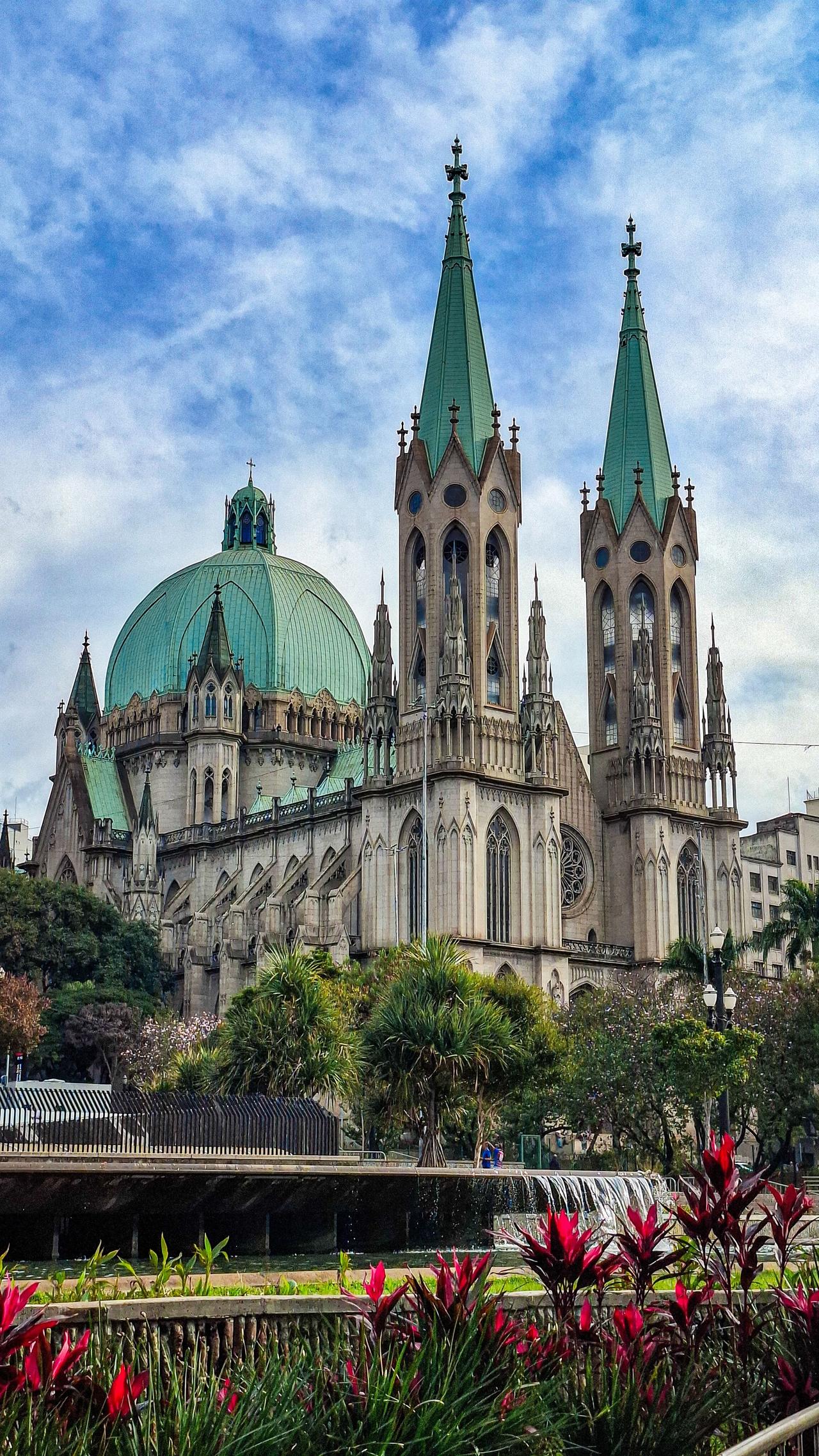
Catedral Da Sé (Pexels)
The official language of the country is Portuguese, but Spanish and English are also widely used in business.【7】 According to estimates by the Brazilian Institute of Geography and Statistics (IBGE), as of July 1, 2025, the country’s population reached 213.4 million, an increase of 0.39 percent compared to the previous year.【8】 Although a general slowdown in population growth is observed, the vast majority of the population lives in urban areas.【9】 According to 2022 data, 87.6 percent of the population lives in urban areas, and this figure is projected to rise to 88.9 percent by 2027.【10】 Population density is particularly high along the narrow coastal strip and in the southeastern region of the country.【11】 The 27 state capitals alone, with a combined population of 49.3 million, host approximately one-fifth of the country’s total population (23.1 percent).【12】 São Paulo, with a population of 11.5 million excluding its suburbs, is the country’s most populous city.【13】 Ethnically, Brazil is a multicultural society formed by centuries of interaction among Indigenous South Americans, European immigrants, Africans, Middle Easterners, and Japanese.【14】
Brazil is a federal republic governed by a presidential system.【15】 The administrative structure consists of 26 states and one Federal District encompassing the capital Brasília; the country also has 5,560 municipalities.【16】 The head of the executive branch is the President of the Republic, elected for a four-year term and eligible for re-election for one consecutive term; the current president is Luiz Inácio Lula da Silva.【17】 The national currency of the country is the Brazilian Real (BRL)【18】. As an important actor in the global system, Brazil is a member of the United Nations (UN), the World Trade Organization (WTO), the International Monetary Fund (IMF), the World Bank, and the G-20.【19】 At the regional level, in addition to its membership in the Latin American Integration Association (ALADI), Brazil co-founded MERCOSUR (Common Market) in 1991 with Argentina, Paraguay, and Uruguay.【20】
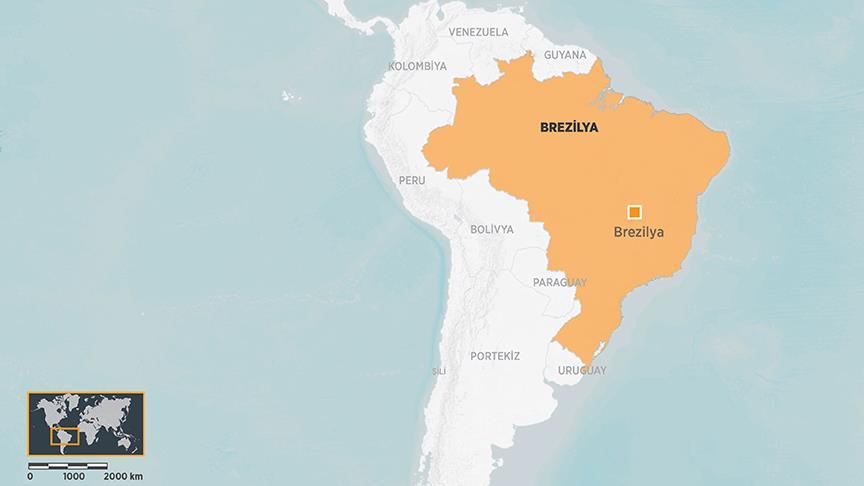
Brazil in South America (AA)
The Federative Republic of Brazil is the largest country in South America and the fifth largest in the world by area. Located on both the Equator and the Tropic of Capricorn, Brazil has an Atlantic coastline ranging from 7,367 to 7,491 kilometers in length. It shares land borders with all South American countries except Ecuador and Chile (to the north: French Guiana, Suriname, Guyana, Venezuela, and Colombia; to the west: Peru, Bolivia, Paraguay, Argentina, and Uruguay; to the southwest: Argentina and Paraguay). Brazil’s total land area of 8,459,417 square kilometers and water area of 55,460 square kilometers are bordered by a total land boundary of 12,000 kilometers with its neighbors.【21】
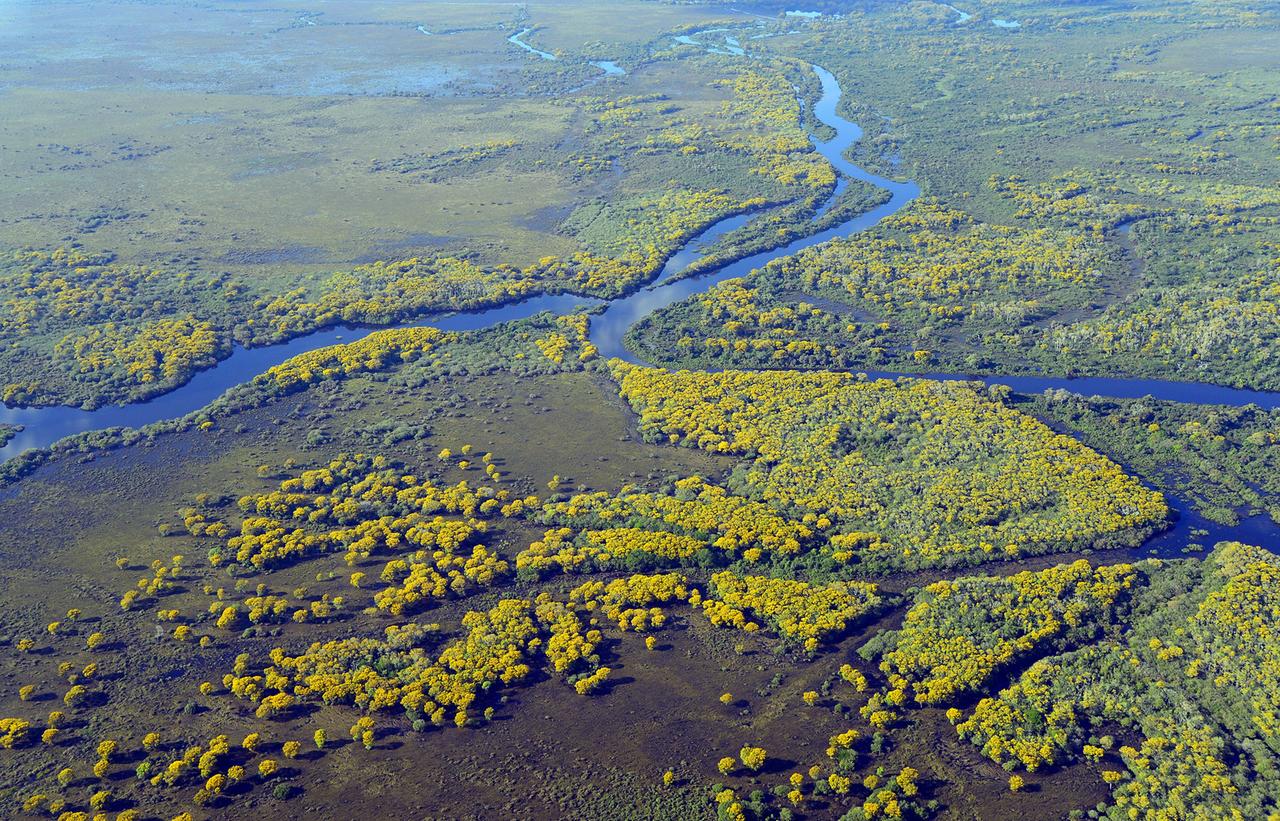
World’s Largest Continental Wetland "Pantanal" (Pixabay)
Due to its vast area, Brazil has a highly diverse topography. In the north, the Amazon Basin covers a large area, while to the south of this basin lies the Brazilian Highlands, a region of river valleys, hills, and mountains. Along the western border, the Pantanal, the world’s largest continental wetland, is located, with more than half of its area within Brazil’s boundaries. In the central and midwestern regions, vast tropical savannas known as Cerrado extend, while in the northeastern region, semi-arid deserts and scrublands known as Caatinga dominate.【22】
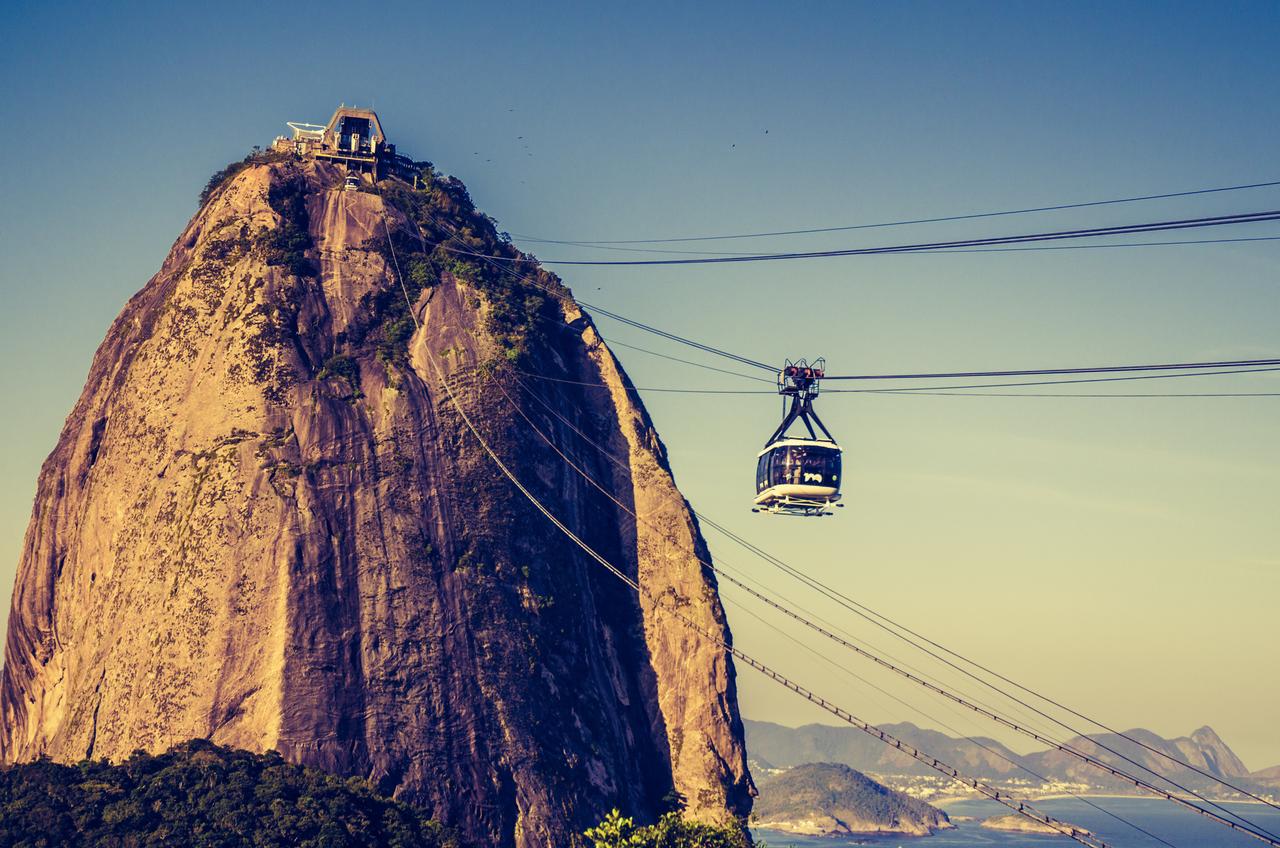
Sugarloaf Mountain (Pixabay)
Brazil’s topography is marked by mountain ranges running parallel to the coast and elevated areas in the interior. The highest point within Brazil’s borders is Pico da Neblina, at 2,994 meters (9,823 feet) above sea level.【23】 However, the thousands of kilometers of the Atlantic coastline exhibit a rugged physical structure in places, and Sugarloaf Mountain in the Rio de Janeiro bay is one of the country’s most recognizable geographical landmarks.
Brazil’s geography includes numerous river valleys extending through the interior highlands. In the west-central region lies the vast Mato Grosso Plateau, forming the northwestern part of the Cerrado plains; this plateau is primarily a broad expanse of scrub forests and savannas. As one moves south toward the Uruguayan border, the temperate climate gives way to the Pampas, large grassy plains and arable grasslands that dominate the landscape.
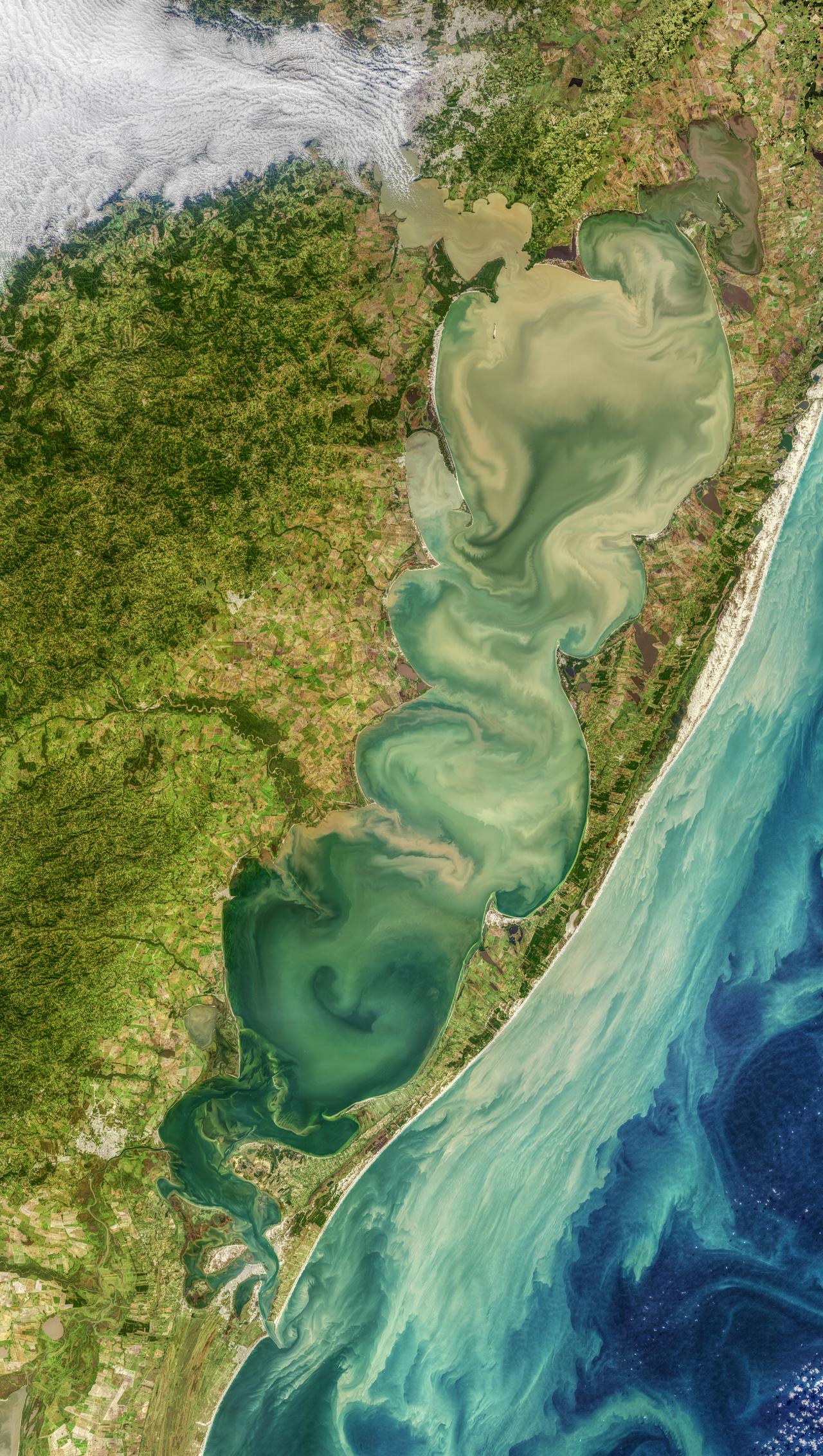
Satellite Image of Lagoa dos Patos in Southern Brazil (NASA)
Brazil is among the countries with the most extensive river systems in the world, with eight major watersheds draining into the Atlantic Ocean.【24】 The Amazon River, which originates in the Peruvian Andes and flows across the entire northern region of the country, is the longest river in the Western Hemisphere and, along with the Nile, among the longest in the world. With over a thousand tributaries, the Amazon is the largest river in the world by volume, and its depth allows ocean-going vessels to navigate as far as Manaus, while smaller vessels can reach Iquitos in Peru.【25】 The Solimões River also plays a vital hydrographic role in internal transportation within the country.
While temperate climate characteristics are observed in the southern regions, most of the country experiences tropical conditions. In the Amazon region, the average annual air temperature is around 25 degrees Celsius (77 Fahrenheit), with a humid climate and almost no dry season throughout the year. Annual average rainfall reaches 220 centimeters in northern rainforests but drops to 160 centimeters in grassland areas. In the northeastern Caatinga and Sertão regions, seasonal downpours are accompanied by severe droughts.【26】
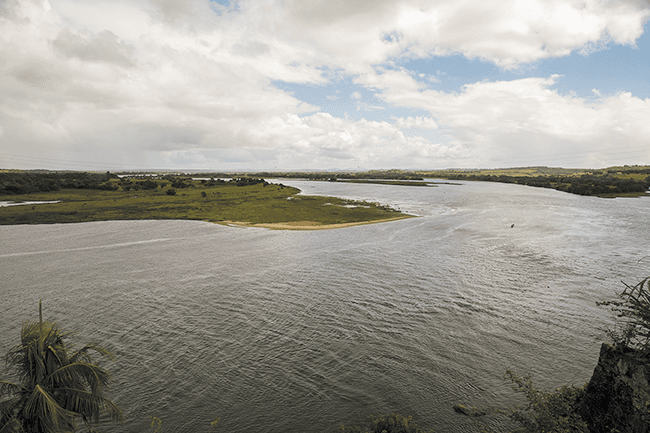
São Francisco River (IBGE)
Brazil ranks first in the world in terms of biological diversity. Approximately 30 percent of the more than 55,000 plant species discovered to date in the country are endemic to Brazil’s geography.【27】 The Amazon and Atlantic rainforests host numerous tropical species including bromeliads, orchids, lianas, and Brazil nut trees.
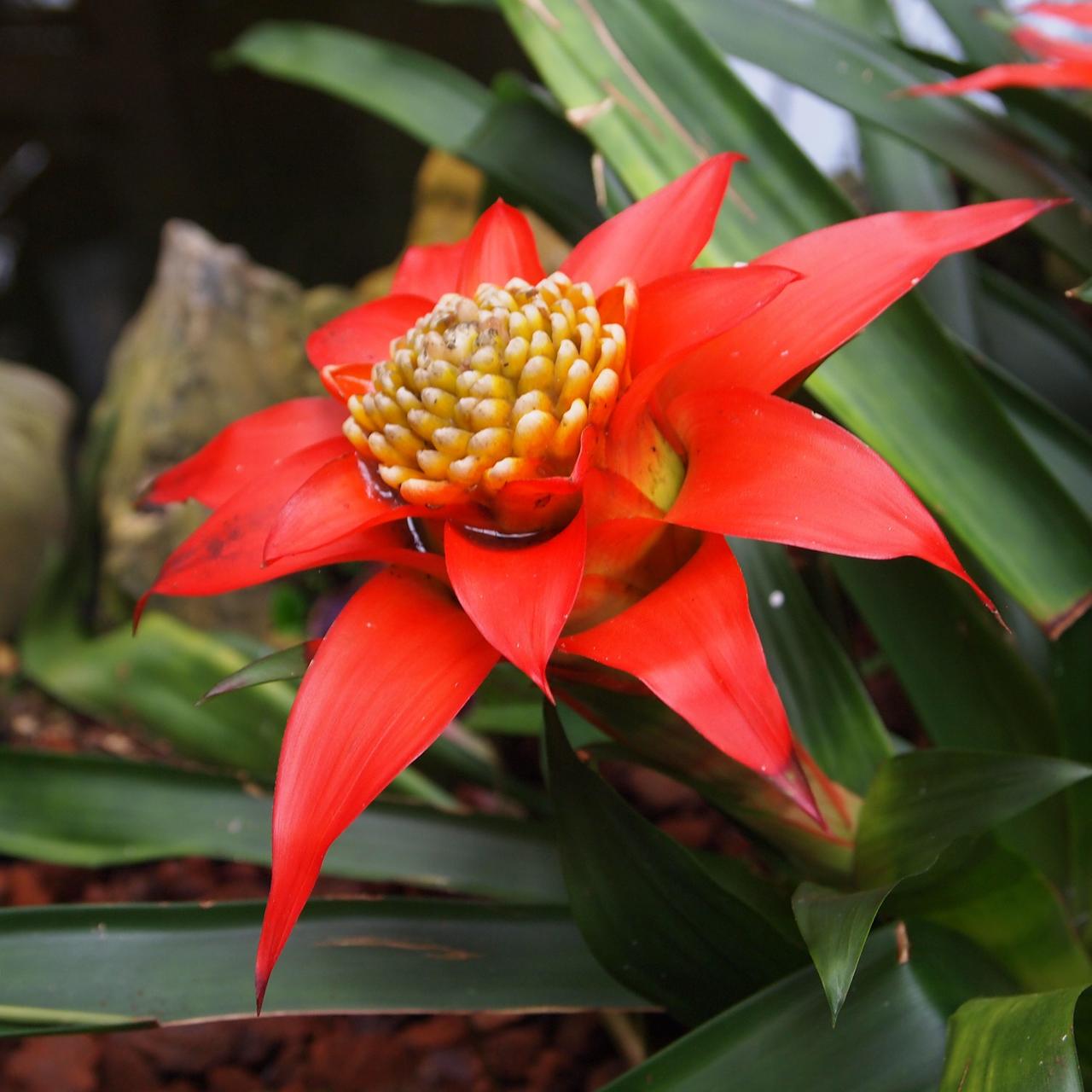
Bromeliad (Pixabay)
With its vast territory, Brazil possesses underground resources including bauxite, gold, platinum, iron ore, manganese, nickel, uranium, petroleum, rare earth elements, and tin. The iron ore extracted from the Grande Carajás Project, located southwest of Belém in northern Brazil, is estimated to alone meet one-third of Europe’s iron demand.【28】 In terms of agricultural natural resources, Brazil leads globally in the production of coffee, orange juice, soybeans, sugarcane, and beef.【29】
Brazil’s energy profile, as of 2024, surpassed a historic threshold by achieving a 50 percent share of renewable energy in its total domestic energy supply, which reached 322 million tons of oil equivalent (Mtoe). Brazil’s electricity generation infrastructure has a remarkably high renewable share of 88.2 percent, historically dominated by hydroelectric dams (11.6 percent of supply), now diversified by wind and solar energy investments. In 2024, solar energy contributed a 39.6 percent increase and wind energy a 12.4 percent increase in electricity production, while sugarcane biomass (bagasse) met 16.7 percent of the country’s total energy supply. When analyzed by sector, total final energy consumption of 288.3 Mtoe reveals that transportation (33.2 percent) and industry (31.7 percent) together account for approximately 65 percent of the country’s total energy consumption.【30】
Despite increasing renewable capacity, fossil fuels and energy products remain central to Brazil’s foreign trade balance. According to 2024 data, total exports amounted to 337 billion U.S. dollars and imports to 262.4 billion U.S. dollars. Crude oil alone, accounting for 13.3 percent (approximately 44.8 billion U.S. dollars) of total exports, became the largest export item, while oil products contributed 3.5 percent. In energy imports aimed at balancing domestic and heavy industry demand, oil products (5.8 percent of total imports), crude oil (3.3 percent), and petroleum gases (1.6 percent) lead the rankings..【31】
Brazil’s transportation infrastructure has developed to facilitate the export of natural resources to international markets; specialized railway networks transport iron ore and agricultural products from inland areas to Atlantic ports, while road networks extend into the interior of the Amazon Basin. The Manaus Free Trade Zone port on the Amazon River, navigable even by ocean-going vessels, plays a critical role in waterborne transport.
In the transportation sector, which accounts for the largest share of energy consumption, the renewable share rose to 25.7 percent in 2024 due to significant increases in biodiesel and hydrated ethanol use (19.3 percent and 30.1 percent respectively) and the growing adoption of electric vehicles (EVs). In urban transportation planning, Curitiba’s Bus Rapid Transit (BRT) system and pedestrianized areas serve as a global model; in communication infrastructure, 5G technology launched in the capital Brasília in 2022 is rapidly expanding nationwide, with a goal of completing a nationwide fiber-optic network along federal highways by 2029.【32】
The foremost threat to Brazil’s natural environment is deforestation in the Amazon Basin, driven by agricultural expansion (slash-and-burn methods), cattle ranching, and the timber industry. This degradation causes severe erosion in tropical soils, where nutrients are concentrated only at the surface. In mining, toxic substances such as cyanide and mercury used to extract gold from rivers poison aquatic ecosystems. Furthermore, forests submerged by hydroelectric dams decompose and increase water acidity, leading to long-term environmental and mechanical damage.【33】 Regarding natural disasters, the semi-arid regions in the northeast are particularly vulnerable to periodic severe droughts.
Brazil is a democratic country whose legal foundation is based on Roman and Germanic traditions of continental European (civil law) legal systems. Brazil’s constitutional development began with the 1824 Imperial Constitution; it was followed in 1891 by the first republican constitution, inspired by the model of the United States of America, which introduced federalism. Due to political fluctuations, different constitutions were enacted in 1934, 1937 (Estado Novo) with corporatist and authoritarian characteristics, and 1946, each responding to distinct political needs.【34】
The current administrative and legal framework of the country was established by the constitution adopted on October 5, 1988, during the transition from military dictatorship to civilian rule. The 1988 Constitution, which established comprehensive rules at the federal level, is built upon fundamental principles such as human dignity, citizenship, political pluralism, free enterprise, and the social value of labor, emphasizing that sovereignty belongs directly or through elected representatives to the people. This text presents a hybrid structure combining representative democratic institutions with mechanisms for direct public participation.【35】
Brazil is a federal republic governed by a presidential system. According to its constitutional structure, the country consists of 26 autonomous states, one Federal District (Distrito Federal) encompassing the capital Brasília, and 5,570 independent municipalities responsible for local services. Fifteen large municipalities with populations exceeding one million account for approximately one-fifth of the national population. Each state has its own constitution, directly elected governors, and unicameral legislative assemblies.【36】
The highest office in the executive branch, the President of the Republic, is directly elected by popular vote for a four-year term and may serve a maximum of two consecutive terms. If no candidate receives more than 50 percent of valid votes in the first round of presidential elections, a second round is held between the two candidates with the most votes. One of the most distinctive features of Brazil’s system is that due to its multi-party structure and proportional representation system, no party has achieved a parliamentary majority (approximately 20 percent threshold) since 1985, making it impossible for any single party to pass legislation alone. This system, known in political science literature as "coalitional presidentialism," obligates presidents to distribute key ministerial positions among coalition partner parties to manage the legislative branch.【37】
In Brazil, state authority is divided among the legislative, executive, and judicial branches according to the principle of separation of powers. The President holds significant powers to intervene in legislation, including issuing decrees with the force of law, submitting legislative proposals, and exercising partial or full vetoes. As of 2025, the executive mechanism consists of a Vice President directly accountable to the President and a total of 38 ministers (including the Attorney General and the General Controller).
Legislative power resides with the bicameral National Congress (Congresso Nacional), composed of the Senate and the Chamber of Deputies. The upper house, the Senate, consists of 81 members elected for eight-year terms, with three representatives from each of the 26 states and the Federal District. The lower house, the Chamber of Deputies, comprises 513 federal deputies elected for four-year terms in proportion to the population of each state.
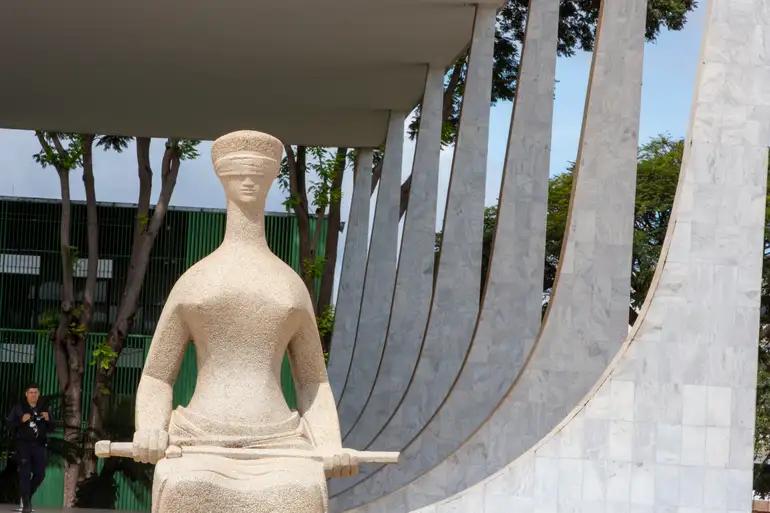
Facade of the Federal Supreme Court (STF) (EBC)
The independent judiciary operates through two main branches: federal and state courts. State courts hold residual jurisdiction over disputes outside the federal domain. At the apex of the judicial hierarchy is the 11-member Federal Supreme Court (STF), which reviews constitutional compliance. A 2004 constitutional amendment granted the STF the authority to issue binding precedents (súmula vinculante) for lower courts and state institutions, subject to approval by two-thirds of its members.
The Superior Court of Justice (STJ), the highest court for non-constitutional civil and criminal cases, has 33 members. In addition, specialized bodies include the 7-member Superior Electoral Court (TSE), the 27-member Superior Labor Court (TST), and the 15-member Superior Military Court (STM). High judicial officials are appointed by the President with the majority approval of the Senate; the constitutional mandatory retirement age for all civil servants and judges is 75. Furthermore, the Public Prosecutor’s Office (Ministério Público), known as the "Fourth Estate," is a constitutionally independent body that oversees police investigations at both federal and state levels.【38】
Brazil’s vast geography and ethnic composition have produced an extremely fragmented, multi-party, and intensely competitive political landscape. Due to proportional representation, numerous parties are represented in parliament. Political life has long been shaped by competition between the center-left Workers’ Party (PT) and the center-right Brazilian Social Democracy Party (PSDB). Traditional structures such as the Brazilian Democratic Movement Party (PMDB/MDB), which represents centrist politics and plays a pivotal role in coalition governments, have served as balancing forces within the system. However, in a system where parties derive power more from local movements and alliances than institutional structures, the PT initially drew strength from organized grassroots movements such as trade unions (e.g., CUT) and the Landless Workers’ Movement (MST); in later years, to remain in power, it formed alliances with conservative and right-leaning parties. Recent political realignments have created conditions for far-right/populist parties such as the Social Liberal Party (PSL) to gain strength outside the traditional two-party rivalry between PT and PSDB.【39】
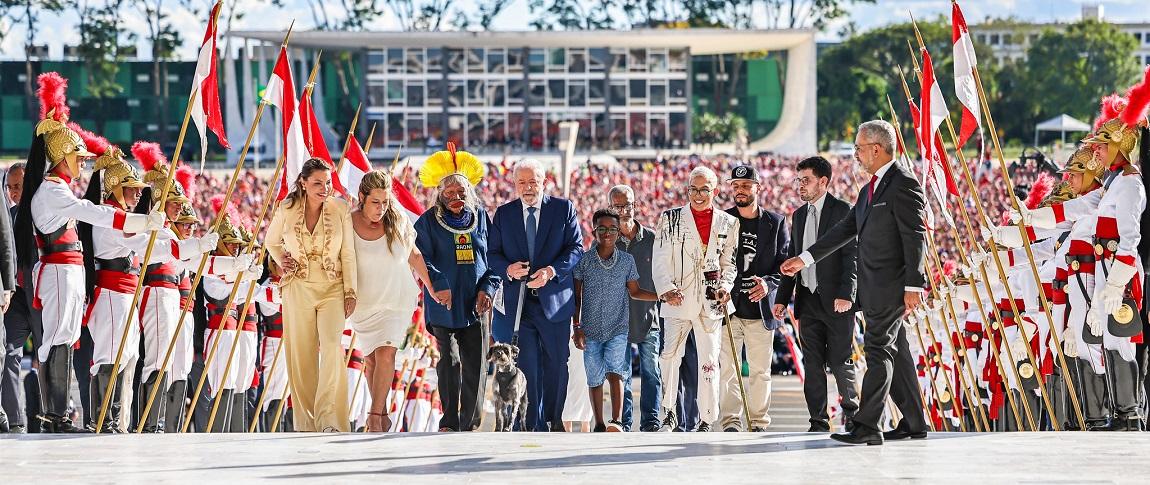
Brazilian President Luiz Inácio Lula da Silva Ascending the Ramp of the Palácio do Planalto (Br)
Recent Brazilian political history entered a new phase with the election of Luiz Inácio Lula da Silva, a candidate of the Workers’ Party, in 2003. Social welfare programs such as "Family Grant" (Bolsa Familia) and "My House My Life" (Minha Casa, Minha Vida) reached approximately 12 million households, equivalent to about 25 percent of the population, helping to reduce extreme poverty. Lula da Silva’s left-populist successes, combined with economic improvements, were continued under Dilma Rousseff, the country’s first female president, who assumed office in 2011.【40】 However, the social policies implemented failed to resolve Brazil’s entrenched economic and political structural problems.
In particular, protests that began in June 2013 in response to public transport fare hikes and spending on the 2014 World Cup, spreading to 400 cities and involving approximately 8 million Brazilians ("June Days"), significantly weakened centrist politics. These social crises were compounded by the "Car Wash" (Lava Jato) systemic corruption investigations, which began in 2014 and implicated senior officials from 14 of the 35 parties represented in parliament. As a result of these investigations centered on Petrobras, 160 individuals, including politicians and businesspeople, were convicted in first-instance courts.【41】
Following economic contraction, political polarization, and the Lava Jato process, President Rousseff was removed from office in August 2016 by a congressional vote (impeachment process) on charges of violating budget laws, and was succeeded by the center-right Michel Temer. This impeachment process was characterized by the left as a form of "parliamentary coup" (golpeachment).
Public distrust, corruption scandals, and backlash against traditional political actors created conditions for the rise of right-populist rhetoric in the 2018 elections. Former military officer Jair Bolsonaro, candidate of the Social Liberal Party (PSL), ran a campaign centered on fighting corruption, public security, conservative social values, and pro-market economic policies. Bolsonaro won the presidency in the second round with approximately 55 percent of valid votes. This outcome marked a transition from the previous left-center governance model to a new political era emphasizing security, conservatism, and market-oriented policies.【42】
As of July 1, 2025, Brazil’s population reached 213.4 million, a 0.39 percent increase from the previous year. Population distribution shows a strong concentration in urban areas; the 27 state capitals, with a combined population of 49.3 million, account for 23.1 percent of the national population.【43】 The most populous metropolitan area is São Paulo with 21.6 million inhabitants, followed by Rio de Janeiro (12.9 million), Belo Horizonte (6 million), and the Federal District (4.8 million). The largest cities not serving as state capitals are Guarulhos and Campinas, while numerous rural municipalities have populations under 1,500; for example, the country’s least populous settlement is Serra da Saudade with 856 residents.【44】
Table based on the latest IBGE data.
Brazil’s social structure is assessed according to official statistical classifications of "color or race," which include the categories white, black, pardo (mixed), yellow (Asian origin), and Indigenous. The pardo population, in particular, constitutes one of the broadest components of the country’s ethnic and social diversity.
When examining the relationship between ethnic composition and socioeconomic stratification, it was found that between 1998 and 2008, the proportion of the Black population increased across all income groups in society. Specifically, the proportion of the Black population in the highest income group rose from 25.6 percent to 33.7 percent during this period, while the proportional presence of the white population declined across all income levels.【45】
Although the population holds diverse religious beliefs, Christianity has historically and culturally dominated. According to the 2010 census, 64.6 percent of the population is Catholic, 22.2 percent Protestant, 2 percent Kardecist Spiritist, and 0.3 percent adhere to Afro-Brazilian religions; 8 percent reported no religious belief.【46】 The proportion of Catholics declined historically from 95.2 percent in 1940, while the Protestant population, including evangelical groups, increased significantly from 2.6 percent to 22.2 percent during the same period.【47】
Internal migration dynamics and population mobility have evolved in parallel with historical economic growth phases. Between 1960 and 1980, a strong rural-to-urban migration occurred, rapidly increasing the urban labor force.【48】 Between 1998 and 2008, internal migration patterns showed an increase in the proportion of low-income populations in metropolitan areas, while low-population municipalities saw an increase in their representation among the high-income group. On the other hand, current data indicate a growing and increasingly evident slowdown (desaceleração) in the overall population growth rate.【49】
All public and private educational institutions (primary, secondary, vocational, and higher education) in the country, including administrative, teaching, student enrollment, attendance, and academic records, are continuously maintained in a centralized database called the "Brazilian Education System" (SEB), managed by Inep for the formulation, implementation, and evaluation of public policies.【50】
Current data on literacy rates in Brazil are tracked through the "Child Literacy Indicator" (Indicador Criança Alfabetizada - ICA), published by the National Institute for Educational Studies and Research (Inep). According to 2025 data, 66 percent of children at the end of the second grade of primary school are literate, surpassing the national target of 64 percent for 2025.【51】 This represents a seven-point increase from the 59 percent rate in 2024 and is the result of coordinated efforts between the federal government, states, and municipalities under the National Child Literacy Commitment.【52】
At the state level, 20 states met or exceeded the 2025 target; Ceará, Paraná, and Goiás states achieved literacy rates of 80 percent, meeting national targets set for 2030 ahead of schedule.【53】 In contrast, Santa Catarina state remained at 59 percent, failing to meet its own target; additionally, 34 percent of students nationwide completed second grade without achieving literacy, underscoring the urgency of strategies to address learning gaps.【54】
The legal education system is administratively and pedagogically divided into two main levels under national laws: Basic Education and Higher Education. Basic Education, aimed at preparing individuals for citizenship and the workforce, consists of three sequential stages. The first stage, early childhood education, covers creches for children aged zero to three and preschool for ages four to five; legally, education becomes mandatory from age four. The second stage, primary education, is a compulsory and free nine-year process designed to equip individuals with literacy, basic knowledge, and civic competencies.【55】
Sociological data on literacy and education duration indicate that school enrollment levels have increased over the years; between 1998 and 2008, the proportional share of the population with no education declined across all income groups, while the share of individuals with eleven or more years of education rose from 40 percent to 55 percent in the highest income group and from 3.7 percent to 12.4 percent in the lowest income group.【56】 The final mandatory stage of basic education, secondary school, prepares students for adult life, the workforce, and higher education. Beyond these standard educational levels, other legally recognized modalities include adult education, special education, vocational and technological education, rural education, Indigenous education, Quilombola education, and distance learning.【57】
Higher education, entered after completion of basic education, consists of two main academic blocks: undergraduate and graduate. Undergraduate education includes bachelor’s degrees providing broad training for market needs, teacher training programs for educational institutions, and technologist degrees offering intensive practical training based on specific sectoral techniques.【58】 Graduate education is divided into two categories: professional specialization programs including master’s degrees and MBAs, and research-focused master’s and doctoral programs aimed at scientific research and knowledge production. Post-doctoral education, frequently mentioned in academic circles, is not a legal degree or title but is recognized as an advanced research internship completed after obtaining a doctorate.【59】
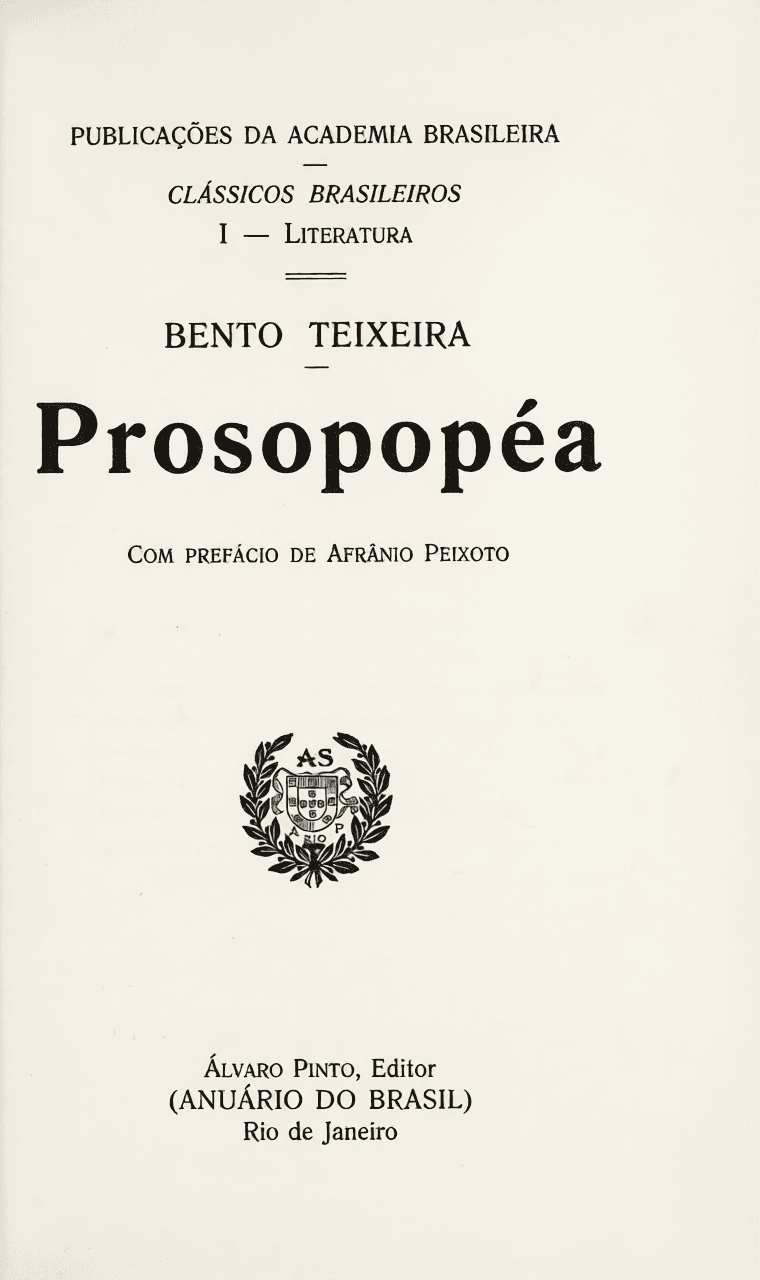
Prosopopea (Googlebooks)
Brazilian literature initially developed under the influence of Portuguese literature and produced its earliest poetic works during the colonial period, such as Bento Teixeira’s Prosopopeia.【60】 Early prose examples of this period include Gabriel Soares de Sousa’s Tratado descritivo do Brasil and Frei Vicente do Salvador’s História do Brasil, recognized as one of the first prose works in Brazilian literary history.【61】 In the 17th century, Gregório de Matos emerged as the leading literary figure of the era with his satirical poems reflecting colonial society.【62】 By the 18th century, poets such as Tomás Antônio Gonzaga (Marília de Dirceu) and Basílio da Gama (O Uraguai), who laid the foundations of the "Indianist" movement, began to shift literature toward national themes.【63】
The Romantic movement in Brazilian literature was institutionally established in 1836 with Gonçalves de Magalhães’s Suspiros poéticos e saudades. In subsequent years, José de Alencar became the most important representative of this movement and the Indianist idea through novels such as O Guarani and Iracema.【64】 In contrast to this romantic orientation, Manuel Antônio de Almeida’s Memórias de um sargento de milícias stands as one of the rare fictional works of the period to exhibit a realist approach.【65】
Towards the end of the 19th century, Romanticism gave way to Realism and Naturalism. During this period, Machado de Assis, through works such as Memórias póstumas de Brás Cubas and Dom Casmurro, introduced psychological depth to Brazilian literature and became the most important figure of the era.【66】 In the same period, Naturalism became established through Aluísio de Azevedo’s O Mulato and O cortiço, while Taunay depicted rural life realistically in his novel Inocência.【67】
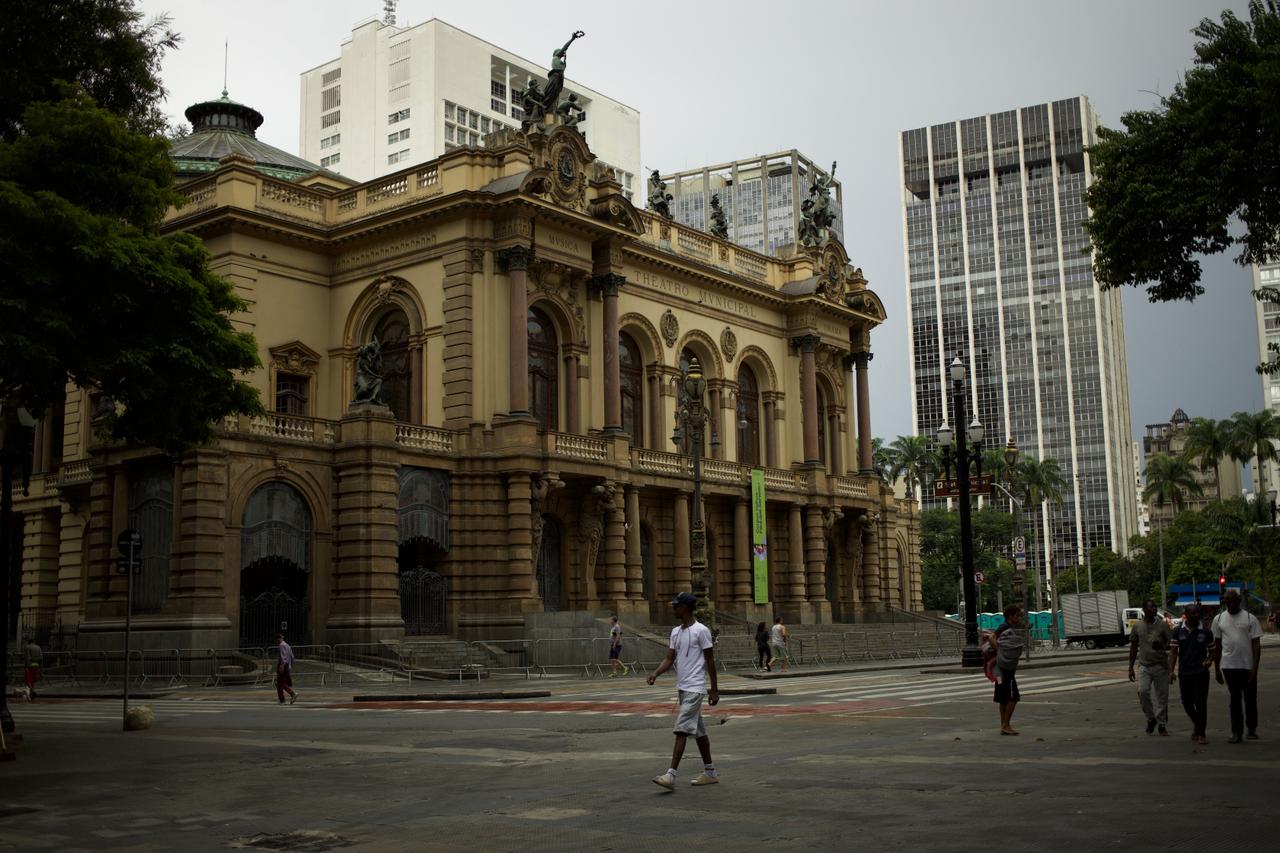
São Paulo Municipal Theater (Pexels)
The beginning of modernism in the performing arts is recognized as the Week of Modern Art held in 1922 at the Theatro Municipal de São Paulo, which featured the participation of composer Heitor Villa-Lobos.【68】 In the mid-20th century, the Bossa Nova and Cinema Novo (New Cinema) movements emerged in performing and visual arts. Among the visual and performing arts productions of this era are works such as Black Orpheus, which reflected the cultural structure of the time.【69】
In visual arts, national motifs found expression in 20th-century graphic works such as Scliar’s engravings.【70】 In the craft domain of visual arts, traditional textile practices such as Renaissance lace, kopanaki, nhaduti, and macramé, prevalent in the northern and northeastern regions, continue to be practiced. Today, Brazilian designers such as Martha Medeiros and Marcia Ganem integrate these traditional craft techniques with new materials such as polyamide fibers, precious stones, and crystals to create high-value visual and commercial products for the international fashion scene.【71】
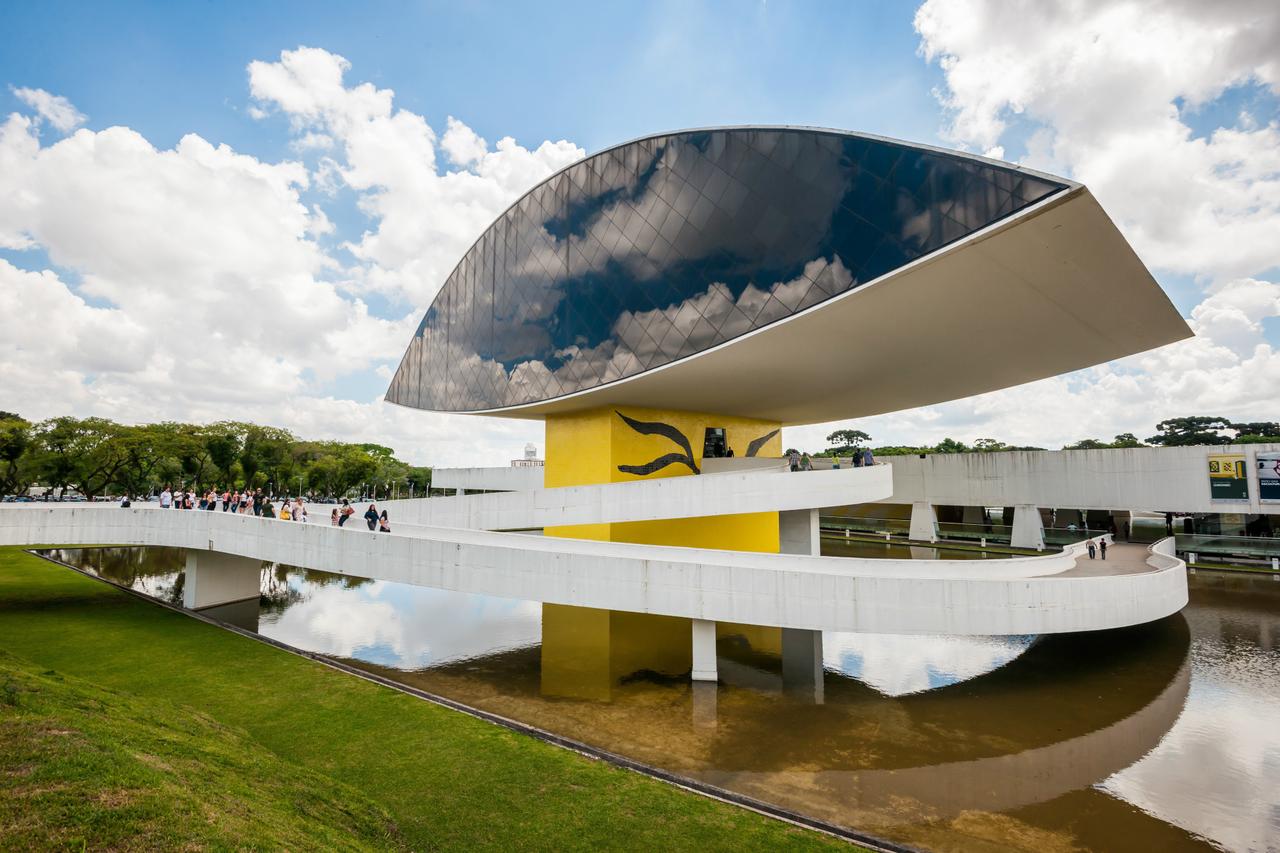
Oscar Niemeyer Museum (Pixabay )
Brazilian architecture developed in the late 19th and early 20th centuries under the influence of European eclecticism and Art Nouveau styles, fueled by capital generated from coffee production. The Theatro Municipal de São Paulo, designed by architect Ramos de Azevedo, is one of the outstanding structures of this era.<kure-citation citation-content='<p class="paragraph"><span style="white-space: pre-wrap;">Eğecioğlu, "Theatro Municipal de São Paulo," 22-23. Access Date: June 22, 2026. </span><kure-link link-reference-type="external" link-reference="
Araujo, Lindemberg Medeiros de, and Bill Bramwell. "Partnership and Regional Tourism in Brazil." *Annals of Tourism Research* 29, no. 4 (2002): 1138–1164. Accessed June 22, 2026. https://doi.org/10.1016/S0160-7383(02)00033-6.
Belanger, Craig. "Brazil." *EBSCO Research Starters*. EBSCO Information Services, 2024. Accessed June 22, 2026. https://www.ebsco.com/research-starters/geography-and-cartography/brazil
Brazilian Institute of Geography and Statistics (IBGE). "São Francisco River Enables Strategic Connection between Major Regions in Brazil." News Agency, November 27, 2018. Accessed June 22, 2026. https://agenciadenoticias.ibge.gov.br/en/agencia-news/2184-news-agency/news/23129-sao-francisco-river-enables-strategic-connection-between-major-regions-in-brazil
Brown University Library. "Brasília." In Five Centuries of Change. Accessed June 22, 2026. https://library.brown.edu/create/fivecenturiesofchange/chapters/chapter-6/brasilia/.
Burnak, Terane Mehemmedova, and Elif Atıcı. "20. Yüzyılın İkinci Yarısında Brezilya Mimarisi." Academia.edu, 2022. Accessed June 22, 2026. https://www.academia.edu/72209370/20_Y%C3%9CZYILIN_%C4%B0K%C4%B0NC%C4%B0_YARISINDA_BREZ%C4%B0LYA_M%C4%M_MAR%C4%B0S%C4%B0
Dinç, Cengiz, and Bülent Akkuş, eds. *Küresel ve Büyük Güçlerin Stratejileri*. Ankara: Orion Kitabevi, 2017. Accessed June 22, 2026. https://www.researchgate.net/publication/320672862_Brezilya_Gelecegin_Ulkesinin_XXI_Yuzyil_Seruveni
Doğan, Sinan. "Güney Amerika'da 3 Ülkeyi Birbirinden Ayıran Sınır: Parana Nehri." Anadolu Ajansı, May 2, 2026. Accessed June 22, 2026. https://www.aa.com.tr/tr/dunya/guney-amerikada-3-ulkeyi-birbirinden-ayiran-sinir-parana-nehri/3924735
Dış Ekonomik İlişkiler Kurulu (DEİK). *Brezilya: Ekonomik İlişkiler Rehberi*. Accessed June 22, 2026. https://www.deik.org.tr/uploads/deik-brezilya-info.pdf.
Elmas, Ömer Melih, and Uğur Özcan. "Brezilya Paraty Bölgesi Geleneksel Konut Mimarisi." *International Journal of Social and Humanities Sciences (IJSHS)* 8, no. 2 (2024): 25-52. Accessed June 22, 2026. https://dergipark.org.tr/tr/download/article-file/4259940
Empresa de Pesquisa Energética (EPE). *Balanço Energético Nacional 2025: Relatório Síntese - Ano base 2024*. Rio de Janeiro: EPE, 2025. Accessed June 22, 2026. https://www.gov.br/mme/pt-br/assuntos/secretarias/sntep/publicacoes/balanco-energetico-nacional/ben-2025/relatorio-sintese/Sintese_BEN2025/view
Federal Judicial Center. "Brazil." *Judiciaries Worldwide*. Accessed June 22, 2026. https://judiciariesworldwide.fjc.gov/country-profile/brazil.
Güngör, Mustafa. "Mersin'de Deri Sırtlı Deniz Kaplumbağası Görüldü." Anadolu Ajansı, May 21, 2016. Accessed June 22, 2026. https://www.aa.com.tr/tr/yasam/mersinde-deri-sirtli-deniz-kaplumbagasi-goruldu/576003
Haiana, Beatriz. "Traditional Brazilian Feijoada with Sides." Pexels. Accessed June 22, 2026. https://www.pexels.com/photo/traditional-brazilian-feijoada-with-sides-34234277/.
Hartt, C. F. "Geology and Physical Geography of Brazil." *The American Naturalist* 5, no. 1 (March 1871): 33–36. Accessed June 22, 2026. https://www.journals.uchicago.edu/doi/10.1086/270699.
Instituto Nacional de Estudos e Pesquisas Educacionais Anísio Teixeira (Inep). "Sistema Educacional Brasileiro (SEB)." Ministério da Educação. Accessed June 22, 2026. https://www.gov.br/inep/pt-br/assuntos/iniciativas-descontinuadas/seb#govbr-busca-input.
Lena, Ângelo Valentim. *A Estrutura, Divisão e Classificação da Educação Escolar no Brasil: Níveis, Etapas e Modalidades Educacionais do Ensino Brasileiro à Luz da LDB*. Cuiabá-MT, 2025. Accessed June 22, 2026. https://educapes.capes.gov.br/bitstream/capes/1000930/6/A%20Estrutura%20do%20Ensino%20Brasileiro%20%C3%A0%20luz%20da%20LDB_%20N%C3%ADveis%2C%20Etapas%20e%20Modalidades%20Educacionais.pdf
Lohmann, Gui, and Dianne Dredge, eds. *Tourism in Brazil: Environment, Management and Segments*. London: Routledge, 2012. Accessed June 22, 2026. https://doi.org/10.4324/9780203121801
Marine Corps Intelligence Activity. *Brazil Country Handbook*. Marine Corps Intelligence Activity. Accessed June 22, 2026. https://info.publicintelligence.net/MCIA-BrazilHandbook.pdf
Ministry of Trade of the Republic of Turkey. *Brazil Country Profile*. Ministry of Trade of the Republic of Turkey, 2025. Accessed June 22, 2026. https://ticaret.gov.tr/data/5f03238413b876ced4013ae9/Brezilya%20%C3%9Clke%20Profili-2026.pdf.
NASA Ocean Biology Processing Group. "Ocean Color Image Gallery." Accessed June 22, 2026. https://oceandata.sci.gsfc.nasa.gov/gallery/573/
Ozan, Hakan. "Brezilya Siyasî Tarihi: Genel Bir Bakış." Academia.edu, 2019. Accessed June 22, 2026. https://www.academia.edu/38499064/Brezilya_Siyas%C3%AE_Tarihi_Genel_Bir_Bak%C4%B1%C5%9F
Pochmann, Marcio. "Estrutura social no Brasil: mudanças recentes." *Serviço Social & Sociedade* (São Paulo), no. 104 (2010): 637-649. Accessed June 22, 2026. https://www.researchgate.net/publication/262659983_Estrutura_social_no_Brasil_mudancas_recentes
Presidency of the Republic. "Biografia do Presidente." Governo Federal do Brasil. Accessed June 22, 2026. https://www.gov.br/planalto/pt-br/conheca-a-presidencia/biografia-do-presidente.
Secretaria de Comunicação Social. "População do Brasil alcança marca de 213,4 milhões de habitantes, divulga IBGE." Presidência da República, August 28, 2025. Last update: January 24, 2026. Accessed June 22, 2026. https://www.gov.br/secom/pt-br/acompanhe-a-secom/noticias/2025/08/populacao-do-brasil-alcanca-marca-de-213-4-milhoes-de-habitantes-divulga-ibge
T.C. Embassy of Brazil. "Brezilya Federatif Cumhuriyeti Bilgi Notu." 2025. Accessed June 22, 2026. https://brezilya-be.mfa.gov.tr/Mission/ShowInfoNote/331320
T.C. Ministry of Trade. *Brezilya Ülke Profili-2025*. General Directorate of International Agreements and European Union, 2025. Accessed June 22, 2026. https://www.aso.org.tr/uploads/ortam/Brezilya%20%C3%9Clke%20Profili-2025.docx.pdf
T.C. Ministry of Trade. *Uzak Ülkeler Stratejisi Brezilya Ülke Rehberi*. Accessed June 22, 2026. https://ticaret.gov.tr/data/5b8a43345c7495406a226f96/Uzak_%C3%9Clkeler_Stratejisi_Brezilya_%C3%9Clke_Rehberi.pdf
T.C. São Paulo Consulate General Trade Attaché. *Brezilya Sağlık Sektörü*. İstanbul: T.C. Ticaret Bakanlığı, 2024. Accessed June 22, 2026. https://www.deik.org.tr/uploads/brezilya-saglik-sektoru_sao-paolo-ticaret-ataseligi.pdf
Tadvald, Marcelo. "Identidade e diversidade religiosa no Brasil." *Latitude* 9, no. 2 (2015): 175-195. Accessed June 22, 2026. https://www.researchgate.net/publication/323198512_Identidade_e_diversidade_religiosa_no_Brasil
Teixeira, Bento. *Prosopopéa*. Google Books. Accessed June 22, 2026. https://books.google.com.tr/books/about/Prosopop%C3%A9a.html?id=49ofAAAAMAAJ&redir_esc=y
Todos Pela Educação. "Nota Técnica: Indicador Criança Alfabetizada 2025." Accessed June 22, 2026. https://todospelaeducacao.org.br/wordpress/wp-content/uploads/2026/03/nota-tecnica-indicador-crianca-alfabetizada-2025-todos-pela-educacao.pdf
UNESCO World Heritage Centre. "Brazil." World Heritage Convention. Accessed June 22, 2026. https://whc.unesco.org/en/statesparties/br.
University of Minnesota. "6.3 Brazil." In *World Regional Geography*. Pressbooks, 2016. Accessed June 22, 2026. https://opened.tesu.edu/umnworldgeography/chapter/6-3-brazil/
Wyler, M. "The Development of the Brazilian Constitution (1891-1946)." *Journal of Comparative Legislation and International Law* 31, no. 3/4 (1949): 53-60. Cambridge University Press. Accessed June 22, 2026. https://www.jstor.org/stable/754245
Yıldırım, Y. "Lula da Silva’dan Bolsonaro’ya Brezilya’da Siyasal Dönüşüm." Niğde Ömer Halisdemir Üniversitesi, 2021. Accessed June 22, 2026. https://dergipark.org.tr/tr/download/article-file/1527599
Çam, Oğuz, and Cengiz Çelik. "Festival Turizmi Çerçevesinde Bir Değerlendirme: Rio Karnavalı." *Sivas İnterdisipliner Turizm Araştırmaları Dergisi* 5, no. 1 (2022): 1-20. Accessed June 22, 2026. https://dergipark.org.tr/tr/download/article-file/2132818
Ömer, I. "São Paulo’s Urban Form: The Case of the AKOB." Accessed June 22, 2026. https://sites.cs.ucsb.edu/~omer/DOWNLOADABLE/Sao_Paulo_AKOB.pdf
Özüdoğru, Şakir, and A. Halûk Yüksel. "Gelenekselden Güncele, Brezilya Modasında Zanaat Uygulamaları: Martha Medeiros ve Marcia Ganem." Accessed June 22, 2026. https://doi.org/10.13140/RG.2.2.25904.30724
[1]
T.C. Ministry of Trade, Brazil Country Profile-2025 (Ankara: T.C. Ministry of Trade, 2025), 3. Access Date: June 22, 2026.https://www.aso.org.tr/uploads/ortam/Brezilya%20%C3%9Clke%20Profili-2025.docx.pdf
[2]
Marine Corps Intelligence Activity, Brazil Country Handbook (Marine Corps Intelligence Activity), 137. Access Date: June 22, 2026.https://info.publicintelligence.net/MCIA-BrazilHandbook.pdf
[3]
T.C. Ministry of Trade, Brazil Country Profile-2025, 3. Access Date: June 22, 2026.
https://www.aso.org.tr/uploads/ortam/Brezilya%20%C3%9Clke%20Profili-2025.docx.pdf
[4]
T.C. Ministry of Trade, Brazil Country Profile-2025, 4 Access Date: June 22, 2026 https://www.aso.org.tr/uploads/ortam/Brezilya%20%C3%9Clke%20Profili-2025.docx.pdf;
Marine Corps Intelligence Activity, Brazil Country Handbook, 194. June 22, 2026.
[5]
T.C. Ministry of Trade, Brazil Country Profile-2025, 4. Access Date: June 22, 2026. https://www.aso.org.tr/uploads/ortam/Brezilya%20%C3%9Clke%20Profili-2025.docx.pdf
[6]
T.C. Ministry of Trade, Brazil Country Profile-2025, 4. Access Date: June 22, 2026.
https://www.aso.org.tr/uploads/ortam/Brezilya%20%C3%9Clke%20Profili-2025.docx.pdf
[7]
Marine Corps Intelligence Activity, Brazil Country Handbook, 137. Access Date: June 22, 2026.https://info.publicintelligence.net/MCIA-BrazilHandbook.pdf
[8]
T.C. Ministry of Trade, Brazil Country Profile-2025 (Ankara: T.C. Ministry of Trade, 2025), 3. Access Date: June 22, 2026
https://www.aso.org.tr/uploads/ortam/Brezilya%20%C3%9Clke%20Profili-2025.docx.pdf
[9]
Secretaria de Comunicação Social, "População do Brasil alcança marca de 213,4 milhões de habitantes, divulga IBGE," Presidência da República. Access Date: June 22, 2026.
[10]
Secretaria de Comunicação Social, "População do Brasil alcança marca de 213,4 milhões de habitantes, divulga IBGE" Access Date: June 22, 2026.https://www.gov.br/secom/pt-br/acompanhe-a-secom/noticias/2025/08/populacao-do-brasil-alcanca-marca-de-213-4-milhoes-de-habitantes-divulga-ibge; T.C. Ministry of Trade, Brazil Country Profile-2025, 3. https://www.aso.org.tr/uploads/ortam/Brezilya%20%C3%9Clke%20Profili-2025.docx.pdf
[11]
T.C. Ministry of Trade, Brazil Country Profile-2025, 4. Access Date: June 20, 2026.
https://www.aso.org.tr/uploads/ortam/Brezilya%20%C3%9Clke%20Profili-2025.docx.pdf
[12]
T.C. Ministry of Trade, Brazil Country Profile-2025, 3-4. Access Date: June 20, 2026.
https://www.aso.org.tr/uploads/ortam/Brezilya%20%C3%9Clke%20Profili-2025.docx.pdf
[13]
Secretaria de Comunicação Social, "População do Brasil alcança marca de 213,4 milhões de habitantes, divulga IBGE." Access Date: June 20, 2026.
[14]
T.C. Ministry of Trade, Brazil Country Profile-2025, 3. Access Date: June 20, 2026.
https://www.aso.org.tr/uploads/ortam/Brezilya%20%C3%9Clke%20Profili-2025.docx.pdf
[15]
T.C. Ministry of Trade, Brazil Country Profile-2025, 3. Access Date: June 20, 2026.
https://www.aso.org.tr/uploads/ortam/Brezilya%20%C3%9Clke%20Profili-2025.docx.pdf
[16]
T.C. Ministry of Trade, Brazil Country Profile-2025, 4. Access Date: June 20, 2026.
https://www.aso.org.tr/uploads/ortam/Brezilya%20%C3%9Clke%20Profili-2025.docx.pdf
[17]
T.C. Ministry of Trade, Brazil Country Profile-2025, 3. Access Date: June 20, 2026.
https://www.aso.org.tr/uploads/ortam/Brezilya%20%C3%9Clke%20Profili-2025.docx.pdf
[18]
T.C. Ministry of Trade, Brazil Country Profile-2025, 3-4. Access Date: June 20, 2026 https://www.aso.org.tr/uploads/ortam/Brezilya%20%C3%9Clke%20Profili-2025.docx.pdf ; Marine Corps Intelligence Activity, Brazil Country Handbook, 137. Access Date: June 20, 2026 . https://info.publicintelligence.net/MCIA-BrazilHandbook.pdf
[19]
T.C. Ministry of Trade, Brazil Country Profile-2025, 3. Access Date: June 20, 2026.
https://www.aso.org.tr/uploads/ortam/Brezilya%20%C3%9Clke%20Profili-2025.docx.pdf; Marine Corps Intelligence Activity, Brazil Country Handbook, 138. Access Date: June 20, 2026.https://info.publicintelligence.net/MCIA-BrazilHandbook.pdf
[20]
T.C. Ministry of Trade, Brazil Country Profile-2025, 3. Access Date: June 20, 2026.
https://www.aso.org.tr/uploads/ortam/Brezilya%20%C3%9Clke%20Profili-2025.docx.pdf
[21]
Craig Belanger, "Brazil", EBSCO Research Starters (EBSCO Information Services, 2024), 2-3 Access Date: June 20, 2026 .https://www.ebsco.com/research-starters/geography-and-cartography/brazil; T.C. Ministry of Trade, Strategy for Remote Countries: Brazil Country Guide , 1. Access Date: June 20, 2026.
[22]
University of Minnesota, "6.3 Brazil", World Regional Geography (Pressbooks, 2016), 4-8. Access Date: June 20, 2026.https://opened.tesu.edu/umnworldgeography/chapter/6-3-brazil/
[23]
Craig Belanger, "Brazil", EBSCO Research Starters (EBSCO Information Services, 2024), 3. Access Date: June 20, 2026. https://www.ebsco.com/research-starters/geography-and-cartography/brazil
[24]
T.C. Ministry of Trade, Strategy for Remote Countries: Brazil Country Guide, 1. Access Date: June 20, 2026. https://ticaret.gov.tr/data/5b8a43345c7495406a226f96/Uzak_%C3%9Clkeler_Stratejisi_Brezilya_%C3%9Clke_Rehberi.pdf
[25]
Craig Belanger, "Brazil", EBSCO Research Starters, 3; University of Minnesota, "6.3 Brazil", 4. Access Date: June 20, 2026.https://www.ebsco.com/research-starters/geography-and-cartography/brazil
[26]
Craig Belanger, "Brazil", EBSCO Research Starters, 3. Access Date: June 20, 2026. https://www.ebsco.com/research-starters/geography-and-cartography/brazil
[27]
T.C. Ministry of Trade, Strategy for Remote Countries: Brazil Country Guide, 2. Access Date: June 20, 2026. https://ticaret.gov.tr/data/5b8a43345c7495406a226f96/Uzak_%C3%9Clkeler_Stratejisi_Brezilya_%C3%9Clke_Rehberi.pdf
[28]
University of Minnesota, "6.3 Brazil", World Regional Geography (Pressbooks, 2016), 5. Access Date: June 20, 2026.https://opened.tesu.edu/umnworldgeography/chapter/6-3-brazil/
[29]
University of Minnesota, "6.3 Brazil," 9-10
https://opened.tesu.edu/umnworldgeography/chapter/6-3-brazil/; T.C. Ministry of Trade, Strategy for Remote Countries: Brazil Country Guide, pp. 14-15. Access Date: June 20, 2026.
[30]
Empresa de Pesquisa Energética (EPE), Balanço Energético Nacional 2025: Relatório Síntese - Ano base 2024 (Rio de Janeiro: EPE, 2025), 10, 15, 23, 34-39 https://www.gov.br/mme/pt-br/assuntos/secretarias/sntep/publicacoes/balanco-energetico-nacional/ben-2025/relatorio-sintese/Sintese_BEN2025/view;
University of Minnesota, "6.3 Brazil," World Regional Geography (Pressbooks, 2016). Access Date: June 20, 2026. https://opened.tesu.edu/umnworldgeography/chapter/6-3-brazil/
[31]
T.C. Ministry of Trade, Brazil Country Profile (T.C. Ministry of Trade, 2025), 7-8, 14-15, 18-19. Access Date: June 20, 2026. https://ticaret.gov.tr/data/5b8a43345c7495406a226f96/Uzak_%C3%9Clkeler_Stratejisi_Brezilya_%C3%9Clke_Rehberi.pdf
[32]
Empresa de Pesquisa Energética (EPE), Balanço Energético Nacional 2025, 24-30 https://www.gov.br/mme/pt-br/assuntos/secretarias/sntep/publicacoes/balanco-energetico-nacional/ben-2025/relatorio-sintese/Sintese_BEN2025/view;
University of Minnesota, "6.3 Brazil," 4-10 https://opened.tesu.edu/umnworldgeography/chapter/6-3-brazil/; T.C. Ministry of Trade, Brazil Country Profile, 14-15; T.C. Ministry of Trade, Strategy for Remote Countries: Brazil Country Guide June 20, 2026.
[33]
University of Minnesota, "6.3 Brazil", World Regional Geography (Pressbooks, 2016), 6. Access Date: June 20, 2026.
https://opened.tesu.edu/umnworldgeography/chapter/6-3-brazil/; Craig Belanger, "Brazil", EBSCO Research Starters, 3; University of Minnesota, "6.3 Brazil", 3 .Access Date: June 20, 2026.https://www.ebsco.com/research-starters/geography-and-cartography/brazil
[34]
Marcus Wyler, "The Development of the Brazilian Constitution (1891-1946)," Journal of Comparative Legislation and International Law 31, no. 3/4 (1949) ,Access Date June 22, 2026 .https://www.jstor.org/stable/754245 : Journal of Comparative Legislation and International Law 31, no. 3/4 (1949): 53-60 ;Federal Judicial Center, "Brazil | Judiciaries Worldwide, https://judiciariesworldwide.fjc.gov/
[35]
Yavuz Yıldırım, "Political Transformation in Brazil from Lula da Silva to Bolsonaro," Mülkiye Dergisi 44, no. 3 (2020) : 519-520. Access Date: June 20, 2026
[36]
T.C. Ministry of Foreign Affairs, "Federative Republic of Brazil Information Note," Access Date: June 20, 2026 https://brezilya-be.mfa.gov.tr/Mission
[37]
Yıldırım, "Lula da Silva’dan Bolsonaro’ya Brezilya’da Siyasal Dönüşüm," 519-521. Access Date: June 20, 2026.
[38]
Federal Judicial Center, "Brazil | Judiciaries Worldwide"; Access Date: June 20, 2026 https://judiciariesworldwide.fjc.gov/; T.C. Ministry of Foreign Affairs, "Federative Republic of Brazil Information Note." https://brezilya-be.mfa.gov.tr/Mission
[39]
Yıldırım, "Lula da Silva’dan Bolsonaro’ya Brezilya’da Siyasal Dönüşüm," 521-522, 529
Access Date : June 20, 2026
[40]
Yıldırım, "Lula da Silva’dan Bolsonaro’ya Brezilya’da Siyasal Dönüşüm," 524; " Hakan, OzanBrazilian Political History: A General Overview," Access Date : June 20, 2026
https://www.academia.edu/38499064/Brezilya_Siyas%C3%AE_Tarihi_Genel_Bir_Bak%C4%B1%C5%9F
[41]
Yıldırım, "Lula da Silva’dan Bolsonaro’ya Brezilya’da Siyasal Dönüşüm," 527-528.
Access Date : June 20, 2026.
[42]
Yıldırım, "Lula da Silva’dan Bolsonaro’ya Brezilya’da Siyasal Dönüşüm," 530-534.
Access Date: June 20, 2026
[43]
Ministério da Comunicação Social, "População do Brasil alcança marca de 213,4 milhões de habitantes, divulga IBGE", Access Date : June 20, 2026
[44]
Ministério da Comunicação Social, "População do Brasil alcança marca de 213,4 milhões de habitantes, divulga IBGE". Access Date: June 20, 2026.
[45]
Marcio Pochmann, "Estrutura social no Brasil: mudanças recentes", Serv. Soc. Soc., São Paulo, n. 104 (October/December 2010): 647. Access Date: June 20, 2026.
https://www.researchgate.net/publication/262659983_Estrutura_social_no_Brasil_mudancas_recentes
[46]
Marcelo Tadvald, "Identidade e diversidade religiosa no Brasil", Latitude 9, no. 2 (2015): 184-185. (5) Tadvald, "Identidade e diversidade religiosa no Brasil", 185. Access Date: June 20, 2026. https://www.researchgate.net/publication/323198512_Identidade_e_diversidade_religiosa_no_Brasil
[47]
Tadvald, "Identidade e diversidade religiosa no Brasil", 185. Access Date: June 20, 2026 https://www.researchgate.net/publication/323198512_Identidade_e_diversidade_religiosa_no_Brasil
[48]
Pochmann, "Estrutura social no Brasil: mudanças recentes", 640. Access Date. June 20 https://www.scielo.br/j/sssoc/a/bb7bdstrPCx4wN6VZHfWvbt/?format=html&lang=pt
[49]
Pochmann, "Estrutura social no Brasil: mudanças recentes", 645-646 https://www.scielo.br/j/sssoc/a/bb7bdstrPCx4wN6VZHfWvbt/?format=html&lang=pt;Ministério da Comunicação Social, "População do Brasil alcança marca de 213,4 milhões de habitantes". Access Date : June 20, 2026
[50]
Instituto Nacional de Estudos e Pesquisas Educacionais Anísio Teixeira (Inep), "Sistema Educacional Brasileiro (SEB)", Ministério da Educação.Access Date June 20, 2026.https://www.gov.br/inep/pt-br/assuntos/iniciativas-descontinuadas/seb#govbr-busca-input
[51]
Todos Pela Educação, "Nota Técnica: Indicador Criança Alfabetizada 2025", 1.Access Date: June 20, 2026.
[52]
Todos Pela Educação, "Nota Técnica: Indicador Criança Alfabetizada 2025", 1-4.Access Date: June 20, 2026
[53]
Todos Pela Educação, "Nota Técnica: Indicador Criança Alfabetizada 2025", 3-4.Access Date: June 20, 2026
[54]
Todos Pela Educação, "Nota Técnica: Indicador Criança Alfabetizada 2025", 3,5.Access Date: June 20, 2026
[55]
Ângelo Valentim Lena, A Estrutura, Divisão e Classificação da Educação Escolar no Brasil: Níveis, Etapas e Modalidades Educacionais do Ensino Brasileiro à Luz da LDB (Cuiabá-MT, 2025), 2-4. Access Date June 20, 2026
[56]
Pochmann, "Estrutura social no Brasil: mudanças recentes", 646-647, Access Date : June 20, 2026,
[57]
Lena, A Estrutura, Divisão e Classificação da Educação Escolar no Brasil, 4-5, 23-24. Access Date: June 20, 2026.
[58]
Lena, A Estrutura, Divisão e Classificação da Educação Escolar no Brasil, 12-14
Access Date: June 20, 2026
[59]
Lena, A Estrutura, Divisão e Classificação da Educação Escolar no Brasil, 14-20. Access Date June 20, 2026https://educapes.capes.gov.br/bitstream/capes/1000930/6/A%20Estrutura%20do%20Ensino%20Brasileiro%20%C3%A0%20luz%20da%20LDB_%20N%C3%ADveis%2C%20Etapas%20e%20Modalidades%20Educacionais.pdf
[60]
José Veríssimo, História da literatura brasileira (Rio de Janeiro: Fundação Darcy Ribeiro, 2013), 41-42. Access Date: June 22, 2026https://fundar.org.br/wp-content/uploads/2021/06/historia-da-literatura-brasileira.pdf
[61]
Veríssimo, História da literatura brasileira, 52-54, 61-64.
Access Date : June 22, 2026https://fundar.org.br/wp-content/uploads/2021/06/historia-da-literatura-brasileira.pdf
[62]
Veríssimo, História da literatura brasileira, 89,94.
Access Date : June 22, 2026
https://fundar.org.br/wp-content/uploads/2021/06/historia-da-literatura-brasileira.pdf
[63]
Veríssimo, História da literatura brasileira, 141,155.
Access Date : June 22, 2026https://fundar.org.br/wp-content/uploads/2021/06/historia-da-literatura-brasileira.pdf
[64]
Veríssimo, História da literatura brasileira, 197-200, 269-272. Access Date: June 22, 2026
https://fundar.org.br/wp-content/uploads/2021/06/historia-da-literatura-brasileira.pdf
[65]
Veríssimo, História da literatura brasileira, 283-285.
Access Date: June 22, 2026.https://fundar.org.br/wp-content/uploads/2021/06/historia-da-literatura-brasileira.pdf
[66]
Veríssimo, História da literatura brasileira, 413-428. Access Date: June 22, 2026.https://fundar.org.br/wp-content/uploads/2021/06/historia-da-literatura-brasileira.pdf
[67]
Veríssimo, História da literatura brasileira, 318-322, 354-357.
Access Date: June 22, 2026https://fundar.org.br/wp-content/uploads/2021/06/historia-da-literatura-brasileira.pdf
[68]
Ömer Eğecioğlu, "Theatro Municipal de São Paulo: Brazil’s Mega-City São Paulo’s Cultural Palace," AKOB 38, 25. Access Date: June 22, 2026. https://sites.cs.ucsb.edu/~omer/DOWNLOADABLE/Sao_Paulo_AKOB.pdf
[69]
Terane Mehemmedova Burnak ve Elif Atıcı, "20. Yüzyılın İkinci Yarısında Brezilya Mimarisi," 285, https://www.academia.edu/72209370/20_Y%C3%9CZYILIN_%C4%B0K%C4%B0NC%C4%B0_YARISINDA_BREZ%C4%B0LYA_M%C4%B0MAR%C4%B0S%C4%B0; Brown University, "Brasília | Brazil: Five Centuries of Change". https://library.brown.edu/create/fivecenturiesofchange/chapters/chapter-6/brasilia/
[70]
Burnak ve Atıcı, "20. Yüzyılın İkinci Yarısında Brezilya Mimarisi," 285.Access Date: June 22, 2026
[71]
Şakir Özüdoğru ve A. Halûk Yüksel, "Gelenekselden Güncele, Brezilya Modasında Zanaat Uygulamaları: Martha Medeiros ve Marcia Ganem," 146-149. Access Date: June 22, 2026https://doi.org/10.13140/RG.2.2.25904.30724

Official Name | Federative Republic of Brazil | ||||||||
|---|---|---|---|---|---|---|---|---|---|
Capital | Brasília | ||||||||
Form of Government | Federal republic governed by a presidential system | ||||||||
Independence Date | 7 September 1822 | ||||||||
National Day | 7 September (Independence Day) and 15 November (Proclamation of the Republic) | ||||||||
Head of State | Luiz Inácio Lula da Silva | ||||||||
Area | 8.5 million km² | ||||||||
GDP (PPP) | 1.9 trillion US dollars (2022 data) / 2.256 trillion US dollars (2025 IMF forecast) | ||||||||
GDP | 1.9 trillion US dollars (2022 data) / 2.256 trillion US dollars (2025 IMF forecast) | ||||||||
GDP per Capita | 10578 USD | ||||||||
Climate | Subequatorial tropical semiarid and subtropical | ||||||||
Population | 203.1 million | ||||||||
Ethnic Groups | Mixed (Pardo) White Black Asian Indigenous peoples | ||||||||
Common Languages | German Italian Japanese Indigenous languages | ||||||||
Religious Composition | Catholic (Christian): 56.7% Evangelical (Christian): 26.9% Unaffiliated: 9.3% Spiritism: 1.8% African religions: 1% Other: 4.3% | ||||||||
Telephone Code | +55 | ||||||||
Internet Domain Code | .br | ||||||||
No Discussion Added Yet
Start discussion for "Federative Republic of Brazil" article
Geography
Location
Landforms
Mountains
Plains and Valleys
Rivers and Lakes
Climate and Vegetation
Natural Resources
Energy and Transportation Infrastructure
Environmental Issues and Natural Disasters
Political and Administrative Structure
Legal System / Constitutional System
Governance System
Legislative, Executive, and Judicial Powers
Political Parties
Current Political Structure
Demography, Society, and Education
Key Demographic Indicators
Ethnic Composition
Religious Distribution
Migration and Population Decline
Education
Literacy Rate
Educational Institutions
Higher Education Structure
Culture
Literature
Performing Arts
Visual Arts
Architecture