

`economic-development` Related Article Results
 Th
ThThe Decline of Nations (Book)
Daron Acemoglu and James A. Robinson’s book Why Nations Fail investigates the causes of differences in economic and political development among nations. The authors analyze why nations with similar historical conditions have followed divergent economic and political paths. The book attempts to explain the origins of wealth and poverty through the role of institutions. Book Content Why Nations Fail " image-alternate="" image-element-format="right"> Inclusive and Extractive Institutions The aut
EN
Ahsen Karakaş
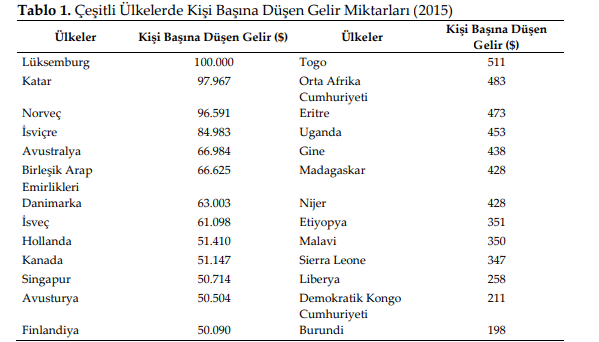
The Connection Between Economics of Education and Standard of Living
Human As a source of capital, educational institutions serve as a key driver of economic development by providing a skilled workforce. At the same time, by contributing to human development, social well-being, and quality of life, education positively influences social development. Economics of Education The economics of education is an interdisciplinary field that applies the theories and findings of economics to education, conducting comparative analyses of educational demand, financing, and v
EN
Fatıma Kurşun

ASEAN Agreements (1967)
In the mid-20th century, Southeast Asia existed within a complex political climate shaped by the process of nation-building following decolonization and the polarization caused by the Cold War. Intermittent border disputes, internal rebellions, and the risk of communist expansion created an unstable security environment. In this context, the foreign ministers of Indonesia, Malaysia, the Philippines, Singapore, and Thailand met in Bangkok on 8 August 1967 and signed the declaration that laid the
EN
Kaan Kutay Duran
IğIğdır Eggplant Jam
Iğdır Eggplant Jam is a type of jam unique to Iğdır Province in eastern Türkiye, produced using traditional methods and registered with geographical indication status. Its primary ingredient is small, seedless, and firm eggplants. The jam has a golden yellow or honey-yellow color, is lightly syrupy, and has a thick consistency. The eggplant content ranges between 75% and 85%. Iğdır Eggplant Jam differs in color and firmness from eggplant jams produced in other regions during summer months, which
EN
Şule Bozkurt

Human Capital
Human capital is the concept that denotes the value individuals contribute to the economic production process through qualities such as knowledge, skills, education, health, and experience. These attributes determine not only an individual’s productivity but also the overall level of societal welfare and the potential for economic growth. The concept emerged as a response to classical economic approaches that neglected the qualitative dimension of labor, arguing that the stock of knowledge and a
EN
Melike Erol
ThThe Decline of Nations (Book)
Daron Acemoglu and James A. Robinson’s book Nations Falling investigates the causes of differences in economic and political development among nations. The authors analyze why nations with similar historical conditions have followed divergent economic and political paths. The book attempts to explain the origins of wealth and poverty through the role of institutions. Content of the Book Nations Falling " image-alternate="" image-element-format="right"> Inclusive and Extractive Institutions Th
EN
Ahsen Karakaş

Federative Republic of Brazil
Brazil (Officially the Federative Republic of Brazil)Federal Republic is a country located in South America with its capital in Brasília.T.C. Ministry of Trade, Brazil Country Profile-2025 (Ankara: T.C. Ministry of Trade, 2025), 3. Access Date: June 22, 2026.https://www.aso.org.tr/uploads/ortam/Brezilya%20%C3%9Clke%20Profili-2025.docx.pdf ">【1】 With an area of 8,547,400 square kilometers, it is the fifth largest country in the world. Marine Corps Intelligence Activity, Brazil Country Handbook
EN
Azra Yaşar
Why Nations Fail
Why Nations Fail by Daron Acemoğlu and James A. Robinson investigates the reasons behind the differences in economic and political development among nations. The authors analyze why nations with similar conditions have taken divergent economic and political paths throughout history. The book seeks to explain the roots of wealth and poverty through the lens of institutional roles. Content Overview Inclusive and Extractive Institutions The authors classify economic and political institutions into
ENAhsen Karakaş
CoCouncil of Economic Affairs
The Supreme Economic Council (SEC) is a key advisory body established on 25 June 1927 by Law No. 1170 with the aim of accelerating economic development in Türkiye and finding solutions to economic problems. Operating under the Prime Ministry, the Council consisted of representatives from the private sector and bureaucrats. Its primary duties were to provide opinions on economic laws and regulations, assess international economic developments, and propose strategies for the country’s economic gro
EN
Denizcan Taşci

Law on the Incentive of Foreign Investment
Law on the Encouragement of Foreign Investment is Law No. 6224, adopted on 18 January 1954 and published in the Official Gazette on 23 January 1954, thereby entering into force. Enacted as part of the Democratic Party (DP) government’s objective to open the Turkish economy to the outside world and establish a competitive foreign trade capacity, the law aimed to encourage the attraction of foreign capital into Türkiye. Designed to strengthen Türkiye’s position within the post-Second World War int
EN
Yunus Emre Sağlam