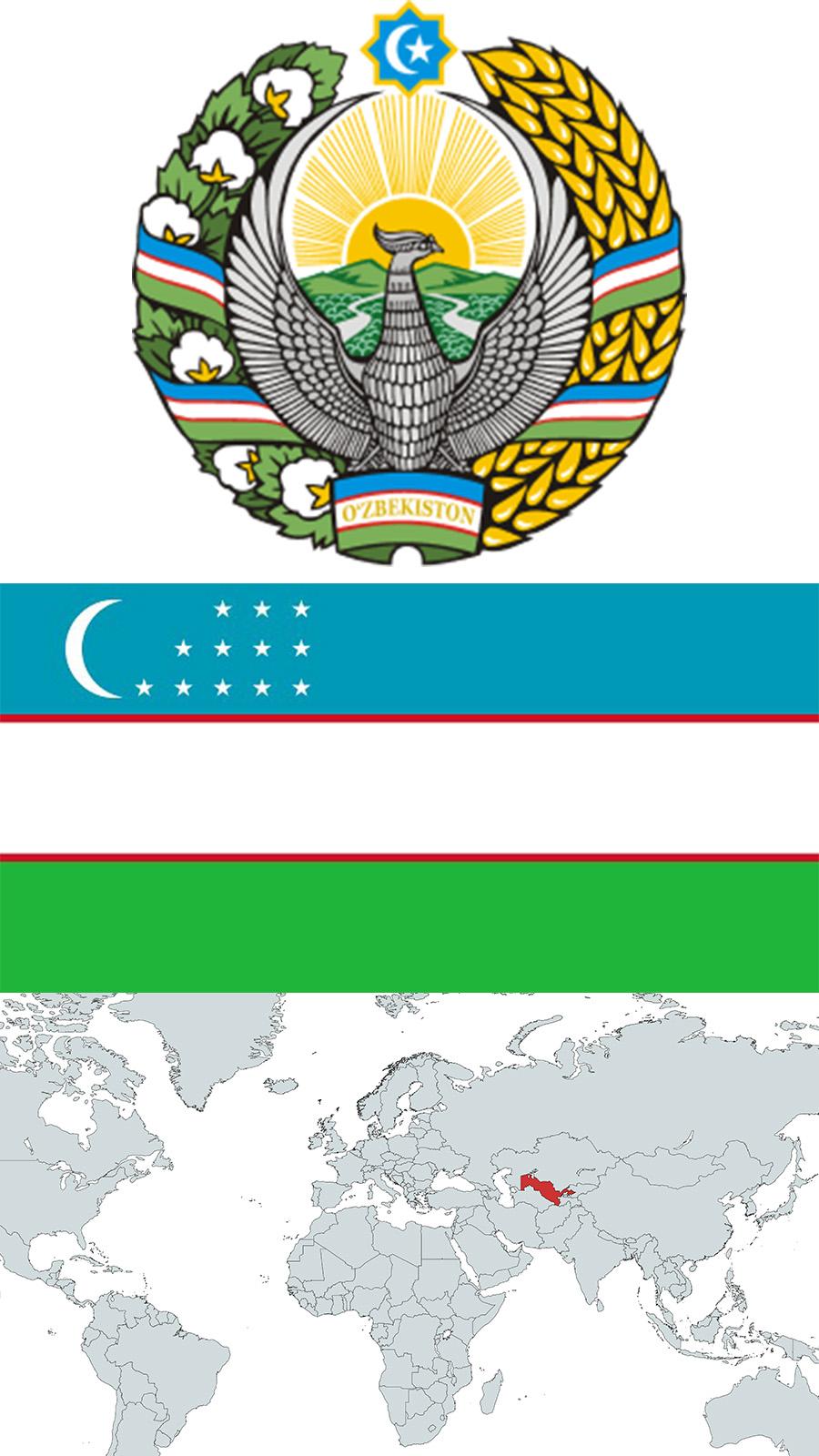
This article was automatically translated from the original Turkish version.
+2 More
Uzbekistan
Official Name | Republic of Uzbekistan | ||||||||
|---|---|---|---|---|---|---|---|---|---|
Location | Central Asia | ||||||||
Capital | Tashkent | ||||||||
Area | 447,400 km² | ||||||||
Population | 37.7 million (2025) | ||||||||
System of Government | Republic | ||||||||
Head of State | Shavkat Mirziyoyev | ||||||||
Official Language | Uzbek | ||||||||
Common Languages | Russian, Tajik (English is also used for international communication) | ||||||||
National Day | September 1 – Independence Day | ||||||||
GDP | 147 billion dollars (2025) | ||||||||
GDP per Capita | 4,661 dollars | ||||||||
Ethnic Groups | Uzbeks ~80%, Russians ~5.5%, Tajiks ~5%, Kazakhs ~3%, Karakalpaks ~2.5%, Other groups | ||||||||
Religious Structure | Islam ~88%, Christianity ~9%, Other ~3% | ||||||||
Currency | Uzbekistani Som | ||||||||
Strategic Location | On the Silk Road, regional center | ||||||||
Highest Point | Hazret Sultan Peak (4,643 m) | ||||||||
Climate | Cold continental climate | ||||||||
Characteristic | Double landlocked (rare among countries without a coastline) | ||||||||
Vegetation | Desert plants (saxaul, wormwood) | ||||||||
Neighboring Countries | North and West, Kazakhstan, East, Kyrgyzstan, Tajikistan, South, Afghanistan and Turkmenistan | ||||||||
Technical Groups | Uzbeks ~80% Russians ~5.5% Tajiks ~5% Kazakhs ~3% Karakalpaks ~2.5% | ||||||||
North and West | Kazakhstan | ||||||||
Total Border Length | 6,221 km | ||||||||
Religious Structure | Muslim 88% Orthodox 9% Other 3% | ||||||||
East | Kyrgyzstan, Tajikistan | ||||||||
Neighboring Countries | Kazakhstan Kyrgyzstan Tajikistan Afghanistan Turkmenistan | ||||||||
Internet Domain Code | .uz | ||||||||
South | Afghanistan, Turkmenistan | ||||||||
Mountains | Tien-Shan Mountains (Tien-Shan) Pamir-Alay system | ||||||||
Telephone Code | +998 | ||||||||
Kizilkum Desert | 300,000 km² | ||||||||
Fergana Valley | Most fertile agricultural land | ||||||||
Environmental Issues | Desiccation of the Aral Sea soil salinization desertification reduction of water resources | ||||||||
Natural Disasters | Earthquake risk (1966 Tashkent earthquake) floods and mudflows erosion | ||||||||
Uzbekistan Republic; is a landlocked state located in the center of Central Asia, bordered by the Tian Shan mountains to the east and the Turan Depression to the west. The majority of its territory is covered by the Kyzylkum Desert. With an area of approximately 447,400 km², Uzbekistan is one of only two “double landlocked” countries in the world, meaning it is landlocked and all its neighbors are also landlocked.【1】
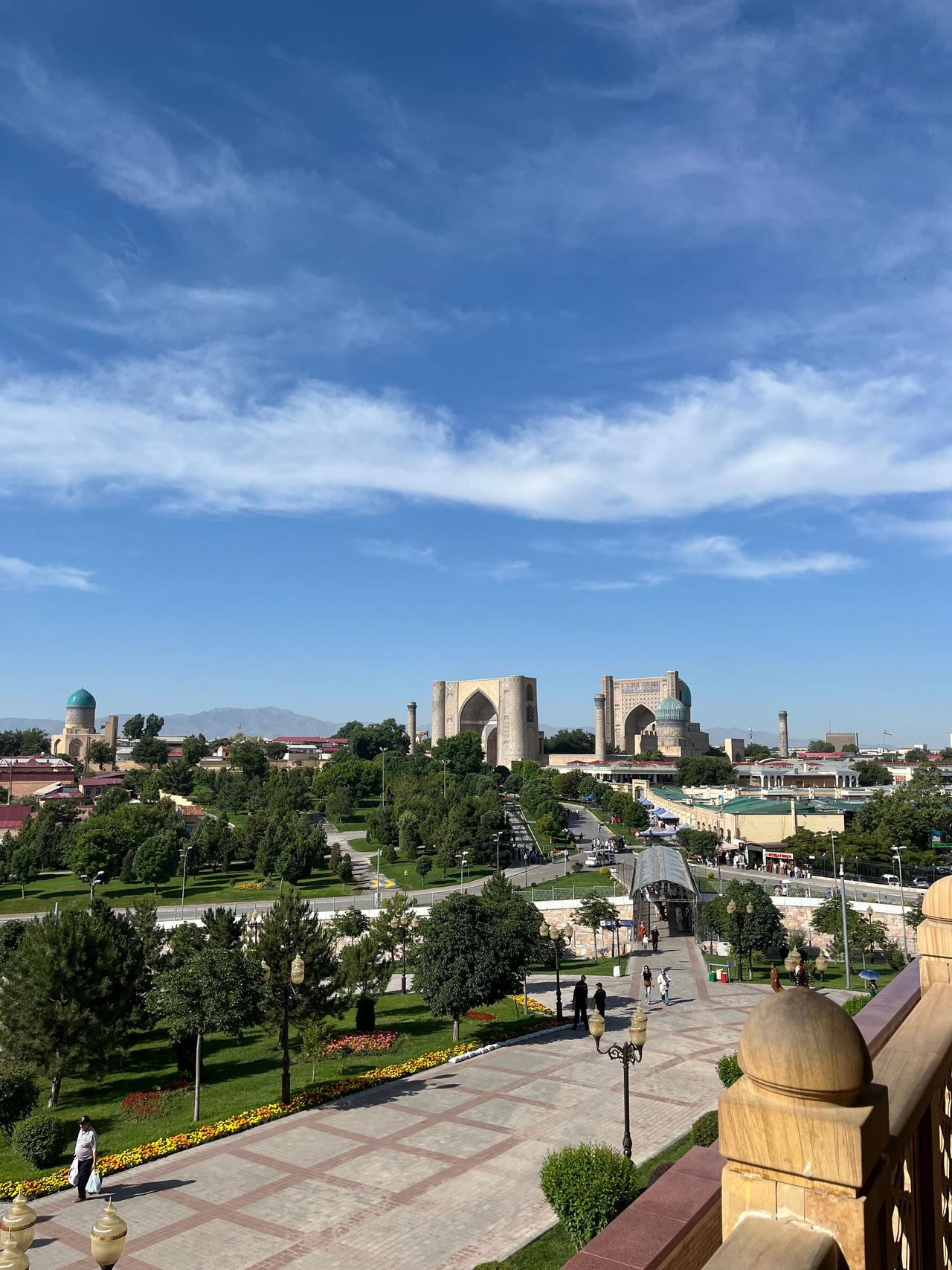
Uzbekistan (Pexels)
With a population of 37.7 million according to recent data, Uzbekistan is the most populous country in Central Asia.【2】 The majority of the population consists of Uzbeks, while Tajiks, Kazakhs, Russians, Karakalpaks, and Tatars also form significant demographic groups. The capital, Tashkent, is the region’s largest industrial, commercial, and cultural center. The country encompasses historic cities along the Silk Road route, including Samarkand, Bukhara, and Khiva.
The state symbols of the Republic of Uzbekistan were constitutionally established following independence and reflect historical heritage and national values.
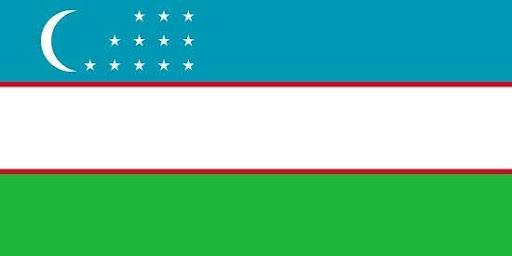
Flag of Uzbekistan (O’zbekiston Respublikasi Hukumat Potali)
The state flag of the Republic of Uzbekistan was officially adopted on 18 November 1991 by the “Law on the State Flag of the Republic of Uzbekistan.”【3】 The flag consists of three horizontal bands of sky blue, white, and green, separated by two thin red stripes. The colors and symbols of the flag are officially defined in constitutional texts as follows:
National Anthem of Uzbekistan (O'zbekiston Respublikasi Davlat Madhiyasi)
The National Anthem of Uzbekistan (O'zbekiston Respublikasining Davlat Madhiyasi) was officially adopted by Law No. 768-XII on 10 December 1992.【4】 The music was composed by Mutall Burhonov and the lyrics were written by the poet Abdulla Oripov. The anthem praises Uzbekistan as a free homeland, the noble spirit of its ancestors, and the torch of independence.
The state emblem of Uzbekistan was adopted on 2 July 1992.【5】 Each visual element on the emblem carries specific meaning.
The territory of Uzbekistan has played a central role in the political and cultural development of Central Asia since antiquity, known historically as Turan, Turkistan, and Mawarannahr.
Human settlement in the region dates back to the Paleolithic era; significant archaeological evidence comes from the Selungur caves in the Fergana Valley and the Kölbulak caves in the Tashkent oasis. The Kaltaminar civilization, engaged in hunting and fishing, spread across the region during the 5th–3rd millennia BCE. By the 2nd millennium BCE, the first urban settlements such as Sopollitepa and Jarkutan emerged with the advent of agriculture and irrigation systems. Between the 6th and 4th centuries BCE, the region witnessed the rise of the Bactrian Kingdom and the Great Khwarezm, which resisted the invasions of the Achaemenid Persians and Alexander the Great (329–327 BCE). In the 3rd–2nd centuries BCE, the powerful Kangju Kingdom dominated the region, while the Kushan Empire ruled to its south and the Dāvān state controlled the Fergana Valley. From the 4th to 6th centuries CE, the Hephthalites, Kidarites, and Akhuns successively held power. Part of the population adopted a sedentary lifestyle and embraced religions such as Zoroastrianism in Sogd and Chach, Buddhism in Tocharistan and Eastern Turkistan, as well as Nestorian Christian and Jewish communities in urban centers.【6】
From the second half of the 6th century, the region united under the banner of the Western Turkic Khaganate. With the Arab conquests of the 8th century, Islam began to spread into the region. In the 9th century, during the Samanid period, Mawarannahr broke away from the central Islamic state, and by the 10th century it came under the control of the Karakhanid state. This era witnessed major civilizational developments in the settled centers of Turkic tribes. During the 14th century, under the empire founded by Emir Timur (Tamerlane), Samarkand became the capital and the region experienced its “Golden Age” in science, art, and architecture. Notable scholars of this period included Ulugh Beg, Ali Shir Nava'i, and Ali Qushji.【7】
The term “Uzbek” became associated with a Turkic group loyal to Ghiyath al-Din Muhammad, known as Uzbek Khan (1313–1340), and later with the Shibanids.【8】 In the 15th century, under Khan Abu’l-Khayr (1428–1468), the Uzbeks became an independent political entity. In the early 16th century, Uzbek tribes led by Muhammad Shaybani overthrew Timurid rule and seized control of Mawarannahr. Subsequently, the Bukhara Khanate (1500–1785, later the Bukhara Emirate from 1785–1920), the Khiva Khanate (1512–1920), and the Kokand Khanate (1709/1710–1876), established in the 18th century, emerged as the dominant powers. Internal rivalries among these khanates and conflicts with the Safavids weakened the region.
From the second half of the 19th century, the Russian Empire began to occupy Turkistan, motivated by strategic and economic interests, particularly its demand for cotton. After General Chernyayev captured Tashkent in 1865, the Bukhara Emirate and Khiva Khanate came under Russian protection, while the Kokand Khanate was fully annexed in 1876. Following the Russian Revolution of 1917, the short-lived “Turkistan Autonomy,” briefly led by Mustafa Chokay, was established in Kokand to seek independence but was violently suppressed by the Bolsheviks. In 1924, the Uzbek Soviet Socialist Republic was established and incorporated into the Soviet Union in 1925. During the Soviet period, religious identity and national culture were suppressed through atheist propaganda and forced collectivization policies. Many intellectuals, including Abdulhamid Sulaymanov Cholpan and Abdulrauf Fitrat, were labeled “enemies of the people” and executed by firing squad in 1938.【9】
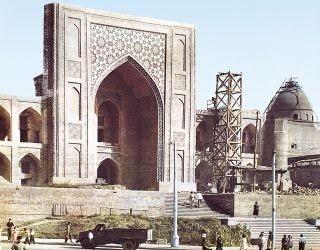
Kukeltaş Madrasa in Tashkent, dating to the second half of the 16th century (Islamic Encyclopedia)
During World War II, many factories and personnel from the western regions of the Soviet Union were relocated to Uzbekistan for security reasons, leading to an increase in the European population and industrial capacity. From the 1950s to the 1960s, the discovery of rich natural gas, gold, and uranium deposits transformed Uzbekistan into a strategic raw material reserve within the USSR.【10】 However, Moscow-centered agricultural policies—particularly the forced monoculture of cotton—caused ecological disasters such as the Aral Sea crisis and widespread economic exploitation.
However, Moscow-centered agricultural policies, particularly the forced monoculture of cotton, caused ecological disasters such as the Aral Sea crisis and widespread economic exploitation.
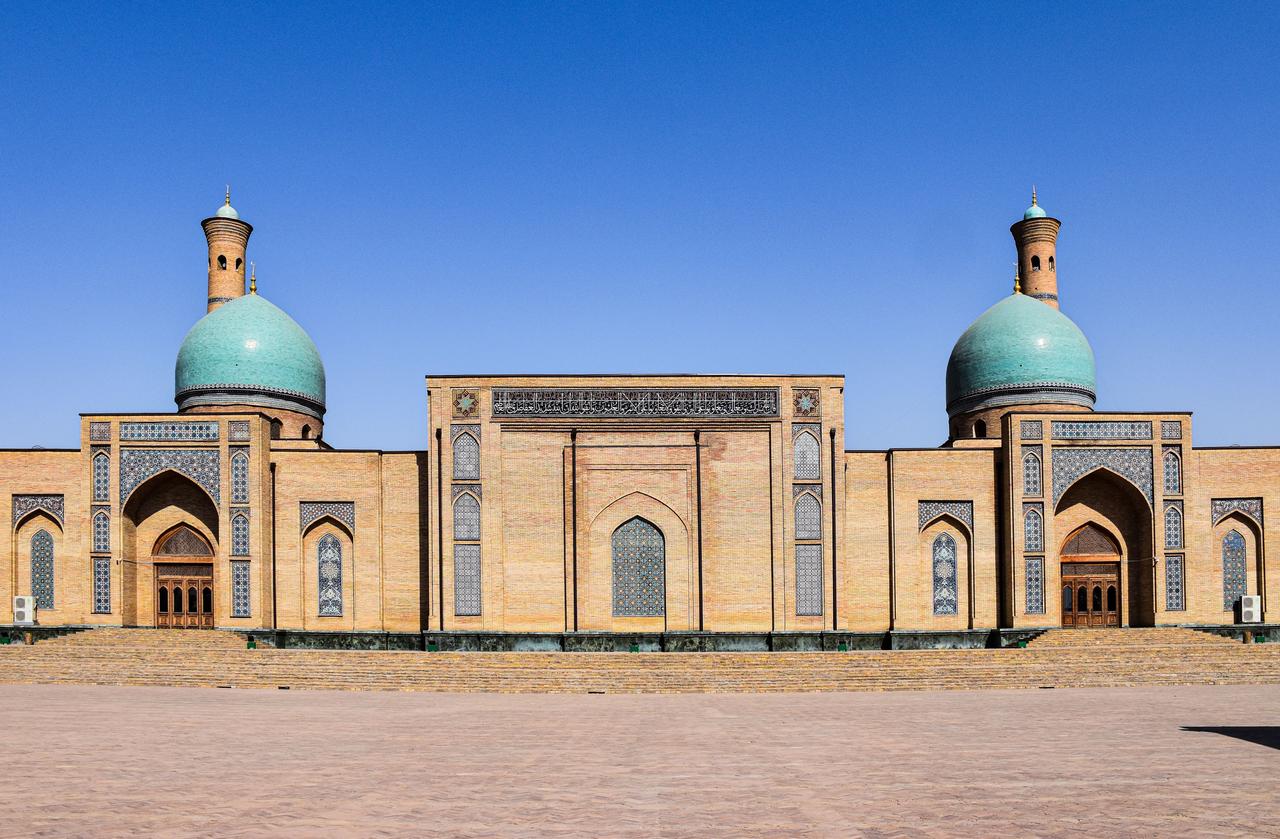
Tashkent, the Capital of Uzbekistan (pexels)
As the Soviet Union began to dissolve, Uzbekistan declared its independence on 31 August 1991. From independence until 2016, the country was governed under strict centralism by Islam Karimov. Following Karimov’s death, on 4 December 2016, Shavkat Mirziyoyev was elected president, ushering in a new era. Under Mirziyoyev, a “New Uzbekistan” vision has guided strategic openings, including improved relations with neighboring countries, economic liberalization, currency reform, public administration reforms, and active participation in international organizations such as the Organization of Turkic States. In 2023, Mirziyoyev undertook 17 official international visits, participated in over 140 international events, and signed more than 264 bilateral and multilateral agreements.【11】
The Republic of Uzbekistan ranks among the world’s top 10 countries with the highest number of historical monuments, hosting over 4,000 architectural and archaeological heritage sites.【12】 Since 2017, tourism has been designated a strategic sector through state policy, accompanied by institutional reforms.
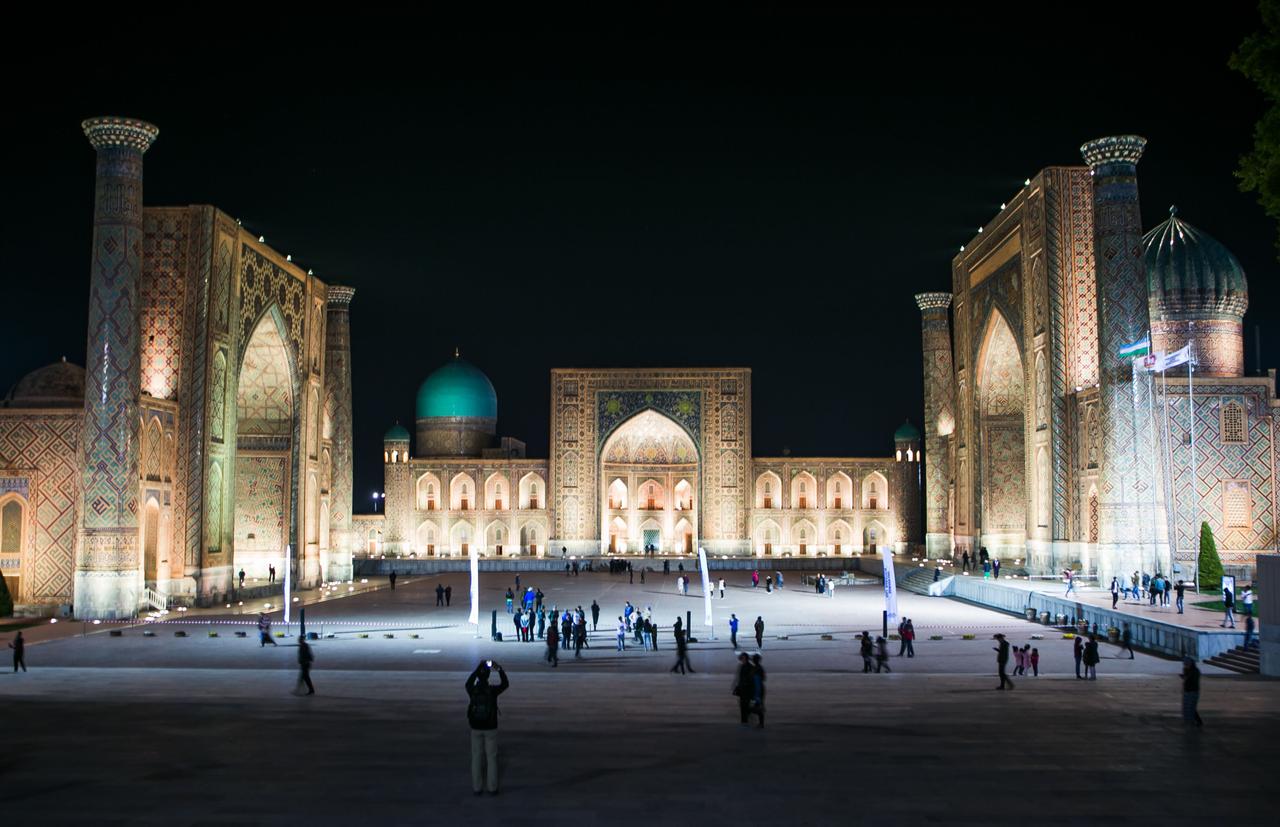
Samarkand (pexels)
Uzbekistan’s post-2017 tourism strategy is built on liberalization, infrastructure modernization, and international cooperation:
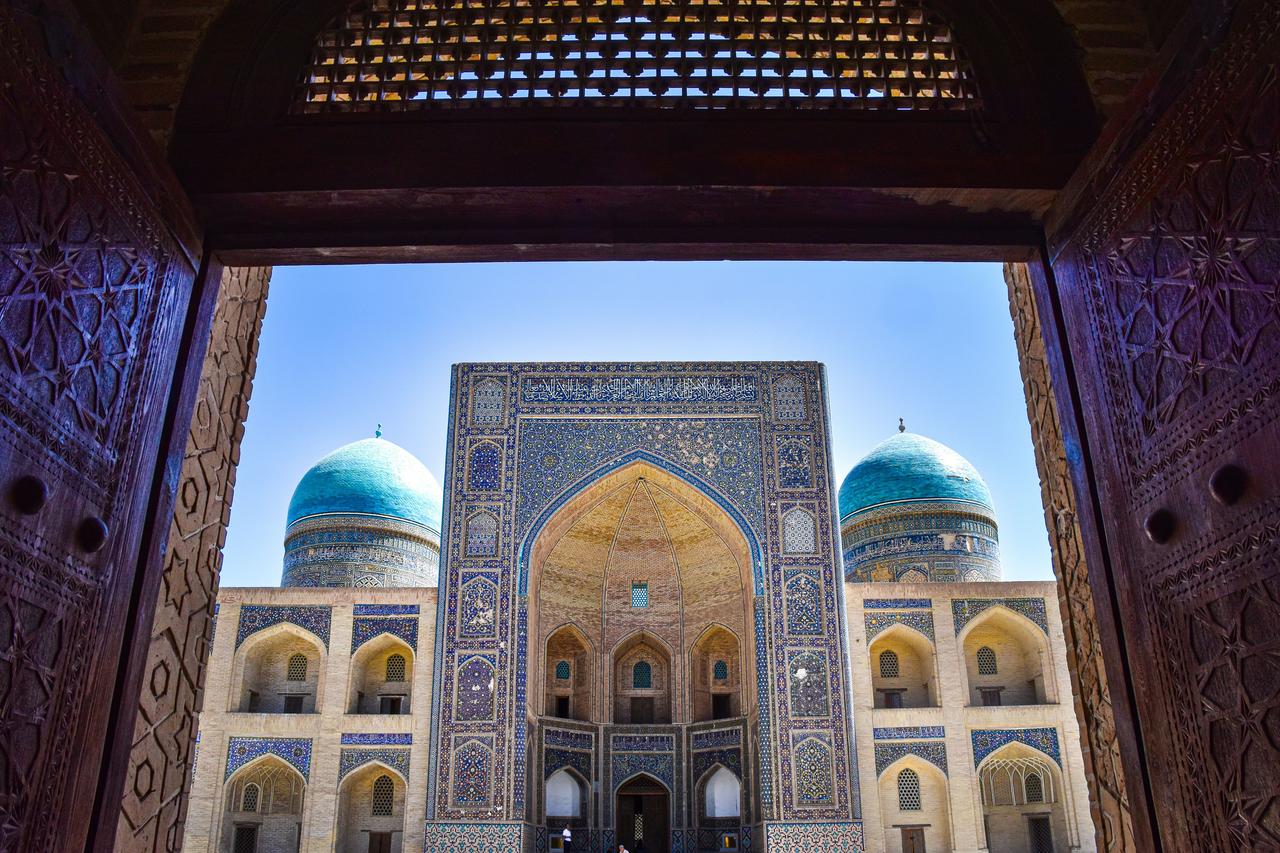
Bukhara(Pexels)
As a result of investments in tourism, Uzbekistan’s tourism revenues rose from $162 million in 2014 to $2.2 billion in 2023. According to data for January–September 2025, the volume of tourism service exports reached a record high of $3.6 billion. This growth has been driven by expanded international cooperation, global promotion of Uzbekistan’s tourism brand, roadshows held abroad, and active participation in international tourism fairs.
AXP Photography. “Bukhara, Uzbekistan.” Pexels. Accessed June 23, 2026. https://www.pexels.com/tr-tr/fotograf/kent-sehir-kent-simgesi-gorulecek-yer-19439103/
AXP Photography. “Tashkent, Uzbekistan.” Pexels. Accessed June 23, 2026. https://www.pexels.com/tr-tr/fotograf/kent-simgesi-gorulecek-yer-seyahat-yolculuk-19227991/
Alpargu, Mehmet. "ÖZBEKLER." *TDV İslâm Ansiklopedisi.* Accessed June 23, 2026. https://islamansiklopedisi.org.tr/ozbekler
Arlı, Merve. “Aerial view of Registan Square, Samarkand, showcasing historic architecture under a clear blue sky.” Pexels. Accessed June 23, 2026. https://www.pexels.com/photo/scenic-view-of-registan-in-samarkand-37862072/
Avcı, Muharrem, and Sherzod Norbaev. “İpek Yolu'nda İnanç Turizminin Geliştirilmesi: Özbekistan Örneği.” *Uluslararası Türk Dünyası Turizm Araştırmaları Dergisi* 6, no. 1 (2021): 208–225. Accessed April 20, 2026. https://dergipark.org.tr/tr/download/article-file/1848548
Aybek, Makhmud. “İnsanlar Kent Simgesi Görülecek Yer Gece.” Pexels. Accessed June 23, 2026. https://www.pexels.com/tr-tr/fotograf/insanlar-kent-simgesi-gorulecek-yer-gece-5964348/
Bursa Büyükşehir Municipality. “Özbekistan'ın Gündemi Bursa'nın Turizmi.” Bursa Metropolitan Municipality. Accessed April 26, 2026. https://www.bursa.bel.tr/haber/ozbekistanin-gundemi-bursanin-turizmi-25045
DEİK (Foreign Economic Relations Board). "Özbekistan Ülke Bülteni." DEİK. Accessed April 20, 2026. https://www.deik.org.tr/uploads/ozbekistan-ulke-bulteni.pdf
EURASIAN RESEARCH INSTITUTE. "Dünden Bugüne Özbekistan Ekonomisi: Tarihsel Geçmişi ile Güncel Gelişmeler." EURASIAN RESEARCH INSTITUTE. Accessed June 23, 2026. https://www.eurasian-research.org/publication/dunden-bugune-ozbekistan-ekonomisi-tarihsel-gecmisi-ile-guncel-gelismeler/?lang=tr
Korkmaz, Sibel. “Savunma ve Güvenlik Sektöründe Reformlar”. *Bilig Dergisi*, no. 102 (2022): 119–144. Accessed April 20, 2026. https://bilig.yesevi.edu.tr/yonetim/icerik/makaleler/7400-published.pdf
Legislative Chamber of the Olin Majlis of the Republic of Uzbekistan. “New Uzbekistan’s Diplomacy: active and effective steps.” parliament.gov.uz. Accessed June 23, 2026. https://parliament.gov.uz/en/news/post-605
Madiev, Parda. “1991 Öncesi ve Sonrası Özbekistan Ekonomisi ve Türkiye Arasındaki İlişkiler.” Master's thesis, İstanbul Üniversitesi, 1995. Accessed April 20, 2026. https://nek.istanbul.edu.tr/ekos/TEZ/25763.pdf
Ministry of Foreign Affairs of the Republic of Türkiye. "Uzbekistan Country Profile." *mfa.gov.tr.* Accessed July 1, 2026. https://www.mfa.gov.tr/ozbekistan-kunyesi.tr.mfa
Ministry of Foreign Affairs, Uzbekistan. "O'zbekiston Respublikasi davlat madhiyasi." YouTube, 2:38. Accessed April 20, 2026. https://www.youtube.com/watch?v=rdOw_VSXbU4
Muhammedcanov, Abdullah. “Özbekistan.” *TDV İslâm Ansiklopedisi*, Volume 34 (2007): 109-114. Accessed April 20, 2026. https://islamansiklopedisi.org.tr/ozbekistan
NATIONAL STATISTICS COMMITTEE OF THE REPUBLIC OF UZBEKISTAN. "The permanent population of Uzbekistan is approaching 38 million people." stat.uz. Accessed June 23, 2026. https://stat.uz/en/press-center/news-of-committee/62547-o-zbekistonning-doimiy-aholisi-soni-qariyb-38-mln-nafarga-yetmoqda-3
Stratejik Düşünce Enstitüsü. "Özbekistan Coğrafyası ile Bağlantıları Yeniden Kurmak: Fergana ve Taşkent Bölgesi İzlenimleri." sde.org.tr. Accessed June 23, 2026. https://www.sde.org.tr/ozbekistan-cografyasi-ile-baglantilari-yeniden-kurmak-fergana-ve-taskent-bolgesi-izlenimleri-konu-577
T.C. Ministry of Culture and Tourism. “Türkiye ile Özbekistan ArasındaTurizm Bakanlığı Niyet Protokolü ve Eylem Planı İmzalandı”. T.C. Ministry of Culture and Tourism. Accessed April 20, 2026. https://basin.ktb.gov.tr/TR-393883/turkiye-ile-ozbekistan-arasinda-turizm-alaninda-niyet-protokolu-ve-eylem-plani-imzalandi.html
TÜRKŞAM (Kyrgyzstan-Turkey Manas University). “Özbekistan'ın Turizmi Rekor Büyüme Gösteriyor”. TÜRKŞAM. Accessed April 20, 2026. https://turksam.manas.edu.kg/index.php/tr/ulkeler/ozbekistan-ulke/9749-ozbekistan-in-turizmi-rekor-buyume-gosteriyor
TÜRSAB. "TÜRSAB'dan Türkiye ile Özbekistan Arasındaki Turizmi Geliştirecek İmza." Accessed April 20, 2026. https://www.tursab.org.tr/basin-odasi-icerikler/tursabdan-turkiye-ile-ozbekistan-arasindaki-turizmi-gelistirecek-imza
Uzbekistan Republic Government Portal. "State Symbols." Uzbekistan Republic. Accessed June 23, 2026. https://gov.uz/oz/pages/symbols
Yılmaz, Kadir Kürşat. “Mirziyoyev Dönemindeki Dış Politika Değişikliğinin Özbekistan Turizminin Gelişimine Etkisi.” Dumlupınar Üniversitesi Sosyal Bilimler Dergisi, no. 80 (2024): 345–359. Accessed April 20, 2026. https://dergipark.org.tr/tr/download/article-file/3728610
[1]
T.C. Dışişleri Bakanlığı, ''Özbekistan Ülke Künyesi,'' mfa.gov.tr, Erişim tarihi: 1 Temmuz 2026, https://www.mfa.gov.tr/ozbekistan-kunyesi.tr.mfa
[2]
T.C. Dışişleri Bakanlığı, ''Özbekistan Ülke Künyesi.''
[3]
O‘zbekiston Respublikаsi Hukumat Portali, “Davlat ramzlari,” O‘zbekiston Respublikаsi, Erişim tarihi: 23 Haziran 2026, https://gov.uz/oz/pages/symbols
[4]
O‘zbekiston Respublikаsi Hukumat Portali, “Davlat ramzlari.”
[5]
O‘zbekiston Respublikаsi Hukumat Portali, “Davlat ramzlari.”
[6]
Abdullah Muhammedcanov, “Özbekistan,” TDV İslâm Ansiklopedisi, Erişim tarihi: 20 Nisan 2026, https://islamansiklopedisi.org.tr/ozbekistan
[7]
Muhammedcanov, “Özbekistan.”
[8]
Alpargu, “Özbekler.”
[9]
Muhammedcanov, “Özbekistan.”
[10]
Eurasian Research Institute, “Dünden Bugüne Özbekistan Ekonomisi: Tarihsel Geçmişi ile Güncel Gelişmeler,” eurasian.research.org, erişim 20 Nisan 2026, https://www.eurasian-research.org/publication/dunden-bugune-ozbekistan-ekonomisi-tarihsel-gecmisi-ile-guncel-gelismeler/?lang=tr
[11]
Parliament of Uzbekistan, “New Uzbekistan's Diplomacy: Active Steps,” parliament.gov.uz, erişim 20 Nisan 2026, https://parliament.gov.uz/en/news/post-605
[12]
Muharrem Avcı ve Sherzod Norbaev, “İpek Yolu’nda İnanç Turizminin Geliştirilmesi: Özbekistan Örneği,” Uluslararası Türk Dünyası Turizm Araştırmaları Dergisi 6, no. 1 (2021): 208, https://dergipark.org.tr/tr/download/article-file/1848548
[13]
Kadir Kürşat Yılmaz, “Mirziyoyev Dönemindeki Dış Politika Değişikliğinin Özbekistan Turizminin Gelişimine Etkisi,” Dumlupınar Üniversitesi Sosyal Bilimler Dergisi. No 80. (2024): 353. https://dergipark.org.tr/tr/download/article-file/3728610
[14]
Yılmaz, “Mirziyoyev Dönemindeki Dış Politika Değişikliğinin Özbekistan Turizminin Gelişimine Etkisi.” 355.
[15]
Yılmaz, “Mirziyoyev Dönemindeki Dış Politika Değişikliğinin Özbekistan Turizminin Gelişimine Etkisi.” 355.
[16]
Yılmaz, “Mirziyoyev Dönemindeki Dış Politika Değişikliğinin Özbekistan Turizminin Gelişimine Etkisi.” 355.
[17]
Yılmaz, “Mirziyoyev Dönemindeki Dış Politika Değişikliğinin Özbekistan Turizminin Gelişimine Etkisi.” 355.
[18]
Yılmaz, “Mirziyoyev Dönemindeki Dış Politika Değişikliğinin Özbekistan Turizminin Gelişimine Etkisi.” 353.
[19]
Yılmaz, “Mirziyoyev Dönemindeki Dış Politika Değişikliğinin Özbekistan Turizminin Gelişimine Etkisi.” 350.
[20]
Yılmaz, “Mirziyoyev Dönemindeki Dış Politika Değişikliğinin Özbekistan Turizminin Gelişimine Etkisi.” 353.
[21]
Yılmaz, “Mirziyoyev Dönemindeki Dış Politika Değişikliğinin Özbekistan Turizminin Gelişimine Etkisi.” 350.

+1 more author
Uzbekistan
Official Name | Republic of Uzbekistan | ||||||||
|---|---|---|---|---|---|---|---|---|---|
Location | Central Asia | ||||||||
Capital | Tashkent | ||||||||
Area | 447,400 km² | ||||||||
Population | 37.7 million (2025) | ||||||||
System of Government | Republic | ||||||||
Head of State | Shavkat Mirziyoyev | ||||||||
Official Language | Uzbek | ||||||||
Common Languages | Russian, Tajik (English is also used for international communication) | ||||||||
National Day | September 1 – Independence Day | ||||||||
GDP | 147 billion dollars (2025) | ||||||||
GDP per Capita | 4,661 dollars | ||||||||
Ethnic Groups | Uzbeks ~80%, Russians ~5.5%, Tajiks ~5%, Kazakhs ~3%, Karakalpaks ~2.5%, Other groups | ||||||||
Religious Structure | Islam ~88%, Christianity ~9%, Other ~3% | ||||||||
Currency | Uzbekistani Som | ||||||||
Strategic Location | On the Silk Road, regional center | ||||||||
Highest Point | Hazret Sultan Peak (4,643 m) | ||||||||
Climate | Cold continental climate | ||||||||
Characteristic | Double landlocked (rare among countries without a coastline) | ||||||||
Vegetation | Desert plants (saxaul, wormwood) | ||||||||
Neighboring Countries | North and West, Kazakhstan, East, Kyrgyzstan, Tajikistan, South, Afghanistan and Turkmenistan | ||||||||
Technical Groups | Uzbeks ~80% Russians ~5.5% Tajiks ~5% Kazakhs ~3% Karakalpaks ~2.5% | ||||||||
North and West | Kazakhstan | ||||||||
Total Border Length | 6,221 km | ||||||||
Religious Structure | Muslim 88% Orthodox 9% Other 3% | ||||||||
East | Kyrgyzstan, Tajikistan | ||||||||
Neighboring Countries | Kazakhstan Kyrgyzstan Tajikistan Afghanistan Turkmenistan | ||||||||
Internet Domain Code | .uz | ||||||||
South | Afghanistan, Turkmenistan | ||||||||
Mountains | Tien-Shan Mountains (Tien-Shan) Pamir-Alay system | ||||||||
Telephone Code | +998 | ||||||||
Kizilkum Desert | 300,000 km² | ||||||||
Fergana Valley | Most fertile agricultural land | ||||||||
Environmental Issues | Desiccation of the Aral Sea soil salinization desertification reduction of water resources | ||||||||
Natural Disasters | Earthquake risk (1966 Tashkent earthquake) floods and mudflows erosion | ||||||||
State Symbols
Flag
National Anthem
State Emblem
History
Ancient Period
Medieval Period
Early Modern Period
World War II and After
Contemporary Era
Tourism
Tourist Regions and Attractions
Historic Cities, Structures and Archaeological Sites
Museums and Cultural Institutions
Tourism Policy
Tourist Profile
Tourism’s Share in the Economy