This article was automatically translated from the original Turkish version.
+2 More
Country | Türkiye | ||||||||
|---|---|---|---|---|---|---|---|---|---|
Location | Beyoğlu, Istanbul, Türkiye | ||||||||
Province | Istanbul | ||||||||
Borders | Dolapdere Street Tarlabaşı Boulevard | ||||||||
District | Beyoğlu | ||||||||
Feature | Historical Settlement Area | ||||||||
Administrative Scope | Çukur, Şehit Muhtar, Bülbül, Kalyoncu Kulluğu, Kamer Hatun, Bostan, Hüseyinağa, Yenişehir and Serdar-ı Ekrem neighborhoods | ||||||||
Settlement | From the 18th Century Onward | ||||||||
Location | Parallel to İstiklal Street; the line between Taksim Square, Dolapdere, Talimhane and Çukurcuma | ||||||||
Prominent Identity | 19th-century Ottoman civil architecture and shelter for fragile and cosmopolitan migrant/marginal communities | ||||||||
Historical Background | From the 19th century to the present (a history extending from non-Muslim lower-middle-class settlement to internal migration, international migration and urban transformation processes) | ||||||||
Tarlabaşı is a historic neighborhood located in the Beyoğlu district of İstanbul, northeast of the Haliç. It encompasses an area bounded by Dolapdere Caddesi to the north, Tarlabaşı Bulvarı (where Cumhuriyet Caddesi meets Taksim Meydanı) and the British Embassy Building to the south.【1】 Over its historical development, the neighborhood has undergone major demographic, physical and sociological transformations and is today associated with phenomena such as migration, poverty, urban renewal and "slum tourism".【2】
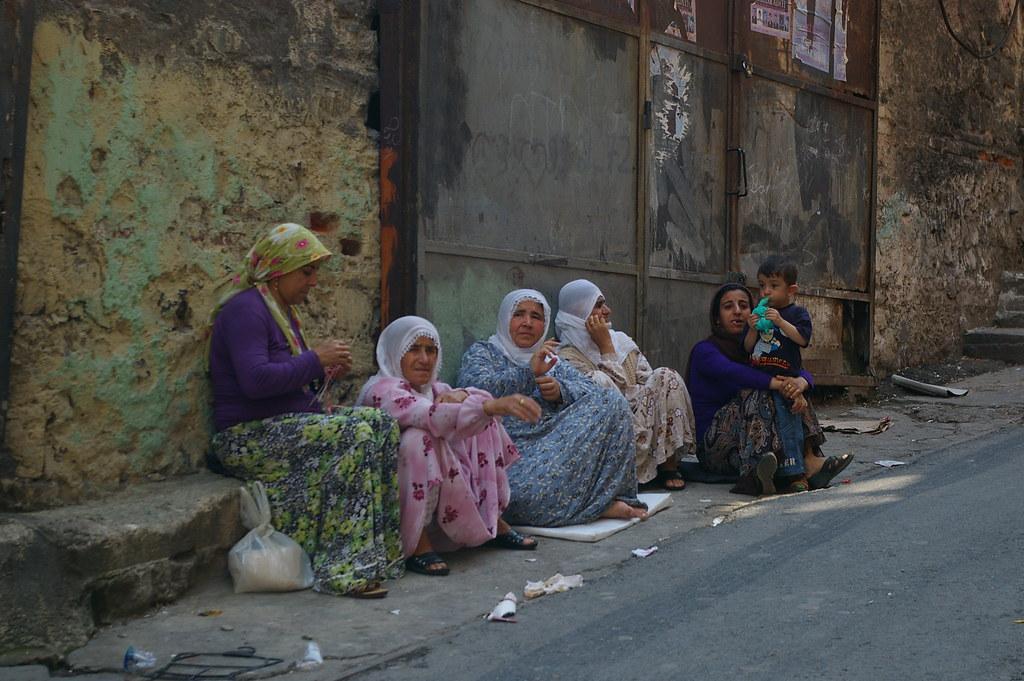
Women in Tarlabaşı (Flickr)
In the 16th and 17th centuries, Tarlabaşı was largely an area of gardens, but it began to develop as a settlement in the 18th century with the expansion of the Pera district.【3】 From the late 19th century onward, it became a residential area predominantly inhabited by lower and middle-class non-Muslims and Levantines.【4】
One of the most significant demographic shifts occurred after the September 6–7 events of 1955, when the non-Muslim population left the area and migrants from Anatolia began settling in Tarlabaşı.【5】 The construction of Tarlabaşı Bulvarı, which began in 1986, led to the demolition of 370 buildings in the area, creating a profound transformation in its physical structure and isolating it sharply from its surroundings by distinct physical boundaries.【6】 In the 1990s and 2000s, the neighborhood became significantly more cosmopolitan as various migrant groups—including Kurds, Roma, Afghans, Africans, Pakistanis and Syrians—established themselves there.【7】
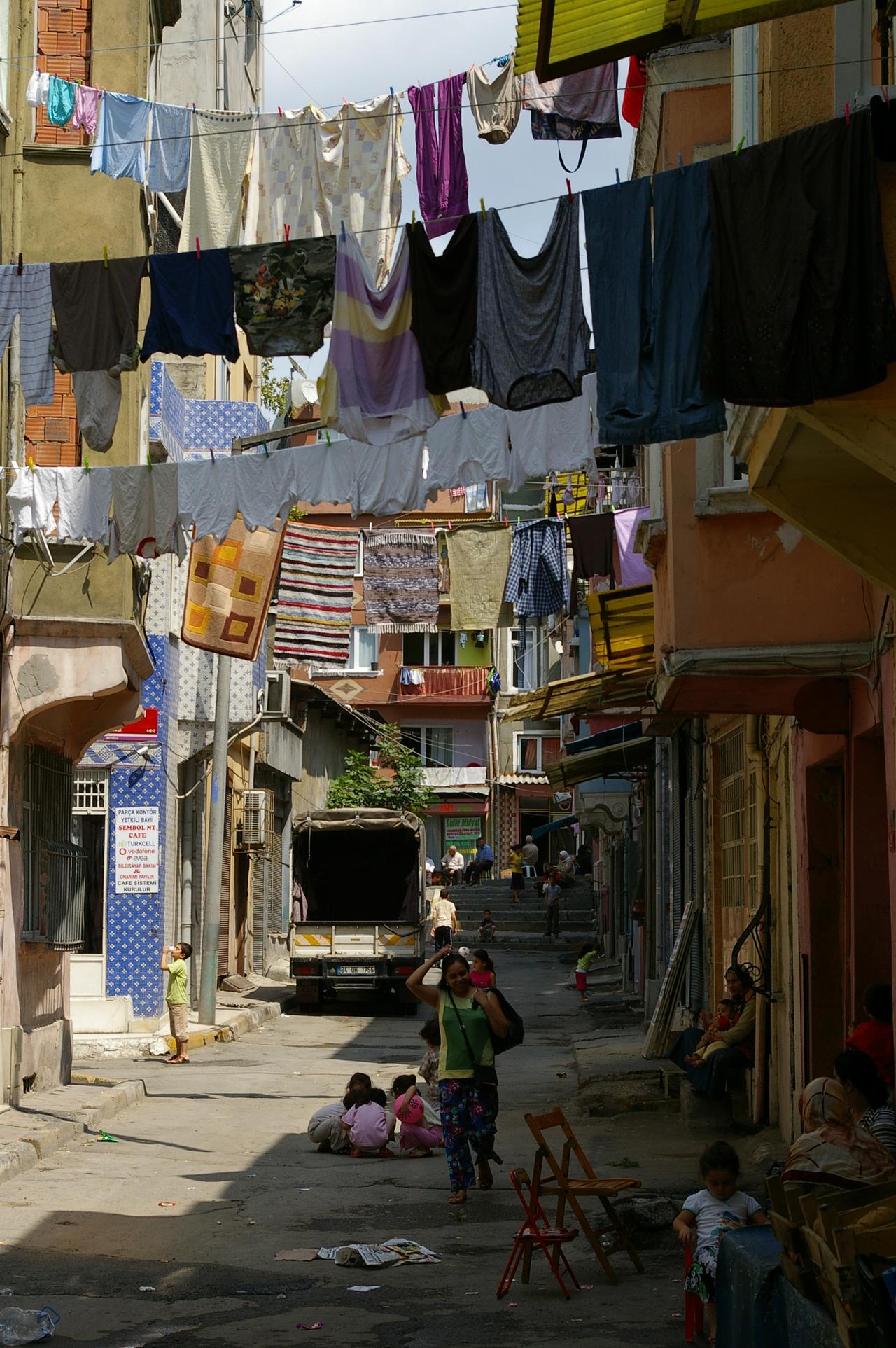
Despite its physical and social challenges, Tarlabaşı has become one of the routes for "slum tourism", as tourists seek alternative and authentic experiences in recent years.【8】 Popular television series and films shot in the area, along with old Greek houses, laundry lines strung across narrow alleys and street culture, are key elements attracting tourist interest.【9】 The local population generally views tourism positively due to the economic benefits and social interactions it generates.【10】
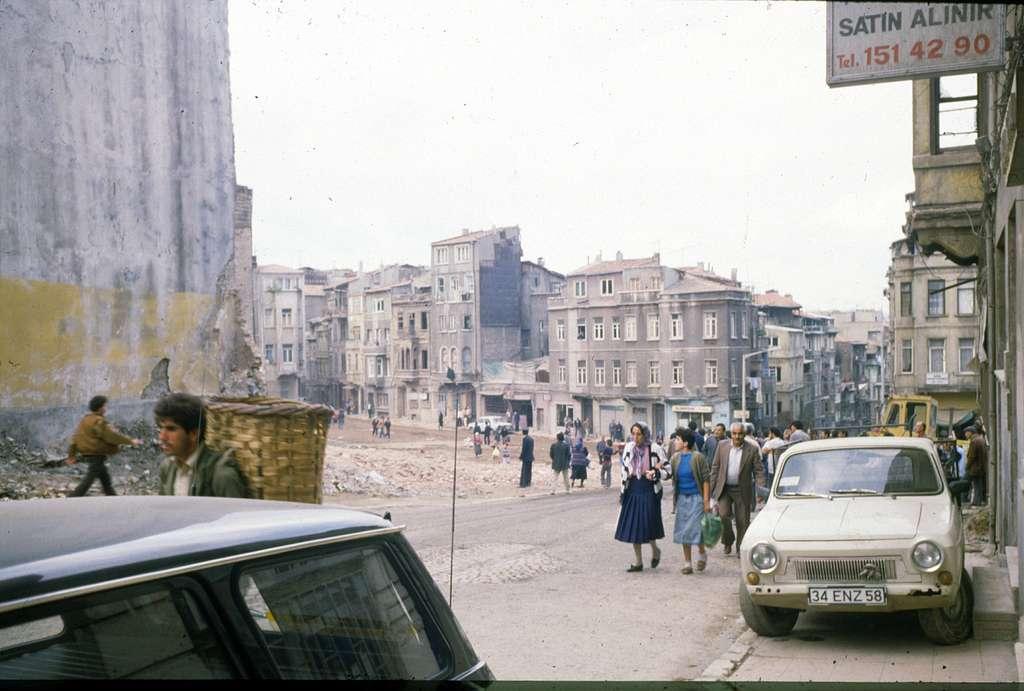
19. Yüzyıldan Kalma Sivil Mimari Örnekleri ile Tarlabaşı (Picryl)
Tarlabaşı is a highly ethnically diverse area as a result of intense waves of migration. Migrants in the neighborhood are categorized into three groups: "old migrants" who arrived before 1990, "new migrants" who arrived after 1990, and İstanbullular.【11】
The neighborhood is characterized by a cycle described in sociological literature as "alternating poverty"; newly arrived migrants temporarily reside in Tarlabaşı, and once their economic situation improves, they move out, making way for new impoverished groups. This dynamic has turned the neighborhood into a kind of "transit point".【12】 High rental rates and deep poverty are fundamental socio-economic characteristics of the area.【13】 Although it is known for high rates of crime such as theft, drug trafficking and prostitution, recent years have seen a decline in these rates due to increased policing.【14】
Physically, Tarlabaşı exhibits characteristics of an "inner slum" and a "degraded area", marked by narrow alleys and old, poorly maintained buildings.【15】 Most buildings in the neighborhood are dilapidated, squeezed between commercial uses, and far from residential standards, contributing to the area’s spatial isolation. Tarlabaşı Bulvarı and Kurtuluş Deresi Caddesi serve as the most prominent physical boundaries separating Tarlabaşı from Beyoğlu and Dolapdere.【16】
The Taksim 360 Renewal Project currently underway in the area has further intensified these physical and social boundaries. Construction sites, scaffolding and security barriers erected during the project have created new divisions within the neighborhood and restricted direct access for residents to İstiklal Caddesi and Taksim.【17】
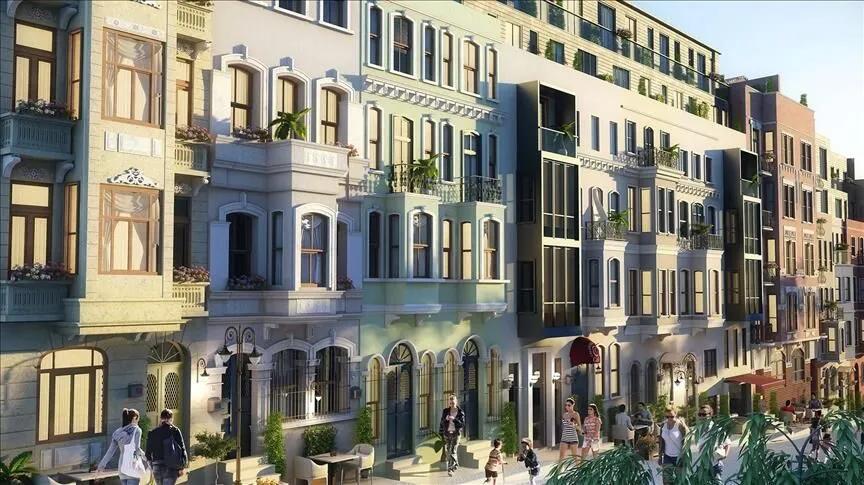
Taksim 360 Projesi (AA)
Among civil society initiatives in the area, the Tarlabaşı Community Center (TTM) stands out. TTM provides psychological and social support to disadvantaged children, women and youth living in Tarlabaşı, and carries out rights-based activities aimed at promoting equal participation of undocumented migrants and those with limited access to basic rights in urban life.【18】
Anadolu Ajansı. "Taksim 360 projesinde özel kampanyalı satış." Accessed July 9, 2026.https://www.aa.com.tr/tr/isdunyasi/gayrimenkul/taksim-360-projesinde-ozel-kampanyali-satis/636169
Güzel, Berrin, Ceren İşçi, and Ebru Bağçı. "Slum Area for Tourists: From Residents’ Perspective Tarlabaşı Case Study." *Journal of Travel and Tourism Research* 16 (2020): 111-133. Accessed July 9, 2026.https://dergipark.org.tr/tr/download/article-file/1420552
Kruszyna, Gosia. "IMGP1254: Streets of Tarlabaşı." Flickr. Accessed July 23, 2026.https://www.flickr.com/photos/36614888@N03/4106750843/
Kruszyna, Gosia. "IMGP1257: Kurdish women in Tarlabaşı." Flickr. Accessed July 23, 2026.https://www.flickr.com/photos/36614888@N03/4107509026
SALT Online. "Tarlabaşı, İstanbul (12966584993)." Picryl. Accessed July 23, 2026.https://picryl.com/media/tarlabasi-istanbul-12966584993-3e08b4
Yazıcı, Burcu, and Yasemin Erkan Yazıcı. "Sınır Kavramına Fenomenolojik Bir Yaklaşım Önerisi: İstanbul-Tarlabaşı Örneği." *Mimarlık ve Yaşam Dergisi* 10, no. 1 (2025): 131-151. Accessed July 9, 2026.https://dergipark.org.tr/tr/download/article-file/4265162
Özdemir Dal, Buket. "Türkiye’de Mültecilerle Çalışan Sivil Toplum Kuruluşlarının Devlet İle İlişkisi." *Journal of International Relations and Political Science Studies* 5 (August 2022): 83–110. Accessed July 9, 2026.https://dergipark.org.tr/tr/download/article-file/2562362
[1]
Burcu Yazıcı ve Yasemin Erkan Yazıcı, "Sınır Kavramına Fenomenolojik Bir Yaklaşım Önerisi: İstanbul-Tarlabaşı Örneği," Mimarlık ve Yaşam Dergisi 10, no. 1 (2025): 138-139, erişim 9 Temmuz 2026, https://dergipark.org.tr/tr/download/article-file/4265162
[2]
Berrin Güzel, Ceren İşçi ve Ebru Bağçı, "Slum Area for Tourists: From Residents’ Perspective Tarlabaşı Case Study," Journal of Travel and Tourism Research 16 (2020), erişim 9 Temmuz 2026, https://dergipark.org.tr/tr/download/article-file/1420552;
[3]
Yazıcı ve Yazıcı, "Sınır Kavramına Fenomenolojik Bir Yaklaşım Önerisi," 139.
[4]
Güzel, İşçi ve Bağçı, "Slum Area for Tourists: From Residents’ Perspective Tarlabaşı Case Study," 128; Yazıcı ve Yazıcı, "Sınır Kavramına Fenomenolojik Bir Yaklaşım Önerisi," 139.
[5]
Buket Özdemir Dal, "Türkiye’de Mültecilerle Çalışan Sivil Toplum Kuruluşlarının Devlet İle İlişkisi," Journal of International Relations and Political Science Studies 5 (Ağustos 2022): 103, erişim 9 Temmuz 2026, https://dergipark.org.tr/tr/download/article-file/2562362; Yazıcı ve Yazıcı, "Sınır Kavramına Fenomenolojik Bir Yaklaşım Önerisi," 133.
[6]
Yazıcı ve Yazıcı, "Sınır Kavramına Fenomenolojik Bir Yaklaşım Önerisi," 133.
[7]
Özdemir Dal, "Türkiye’de Mültecilerle Çalışan Sivil Toplum Kuruluşlarının Devlet İle İlişkisi," 103; Yazıcı ve Yazıcı, "Sınır Kavramına Fenomenolojik Bir Yaklaşım Önerisi," 133.
[8]
Güzel, İşçi ve Bağçı, "Slum Area for Tourists," 118.
[9]
Güzel, İşçi ve Bağçı, "Slum Area for Tourists," 122, 128.
[10]
Güzel, İşçi ve Bağçı, "Slum Area for Tourists," 122-123.
[11]
Güzel, İşçi ve Bağçı, "Slum Area for Tourists," 114-115.
[12]
Güzel, İşçi ve Bağçı, "Slum Area for Tourists," 115, 126-127.
[13]
Güzel, İşçi ve Bağçı, "Slum Area for Tourists," 115.
[14]
Güzel, İşçi ve Bağçı, "Slum Area for Tourists," 121, 126.
[15]
Güzel, İşçi ve Bağçı, "Slum Area for Tourists," 116.
[16]
Yazıcı ve Yazıcı, "Sınır Kavramına Fenomenolojik Bir Yaklaşım Önerisi," 143.
[17]
Yazıcı ve Yazıcı, "Sınır Kavramına Fenomenolojik Bir Yaklaşım Önerisi," 133, 143.
[18]
Özdemir Dal, "Türkiye’de Mültecilerle Çalışan Sivil Toplum Kuruluşlarının Devlet İle İlişkisi," 103-104.

Country | Türkiye | ||||||||
|---|---|---|---|---|---|---|---|---|---|
Location | Beyoğlu, Istanbul, Türkiye | ||||||||
Province | Istanbul | ||||||||
Borders | Dolapdere Street Tarlabaşı Boulevard | ||||||||
District | Beyoğlu | ||||||||
Feature | Historical Settlement Area | ||||||||
Administrative Scope | Çukur, Şehit Muhtar, Bülbül, Kalyoncu Kulluğu, Kamer Hatun, Bostan, Hüseyinağa, Yenişehir and Serdar-ı Ekrem neighborhoods | ||||||||
Settlement | From the 18th Century Onward | ||||||||
Location | Parallel to İstiklal Street; the line between Taksim Square, Dolapdere, Talimhane and Çukurcuma | ||||||||
Prominent Identity | 19th-century Ottoman civil architecture and shelter for fragile and cosmopolitan migrant/marginal communities | ||||||||
Historical Background | From the 19th century to the present (a history extending from non-Muslim lower-middle-class settlement to internal migration, international migration and urban transformation processes) | ||||||||
No Discussion Added Yet
Start discussion for "Tarlabaşı (Neighborhood)" article
History
Demographic and Socio-Economic Structure
Spatial Structure and Boundaries
Tourism and Civil Society