


This article was automatically translated from the original Turkish version.
+2 More
Fixed-line telephone is a communication device that operates through a wired connection at a specific location and enables voice communication. As one of the key inventions in communication technology, the fixed-line telephone has followed a path marked by bans, customs seizures, foreign company concessions, nationalization efforts, institutional transformations, and technological breakthroughs from the Ottoman Empire to present-day Türkiye.
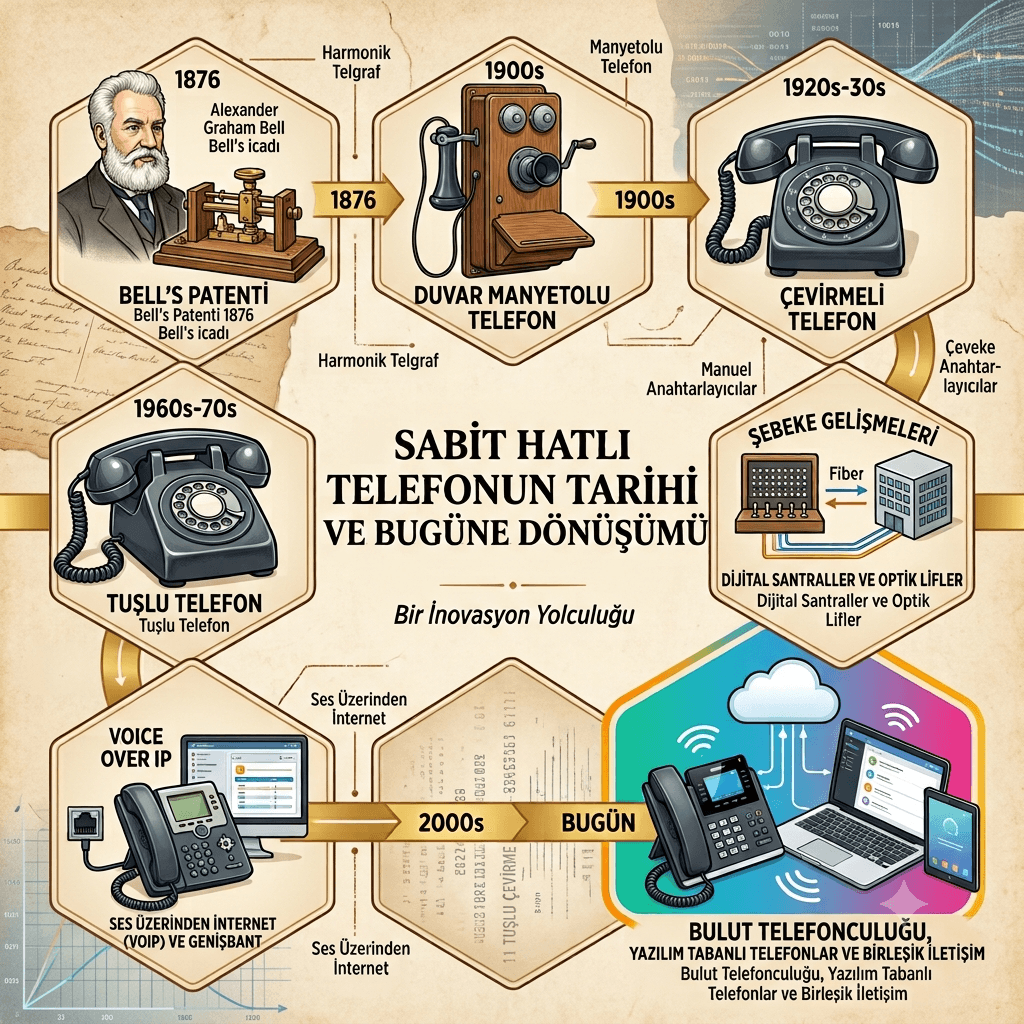
Sabit Hatlı Telefonun Dönüşümünü Gösteren Bir Şema (Yapay Zeka ile Oluşturulmuştur.)
Fixed-line telephone communication emerged in 1875–1876 as a result of the work of Scottish-American scientist Alexander Graham Bell and was patented in 1876. The Ottoman Empire encountered this invention during the reign of Sultan Abdülhamid II in 1881.【1】 While the telephone quickly spread across Europe and America, the first trials in the Ottoman Empire were centered in Istanbul..
The first fixed-line telephone connection in the Ottoman Empire, established in 1881 by the Ministry of Posts and Telegraphs, was a single-wire line linking the former telegraph office/building in Soğukçeşme with the Yeni Cami Post Office.【2】 During the same period, telephone lines were also installed between the post office in Galata, the Yeni Cami Post Office, the Ottoman Bank, and several administrative centers. However, this technological beginning was very brief. In 1886, during the reign of Sultan Abdülhamid II, the telephone was banned due to concerns that it could be used for “secret” or “concealed” affairs.【3】
During the ban period, customs authorities seized telephone devices arriving from Europe at Ottoman port cities, placing them under custody. Nevertheless, smuggling of telephones into the country could not be fully prevented, and demand for telephone use gradually increased. This period stands as one of the most notable examples of the Ottoman Empire’s efforts to maintain state control over communication tools.
The declaration of the Second Constitutional Monarchy in 1908 eased the restrictive approach toward telephone technology. Under the more liberal policies of the Second Constitutional Monarchy, concessions were granted to foreign companies, opening the way for telephone use. In 1909, the first telephone exchange with a capacity of 50 lines was established and began serving a limited number of subscribers, primarily ministers and senior officials.
In 1911, the right to construct Istanbul’s telephone network was granted for 30 years to Herbert Lows Webb. The company established under this concession, the Dersaadet Telephone Joint Stock Company, also known as the Istanbul Telephone Company, began operations in 1913.【4】 The company had a partnership structure with British, American, and French capital. From this period onward, Istanbul became the Ottoman city most closely associated with the telephone.
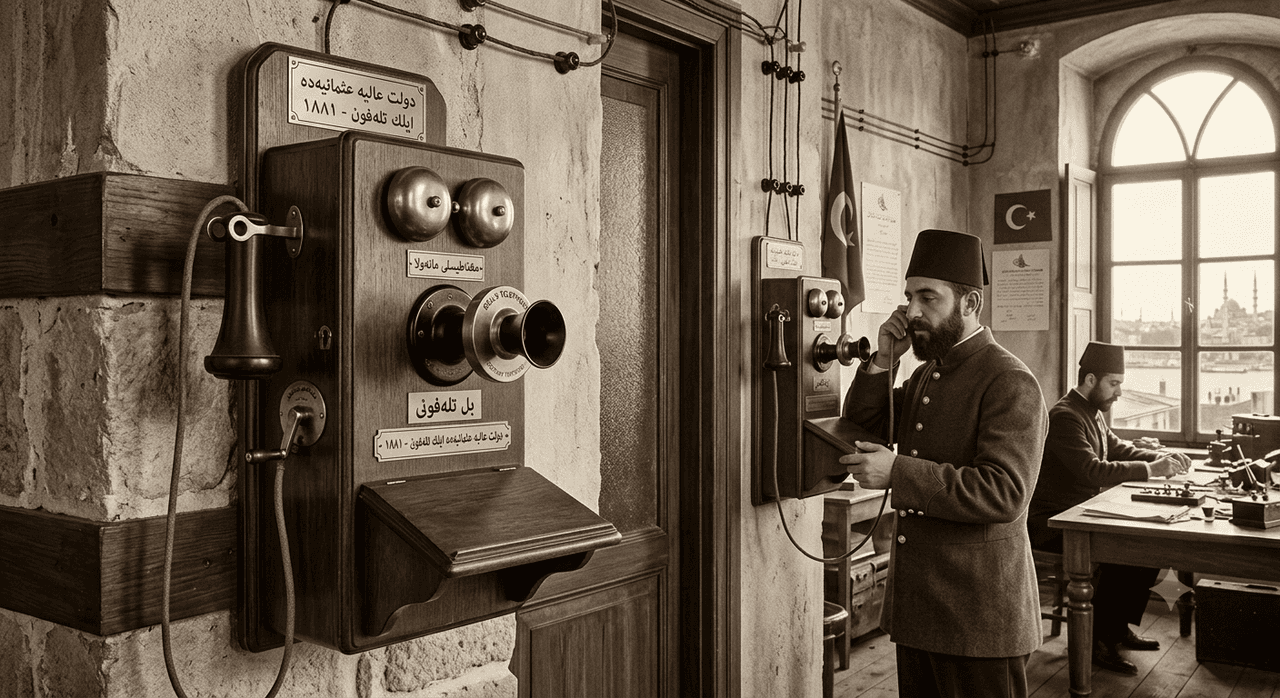
Visual Representing the First Fixed Telephone Used in the Ottoman Empire (Generated by Artificial Intelligence)
During the Republican era, communication was regarded as a key component of the state’s modernization and development policies. Communication services held great importance during the National Struggle years, and after the proclamation of the Republic, efforts were made to expand telephone, telegraph, and postal services across the country.
Under Law No. 406 on Telegraph and Telephone dated 1924, the task of equipping Anatolia with telephone lines was undertaken by the General Directorate of Posts and Telegraphs.【5】 In the early years of the Republic, work was carried out to establish a telephone connection between Ankara and Istanbul and to expand the telephone infrastructure.
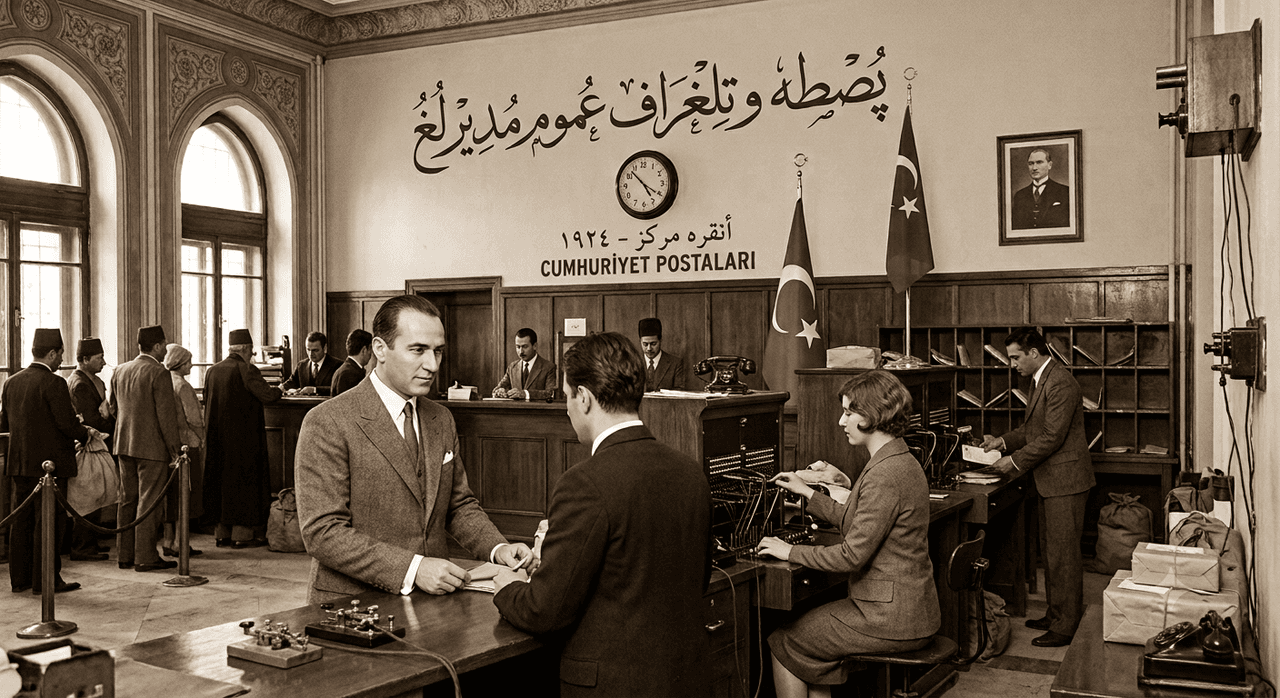
Cumhuriyetin İlk Dönemlerinde PTT (Yapay Zeka ile Oluşturulmuştur.)
Türkiye’s first automatic telephone exchange was established in Ankara in 1926. This exchange had a capacity of 2,000 lines.【6】 Two years later, its capacity was increased, and in 1929 the first intercity telephone line between Istanbul and Ankara was put into service. In 1931, connections were opened between Istanbul and Sofia, followed by Istanbul and Bucharest, and Istanbul and Belgrade, establishing Türkiye’s telephone links with European cities.【7】
In line with statist economic policies, the Istanbul Telephone Company was nationalized in 1936 and the İzmir Telephone Company in 1938, both integrated into the PTT. Thus, major telephone networks previously under private companies came under state control and were incorporated into the PTT network.
After World War II, Türkiye brought in foreign experts to modernize its telecommunications infrastructure. Between 1946 and 1951, fifteen British engineers employed by the PTT focused on the installation and maintenance of automatic exchanges. During this period, “carrier” systems became widespread, and technical measures were developed to protect lines against natural phenomena such as ice buildup.
In the 1950s, the PTT organization began transitioning from its outdated and cumbersome structure toward a more modern one. During the Democrat Party period, particular emphasis was placed on technical investment, leading to progress in the development of telecommunications. Nevertheless, Turkey’s telephone infrastructure remained inadequate for a long time, resulting in long waiting periods for line applications.
In the 1980s, Türkiye experienced a major breakthrough in telecommunications. The telecommunications expansion carried out by the PTT between 1983 and 1987 marked a turning point in the widespread adoption of fixed-line telephone infrastructure. During this period, mechanical exchanges began to be replaced by more modern and higher-capacity systems, and access to telephone services expanded rapidly. Reducing the long-standing waiting times for telephone lines was one of the key objectives of this era.
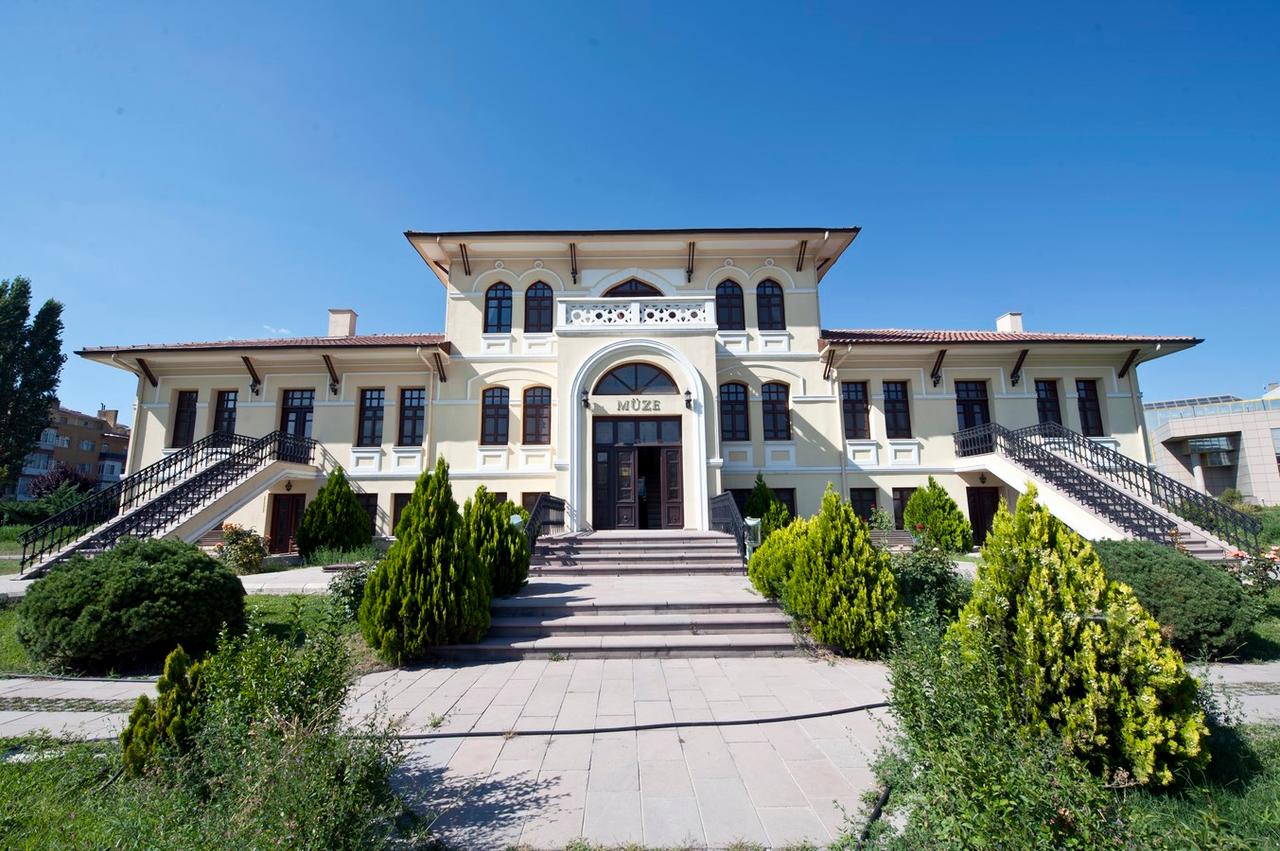
Türk Telekom Telekomünikasyon Müzesi - Ankara (Türkiye Kültür Portalı)
In 1994, telephone services within the PTT were separated to establish Türk Telekom, which was included in the privatization program. This separation gave PTT’s telephone services a distinct corporate structure under the Türk Telekom umbrella. In 2005, privatization transformed Türk Telekom into a new organizational structure.
Although fixed-line telephone subscriptions have declined over time, the fixed infrastructure continues to serve as the foundational carrier for fiber-optic internet and broadband data transmission. Today, while fixed lines have lost much of their role in traditional voice communication, they retain strategic importance in terms of fiberization, broadband internet, and preparation for 5G. According to Türk Telekom officials, data communication has now become as decisive as voice communication. For this reason, fiber infrastructure is regarded as one of the fundamental elements of next-generation communication technologies.
Historical telephone line applications by figures such as Zeki Müren and Adnan Menderes are currently exhibited at the Türk Telekom Telecommunications Museum. These documents draw attention to how obtaining a telephone line in Türkiye was once a significant and lengthy process.
The rapid advancement of communication technologies in Türkiye and the widespread adoption of mobile phones have created a significant shift in traditional communication methods. According to data from the Information and Communication Technologies Authority, between 2021 and 2025 fixed-line telephones and payphones experienced a decline of over 30 percent. During this period, the number of mobile subscribers rose from 86.3 million in 2021 to 99.7 million in 2025. The number of fixed-line telephone subscribers, meanwhile, fell from 12 million 264 thousand 321 in 2021 to 8 million 359 thousand 681 by the end of 2025. This represents a decline of approximately 32 percent in fixed-line telephone subscriptions.【8】
A similar decline has been observed in the number of payphones. In 2014, there were 83 thousand 283 payphones nationwide; by 2021 this number had dropped to 45 thousand 695, and by 2025 it had further decreased to 31 thousand 175. Thus, between 2021 and 2025, the number of payphones also declined by approximately 32 percent.【9】
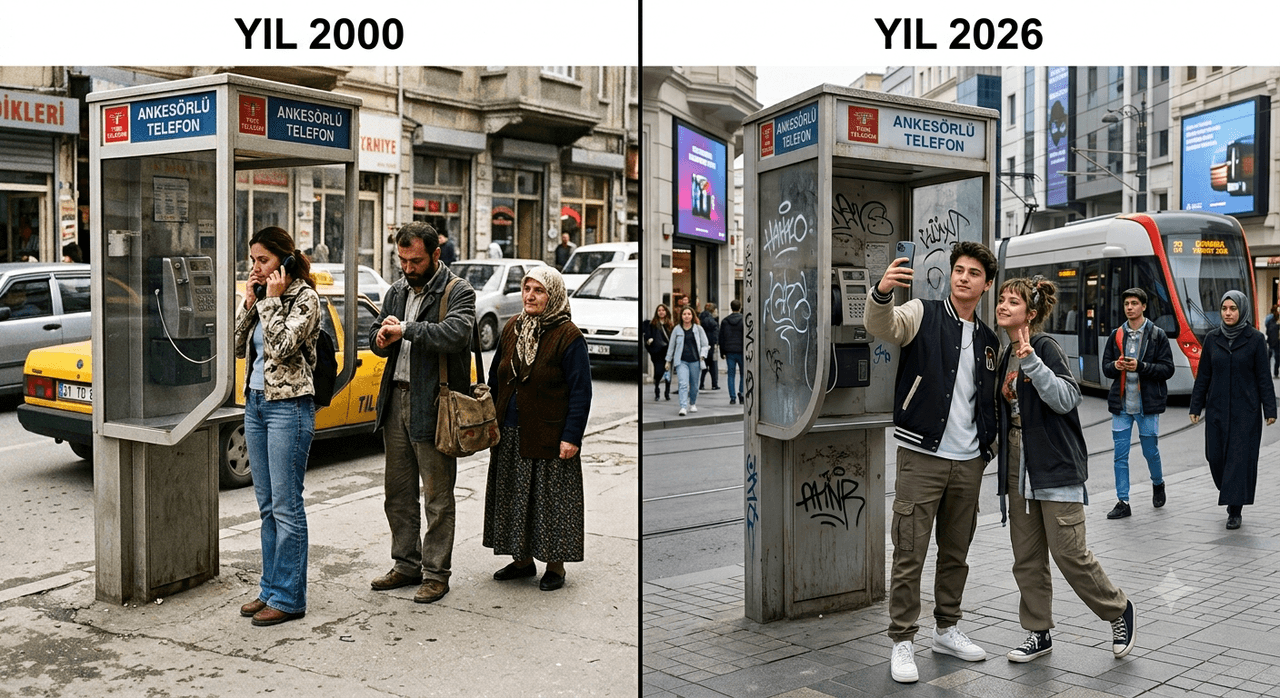
Sabit Hatlı Ankesörlü Telefonun Yıllar İçindeki Değişimi (Yapay Zeka ile Oluşturulmuştur.)
This numerical decline has also changed the physical presence of fixed lines and payphones in social life. Once an inseparable part of city squares, bus terminals, public buildings, and major centers, payphones have lost their former public significance due to digitalization and the proliferation of mobile communication. Today, these devices have become a niche communication tool, primarily serving specialized and restricted areas such as Turkish Armed Forces installations and prisons rather than the general public.

Neighbors Talking on Landline Phones in the Early 2000s (Generated by Artificial Intelligence.)
The fixed-line telephone in Türkiye has long been more than just a communication tool; it was an integral part of social life and family culture. Telephones located in shared household areas played a vital role not only in family communication but also in maintaining kinship, neighborhood, and social ties. Telephone conversations were scheduled at specific times, and calls with relatives living in distant cities became special moments within daily life.
Although the frequency of fixed-line telephone use has decreased with technological advancement and the widespread adoption of mobile communication, fixed lines continue to be used as a reliable and uninterrupted communication tool, particularly in public institutions, workplaces, and some households. In this regard, the fixed-line telephone remains an important element of Türkiye’s communication culture.
Anadolu Ajansı. “Ankesörlü ve sabit telefon sayısı 5 yılda yüzde 30'dan fazla azaldı”. Accessed June 30, 2026.https://www.aa.com.tr/tr/ekonomi/ankesorlu-ve-sabit-telefon-sayisi-5-yilda-yuzde-30dan-fazla-azaldi/3909019
Bingül, Şeyhmus. “Osmanlı Devleti’nde İletişim Araçlarının Kontrolü: “Telefon Tevkifleri” Osmanlı Bilimi Araştırmaları 2, no. 2 (2020): 293-320. Accessed June 29, 2026.https://dergipark.org.tr/tr/download/article-file/1183910
Kabaklarlı, Esra, and Işıcık, Şeyda. “Türkiye Telekomünikasyon Sektörüne Genel Bakış.” *Aksaray Üniversitesi İİBF Dergisi* 12, no. 1 (2020): 35–42. Accessed June 29, 2026.https://dergipark.org.tr/en/download/article-file/1055682
TRT Haber. “İlk “alo”nun üzerinden 143 yıl geçti”. TRT Haber. Accessed June 29, 2026.https://www.trthaber.com/haber/bilim-teknoloji/ilk-alonun-uzerinden-143-yil-gecti-407884.html
Türkiye Kültür Portalı. "Türk Telekom Telekomünikasyon Müzesi – Ankara." T.C. Kültür ve Turizm Bakanlığı. Accessed June 30, 2026.https://www.kulturportali.gov.tr/turkiye/ankara/gezilecekyer/turk-telekom-telekomunkasyon-muzes
Yiğit, Yücel. (Ed. Yunus Pustu, Ayşenur Şenel, Hande Yaren Karacabey). “PTT’nin İngiliz Mühendisleri”. Türkiye İktisat Kongresi Bildiriler Kitabı. Türk Tarih Kurumu. (2024): 1701-1723. Accessed June 29, 2026.https://ttk.gov.tr/wp-content/uploads/2024/06/PTTnin-Ingiliz-Muhendisleri.pdf
Yurtoğlu, Nadir. “HABERLEŞME SEKTÖRÜNÜN ÖNEMLİ BİR TEŞEKKÜLÜ: MİLLÎ MÜCADELE DÖNEMİNDEN 1960 YILINA TÜRKİYE’DE POSTA, TELGRAF VE TELEFON (PTT) TEŞKİLATI (1920-1960).” *Atatürk Araştırma Merkezi Dergisi* 32, no. 93 (2016): 47–103. Accessed June 29, 2026.https://dergipark.org.tr/en/download/article-file/675262
Üçer, Sırrı Emrah. “Telefon: ‘Nakl-i Sada’dan ‘Mutant Telefon’a: Türkiye’de Telefonun 100 Senesi (1920-2020).” *100 Sene 100 Nesne Ansiklopedisi*. (2022): 1–20. Accessed June 29, 2026.Accessed Adresi
“Sabit Telefon.” Türk Dil Kurumu. *Güncel Türkçe Sözlük*. Accessed June 30, 2026.https://sozluk.gov.tr/?ara=sabit%20telefon
[1]
Şeyhmus Bingül, “Osmanlı Devleti’nde İletişim Araçlarının Kontrolü: “Telefon Tevkifleri,” Osmanlı Bilimi Araştırmaları 21, no. 2 (2020): 293. https://dergipark.org.tr/tr/download/article-file/1183910
[2]
Nadir Yurtoğlu, “Haberleşme Sektörünün Önemli Bir Teşekkülü: Millî Mücadele Döneminden 1960 Yılına Türkiye’de Posta, Telgraf Ve Telefon (Ptt) Teşkilatı (1920-1960)”, Atatürk Araştırma Merkezi Dergisi 32 no. 93 (2016): 71. https://dergipark.org.tr/en/download/article-file/675262
[3]
Bingül, “Osmanlı Devleti’nde İletişim Araçlarının Kontrolü: “Telefon Tevkifleri,” 303.
[4]
Yücel Yiğit, “PTT’nin İngiliz Mühendisleri”, Türkiye İktisat Kongresi Bildiriler Kitabı, Türk Tarih Kurumu. 1703. https://ttk.gov.tr/wp-content/uploads/2024/06/PTTnin-Ingiliz-Muhendisleri.pdf
[5]
Esra Kabaklarlı ve Şeyda Işıcık, “Türkiye Telekomünikasyon Sektörüne Genel Bakış,” Aksaray Üniversitesi İİBF Dergisi 21, no. 1 (2020): 36. https://dergipark.org.tr/en/download/article-file/1055682
[6]
Yiğit, “PTT’nin İngiliz Mühendisleri,” 1704.
[7]
Yiğit, “PTT’nin İngiliz Mühendisleri,” 1704.
[8]
Anadolu Ajansı. "Ankesörlü ve sabit telefon sayısı 5 yılda yüzde 30'dan fazla azaldı." Accessed June 30, 2026.
[9]
Anadolu Ajansı, "Ankesörlü ve sabit telefon sayısı 5 yılda yüzde 30'dan fazla azaldı."

No Discussion Added Yet
Start discussion for "Fixed-Line Telephone Communication in Türkiye" article
History of the Fixed-line Telephone
The Republican Era and the Role of PTT
Corporate Structure and Privatization
Fixed-line Telephones Today
Cultural and Social Dimension