

`linguistics` Related Article Results

Noam Chomsky
Avram Noam Chomsky was born on 7 December 1928 in Philadelphia; he is a highly influential American linguist philosopher political activist and public intellectual. Growing up in an intellectually rich and politically active family Chomsky developed a strong sense of social justice at an early age shaped by experiences such as witnessing the Great Depression and labor uprisings. He began his studies at the University of Pennsylvania where he studied under linguist Zellig Harris and later met pro
EN
Sümeyye Nur Toçoğlu

Agop (Martayan) Dilaçar
Agop (Martayan) Dilaçar was born in Istanbul in 1895 and held various positions in linguistics during the early years of the Türkiye Republic through institutions, educational activities and publications. Dilaçar completed his education at Robert College and participated in academic, encyclopedic and institutional projects using his proficiency in multiple languages. At the invitation of Atatürk, he attended the Turkish Language Research Society congress in 1932 and subsequently served at the Tu
EN
Yunus Emre Sağlam

Translation Studies
Translation Studies is an academic discipline that examines translation as an activity in terms of its theoretical foundations, descriptive approaches, and practical dimensions. This field investigates the processes of meaning transfer between different languages on one hand, and on the other hand explores the cultural, social, and cognitive aspects of these processes. Translation Studies has a multilingual and interdisciplinary character; it is closely related to fields such as linguistics, cul
EN
Özge Buslu

Sapir-Whorf Hypothesis
The Sapir–Whorf Hypothesis is a theory that posits language is not merely a tool of communication but a fundamental element that shapes thought processes and perceptions of reality. According to this assumption, individuals perceive the world through the conceptual framework provided by their own language; thus, each language creates a unique worldview. The hypothesis is based primarily on two principles: linguistic determinism and linguistic relativity. Linguistic determinism argues that langua
EN
Tuğçe Kabakcı

What Is Kinaye (Allusion)?
Kinaye, also known as allusion, is the use of a phrase in such a way that it suggests both its literal and metaphorical meanings. In kinaye, the intended meaning is most often the metaphorical meaning. The expression is indirect and implicit rather than explicit. Kinaye is a figure of speech that demonstrates the subtleties of language. It frequently appears in everyday speech literary texts and proverbs. It encourages children to listen more carefully and interpret meaning thoughtfully. What Do
EN
Nursena Güller
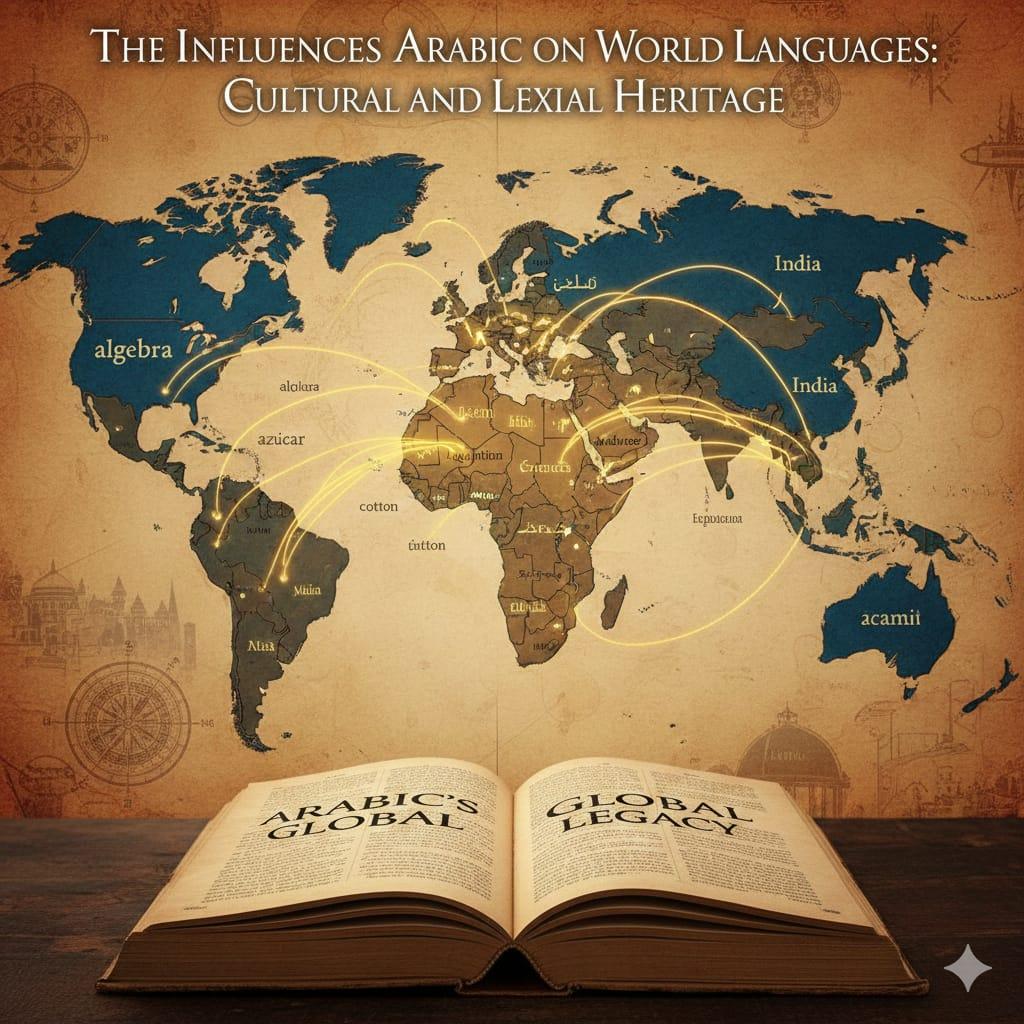
The Influence of Arabic on Other Languages
Arabic is a civilization language that has left indelible marks on world languages by serving not merely as a religious textual language but as the universal vehicle of science, philosophy, art, and trade throughout the Middle Ages. Beginning in the 7th century, with the expansion of Islamic civilization across a vast geographical area, this language profoundly influenced the vocabularies, conceptual frameworks, and even grammatical structures of local languages. Particularly through translation
EN
Elif KARDAŞ
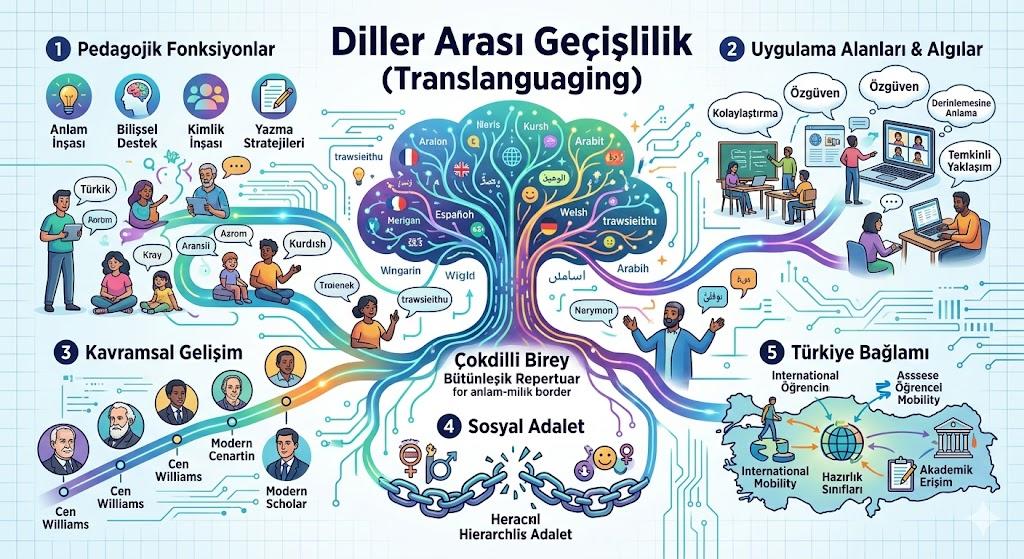
Interlinguistic Transition
Translanguaging is the process by which multilingual individuals draw upon their full range of linguistic and semiotic resources not as separate systems but as an integrated repertoire for meaning-making. This approach challenges the traditional monolingual paradigm that views languages as closed systems rigidly divided by social, cultural, and political boundaries. Conceptual Origins and Theoretical Development The concept was first introduced in the 1980s in bilingual educational settings in W
EN
Büşra Tuğa
 Cu
CuCultural Semiotics
Cultural Semiotics is a discipline that examines the production of signs and symbols within cultural contexts. By applying semiotic approaches to the field of culture, it analyzes how meaning is constructed through social structures and practices. It investigates individual and collective processes of meaning-making across a wide spectrum, from linguistic signs to visual symbols. Origins and Development of Cultural Semiotics Cultural semiotics emerged in the 20th century as an extension of semio
EN
Fatihhan Adana
TuTurkish Language Family
Turkic language family (Turkic languages) is a language family consisting of languages with a common origin, spoken across the vast geography of Eurasia throughout history and still used today by numerous communities. This family is defined as a whole characterized by structural similarities evident from both historical documents and modern linguistic data, accepted as sharing a common origin, and classified through various approaches in different periods. The Turkic languages have spread over a
EN
Meryem Şentürk Çoban

Ancient Sicilian Languages
Ancient Sicily held a significant position in the Mediterranean and served as a meeting point for many cultures. Between the 7th and 4th centuries BCE, indigenous languages besides Greek and Phoenician were spoken on the island. These languages, generally referred to in Italian sources as "Anellenico" (non-Greek), were associated with ancient peoples such as the Elymians and Sicani and Sicels. However, evidence surviving from these languages is extremely scarce, and interpreting them presents ch
EN
Aslı Öncan