This article was automatically translated from the original Turkish version.
Coffee Plant | Coffea Arabica | ||||||||
|---|---|---|---|---|---|---|---|---|---|
Period | 16th Century–Present | ||||||||
Materials | Coffee, Water, Sugar | ||||||||
Presentation | Water, Lokum | ||||||||
Registration | UNESCO Intangible Cultural Heritage (2013) | ||||||||
Usage | Holiday Engagement Special Days | ||||||||
Regional Varieties | Menengiç, Dibek, Mırra, Hilve | ||||||||
Registration Authority | Ministry of Culture and Tourism / UNESCO | ||||||||
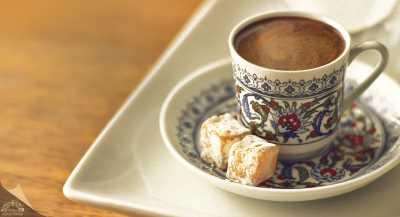
Turkish coffee is a beverage distinguished by its unique aroma, foam, and sediment, made from roasted and finely ground seeds of the coffee plant (Coffea arabica). It is typically served in small, single-handled cups, accompanied by water and Turkish delight. Although the coffee plant does not grow in Türkiye, Turkish coffee is differentiated by its distinctive grinding and brewing methods.
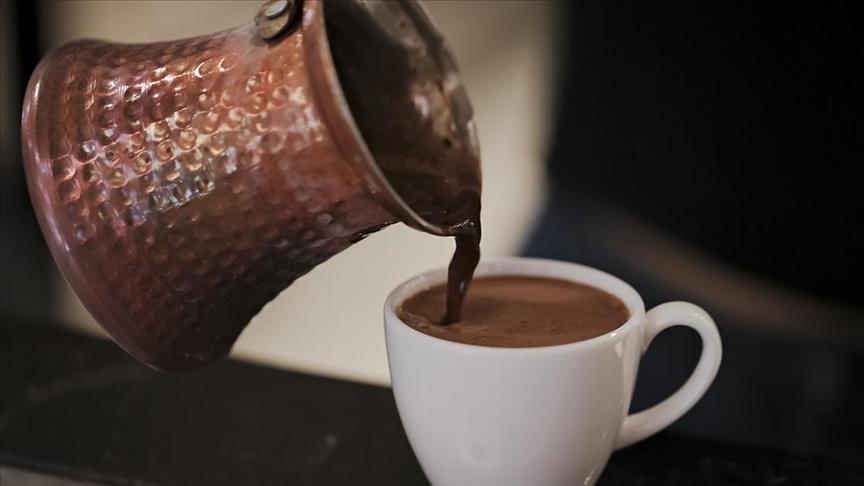
Turkish Coffee (AA)
The introduction of Turkish coffee into Ottoman society dates back to the mid-16th century. Coffee beans brought from Yemen were first prepared and consumed in the imperial kitchens and elite households of Istanbul. Over time, this beverage spread across different social strata and became an integral part of urban life.
The first coffeehouses opened in Istanbul in the 1550s, significantly enhancing coffee’s importance in social life and quickly transforming into centers of cultural exchange across Ottoman cities. Coffeehouses served not only as places for consuming beverages but also as venues for sharing oral culture, music, literature, and folk narratives. During this period, they evolved into public spaces where social bonds were formed and ideas exchanged.
In the 17th century, coffee reached Europe from Ottoman territories and was known in the Western world as the “Turkish drink.” This designation reflects the Ottoman origin of the coffee culture introduced to Europe. From this century onward, coffee was transported via Ottoman port cities to the Mediterranean and then to Europe, becoming a component of international trade.
During the 18th and 19th centuries, with the widespread use of grinders and cezves in coffee production, coffee consumption became part of daily life not only in urban centers but also in rural settlements. This era is also significant for the formal diversification of coffee preparation tools and the advancement of metalwork. Furthermore, the integration of local handicrafts into the design of cups and serving sets strengthened the cultural identity of coffee.
During the Republican period, Turkish coffee was recognized as a symbol of national identity, and traditional preparation and serving methods were preserved. Coffeehouses continued to function as spaces for social and cultural interaction. Although the use of coffee machines and modern brewing equipment increased toward the end of the 20th century, the traditional method of preparing Turkish coffee has been maintained.
In 2013, the culture of Turkish coffee was inscribed on UNESCO’s Representative List of the Intangible Cultural Heritage of Humanity, ensuring international recognition and protection for this centuries-old tradition.
Turkish coffee is regarded as an expression of respect and courtesy toward guests and social relationships. It has become an essential part of conversations among family and friends.
The serving of coffee during social events such as marriage proposals, holiday visits, and celebrations carries ceremonial significance. In this sense, Turkish coffee is viewed as a cultural element that strengthens social bonds in daily life. Offering coffee is not merely about beverage consumption but also functions as a medium of communication and sharing.
Serving tools such as the coffee cup, cezve, and tray contribute to the preservation of traditional handicrafts. These objects possess cultural value not only for their functionality but also for their aesthetic and artisanal qualities. Knowledge of coffee preparation and serving is passed down from generation to generation within families through observation and practice.
The practice of fortune-telling using the sediment left in the cup after drinking coffee, known as tasseography, serves as a social entertainment activity. Additionally, Turkish coffee has found its place in cultural expressions such as proverbs, poetry, and folk narratives.
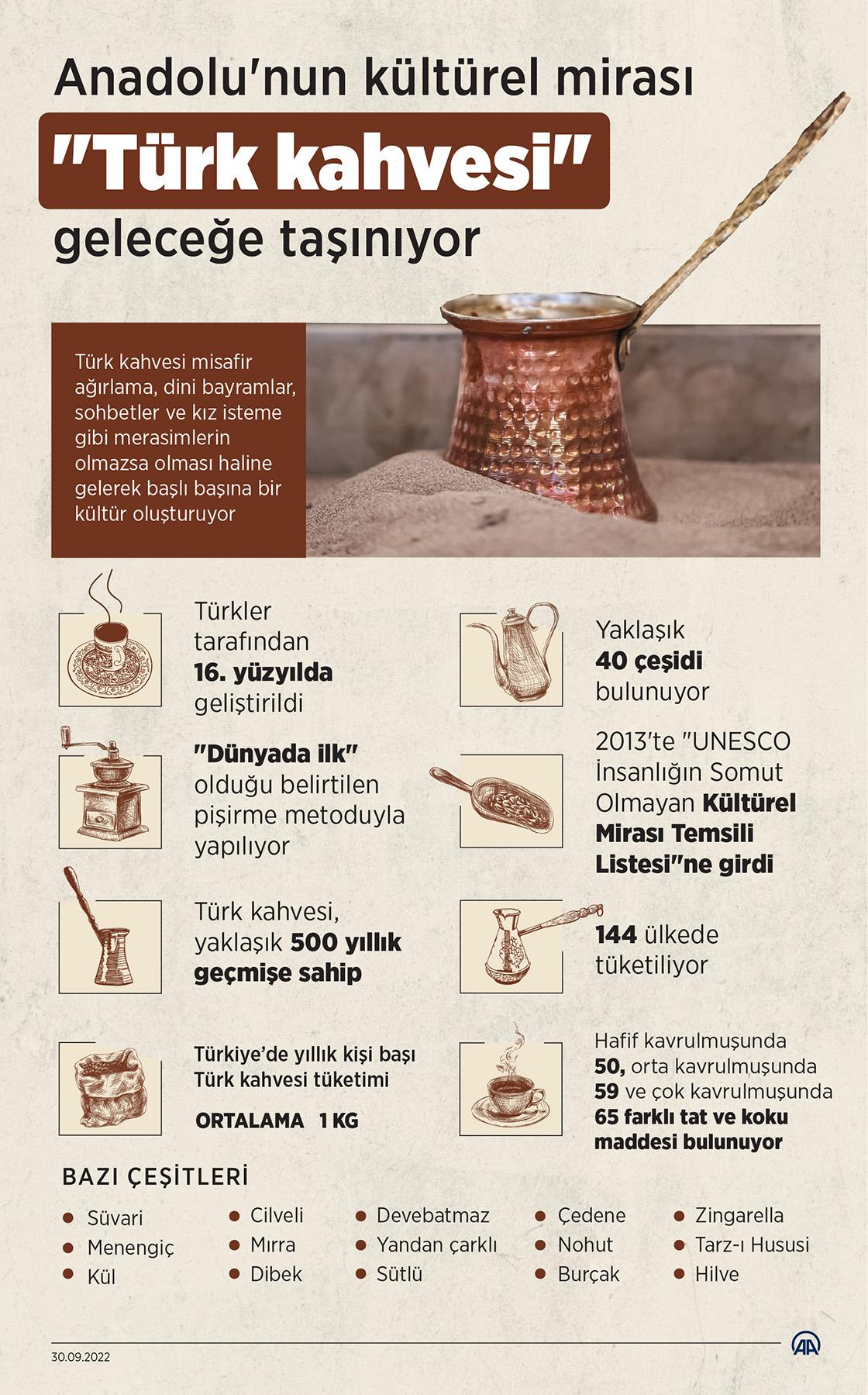
General Information about Turkish Coffee (AA)
Selection and Preparation of Coffee Beans
Measurement of Ingredients
Preparation of the Mixture
Brewing Process
Formation of Aroma and Consistency
Serving Stage
These steps ensure that both the physical characteristics and cultural values of Turkish coffee are preserved during preparation. The precise measurements, temperature, and timing involved in the process are fundamental factors determining the coffee’s flavor, consistency, and foam balance.
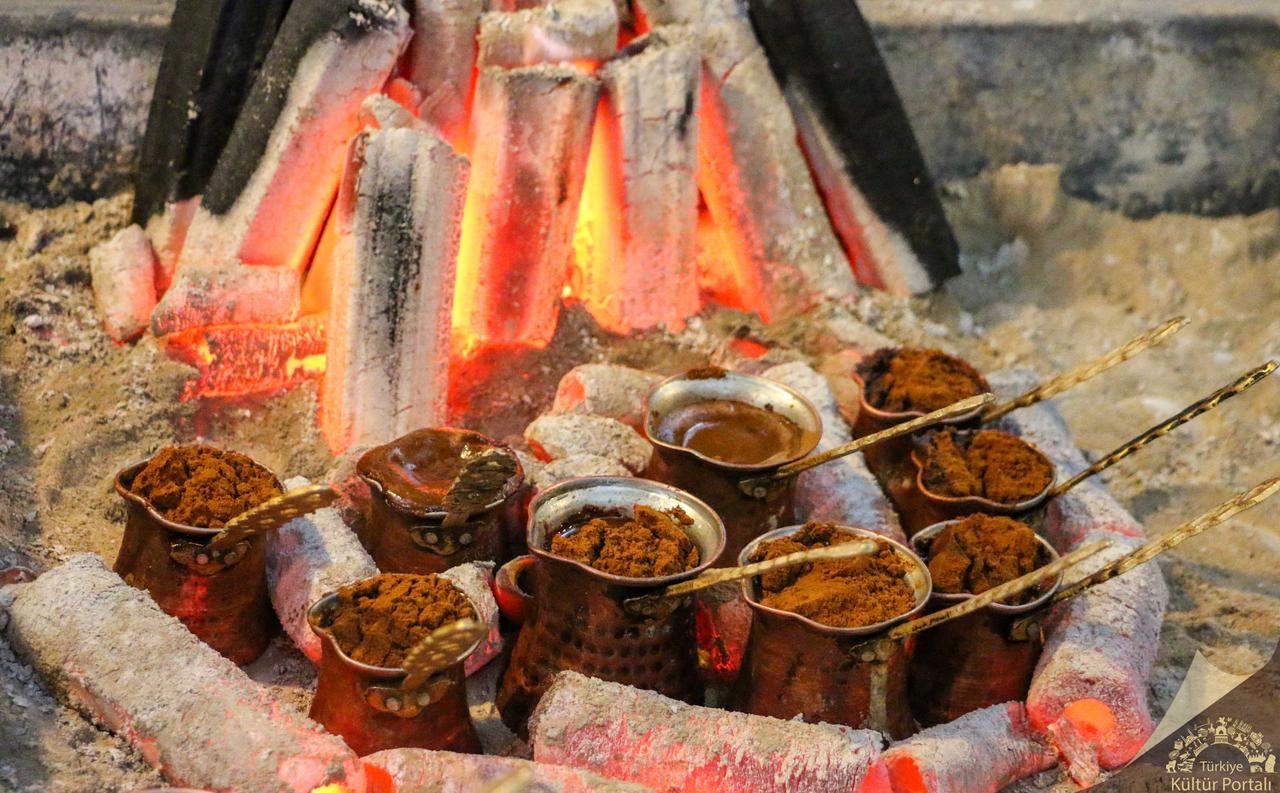
Turkish Coffee on Coals (Culture Portal)
The culture of Turkish coffee has developed alongside handicraft traditions. Tools used in coffee preparation and serving—such as the cezve, cup, tray, and coffee grinder—possess both functional and aesthetic qualities. These items were crafted from materials such as copper, brass, silver, and porcelain and adorned with motifs reflecting the decorative sensibilities of their time.
Handmade coffee sets have supported the development of metal and ceramic crafts and have become important examples of Turkish handicrafts. Today, these products are preserved as part of the cultural heritage in museums and traditional artisan workshops.
The culture of Turkish coffee is closely linked not only to handicrafts and artisanry but also to women’s labor. The production of serving items such as coffee cups, cezves, trays, and sweetmeat containers has traditionally been carried out by women who sustain traditional craft skills. In recent years, with increasing demand for handmade cups and coffee sets, women have established small workshops to generate income in this field. These productions contribute to the local economy and help preserve cultural heritage.
Handicraft products accompanying coffee service have helped create new sectors that enable women to actively participate in social life. This labor-intensive production process is regarded as a vital element strengthening the economic and social dimensions of Turkish coffee culture.
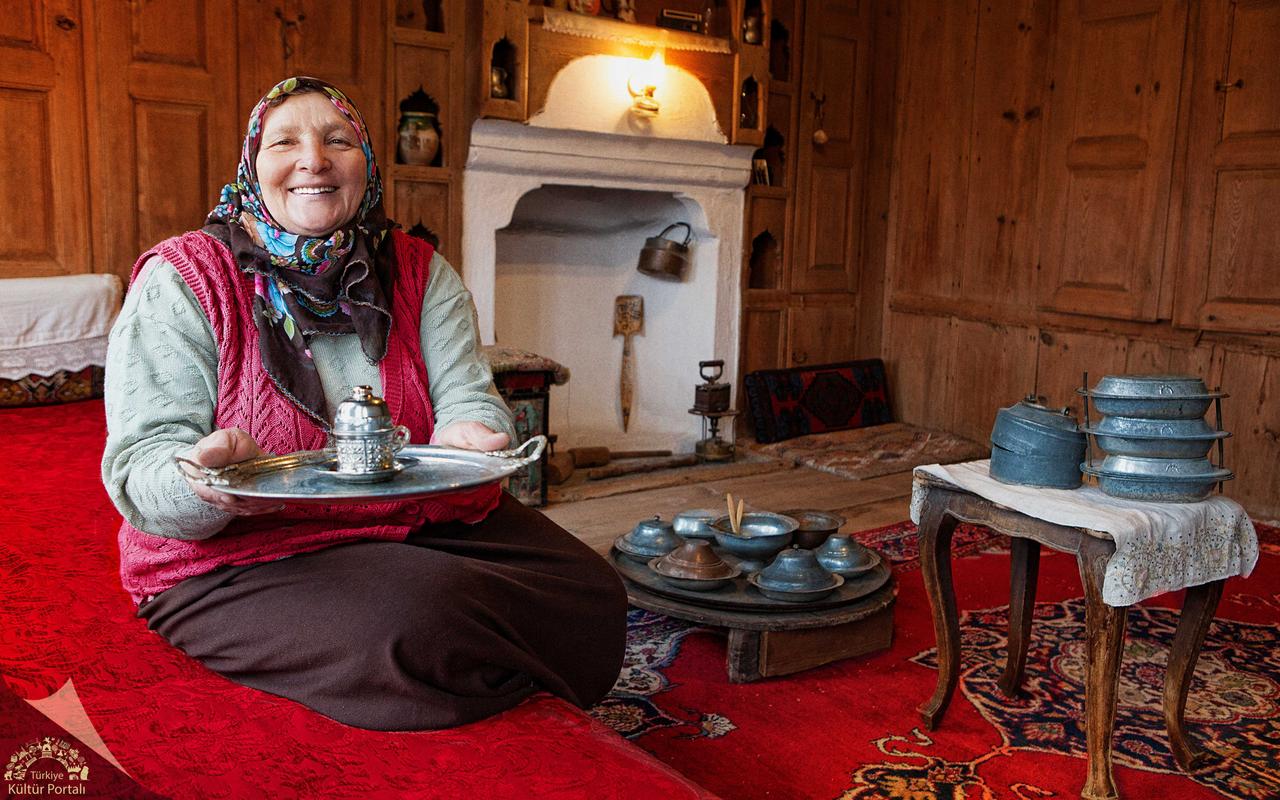
Turkish Coffee (Culture Portal)
The tradition of Turkish coffee has evolved through interaction with other coffee varieties originating in Anatolia. These varieties differ from Turkish coffee in preparation method, ingredients, and aroma, yet they maintain a similar cultural ethos of sharing and hospitality.
Menengiç coffee is made by roasting and grinding the fruits of the menengiç plant, native to Southeastern Anatolia. It is notable for being caffeine-free and is typically prepared with milk.
Dibek coffee is produced by grinding coffee beans in stone mortars; it is often enriched with additional ingredients such as cardamom or pine resin.
Mırra is especially common in Southeastern Anatolia and Arab cultures and has a bitter taste; it is prepared by boiling several times and served in small cups.
Çörekotu and keçiboynuzu coffee are regional varieties that have introduced local flavors to coffee culture through plant-based additives.
These varieties constitute part of the intangible cultural heritage as regional adaptations of the Turkish coffee tradition. Each reflects distinct geographical and social characteristics, supporting the diversity and continuity of coffee culture.
To introduce Turkish coffee culture and document its tradition from the past to the present, coffee-themed museums have been established in various regions of Türkiye. Among these, the Turkish Coffee Museum located in the Safranbolu district of Karabük stands out. Opened to the public in 2019, the museum aims to transmit the five-century-old coffee culture of Anatolia to future generations.
The museum displays artifacts from the 19th century, including cezves, cups, coffee grinders, roasting pans, and water vessels. The collection also includes historical items such as the cup used by Sultan Abdülhamid II, the cezve belonging to Sütçü İmam, and a replica of the cup from which Atatürk drank his last coffee. Visitors are offered samples of different coffee types such as menengiç, mırra, hilve, and dibek to experience the diversity of Anatolian coffee.
The museum attracts significant interest from both domestic and international tourists, welcoming over 100,000 visitors annually. In this way, coffee museums have become important promotional venues that contribute to both the preservation of cultural heritage and tourism.
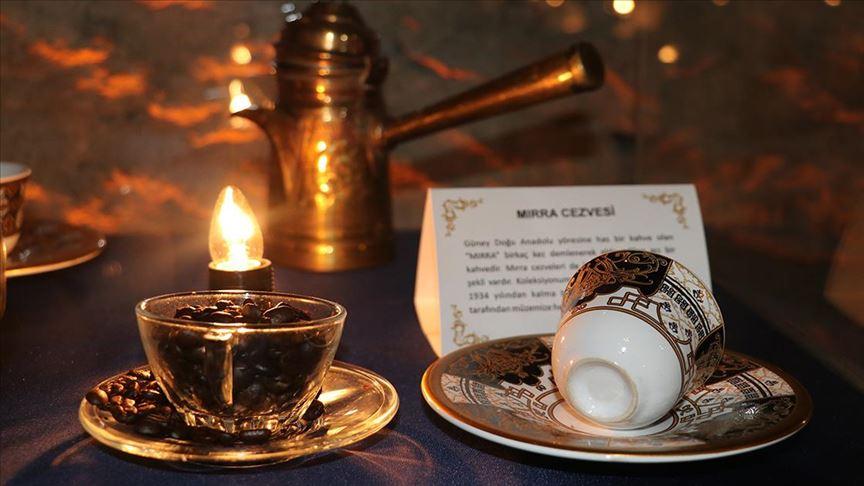
Turkish Coffee Museum (AA)
Although Turkish coffee is not produced from beans grown in Türkiye, it holds significant economic value through processing, packaging, serving, and export. Coffee beans are imported, but they gain added value through uniquely Turkish grinding and brewing techniques.
The TSE 13423 Standard for Coffee–Ground, developed under the leadership of the Kocaeli Chamber of Commerce, has established uniformity in production and quality processes. This standard has enhanced the recognition of Turkish coffee in domestic and international markets, contributing to its branding.
Turkish coffee generates economic circulation not only within the domestic market but also through exports. Products marketed globally as “Turkish Coffee” contribute to Türkiye’s gastronomy and tourism revenues.
Today, Turkish coffee maintains its importance through its cultural and economic value. Its inclusion in UNESCO’s Representative List of the Intangible Cultural Heritage of Humanity in 2013 has ensured its international recognition.
The Ministry of Culture and Tourism, along with local institutions, conducts various initiatives to transmit knowledge of coffee preparation and serving to future generations. Family-based transmission and tourist promotion are key factors supporting this continuity.
Today, Turkish coffee is regarded not merely as a traditional beverage but also as a sustainable heritage element in the fields of cultural diplomacy, tourism, and gastronomy.
Anadolu Ajansı. "Türk Kahvesi Çeşitlerine Talep Artıyor." AA Kültür, March 12, 2024. Accessed October 22, 2025.https://www.aa.com.tr/tr/kultur/turk-kahvesi-cesitlerine-talep-artiyor/3248668
Anadolu Ajansı. "Türk Kahvesine TSE Standardı Kazandırıldı." *AA Ekonomi*, November 10, 2021. Accessed October 22, 2025.https://www.aa.com.tr/tr/ekonomi/turk-kahvesine-tse-standardi-kazandirildi-/2057987
Anadolu Ajansı. “Anadolu’nun Kültürel Mirası ‘Türk Kahvesi’ Geleceğe Taşınıyor.” *AA Kültür*, September 30, 2022. Accessed October 22, 2025.https://www.aa.com.tr/tr/kultur/anadolunun-kulturel-mirasi-turk-kahvesi-gelecege-tasiniyor/2698962
Anadolu Ajansı. “Kahvenin Tarihine Müzede Yolculuk.” *AA Kültür-Sanat*, October 16, 2019. Accessed October 22, 2025.https://www.aa.com.tr/tr/kultur-sanat/kahvenin-tarihine-muzede-yolculuk/1615523
Anadolu Ajansı. “Kültürel Miras Olarak Türk Kahvesi.” *AA Analiz*, December 5, 2021. Accessed October 22, 2025.https://www.aa.com.tr/tr/analiz/kulturel-miras-olarak-turk-kahvesi/2439054
Anadolu Ajansı. “Safranbolu’da Bu Yıl 100 Binden Fazla Ziyaretçi Kahvenin Tarihine Yolculuk Yaptı.” *AA Kültür*, August 19, 2025. Accessed October 22, 2025.https://www.aa.com.tr/tr/kultur/safranboluda-bu-yil-100-binden-fazla-ziyaretci-kahvenin-tarihine-yolculuk-yapti/3663318
Bayramova, Günay. *Türk Kahvesi Pişirme Yöntemleri ve Tarihsel Gelişiminin Ürün Tasarımı Bağlamında İncelenmesi.* Master's thesis,Marmara Üniversitesi, Institute of Fine Arts, Istanbul, 2019. Accessed October 22, 2025.https://www.proquest.com/docview/2467056019?fromopenview=true&pq-origsite=gscholar&sourcetype=Dissertations%20&%20Theses
Koca, Nusret, and Arzu Ersöz Tügen. “Somut Olmayan Kültür Miras Listesinde Bir Değer Olan Türk Kahvesine Coğrafya Perspektifinden Bakış.” *Troyacademy*, 5(1) (2020): 347–362. doi:10.31454/usb.692043. Accessed October 22, 2025.
Ministry of Culture and Tourism. "Türk Kahvesi Fotoğraf Arşivi." Kültür Portalı. Accessed October 22, 2025.https://www.kulturportali.gov.tr/medya/fotograf/arama/t%C3%BCrk%20kahvesi.
Ministry of Culture and Tourism. "Türk Kahvesi Kültürü ve Geleneği." Kültür Portalı. Accessed October 22, 2025.https://www.kulturportali.gov.tr/portal/turkkahvesikulturuvegelenegi.
Ministry of Culture and Tourism. "Türk Kahvesi Kültürü ve Geleneği." YAKEGM. Accessed October 22, 2025.https://yakegm.ktb.gov.tr/TR-345002/turk-kahvesi-kulturu-ve-gelenegi.html.
UNESCO. “Turkish Coffee Culture and Tradition.” Representative List of the Intangible Cultural Heritage of Humanity, 2013. Accessed October 22, 2025.https://ich.unesco.org/en/RL/turkish-coffee-culture-and-tradition-00645

Coffee Plant | Coffea Arabica | ||||||||
|---|---|---|---|---|---|---|---|---|---|
Period | 16th Century–Present | ||||||||
Materials | Coffee, Water, Sugar | ||||||||
Presentation | Water, Lokum | ||||||||
Registration | UNESCO Intangible Cultural Heritage (2013) | ||||||||
Usage | Holiday Engagement Special Days | ||||||||
Regional Varieties | Menengiç, Dibek, Mırra, Hilve | ||||||||
Registration Authority | Ministry of Culture and Tourism / UNESCO | ||||||||
History
Cultural Significance
Preparation of Turkish Coffee
Relationship Between Turkish Coffee and Handicrafts
Turkish Coffee and Women’s Labor
Turkish Coffee and Alternative Coffee Varieties
Turkish Coffee Museums
Economic and Commercial Importance of Turkish Coffee
Contemporary Status and Sustainability of Turkish Coffee