This article was automatically translated from the original Turkish version.
+1 More
Location | Near İbecik Village, Gölhisar District, Burdur Province | ||||||||
|---|---|---|---|---|---|---|---|---|---|
Name Etymology | Hellenic βουβών (protrusion, prominence, swelling) | ||||||||
Urban Structure | Agora Theatre Sebasteion Acropolis walls Necropolis | ||||||||
Important Discovery | Bronze statues of 11 emperors and 3 empresses | ||||||||
Archaeological Process | Research from 1842 to the present; excavations resumed in 2023 | ||||||||
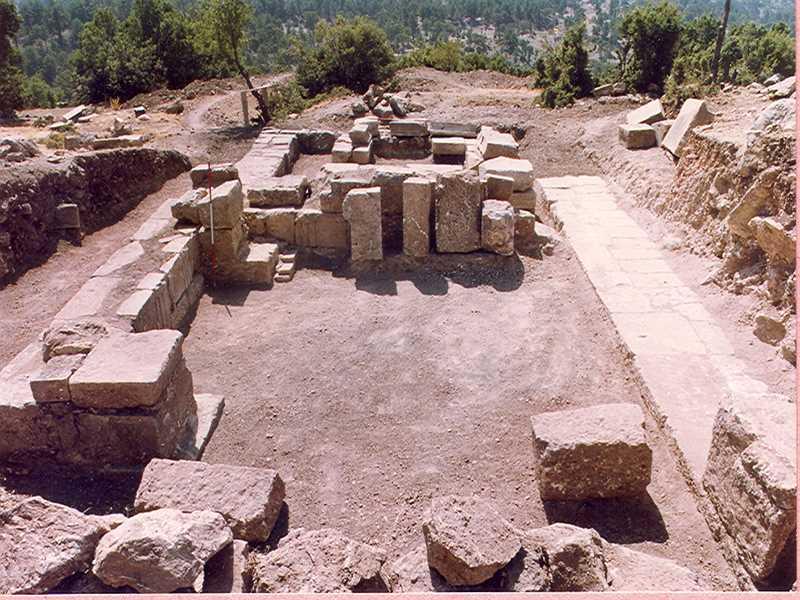
Boubon Ancient City is an ancient Lycian city situated on Dikmen Tepe near İbecik Village in the Gölhisar district of Burdur. The city persisted from the Hellenistic Period through the Roman Imperial Period and at one time formed part of the Kibyra Tetrapolis, along with Kibyra, Balbura, and Oinoanda. Later, it joined the Lycian League. The city bears the name βουβών, which in Hellenistic Greek means “projection, prominence, or swelling.” 【1】This usage reflects the correspondence between the city’s name and its geographical topography, indicating that the name derives directly from a topographic term. The site contains public and defensive structures such as an agora, theater, Sebasteion, acropolis walls, and a necropolis. 【2】The ancient city is located within the geographical region historically known as Kabalia or Kabalis.【3】
Boubon & Balboura Ancient Cities (TRT2)
Boubon Ancient City came under the control of the Kingdom of Pergamon during the reign of Eumenes II in the Hellenistic Period. Subsequently, it became a member of the political union known as the Tetrapolis, alongside Kibyra, Balbura, and Oinoanda. As a result of administrative reorganizations carried out by the Roman Empire in AD 84, Boubon, Balbura, and Oinoanda were incorporated into the Lycian League, while Kibyra remained within the boundaries of the province of Asia. Key historical data regarding the city’s development come from an inscription discovered at the Boubon Theater and dated to the second century AD. According to this inscription, due to its success in combating banditry along the frontier regions during the reign of Emperor Commodus, Boubon’s voting rights within the Lycian League were increased from two to three votes. Thus, despite its small size, Boubon gained representation equal to that of major regional cities such as Patara and Xanthos, owing to its strategic importance.【4】
Boubon Ancient City Artifacts (TRT2)
The first investigations of Boubon Ancient City were conducted in 1842 by Western researchers T. A. B. Spratt and E. Forbes, who visited the region. Subsequent studies revealed that numerous bronze artifacts from the site had been illegally excavated and smuggled abroad. In response, rescue excavations were carried out, particularly at the Sebasteion structure. The first rescue excavation was conducted in 1967 by Burdur Museum Specialist M. Yılmaz, followed by new investigations led by Jale İnan in 1990 and H. Ali Ekinci in 1993. Archaeological research, which had been suspended for a long period, was resumed in 2023 under the scientific guidance of D. Tarkan.【5】
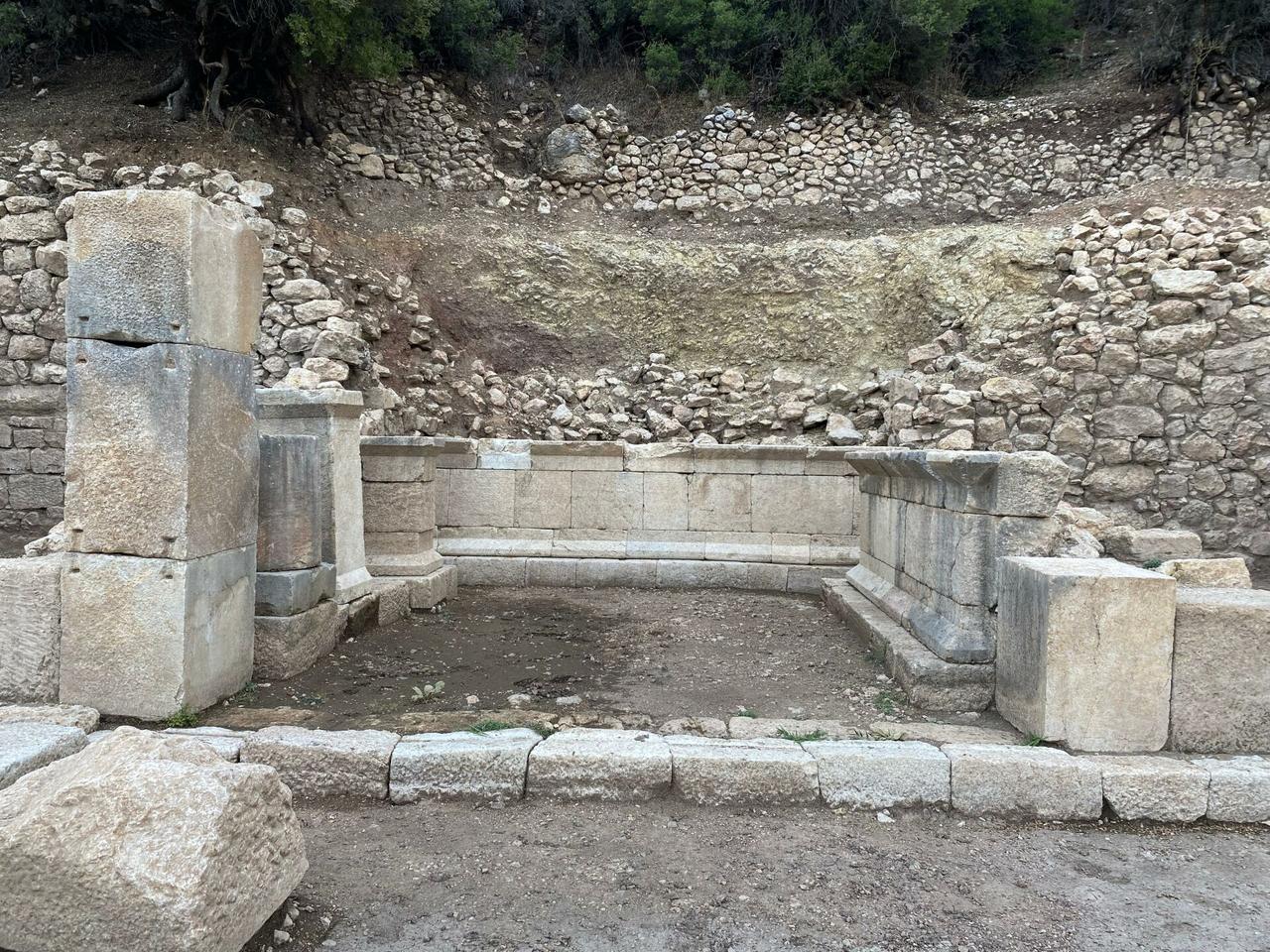
Boubon Sebasteionu (Türkiye Turizm Ansiklopedisi)
The Sebasteion structure and its bronze statues are among the most prominent archaeological features of Boubon Ancient City. Research has shown that some bronze artifacts were removed from the site during illegal excavations in the 1960s. During the 1990 rescue excavation at the Sebasteion, it was determined that a significant portion of the bronze statues belonged to this structure. Inscriptions on the statue bases reveal that the building originally housed bronze statues of eleven Roman emperors and three empresses. The Sebasteion, constructed during the first half of the first century AD under Emperor Nero, remained in use until the middle of the third century AD and was periodically updated with new imperial statues. Some of the artifacts removed from the site have since been returned to Türkiye through repatriation efforts and are now preserved at the Burdur Museum.【6】
Culture Portal. "Boubon Antik City - Burdur." T.C. Ministry of Culture and Tourism. Accessed June 28, 2026.https://www.kulturportali.gov.tr/turkiye/burdur/gezilecekyer/boubon
Metin, Hüseyin. “Boubon’dan Bir Grup Kalıp Yapımı Kâse.” *Colloquium Anatolicum* 13 (2014): 243–260. Accessed July 11, 2026.https://dergipark.org.tr/en/pub/collan/article/919795
TRT 2. “Anadolu Arkeolojisi | Boubon & Balboura Antik Kentleri | 106. Bölüm.” YouTube video, October 27, 2023. Accessed July 5, 2026.https://www.youtube.com/watch?v=ebQORIOmT-g
TRT 2. “Eve Dönen Miras | Boubon Antik Kenti Eserleri | 11. Bölüm.” YouTube video, 23 January 2024. Accessed July 5, 2026.
Çidem, Mustafa. “Boubon Antik Kenti.” *Online Türkiye Turizm Ansiklopedisi*. Accessed June 28, 2026.https://turkiyeturizmansiklopedisi.com/boubon-antik-kenti
[1]
Mustafa Çidem, "Boubon Antik Kenti," Türkiye Turizm Ansiklopedisi. Accessed June 28, 2026.
[2]
Mustafa Çiğdem, "Boubon Antik Kenti."
[3]
Hüseyin Metin, “Boubon’dan Bir Grup Kalıp Yapımı Kâse.” Colloquium Anatolicum 13 (2014): 243. https://dergipark.org.tr/en/pub/collan/article/919795
[4]
Mustafa Çiğdem, "Boubon Antik Kenti."
[5]
Mustafa Çiğdem, "Boubon Antik Kenti."
[6]
Mustafa Çiğdem, "Boubon Antik Kenti."

Location | Near İbecik Village, Gölhisar District, Burdur Province | ||||||||
|---|---|---|---|---|---|---|---|---|---|
Name Etymology | Hellenic βουβών (protrusion, prominence, swelling) | ||||||||
Urban Structure | Agora Theatre Sebasteion Acropolis walls Necropolis | ||||||||
Important Discovery | Bronze statues of 11 emperors and 3 empresses | ||||||||
Archaeological Process | Research from 1842 to the present; excavations resumed in 2023 | ||||||||
No Discussion Added Yet
Start discussion for "Boubon Ancient City" article
Historical Development
Archaeological Investigations
Sebasteion and Bronze Artifacts