


This article was automatically translated from the original Turkish version.
+1 More
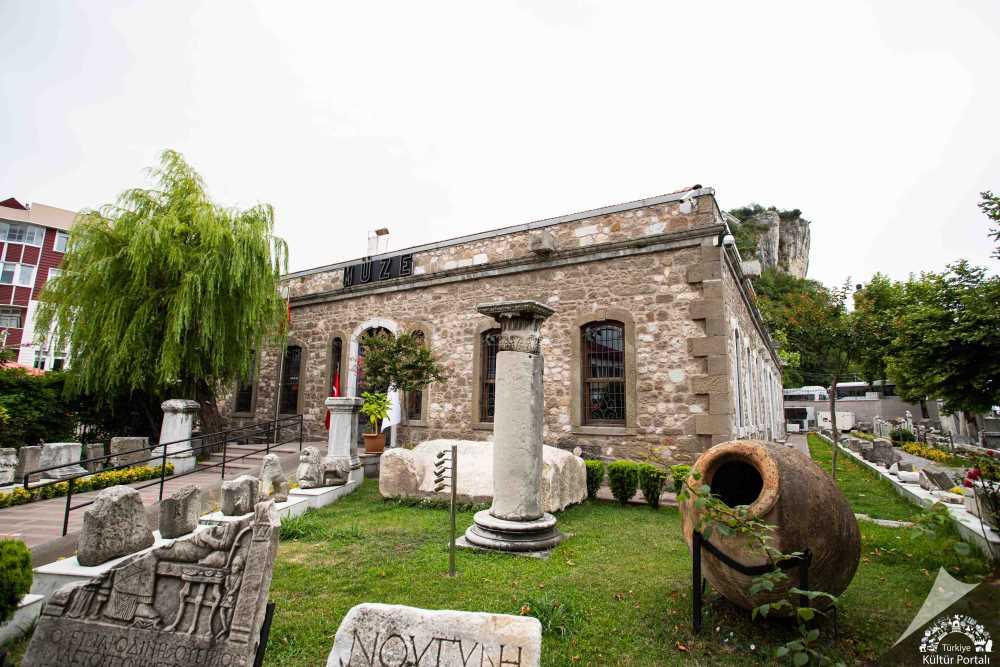
Amasra Museum
Location | Amasra Bartın Türkiye | ||||||||
|---|---|---|---|---|---|---|---|---|---|
Museum Type | Museum of Archaeology and Ethnography | ||||||||
Initial Construction | 1884, as the Naval School | ||||||||
Architectural Feature | Late Ottoman period, rectangular plan, stone and brick construction | ||||||||
Periods of Exhibited Works | Hellenistic, Roman, Byzantine, Genoese, Ottoman | ||||||||
Notable Works | Armored Torso of Emperor Hadrian, Nike Relief on Quadriga, Glykon (Serpent Statue), Hittite Dagger, Mediterranean Map dated 1852, Genoese Coats of Arms | ||||||||
Amasra Museum is located in the district of Amasra, within the province of Bartın on the western Black Sea coast of Türkiye.
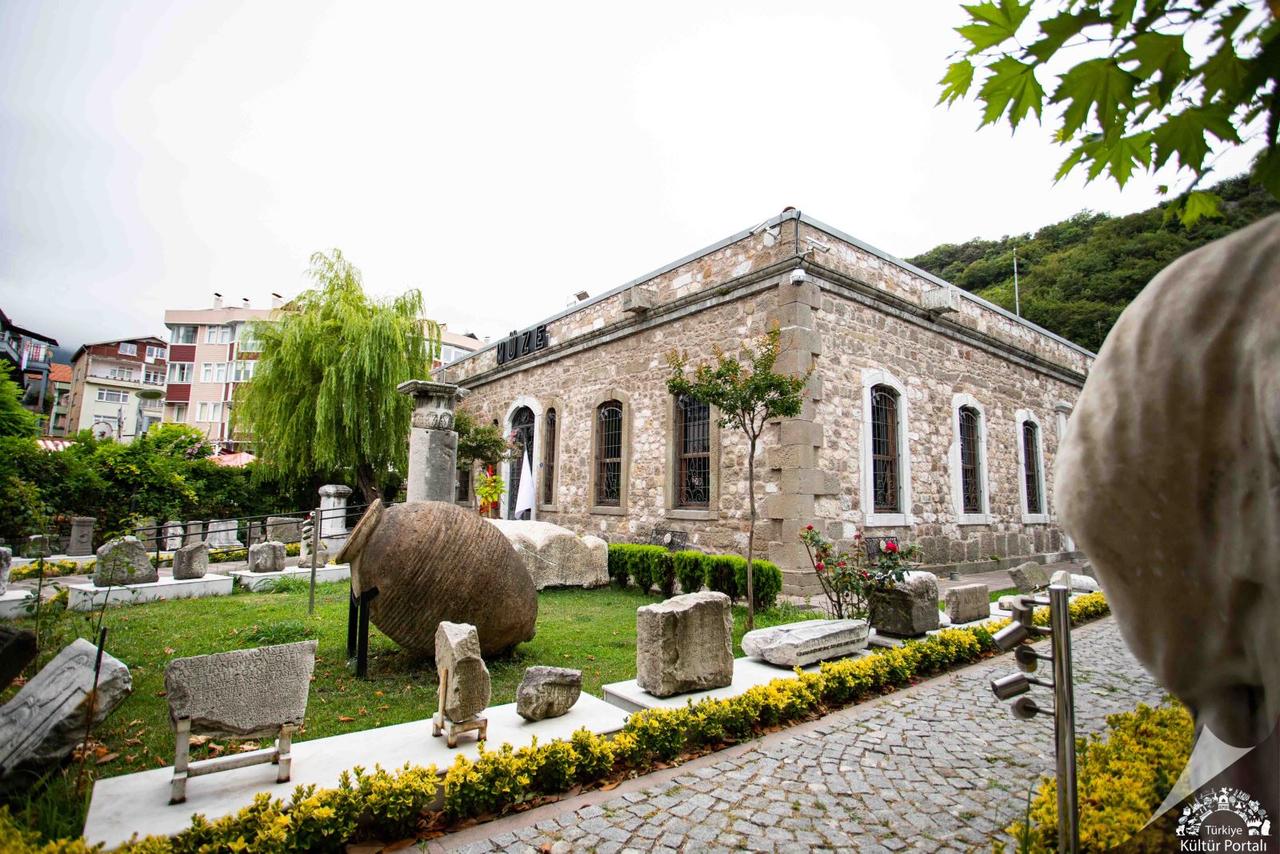
Amasra Museum (Culture Portal)
Amasra, which has served as a home to numerous civilizations from antiquity to the present day, is a region rich in historical artifacts. This has created a clear need for systematic cultural preservation and exhibition. The idea of establishing a museum in Amasra first emerged in the 1950s, with poet and writer Tahir Karaoğuz being one of the key figures who initiated efforts in this regard. As a result of the work led by Karaoğuz, Amasra’s first museum began operations in 1955 in a small room within the municipal building.
In 1969, the museum was relocated to an old primary school building. However, the inadequacy of this structure highlighted the necessity for a larger and more permanent museum facility in Amasra. In this context, the unfinished building of the Naval School, whose construction was initiated in 1884 by the Governor of Bolu, İsmail Kemal Bey, was purchased by the Ministry of Culture in 1975 and restoration work commenced in 1976. After completion of the restoration on 30 January 1982, the building was opened to the public as the Amasra Museum.
In 2014, a comprehensive renovation process was launched within the museum building, preserving its original architectural fabric while reorganizing the space according to contemporary museum standards. As part of this renovation, archives, study rooms, and interactive presentation areas were added to the museum.
The Amasra Museum building is a registered cultural asset exhibiting architectural characteristics of the late Ottoman period. Although designed as a rectangular, two-story structure, only the ground floor was completed. Constructed of stone and brick, the interior spaces are organized into exhibition halls, corridors, and office areas. Following restoration, the building was modernized to suit museum functions; digital display systems and model shipwreck galleries were also introduced for specific artifacts.
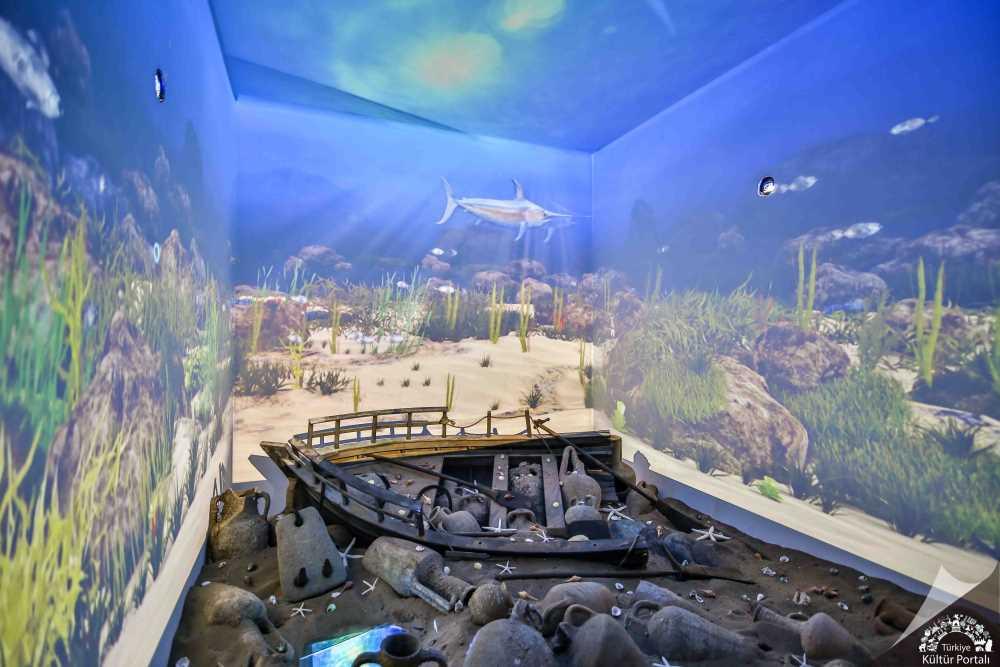
Shipwreck Reconstruction Hall (Culture Portal)
The Amasra Museum serves visitors through four main exhibition halls, a bust hall, a corridor exhibition area, and an open-air display section in the museum garden. The majority of the artifacts were discovered accidentally during construction, roadworks, landslides, and drilling operations in Amasra and its surroundings. Some were recovered from fishermen’s nets. For this reason, the museum is also known among the public as the “Museum of Accidental Finds.”
This hall displays small archaeological finds from the Hellenistic, Roman, and Byzantine periods. Particularly notable are clay and glass unguent and tear bottles recovered from tombs, gold and bronze jewelry, amphorae, jugs, small bronze statuettes, bracelets, fishing hooks, crosses, weapons, lamps, and various vessels. Additionally, gold, silver, and bronze coins from the Hellenistic, Roman, Byzantine, and Ottoman periods are exhibited here.
Significant artifacts from the Roman Imperial period are displayed in this hall, including a unique armored torso of Emperor Hadrian. Other statues from the same era are also on display.
This hall features marble artifacts from the Hellenistic, Roman, Byzantine, and Genoese periods. It contains full-figure statues, sculpted heads, funerary stelae, altars, carved architectural elements, column capitals, and bases. Roman marble statues are among the most prominent exhibits.
Clothing and decorative items from the late Ottoman period are displayed in this hall. Local textile products from the Amasra region, including bed and pillow covers, carpets, bags, copies of the Qur’an, and antique wall clocks, are part of this collection. Additionally, a Mediterranean map printed in 1852 at the imperial press is exhibited here.
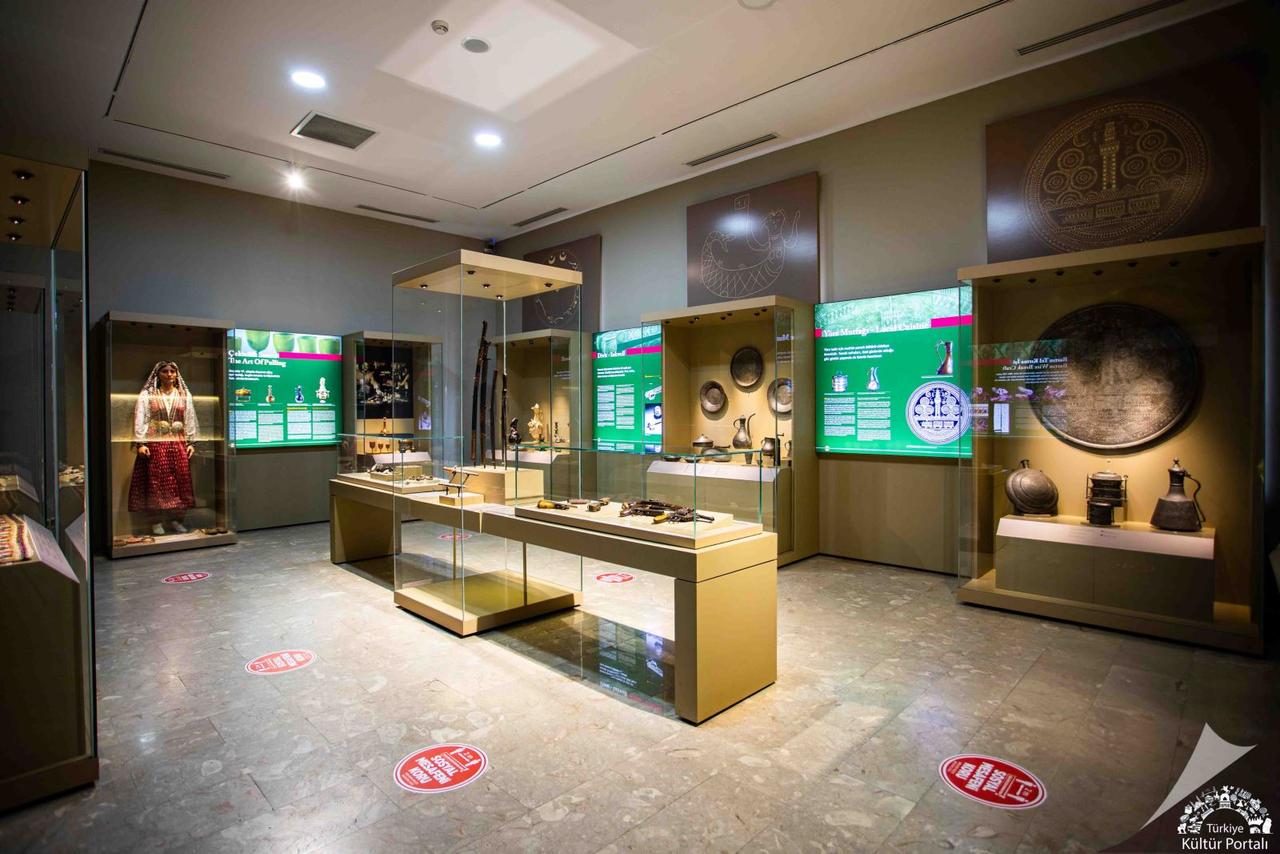
Hall 4: Ethnographic Artifacts (Culture Portal)
The Bust Hall displays eight busts, mostly from the Roman Imperial period. Among them is a portrait of Demosthenes, one of Athens’ most renowned orators.
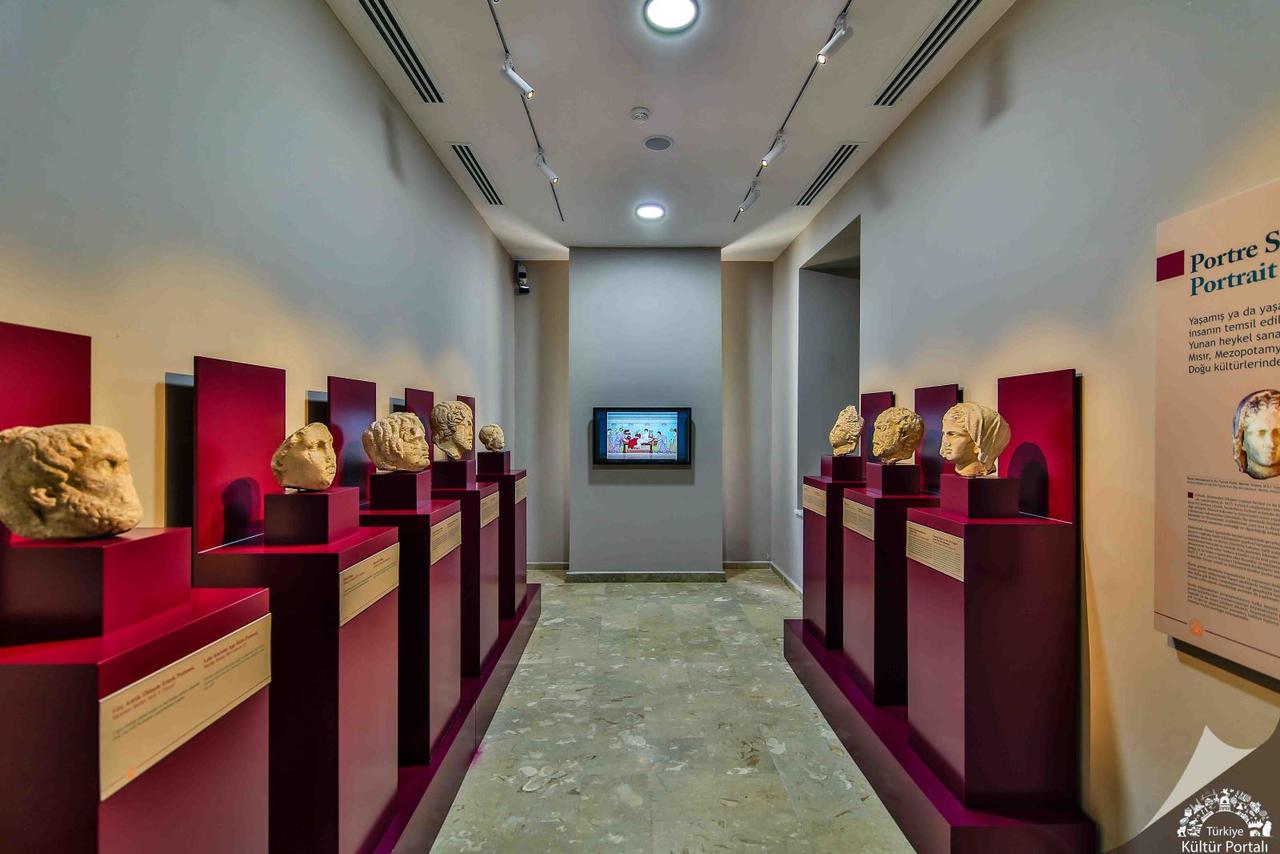
Bust Hall (Culture Portal)
In the museum garden, stone artifacts from the Hellenistic, Roman, Byzantine, Genoese, and Ottoman periods are displayed. This open-air exhibition includes funerary stelae, inscriptions, column fragments, and other architectural elements. Nine Genoese coats of arms, preserved in situ on the walls of Amasra, are also among the notable attractions for visitors.
Nike Relief on a Quadriga: This stela fragment measures approximately 76 cm in height, 97 cm in width, and 12 cm in depth. One side depicts the goddess Nike standing atop a quadriga, a four-horse chariot, while the other side illustrates a symposium scene. The artifact, believed to have been used in two distinct periods, is dated to the 1st century and after 212 CE.
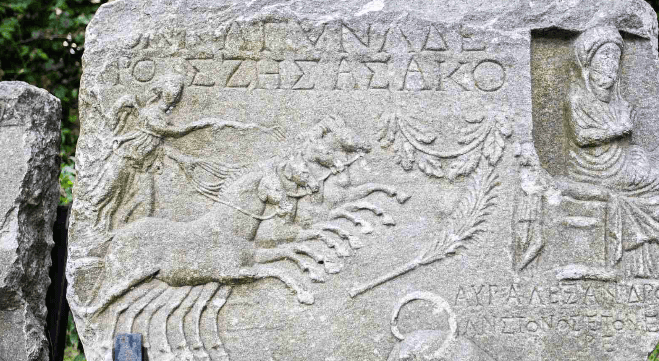
Nike Relief on a Quadriga (Turkish Museums)
Glykon (Serpent Statue): This large-scale statue represents the serpent figure associated with the Glykon cult, unique to the Paphlagonia region, and is depicted as a reincarnation of the healing god Asclepius. It is one of the rare examples influenced by Abounouteikhoslu Alexandros, the cult’s founder.
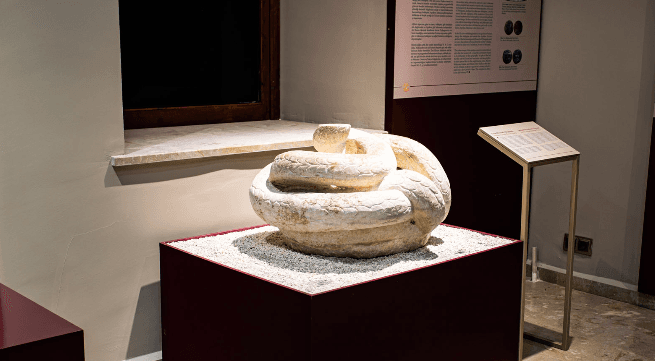
Glykon (Turkish Museums)
Armored Torso of Emperor Hadrian: This armored torso of Emperor Hadrian is the only known example of its kind in Anatolia and belongs to the Hierapytna type of statues. The armor reliefs depict the founding myth of Rome—the she-wolf and the twin brothers Romulus and Remus—as well as the figure of Pallas Athena.
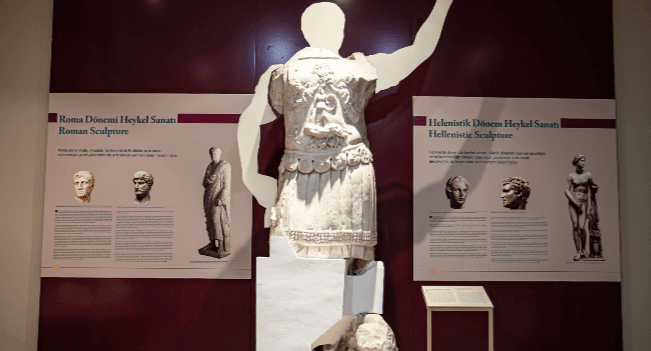
Armored Torso of Emperor Hadrian (Turkish Museums)
Hittite Dagger: This 42.5 cm long dagger was produced using the cast iron technique and features a crescent-shaped pommel. It is one of the rare surviving examples of a complete Hittite weapon.
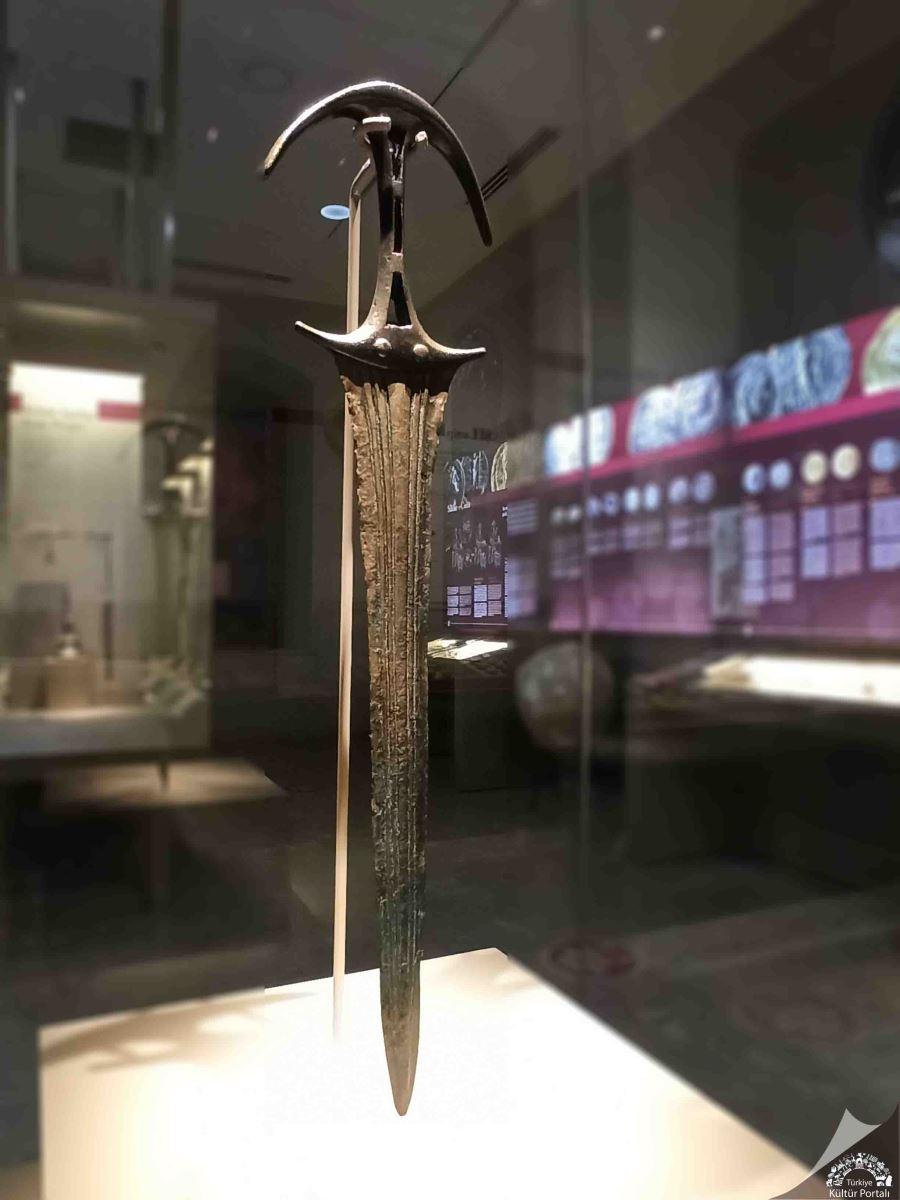
Hittite Dagger (Culture Portal)
Genoese Coats of Arms: Five Genoese coats of arms are exhibited in the museum. These stone reliefs represent the symbols of noble families and foreign officials who governed Amasra during the Genoese period.
The Amasra Museum underwent a comprehensive three-year restoration between 2014 and 2017. Following the restoration, both the physical structure and exhibition methods were modernized in accordance with contemporary museum standards. Laser-based digital integration techniques have been applied to select artifacts. A model shipwreck gallery, interactive digital zones, and a chronological display system provide visitors with a comprehensive experience.
In the first three months after reopening, the museum was visited by approximately 15,000 people and continues to attract both domestic and international tourists. Visitor numbers peak significantly during holidays and festive periods.
The Amasra Museum holds a prominent place among Türkiye’s exemplary museums due to its archaeological and ethnographic collections, original architecture, interactive presentation areas, and chronological exhibition layout. Nearly all artifacts were discovered by chance, a distinctive feature that adds to its appeal. Thousands of years of history spanning the Hellenistic, Roman, Byzantine, Genoese, and Ottoman periods are preserved and displayed in accordance with modern museum principles.
Amasra Kaymakamlığı. "Amasra Müzesi." T.C. Bartın Amasra Kaymakamlığı. Accessed May 1, 2025.http://www.amasra.gov.tr/amasra-muzesi
Anadolu Ajansı. “Tesadüf Eserler Müzesine Ziyaretçi Akını.” Anadolu Ajansı, August 11, 2017. Accessed May 1, 2025.
Culture Portal. "Amasra Müzesi." T.C. Ministry of Culture and Tourism. Accessed May 1, 2025.
Müze.gov.tr. "Amasra Müzesi." Accessed May 1, 2025.
Turkish Museums. "Bartın Amasra Müze Müdürlüğü." Accessed May 1, 2025.

Amasra Museum
Location | Amasra Bartın Türkiye | ||||||||
|---|---|---|---|---|---|---|---|---|---|
Museum Type | Museum of Archaeology and Ethnography | ||||||||
Initial Construction | 1884, as the Naval School | ||||||||
Architectural Feature | Late Ottoman period, rectangular plan, stone and brick construction | ||||||||
Periods of Exhibited Works | Hellenistic, Roman, Byzantine, Genoese, Ottoman | ||||||||
Notable Works | Armored Torso of Emperor Hadrian, Nike Relief on Quadriga, Glykon (Serpent Statue), Hittite Dagger, Mediterranean Map dated 1852, Genoese Coats of Arms | ||||||||
History
Architectural Features
Exhibition Areas and Sections
Hall 1: Archaeological Artifacts
Hall 2: Statues
Hall 3: Archaeological Artifacts
Hall 4: Ethnographic Artifacts
Bust Hall
Garden Exhibition Area
Notable Artifacts
Museum and Visitor Experience