


This article was automatically translated from the original Turkish version.
+1 More
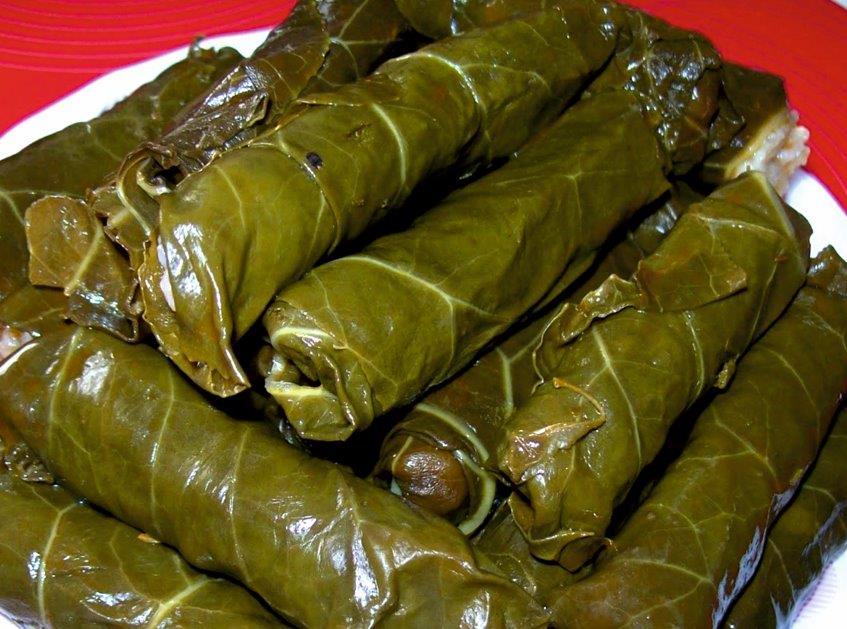
Ordu Olive Oil Lamb's Leaf Rolls / Ordu Olive Oil Beetleaf Rolls
Registration Number | 1426 | ||||||||
|---|---|---|---|---|---|---|---|---|---|
Registration Date | 26.07.2023 | ||||||||
Application Number | C2022/000421 | ||||||||
Application Date | 28.11.2022 | ||||||||
Name of the Geographical Indication | Ordu Zeytinyağlı Karalahana Sarması / Ordu Zeytinyağlı Pancar Sarması | ||||||||
Product / Product Group | Food / Dishes and Soups | ||||||||
Type of Geographical Indication | Mahreç Sign | ||||||||
Applicant / Registrant | Ordu Metropolitan Municipality | ||||||||
Address of the Registrant | Şarkiye Mah. Yükçülük Sok. No:2 Altınordu ORDU | ||||||||
Geographical Boundary | Ordu Province | ||||||||
Ordu Olive Oil Stuffed Cabbage / Ordu Olive Oil Beet Leaves Roll is a traditional dish specific to Ordu province, made by wrapping rice or bulgur-based filling in cabbage leaves. The cabbage, known in Latin as Brassica oleracea, is also locally referred to as “pancar” in the region. The filling is prepared with dried onion, parsley, garlic, tomato paste, red pepper flakes, black pepper, vegetable oil and salt. The leaves are blanched, wrapped around the filling, and cooked in a pot with hot water until ready to serve. This dish is served both in daily meals and at weddings, holidays and local events.
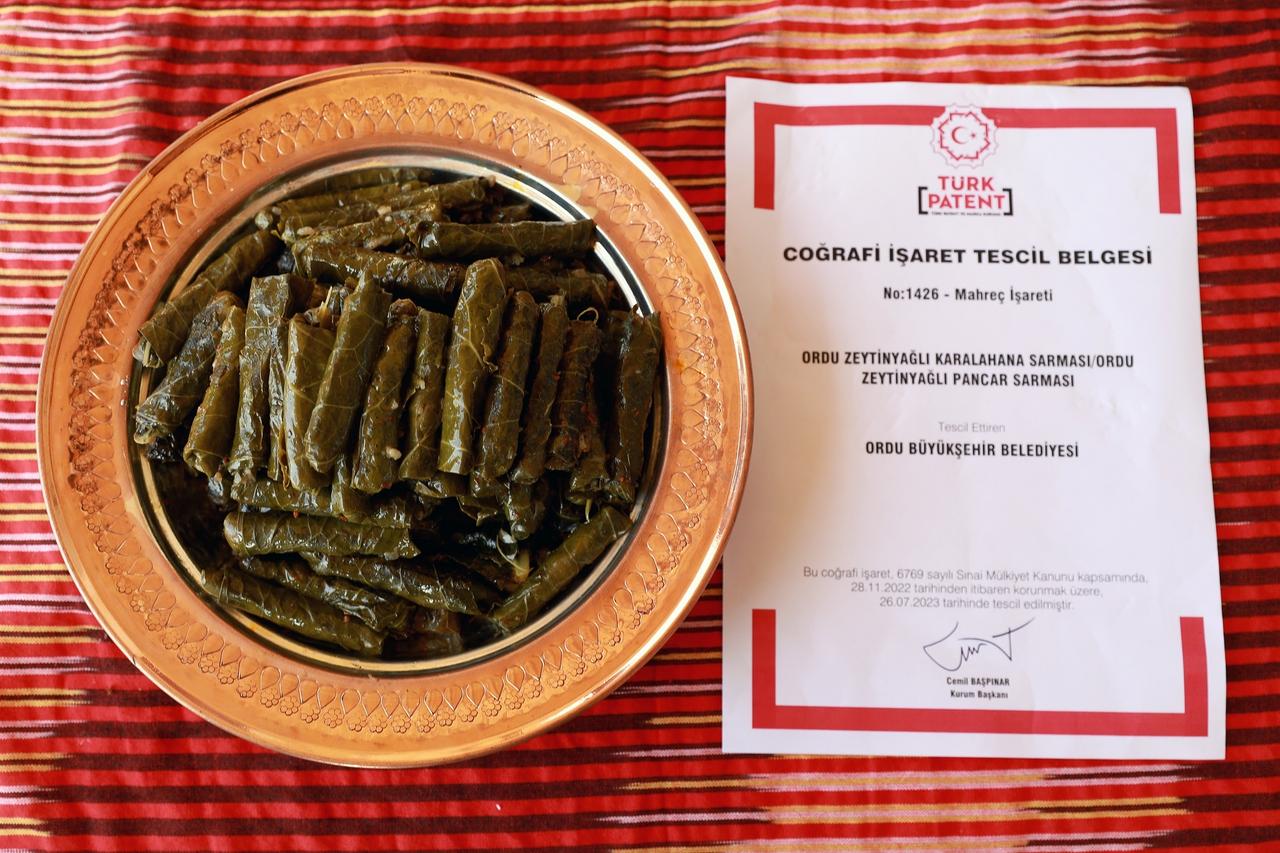
Ordu Zeytinyağlı Karalahana Sarması / Ordu Zeytinyağlı Pancar Sarması (Ordu Büyükşehir Belediyesi)
On 26 July 2023, this dish was officially registered as a geographical indication under number 1426 by the Turkish Patent and Trademark Office. The application was submitted on 28 November 2022 under reference number C2022/000421, and the registering authority is the Ordu Metropolitan Municipality. The scope of the geographical indication covers this traditional dish, classified under the product group “meals and soups,” and its production is restricted exclusively to processes carried out within Ordu province.
The geographical indication’s name refers to two distinct yet similar preparation methods: “Ordu Olive Oil Stuffed Cabbage” and “Ordu Olive Oil Beet Leaves Roll.” In this naming, the term “pancar” is a local designation used in Ordu for cabbage. The Latin name of the cabbage plant is specified as Brassica oleracea.
This dish is produced by wrapping a filling made of rice or bulgur, combined with various vegetables and spices, in cabbage leaves. The preparation and production process requires regional expertise, establishing a traditional and cultural link between the dish and its geographical origin.
Ordu Olive Oil Stuffed Cabbage / Ordu Olive Oil Beet Leaves Roll is produced by wrapping a filling of rice, bulgur or a mixture of both, along with dried onion, garlic, parsley, red pepper flakes, black pepper, tomato paste, salt and vegetable oil, into cabbage leaves. The cabbage leaves are typically blanched to make them pliable for wrapping. The rolling process requires the filling to be tightly wrapped to a thickness equivalent to a little finger.
The dish can be served either hot or cold and is most commonly presented with lemon wedges. In addition to home consumption, it is also offered at weddings, holidays, festivals, celebrations and special gatherings, holding a historic place in Ordu cuisine.
The phrase “Ordu Olive Oil Stuffed Cabbage / Ordu Olive Oil Beet Leaves Roll” and the geographical indication emblem must be clearly displayed on the product itself or its packaging. When packaging is not feasible, the phrase and emblem must be prominently displayed at the production facility where they are easily visible.
In the preparation of Ordu Olive Oil Stuffed Cabbage / Ordu Olive Oil Beet Leaves Roll, cabbage grown within the geographical boundaries of Ordu province is used. The cabbage can be consumed fresh, frozen or preserved by pickling. The leaves are first sorted, their stems removed and cleaned. They are then blanched in boiling water for five to ten minutes to soften the veins, followed by cooling in cold water.
For the filling, onions are diced into small cubes; rice or bulgur is washed and drained. In a pan, vegetable oil, onion, garlic and tomato paste are sautéed until the onions turn pink. Rice or bulgur is added to this mixture and stirred, followed by finely chopped parsley, red pepper flakes, black pepper and salt. The mixture is cooked with 200 ml of water until the liquid is absorbed, then left to rest.
The blanched cabbage leaves, previously soaked in cold water, are drained and their central veins removed. The prepared filling is placed inside each leaf and tightly rolled to the thickness of a little finger. The rolled parcels are arranged in a pot, covered with enough hot water, vegetable oil and salt to submerge them. A flat plate is placed on top to prevent the rolls from unraveling, and they are cooked over low heat for 20 to 25 minutes. The finished dish may be served hot or cold, optionally accompanied by lemon wedges.
The entire production process of this product must be carried out within the geographical boundaries of Ordu province. Both the type of cabbage used and the local knowledge and craftsmanship involved in production are directly tied to this region. Therefore, production outside this area is not permitted if the product is to retain its geographical indication status.
Inspection activities are coordinated by the Ordu Metropolitan Municipality and conducted by a minimum three-member inspection board composed of representatives from the Ordu Metropolitan Municipality and the Ordu Provincial Directorate of Agriculture and Forestry. Inspections are carried out at least once a year; additional inspections may be conducted if needed or upon receipt of complaints. Inspection results are reported in accordance with Law No. 6769 on Industrial Property and submitted annually by the Ordu Metropolitan Municipality to the Turkish Patent and Trademark Office.
The inspection board verifies compliance with usage conditions for the geographical indication, the accuracy of ingredients used, and adherence to the production methods specified in the registration documents. Any non-conformities identified during inspections and required corrective measures are communicated to the relevant individuals or institutions. In necessary cases, expert support may be obtained from specialists working in the public or private sector, or services may be procured. The registering authority is responsible for safeguarding the rights related to the geographical indication and for managing legal proceedings.
Ordu Büyükşehir Municipality. "Geleneksel Lezzet de Tescillendi." Accessed June 13, 2025.https://www.ordu.bel.tr/haber/geleneksel-lezzet-de-tescillendi-46940
Turk Patent and Trademark Office. "Coğrafi İşaretler: Ordu Zeytinyağlı Karalahana Sarması / Ordu Zeytinyağlı Pancar Sarması." Accessed June 13, 2025.https://ci.turkpatent.gov.tr/cografi-isaretler/detay/8088
Turkish Patent and Trademark Office. "Coğrafi İşaret Tescil Belgesi: Ordu Zeytinyağlı Karalahana Sarması / Ordu Zeytinyağlı Pancar Sarması." Accessed June 13, 2025.https://ci.turkpatent.gov.tr/Files/GeographicalSigns/7a45c25b-ba48-4a18-b44e-47a9a5538223.pdf.

Ordu Olive Oil Lamb's Leaf Rolls / Ordu Olive Oil Beetleaf Rolls
Registration Number | 1426 | ||||||||
|---|---|---|---|---|---|---|---|---|---|
Registration Date | 26.07.2023 | ||||||||
Application Number | C2022/000421 | ||||||||
Application Date | 28.11.2022 | ||||||||
Name of the Geographical Indication | Ordu Zeytinyağlı Karalahana Sarması / Ordu Zeytinyağlı Pancar Sarması | ||||||||
Product / Product Group | Food / Dishes and Soups | ||||||||
Type of Geographical Indication | Mahreç Sign | ||||||||
Applicant / Registrant | Ordu Metropolitan Municipality | ||||||||
Address of the Registrant | Şarkiye Mah. Yükçülük Sok. No:2 Altınordu ORDU | ||||||||
Geographical Boundary | Ordu Province | ||||||||
No Discussion Added Yet
Start discussion for "Ordu Olive Oil Stuffed Cabbage Rolls / Ordu Olive Oil Beet Leaves Rolls" article
Terminology
Usage and Labelling
Recipe
Geographical Boundary and Production Requirement
Inspection and Oversight Process