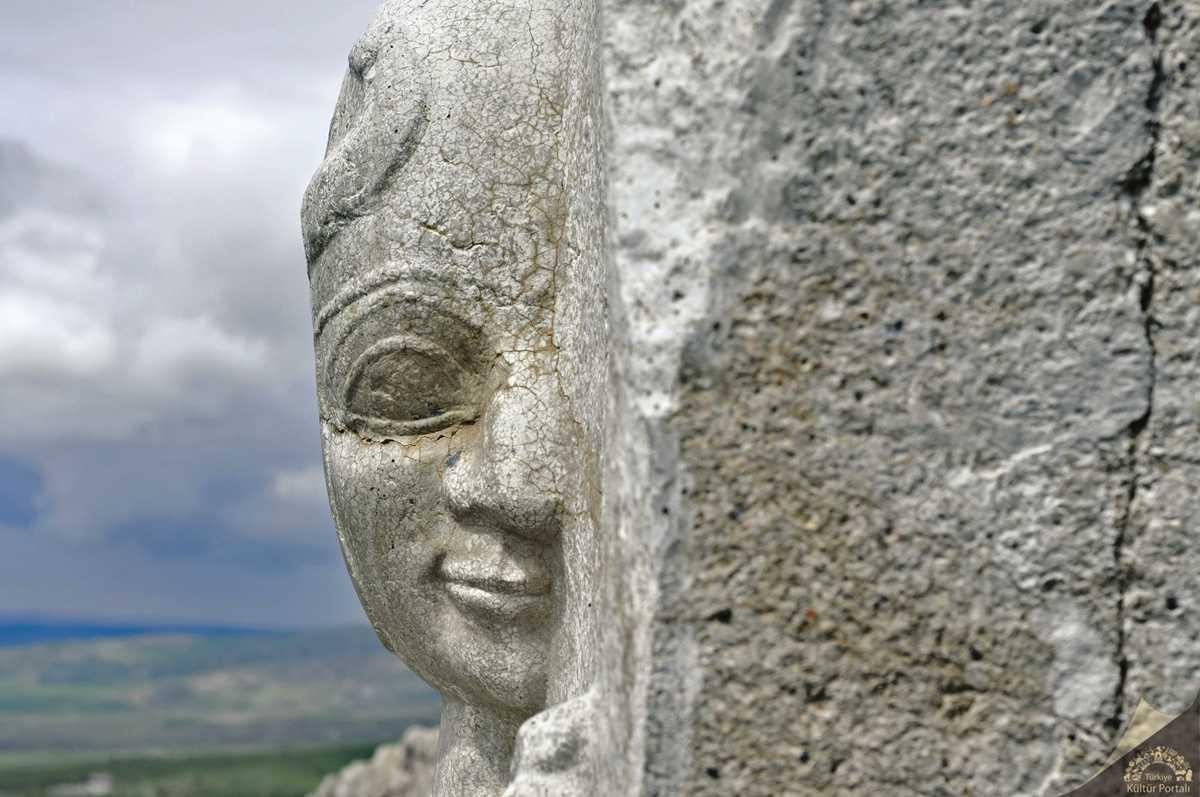
This article was automatically translated from the original Turkish version.
+2 More
Capital | Hattuşaş (Boğazköy) | ||||||||
|---|---|---|---|---|---|---|---|---|---|
Period | Bronze Age (c. 1700 BCE - 1200 BCE) | ||||||||
Writing Systems | Cuneiform script, Hieroglyph | ||||||||
Royal Title | Tabarna / Labarna | ||||||||
Queen Title | Tavananna | ||||||||
Important Agreement | Treaty of Kadesh (1280 BCE) | ||||||||
Important Kings | Telipinu Šuppiluliuma I Muršili I Hattušili I Labarna - Founding figure of the dynasty Muwattalli II Hattušili III Tuthaliya IV Šuppiluliuma II Muršili II Muršili III (Urhi-Tešup) | ||||||||
Important Wars | Campaign against Babylon Aleppo Campaign Battle of Kadesh (1274 BCE) | ||||||||
Means of Subsistence | Copper trade Agriculture Animal husbandry Beekeeping Wool production Leatherworking Tin trade | ||||||||
Hittites, upon their emergence on the historical stage, attracted attention as an Indo-European people in the Anatolian region. Although their origins cannot be definitively established, the prevailing view, based on linguistic and archaeological evidence, is that the Hittites migrated into Anatolia from the Caucasus around the end of the third millennium BCE. This migration was a long-term transformation that brought profound changes to Anatolia’s ethnic and cultural structure.
Upon arriving in Anatolia, the Hittites encountered established populations such as the Hattians, Luwians, and Hurrians. The Hattians were the most influential indigenous group, leaving a lasting imprint on Hittite state and linguistic structures. Indeed, although the official language of the civilization we call “Hittite” is Hittite, documents reveal that Hattic, Luwian, and Hurrian languages were also used in sacred rituals, diplomatic correspondence, and certain official texts. This demonstrates that the Hittites distinguished themselves not only through military or political achievements but also through their capacity for cultural interaction and synthesis.
The Hittites established their earliest settlements in Central Anatolia, around the bend of the Kızılırmak River. This region would later become the core territory of the Hittite state. The city of Hattuşa (modern Boğazkale) was chosen as the capital and became the heart of the civilization due to its strategic location and symbolic significance. At this stage, however, the Hittites were not yet an empire but rather a political entity seeking regional dominance.
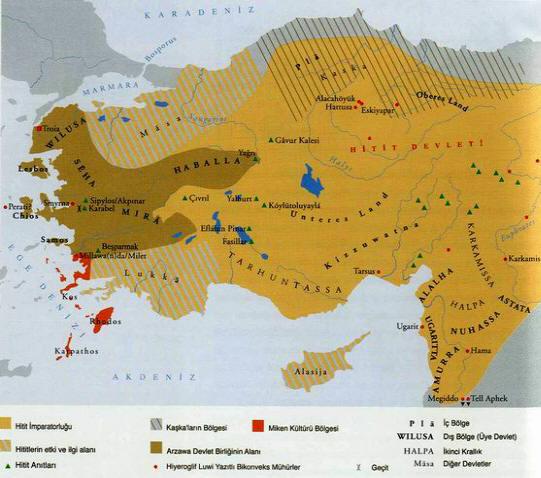
Hittite State (Ministry of Culture and Tourism)
The Hittite state truly entered the historical stage with the reign of the ruler Labarna, dated to the early 17th century BCE. Labarna is regarded in historical sources as both a founding king and the progenitor of the royal dynasty. However, in Hittite written records, his successor Hattušili I emerges as a more prominent figure in the institutionalization of the state and the consolidation of its regional power. For this reason, some scholars identify Hattušili I as the “true founder.”
Hattušili I selected Hattuşa as the capital, thereby shaping the future centralized structure of the Hittite state. During his reign, the Hittites ceased to be merely a local community in Central Anatolia and became a powerful political actor through conquests extending as far as Syria. Campaigns against Alalakh and Aleppo significantly deepened the Hittites’ interactions with the wider world. These expeditions aimed to control trade routes and extend Hittite influence into the political balance of Mesopotamia.
Following Hattušili I, Muršili I extended this expansionist policy further, capturing Aleppo and then launching a major campaign that reached Babylon. This campaign, around 1595 BCE, demonstrated the Hittites’ capacity to project power deep into Mesopotamia. However, it also resulted in political instability: Muršili I was assassinated in a palace coup, triggering a prolonged period of chaos on the Hittite throne.
The Old Kingdom period was one in which central authority had not yet fully institutionalized, and the royal lineage and dynastic structure were still being consolidated. Simultaneously, this era saw the foundation of the Hittite royal ideology, legal system, and religious structure. Hittite kings identified themselves with the title “Great King” (Tabarna) and reinforced their legitimacy by emphasizing their direct connection to the gods. During this period, the Hittite king served not only as a military leader but also as the chief priest and supreme judge. This multifaceted model of kingship strengthened the king’s sacred and central role in Hittite society. Thus, the Old Kingdom formed the core of pre-imperial Hittite political structure and laid the groundwork for subsequent periods.
Hittites (TRT Documentary)
Hattuşa served as the political, religious, and cultural center of the Hittite state. It was inscribed on UNESCO’s World Heritage List in 1986. This ancient city, located at the site of modern Boğazköy in Çorum Province, was regarded as a sacred center where the Hittites communicated with the gods. Originally conquered and cursed around 1700 BCE by King Anitta of Kussara, Hattuşa was rebuilt and declared the capital around 1650 BCE by Hattušili I. His decision was also influenced by a desire to enhance his legitimacy among the Hattians. The survival of the kingdom was linked to the belief that “the hearth fire must never be extinguished”; otherwise, it was believed that a serpent would engulf the entire city.
Muwatalli II relocated the capital to Tarhuntašša due to threats from the Kaška and proximity to southern campaigns. However, after his death, his son Muršili III (Urhi-Tešup) moved the capital back to Hattuşa. Hattuşa retained its political importance after the accession of Hattušili III.
Hattuşa was the center of royal court life and the administration of royal affairs. During the reigns of Šuppiluliuma I and Muršili II, many territories were lost, yet the kings’ first priority was always to reassert control over these regions from Hattuşa. Šuppiluliuma I transported spoils from Aleppo, and Muršili I brought treasures from Babylon to Hattuşa, enhancing the city’s economic and symbolic value. A strong agricultural infrastructure was necessary to feed the population. Hattuşa housed a vast pantheon, embodying the belief in the “People of a Thousand Gods.” Conquered cities’ deities were not destroyed; their statues were brought to Hattuşa and incorporated into the Hittite pantheon. In accordance with this practice, over thirty temples were constructed in the city. Additionally, the open-air sanctuary at Yazılıkaya, located northeast of the city, was adorned with reliefs depicting the Hittite divine assembly.
Archaeologically, Hattuşa stands out as the “city of archives” due to thousands of cuneiform tablets. Of the approximately 30,000 tablets discovered, most are religious texts, revealing the intense relationship between the Hittites and their gods. These include divination records, prayers, royal correspondence, and legal texts. The “Boğazköy-type seals” and royal seals found at Korucutepe demonstrate that royal authority was reinforced through written documents.
%2520kopya.jpg&w=1280&q=75)
Hattuşa (Cultural Portal)
In the Hittite state, the kingship institution was not merely a political authority but a holistic structure that concentrated religious, legal, and military power in a single hand. The king acted as both intermediary between the gods and the people and as commander-in-chief and supreme judge. This multifaceted role reinforced the king’s central position in Hittite political life and fostered the belief that the monarch’s decisions derived legitimacy from both earthly and divine sources.
The Hittite king was referred to by the title “Tabarna,” symbolizing the royal office. In the person of the king, the continuity of the dynasty and the permanence of the state were embodied. It was believed that the royal lineage was sacred and that kings could communicate directly with the gods. The queen, known as “Tavananna,” was not merely the king’s wife but also a significant political and religious figure who often retained influence even after the king’s death.
The administrative system was centralized, with the king at its head and provinces governed through a network of nobles and officials. The Hittite realm operated under a system of the “Great Kingdom” and subordinate “Vassal Kingdoms.” Vassal kings ruled their own territories but swore allegiance to the Hittite king and were obligated to provide military or economic support when required. This system enabled the Hittite state to exert influence over a vast territory and institutionalized the center’s control over its periphery.
Additionally, the Hittites established a consultative assembly known as the “Pankuş.” Composed primarily of nobles and prominent figures, this assembly could play an active role during succession disputes or major decision-making moments. The existence of the Pankuş is a significant example demonstrating that royal authority was not absolute and that institutional balances were maintained.
In summary, the Hittite administrative model was a sophisticated system centered on the multifaceted authority of the king, striving to balance central control with local elements. This structure facilitated the formation of a centralized state and laid the groundwork for its transformation into a multi-ethnic empire.
Hattuşa (Turkish Museums)
Hattušili I: The founding king who made Hattuşa the capital. He conducted campaigns into northern Syria, fought against the Hurrians, and dealt with rebellions within his family. He changed his heir, selecting Muršili over the previously designated “Young Labarna.”
Muršili I: The king who launched a campaign against Babylon. He captured Aleppo and ended the Hammurabi dynasty by reaching Babylon. However, he was assassinated on his return journey.
Telipinu: The legalistic king who limited throne disputes. He issued the Edict of Telipinu, formalizing the succession system. He curbed palace intrigues and secured royal stability. He clarified the succession process, including inheritance through female relatives.
Šuppiluliuma I: Considered the most powerful military king. He established dominance over Anatolia and Syria and destroyed the Mitanni Kingdom. He married Malsilgal and brought her to court as Tavananna. Although he accepted a marriage proposal from the Egyptian queen, her son was murdered, triggering a major plague in the kingdom. Both Šuppiluliuma and his son Arnuwanda died in this plague.
Muršili II: A strong king who sought to restore internal and external stability. He conducted campaigns into northern and western Anatolia, recaptured Karkemish, and appointed members of his own lineage as rulers in Aleppo and its surroundings. He successfully campaigned against the Kaška tribes and combated seal forgery. Important religious texts such as the “Plague Prayers” emerged during his reign.
Muwatalli II: The king of the Battle of Kadesh. He moved the capital from Hattuşa to Tarhuntašša. Conflicts with Egypt over the Amurru region led to war.
Muršili III / Urhi-Tešup: His brief reign placed him at the center of a succession struggle. He ascended the throne after the death of his father Muwatalli II but was deposed by his uncle.
Hattušili III: The architect of the first known written peace treaty. He seized the throne by deposing his nephew Muršili III. He signed the Treaty of Kadesh with Pharaoh Ramses II. He meticulously addressed issues such as the return of refugees, mutual aid, and peace. His daughter was made queen of Amurru. His queen, Puduhepa, played an active role in religious and diplomatic affairs.
Tudhaliya IV: One of the last great rulers. He achieved military successes despite food shortages. He fought against the rising power of Assyria and rebellions among vassal cities. He died from wounds sustained in battle near Adana Sirkeli.
Šuppiluliuma II: The last king of the Hittite Empire. He was unable to resist growing internal crises and external threats. Forged seals were produced, undermining his authority. Under his reign, the Hittite state was driven toward collapse.
Hittite Monuments (TRT2)
Geographically, the Hittite state was in direct contact with strategic regions such as Mesopotamia, Syria, Cilicia, and the Aegean. This prevented the Hittites from being confined solely to Anatolia and positioned them as an active player among the great powers of the Near East. Foreign policy was shaped by the long-term strategies of Hittite kings, with military and diplomatic activities directed toward Mesopotamia via Syria drawing particular attention from the Old Kingdom onward.
During the Old Kingdom, campaigns by kings such as Hattušili I and Muršili I extending to Aleppo, Alalakh, and Babylon enhanced Hittite influence in the region. These expeditions aimed not only at plunder or territorial gain but also at gaining control over Eastern Mediterranean trade routes. The Hittites did not rely solely on military force; they also expanded their sphere of influence through political marriages, vassal kingdoms, and diplomatic alliances.
During the New Kingdom, foreign policy became more institutionalized and diplomatic. The most notable development of this period was the Hittites’ relationship with Egypt. The Battle of Kadesh (circa 1274 BCE) during the reign of Muwatalli II marked the peak of the Hittite-Egyptian rivalry. This battle holds great significance in world diplomatic history, both for its military dimensions and for the Treaty of Kadesh that followed. The Treaty of Kadesh is regarded as the first international agreement based on the principle of equality between two great powers and demonstrates the Hittites’ high level of diplomatic skill.
The foundation of Hittite foreign policy lay in establishing balanced relations with regional powers, maintaining control through vassal kingdoms, and securing strategic trade routes. In treaties with hostile states, the invocation of divine names reveals that diplomatic documents were constructed on a religious foundation. This reflects the Hittites’ skill in using religion both as a tool of legitimacy and as a binding element in international relations.
%2520kopya.jpg&w=1280&q=75)
Lion Gate (Cultural Portal)
A significant peace and brotherhood treaty signed between Egypt and the Hittite state. The treaty was concluded between the King of Egypt, Great King Ramesses II, and the King of Hatti, Great King Hattušili. Its primary aim was to establish lasting brotherhood and peace between the two nations. It was declared “eternal” because the gods had never permitted hostility between them. The treaty stated that this peace would surpass all previous agreements between Egypt and Hatti. It emphasized that the divine order brought by the Sun and Storm gods for Egypt and Hatti was peace and brotherhood, not enmity.
The treaty was established as “eternal,” and it was stipulated that King Ramesses II would remain in good condition. It was also declared that the sons of King Ramesses II and the sons and brothers of King Hattušili would maintain perpetual peace and friendship, just as their fathers had. According to the treaty, the Egyptian king would never enter Hatti territory to seize anything, and the Hittite king would never enter Egypt. If a foreign enemy attacked Hatti and King Hattušili requested aid from King Ramesses II, the Egyptian king would send infantry and chariots to defeat the enemy and avenge Hatti. Furthermore, if a noble from Hatti fled to Egypt, the Egyptian king would capture him and return him to the Hittite king. The same applied to nobles fleeing from Egypt to Hatti; the Hittite king would capture them and return them to the Egyptian king. This obligation of return also applied to one or more common individuals. According to the treaty, returned individuals would not be severely punished, would not be blinded, and their wives and children would not be taken as revenge.
Before the treaty, the Battle of Kadesh had occurred. This battle took place during the reign of the Hittite emperor Muwatalli. Due to Kaška attacks, Muwatalli had moved the capital from Hattuşa to Tarhuntassa, but after the battle, the capital was returned to Hattuşa.
The treaty was concluded years after Muwatalli’s war, during the reign of his successor Hattušili III. Hattušili III noted that his nephew Urhi-Tešup’s attempts to gain Egyptian support had failed. The treaty also included details such as the obligation of Kurunta, appointed king of Tarhuntassa, to provide aid if he rebelled against the king, while specifying that infantry and chariots would not be requested for such aid.
Hattuşa (Go Türkiye)
Hittite society featured a broad class structure ranging from slaves to nobles, supported by a sophisticated legal system under centralized authority. Compared to other great civilizations of the period, Hittite law exhibited remarkably humane, moderate, and pragmatic characteristics. This legal system served as an effective instrument in ensuring state continuity and social order.
Hittite laws were largely established through royal decrees and inscribed on stone tablets to attain official status. Known as the “Hittite Laws,” these texts cover a wide range of subjects including property rights, marriage and family law, employer-employee relations, slavery regulations, and agricultural and pastoral matters. In criminal law, the Hittites emphasized proportionality in punishment. Unlike in Babylon, the death penalty was not commonly applied; instead, alternative sanctions such as monetary compensation, enslavement, or exile were preferred. This reflects a penal philosophy based more on restorative justice than retribution.
Society was divided into three main classes: nobles (aristocrats), free commoners, and slaves.
The king and royal family stood at the top of society, while nobles around the court, provincial governors, and the military aristocracy held significant status. The free commoners consisted of farmers, artisans, and small producers, who paid taxes and fulfilled military obligations. At the bottom of society, slaves were drawn from war captives and those unable to repay debts. However, Hittite law granted slaves certain rights: they could marry, acquire property, and in some cases, attain freedom.
The position of women in society is also noteworthy. Hittite women, particularly at the level of the queen (Tavananna), could wield influence in state affairs. Women possessed certain legal rights regarding marriage, inheritance, and property. This demonstrates that, despite the patriarchal norms of the era, women held a relatively active role in Hittite society.
Another notable feature of Hittite law is the binding force of oaths sworn in the names of the gods and sacred texts. An individual’s oath before the gods was considered as legally binding as written law. This underscores how the legal system was supported by religious legitimacy and reflects a strong connection between secular law and divine order in Hittite society.
.jpg&w=1280&q=75)
Eflatunpınar Hittite Water Monument (Cultural Portal)
In Hittite civilization, religion and belief formed a central element deeply influencing both individual and public life. The Hittite religion, polytheistic in nature, developed through the interaction of diverse cultures and evolved into a rich pantheon. For this reason, the Hittites are frequently described as the “People of a Thousand Gods.” This abundance of deities resulted from the Hittites’ integration of gods from other peoples into their own belief system.
Major deities included the Storm God (Tešup), the Sun Goddess of Arinna, the Earth Goddess, and War Gods. The Storm God was regarded as both protector of the sky and the state and played a crucial role in the king’s legitimacy. The Sun Goddess was seen as the symbol of justice and order and was especially prominent in royal ceremonies. These two deities occupied the highest level of the Hittite pantheon and were typically worshipped as a pair.
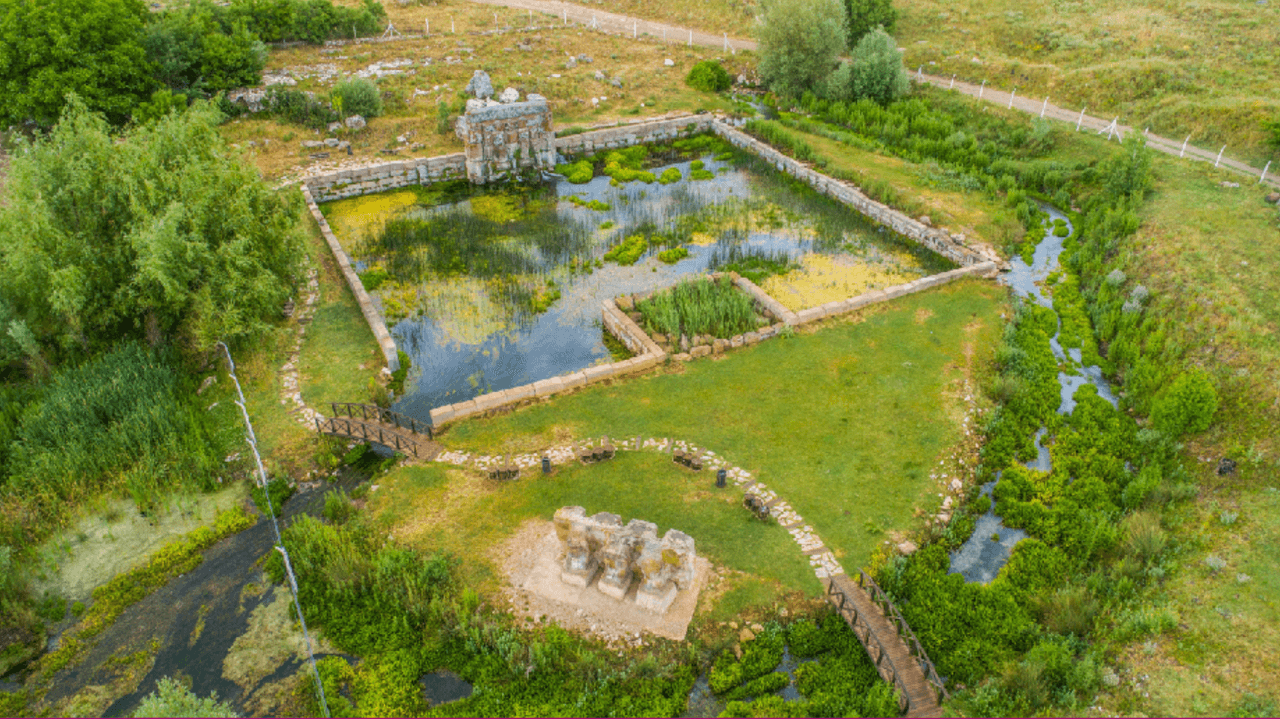
Eflatunpınar Hittite Water Monument (Culture and Life)
Hittite religion involved constant communication with the gods. Kings, regarded as chief priests, were the principal actors in religious rituals. Major festivals, annual rites, and offerings to the gods were regularly conducted according to the state calendar. Centers such as Hattuşa, Arinna, Nerik, and Yazılıkaya were important religious and political cult sites. The reliefs at Yazılıkaya, depicting processions of deities, carried great symbolic value as ritual scenes.
For the Hittites, religion was the direct guarantee of state order and social stability. The sacred bond between the royal family and the gods supported the legitimacy of governance. Consequently, treaties and oaths were not only made between kings but also performed in the presence of the gods. In treaties, invoking the gods’ names implied that violations of obligations would incur divine curses.
The Hittites placed great importance on magic, divination, and purification rituals. Divination texts, dream interpretations, and oracle tablets provide rich information on efforts to discern the gods’ will. In response to adverse conditions such as plague, drought, or military failure, elaborate rituals were performed to appease the gods’ anger.
%2520kopya.jpg&w=1280&q=75)
Fasıllar Monument (Cultural Portal)
The Hittite civilization produced original works in art and architecture, synthesizing indigenous Anatolian elements with influences from Mesopotamia and Syria to create a layered cultural structure. Hittite art primarily served religious and political purposes, conveying the power of the gods and royal authority through monumental structures, reliefs, and seals.
Art is best exemplified by rock reliefs, depictions of gods and goddesses, animal figures, and mythological scenes. Particularly at the open-air sanctuary of Yazılıkaya, the processions of deities demonstrate the aesthetic and symbolic sophistication achieved by Hittite art. In reliefs, gods are typically depicted walking, dressed in ceremonial garments, and arranged in a clear hierarchical order. Animals such as bulls, lions, and eagles carried sacred and protective meanings. Lion-gates stood out as powerful symbols adorning royal entrances.
Architecture emphasized functionality. Urban planning, palace and temple architecture, defense systems, and water channels were constructed using technical and strategic knowledge. In Hattuşa and other Hittite settlements, walled city layouts, monumental gates, and multi-room structures are prominent. Büyükkale is considered one of the most magnificent examples of Hittite palace architecture. Additionally, durable and functional structures were built using local materials and construction techniques.
Literacy: The Hittites adopted cuneiform script from Mesopotamia and adapted it to their own language. They also used Anatolian-specific hieroglyphic writing in diplomatic and official documents. Hittite written records were mostly inscribed on clay tablets, containing royal annals, treaties, legal texts, ritual instructions, and letters. This written legacy is a crucial source for understanding Hittite history and the interaction between Hittite and Akkadian as the diplomatic language of the period.

Yazılıkaya (Cultural Portal)
The Hittite economy was based largely on agriculture, animal husbandry, and limited trade. The state’s geographic location and natural resources encouraged a focus on agricultural production and internal trade. Agriculture was not merely an economic activity but also a fundamental pillar of social order and state administration.
Major agricultural products included wheat, barley, lentils, chickpeas, and grapes. Agricultural production was primarily carried out by peasants but was tightly controlled by the central authority. Royal estates (haltu farms) and temple lands were significant production areas under direct state control. Products from these estates were allocated to the palace, the army’s provisions, and offerings to the gods. Thus, agricultural production was indispensable not only for subsistence but also for maintaining political legitimacy and ritual continuity.
Animal husbandry also held an important place in the Hittite economy. Cattle, sheep, and goats were widely raised. These animals were used not only for meat and milk but also as sacrificial animals, draft animals (oxen for plowing), and units of taxation. Additionally, beekeeping, leatherworking, and wool production provided supplementary economic support.
The economic system was largely based on centralized control. Surplus production was stored in royal and temple granaries and redistributed as needed. This system enabled the central authority to ensure food security during famine years and maintain control over the population. The storage of staple crops such as wheat in silos and their periodic distribution also indicates an early form of public administration.
The Hittites engaged in limited but strategic foreign trade. The procurement of tin, the most valuable metal of the Bronze Age, and copper trade strengthened their relations with regions beyond Central Anatolia. Trade activities were generally conducted through vassal kingdoms and neighboring states, with some trade colonies established in cities. The Hittites also sought to facilitate the flow of precious metals, luxury goods, and rare raw materials through diplomatic channels.

Yazılıkaya (Cultural Portal)
One of the most important reasons for the Hittite state’s long-lasting presence on the historical stage was its highly organized and functional military structure. Both during the Old Kingdom and especially the New Kingdom, the Hittite army was not merely a defensive force but the primary instrument of expansionist policy. The organization of the army, its weaponry, tactics, and military diplomacy demonstrate that the Hittites possessed one of the most powerful military structures of their era.
The Hittite army consisted primarily of infantry, chariots, and auxiliary vassal units. Infantry were armed with spears, swords, axes, bows, and arrows. However, the backbone of Hittite military power was the two-man light chariot. These chariots, carrying a driver and a warrior, provided strategic advantages on the battlefield due to their speed and maneuverability. This system proved decisive in major battles such as the Battle of Kadesh against the Egyptians.
Supreme command of the army rested with the king. The king often personally led campaigns, reinforcing his dual role as both military and religious leader. Generals from the royal family or high-ranking nobles commanded various units. Military support was drawn from provinces, vassal kingdoms, and the royal court. During wartime, the population was mobilized through taxation and corvée labor, and certain productive classes were temporarily conscripted.
The Hittites placed great importance on intelligence and diplomacy before warfare. Treaties with vassal kingdoms often included military obligations, requiring them to send troops to the Hittite king when needed. This system supported the central army during distant campaigns. After conquests, territories were reduced to vassal status; local rulers swore allegiance to the Hittite king and entered military service.
Hittite military strategies were not limited to open-field battles. Siege techniques were employed to capture enemy fortresses, involving stone-throwing devices similar to catapults and ramps. After victory, captured enemies were either enslaved or resettled on Hittite territory and made subject to taxation. Additionally, thanksgiving rituals involving sacrifices to the gods were conducted.
In Hittite society, women were not confined to domestic roles but were active figures in various social and religious domains. The legal status, daily roles, and religious positions of women reveal that the Hittites established a more balanced and pragmatic social order compared to their contemporaries.
Hittite legal documents show that women could own property, possess rights in marriage and divorce proceedings, and inherit. In inheritance law, although male children were given priority, daughters could inherit if there were no sons. Hittite laws explicitly granted women the right to alimony or compensation upon divorce.
The role of women in the royal family was even more prominent. The queen, bearing the title “Tavananna,” was not merely the king’s spouse but also a significant religious authority. It is known that even after the king’s death, the Tavananna retained her role and actively participated in ceremonies. This demonstrates that women in Hittite society wielded functional power, not merely symbolic influence.
In daily life, Hittite women played active roles in domestic tasks. Women’s labor was fundamental in household economy activities such as weaving, grinding grain, baking, and producing wine and beer. Additionally, women served as priestesses in certain rituals and participated in divination and purification ceremonies. Particularly in rites connected to fertility and agriculture, female figures were central.
Hittite women also appeared as those who made offerings at ceremonies and festivals, sang hymns to the gods, and participated in sacrificial rites. Some tablets record women as possessing “magical” knowledge, such as performing divination, prophecy, and healing. These records indicate that women were not only confined to the home but also specialized in matters of faith and healing.
The Hittites became one of the leading civilizations of their time in mining and metallurgy. Their effective exploitation of Anatolia’s rich mineral resources enabled them not only to build a powerful army and economy but also to achieve regional political dominance. Especially during the Bronze Age, bronze, an alloy of tin and copper, formed the foundation of Hittite technology and foreign trade relations.
Copper, tin, gold, silver, lead, and iron were the primary metals in Hittite mining. The most commonly used metal was bronze, valued for its durability and used in weapons, armor, ornaments, and everyday tools. Tin and copper were sourced from different regions; since tin deposits were limited in Hittite territory, this metal was generally obtained through trade. This necessity drove the Hittites to establish trade relations with regions such as Mesopotamia, Iran, and the Caucasus.
Iron was rare and precious during the Hittite period. It was used only in the possessions of elite individuals and for religious or ceremonial objects. Its use in weapons was limited. However, the Hittites are regarded as among the first civilizations to work with iron, reinforcing the view that they played a leading role in the transition to the Iron Age.
Mining activities were not limited to extraction; the processing of metals reached a high level of craftsmanship. Casting techniques, riveting, gilding, and inlay art were among the principal methods used in Hittite metallurgy. Hittite artisans produced metal objects that were both functional and aesthetically striking, including spearheads, daggers, helmets, cauldrons, jewelry, and seals.
Metal production was under state control. Some tablets record royal orders for mining and processing metals in specific regions. Artisans working in palace workshops carried out production under the central authority. This demonstrates that metal held both strategic and symbolic value in the Hittite economy.
In terms of trade, metal products served as exchange media in both domestic and international markets. Some treaties stipulated that vassal kingdoms must provide gold or copper, indicating that metals were valuable elements in international diplomacy.
The Hittites, as one of the most powerful and influential civilizations in Anatolian history, left deep imprints on the region’s political, cultural, and social structure. Settling in Central Anatolia from the beginning of the second millennium BCE, they established a powerful state structure and shaped Anatolia’s destiny as its first major centralized state. In this regard, the Hittites are recognized as the “people who founded Anatolia’s first empire.”
Anatolia’s rich natural environment, fertile lands, and strategic location provided favorable conditions for Hittite agricultural production and political expansion. The capital, Hattuşa, established in the Kızılırmak basin, assumed a central role both militarily and administratively, bringing many regions of Anatolia under Hittite control. Thus, the Hittites provided an early model for unifying Anatolia under political unity.
The Hittites also achieved a cultural synthesis in Anatolia. Through interaction with indigenous peoples such as the Hattians, Luwians, and Hurrians, they created a multi-layered structure in both language and religious beliefs. This marked a pivotal moment in Anatolian cultural history. Although the Hittite language was Indo-European, its written language and religious literature incorporated Hattic and Hurrian influences. Thus, a multilingual, multicultural, and polytheistic worldview emerged in Anatolia.
One of the Hittites’ most important legacies to Anatolia is written culture. Treaties, laws, ritual texts, and royal annals inscribed on clay tablets are among the earliest written documents in Anatolia. These documents not only illuminate Hittite history but also enable us to understand interactions with other cultures in the region.
Moreover, the Hittites’ centralized administrative structure, legal system, and doctrine of legitimacy based on the relationship between god and king left indirect influences on later Anatolian civilizations such as the Phrygians, Urartians, Lydians, and even the Romans. Particularly urban planning, palace architecture, fortification systems, and temple organization served as models for state formation processes in Anatolia.
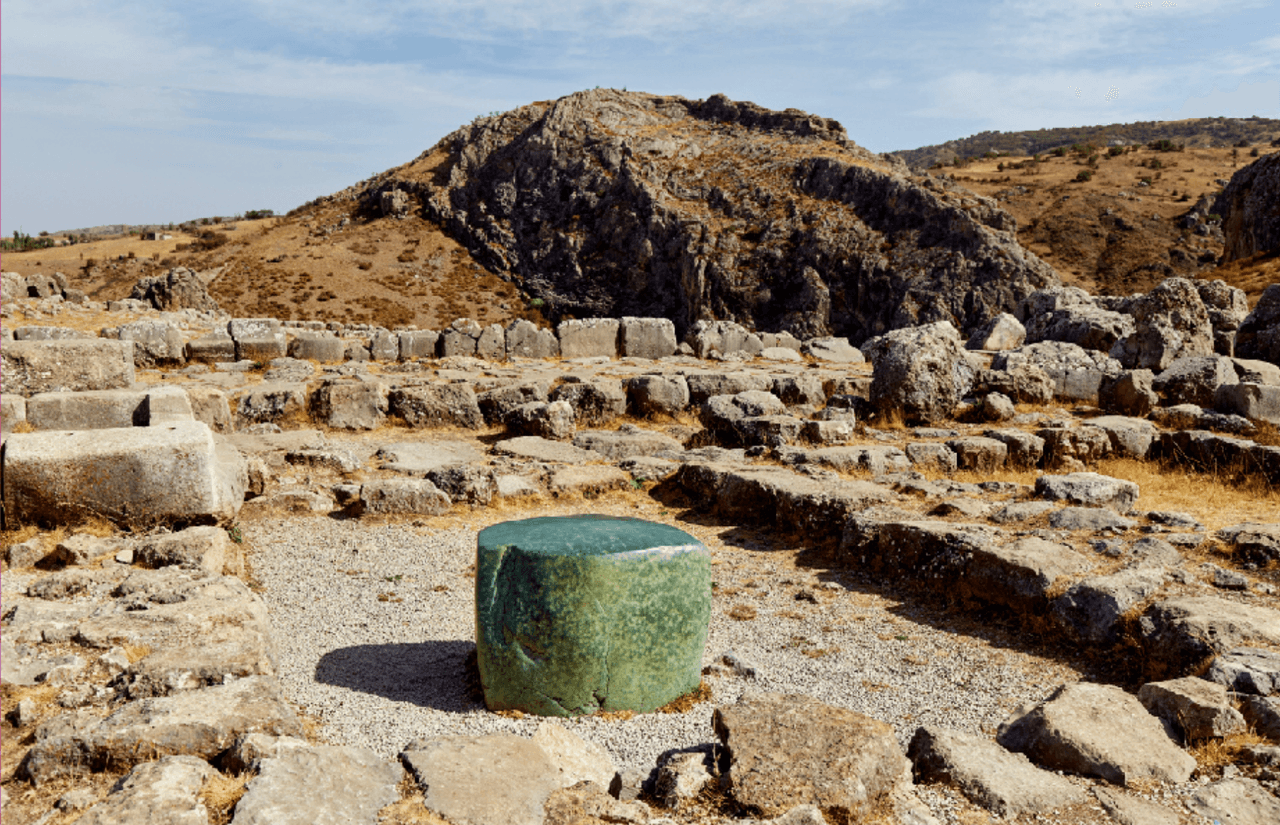
Hittites (Culture and Life)
The Hittites hold great significance as the first civilization known to have committed an Indo-European language to writing. The language they spoke is referred to in modern scholarship as “Nesili” or “Hittite.” This language is not only the oldest known Indo-European language in Anatolia but also uniquely preserves many early features of the Indo-European language family.
Grammatically, Hittite is inflected and follows a subject-object-verb structure. Verbs are conjugated according to person, tense, mood, and voice, while nouns change according to gender, number, and case, demonstrating a rich morphological structure. Additionally, the existence of two distinct verb types (mi and hi) in Hittite suggests the language possesses unique historical layers.
Hittite writing was recorded using cuneiform script, of Mesopotamian origin, which the Hittites adapted for official documents, treaties, religious texts, and royal annals. The tens of thousands of clay tablets found in Hattuşa’s archives attest to the Hittites’ strong bureaucratic and intellectual tradition.
In addition to Hittite, other languages such as Hattic, Hurrian, Luwian, Akkadian, and Sumerian were also used in official and religious documents. This demonstrates that the Hittites were a multilingual and multicultural society, actively employing different languages in diplomatic, religious, and administrative contexts. The Treaty of Kadesh with Egypt, for example, was recorded in two versions—one in Akkadian (the diplomatic language) and the other in Egyptian hieroglyphs—illustrating this multilingualism.
Among the notable types of Hittite written documents are treaties, laws, purification rituals, divinations, magic texts, royal annals, and literary texts (myths, prayers). These texts serve as fundamental sources not only linguistically but also for understanding religious, social, and political history.
The writing system combined ideograms (symbols representing meaning), syllabic signs, and phonetic spelling. Some words were written using Hattic or Sumerian signs, with Hittite pronunciations provided as explanatory notes. This mixed structure reflects the multi-layered nature of Hittite written culture.
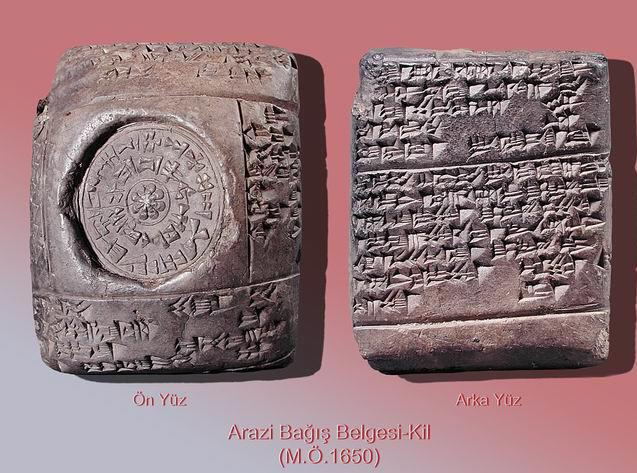
Hittite Cuneiform
Hittite belief systems extended beyond official cults of the gods; numerous popular beliefs, magical practices, and supernatural convictions formed an integral part of social life. These beliefs functioned as a spiritual safety net in response to unexplainable phenomena such as illness, famine, and death, and were deeply interwoven with religious rituals.
Divination, oracle, and purification texts found in Hittite tablets reveal the civilization’s persistent effort to communicate with supernatural forces. Particularly, “magic texts” (ritual texts) in royal archives indicate that illnesses were believed to result from divine anger and were therefore addressed through purification rites to appease the gods. The “purification” (pišaiš) and “pacification” rituals described in these texts confirm the institutionalization of magical practices.
Superstitious beliefs centered on evil spirits, cursed objects, and taboos that provoked divine wrath. For example, certain animals (snakes, scorpions, black cats) were believed to bring misfortune, and specific behaviors were avoided. Natural disasters or military failures were commonly attributed to divine anger or a “sin” committed by the people. To appease the gods, offerings were made, sacrifices were performed, and priests conducted “purifying” magic.
Women frequently participated in such magical practices. Female priestesses (sometimes referred to as “witches” in tablets) played active roles in healing magic and fertility rituals. Similarly, popular beliefs such as protection from the evil eye, expulsion of evil spirits, and enhancing fertility were widely practiced. Materials used in these practices included herbs, oils, sacrificial blood, incense, animal figurines, and special mixtures.
Another notable feature of Hittite magical texts is the systematic application of divination and oracle methods. Techniques such as bird flight observation, hepatoscopy (reading the entrails of sacrificial animals), and dream interpretation were used to decipher the gods’ messages. These practices could even influence state decisions. For instance, before launching a campaign, the king would consult dreams or oracle texts to determine whether the gods approved.
In Hittite civilization, food culture was an inseparable part of both daily life and religious rituals. The Hittites, engaged in agriculture and animal husbandry on Anatolia’s fertile lands, developed a sophisticated culinary tradition for their time. Food recipes recorded on tablets, offerings presented in rituals, and archaeological finds provide important insights into what the Hittites ate, how they cooked, and how they related to food.
The foundation of Hittite diet was grains. Barley, wheat, and emmer were ground into flour and made into various types of bread. Hittite bread was not only plain but also enriched with honey, fruits, or oil. Additionally, wheat porridge and barley-based foods were widely consumed by both commoners and the royal kitchen.
Meat and animal products were consumed more frequently on special occasions and during rituals. Beef, mutton, goat, and pork were eaten, typically boiled, roasted, or grilled. Poultry and game meats also appeared on the table. Animal fat was used as a flavor enhancer, while dairy products such as milk, yogurt, and cheese were part of daily nutrition.
Vegetables and fruits were commonly consumed, especially among the lower classes. Onions, garlic, legumes, figs, grapes, and apples were eaten raw or cooked. Grapes were also the primary fruit used in Hittite wine production. Archaeological findings indicate that the Hittites developed specific techniques for winemaking and that wine held an important place in both social and ritual contexts.
Beverage culture in Hittite society was diverse. Besides water, the most common beverages were beer made from barley and wine made from grapes. Beer was a popular drink among lower classes, while wine was more associated with elite circles and religious ceremonies. Archaeological discoveries of jars, cups, and vessels indicate a developed culture of serving and storing beverages.
Food culture was not limited to nutrition but also occupied a central place in rituals. Offerings to the gods, sacred breads, and ritual meals were regarded as material manifestations of faith. During festivals, the king and queen, in their roles as chief priest and priestess, presented meals on behalf of the gods, revealing the central role of food in the belief system.
Although the Hittite Empire reached its peak in the 14th century BCE, it began to weaken politically, militarily, and economically by the early 12th century BCE. This decline was multifaceted and complex, triggered by internal unrest, external pressures, climate change, disruptions in trade routes, and threats from the Sea Peoples.
During the New Kingdom, political successes and diplomatic victories achieved under strong kings such as Muwatalli II, Hattušili III, and Šuppiluliuma II gave way to internal strife and succession struggles. Palace intrigues and successive changes of rulers weakened central authority, while control over provincial administration gradually eroded. Disobedience from vassal kingdoms and the increasing autonomy of local rulers accelerated the fragmentation of the Hittite state.
The most significant external threat came from the Sea Peoples, mysterious nomadic and warrior groups whose identities remain unclear. Their destructive raids along the Aegean and Mediterranean coasts severely impacted not only the Hittites but also Egypt, Ugarit, Cyprus, and other Eastern Mediterranean civilizations. The destruction and abandonment of Hattuşa around 1200 BCE indicate the complete collapse of Hittite authority. After this event, the Hittites largely vanished from the historical stage, although their cultural influence endured.
After the fall of the Hittites, small kingdoms known as “Late Hittite Principalities” were established in Central Anatolia by Hittite-descended communities. These states preserved Hittite writing, rituals, and architectural traditions, ensuring a form of cultural continuity. These principalities were particularly influential in Southeastern Anatolia and Northern Syria, eventually disappearing with the rise of the Assyrian Empire.
The Hittite civilization holds great importance for historical scholarship, primarily due to its cuneiform tablets. The thousands of clay tablets found in Hattuşa’s archives contain rich information on law, diplomacy, religion, economy, and daily life. Thanks to these documents, not only Hittite history but also their relationships with contemporary civilizations have been illuminated. The Treaty of Kadesh is one of the universal legacies this heritage has left to world history and is symbolically displayed in the United Nations building.
Akdağ, Özge. "Hititlerin Tanrılarını Memnun Etme Yöntemleri ve Bunun Hitit Arkeolojisine Yansımaları." Avrasya Sosyal ve Ekonomi Araştırmaları Dergisi 5, no. 2 (2018): 23-36. Accessed August 1, 2025.https://dergipark.org.tr/en/download/article-file/591318
Akdoğan, Rukiye. "Hititler Döneminde URUAdaniya." *Archivum Anatolicum – Anadolu Arşivleri* 11, no. 1 (2017): 1-28. Accessed August 1, 2025.
Akçelik, Seval Salın. "Hitit Dininin Niteliksel Özellikleri." Kafdağı 3, no. 1 (2018): 52-70. Accessed August 1, 2025.https://dergipark.org.tr/tr/download/article-file/833172
Alp, Sedat. "Asur Ticaret Kolonileri Çağında Kaneš Neša'da Hititler'in Varlığı ve Yoğunluğu (Bilimsel Bir Oluşumun Öyküsü)." Archivum Anatolicum – Anadolu Arşivleri 3, no. 1 (1997): 2-17. Accessed August 1, 2025.
Altunok, Mustafa. "Hititler: Boğazköy'den Yükselen Bir Yönetim Güneşi." Akademik Hassasiyetler 6, no. 11 (2019): 147-160. Accessed August 1, 2025.
Aslantürk, Nursel, and Zuhal Yonca Odabaş. "Hititler'de Evlilik ve Evlenme Geleneklerinin Günümüz Anadolusu'na Etkileri." Kafkas Üniversitesi Sosyal Bilimler Enstitüsü Dergisi 28 (2021): 353-370. Accessed August 1, 2005.https://www.kafkas.edu.tr/dosyalar/sobedergi/file/28/Hititler%E2%80%99de%20Evlilik%20ve%20Evlenme%20Geleneklerinin%20G%C3%BCn%C3%BCm%C3%BCz%20Anadolusu%E2%80%99na%20Etkileri.pdf
Aslantürk, Nursel. "Hitit Metinlerinde Geçen Hatti Tanrısı: Šımmıšu/Šımešu/Šımšu/Šımıšu." Gazi Akademik Bakış 12, no. 24 (2019): 341-355. Accessed August 1, 2025.https://dergipark.org.tr/en/download/article-file/741710
Ataş, Vatan. Tevrat ve Hititler: Hitit Siyasi, Kültür ve Dini Dünyası ile Tevrat'ın Mukayesesi. PhD thesis, Necmettin Erbakan Üniversitesi, 2020. Accessed August 1, 2025.https://www.proquest.com/docview/2606880151
Aydoğan, Sevim. "Uygarlık Tarihinde Hitit Uygarlığının ve Kadeş Antlaşmasının Yeri." Adnan Menderes Üniversitesi Sosyal Bilimler Enstitüsü Dergisi 8, no. 2 (2021): 129-151. Accessed August 1, 2025.https://dergipark.org.tr/tr/download/article-file/1846217
Bahar, Hasan. "Konya Çevresi Tarih Araştırmaları 1: Hititler'den Romalılara Kadar Isauria Bölgesi." Selçuk Üniversitesi Edebiyat Fakültesi Dergisi 9-10 (1994): 219-246. Accessed August 1, 2025.https://dergipark.org.tr/en/download/article-file/151919
Beyşehir Fasıllar Hitit Anıtı. Kültür Portalı (T.C. Kültür ve Turizm Bakanlığı). Accessed August 1, 2025.
Bozca, Sebahat. "PAŠKUWATTİ Ritüeli (CTH 406)." Ankara Hacı Bayram Veli Üniversitesi Edebiyat Fakültesi Dergisi 2, no. 6 (2022): 153-159. Accessed August 1, 2025.https://dergipark.org.tr/en/download/article-file/2352818
Bozgun, Şafak. "Hititler'de Ateş Kültü ve Tanrı Pahhur (I)." Colloquium Anatolicum, no. 20 (2021): 147-161. Accessed August 1, 2025.https://dergipark.org.tr/en/download/article-file/1701148
Coşkun, İsmail. "Hitit İmparatorluk Dönemi Krallık Asası." Yüzüncü Yıl Üniversitesi Sosyal Bilimler Enstitüsü Dergisi 40 (2018): 9-26. Accessed August 1, 2025.https://dergipark.org.tr/en/download/article-file/664176
Demirci, Kürşad, and Burcu Falay. "Ana Hatlarıyla Hitit Dini." *Cumhuriyet İlahiyat Dergisi* 20, no. 1 (2016): 35-60. Accessed August 1, 2025.
Eflatunpınar Hitit Water Monument - Konya." Culture Portal (Republic of Turkey Ministry of Culture and Tourism). Accessed August 1, 2025.https://www.kulturportali.gov.tr/turkiye/konya/gezilecekyer/beysehir-eflatunpinari-hitit-su-aniti
Ertem, Hayri. "Hattiler ve Hititler Dönemi'nden Eski Türklere, Osmanlılara ve Günümüz Anadolusuna Kadar Uzanan Bazı Benzer Unsurlar - 1." Archivum Anatolicum - Anadolu Arşivleri 6, no. 2 (2003): 39-72. Accessed August 1, 2025.https://dergipark.org.tr/en/download/article-file/770894
Go Türkiye. "Hattusha - Uncovering." YouTube video, Published October 27, 2022. Accessed August 1, 2025.https://www.youtube.com/watch?v=OuTnpVhS8GY
Gökçek, L. Gürkan, and Hasan Tuncer. "Eski Anadolu'da Tekstil Ekonomisi: Asur Ticaret Kolonileri Çağı ve Hititler Dönemi." Akademik Tarih ve Düşünce Dergisi 11, no. 6 (2023): 3992-4009. Accessed August 1, 2025.https://dergipark.org.tr/en/download/article-file/4375963
Gür, Barış. "Hititler, Mikenler ve Batı Anadolu'daki Kültür Etkileşimleri." Dokuz Eylül Üniversitesi Edebiyat Fakültesi Dergisi 1, no. 2 (2012): 12-22. Accessed August 1, 2025.https://dergipark.org.tr/en/download/article-file/416718
Gür, Barış. "Minos, Miken ve Hititler Ekseninde Batı Anadolu'daki Muhtemel Sömürgecilik Faaliyetleri." The Journal of Academic Social Science Studies 5, no. 6 (2012): 233-249. Accessed August 1, 2025.
Hasdemir, Hülya Kaya. "Hititler Zamanında Anadolu'da Yaşanan Depremler ve İzleri." Recep Tayyip Erdoğan Üniversitesi Sosyal Bilimler Dergisi 11, no. 1 (2023): 27-37. Accessed August 1, 2025.https://dergipark.org.tr/en/download/article-file/3757934
Hattuşa - Hittite Capital. Culture Portal (Ministry of Culture and Tourism of the Republic of Türkiye). Accessed August 1, 2025.
Hitit Dili." Çorum İl Kültür ve Turizm Müdürlüğü (T.C. Kültür ve Turizm Bakanlığı). Accessed August 1, 2025.https://corum.ktb.gov.tr/TR-58682/hitit-dili.html
Hoffner, Harry A. Trans. Sevgül Çilingir. "Hititler Anadolu'sunda Yasal ve Sosyal Kurumlar." Tarih Okulu Dergisi VI (2010). Accessed August 1, 2025.https://dergipark.org.tr/en/download/article-file/144890
Kirçil, Zekiye Nihan. *Hititler'de Tanrı Pirwa ve Kültü.* Master's thesis, Ankara Üniversitesi, 2017. Accessed August 1, 2025.https://www.proquest.com/docview/3085997081
Mandacı, Ebru. "Asur Ticaret Kolonileri Çağı ve Hititler Devrinde Anadolu'da Kuyumculuk." İnsan ve Toplum Bilimleri Araştırmaları Dergisi 5, no. 8 (2016): 3193-3213. Accessed August 1, 2025.https://dergipark.org.tr/en/download/article-file/230090
Murat, Leyla. "Hititlerde Su Kültü." Tarih Araştırmaları Dergisi 31, no. 51 (2012): 125-158. Accessed August 1, 2025.https://dergipark.org.tr/en/download/article-file/781258
Mutlu, Suzan Akkuş, and Safa Emre Koç. "Hitit Ritüellerinde Bakır Madeninin Kullanımı." Akademik MATBUAT 5, no. 2 (2021): 31-44. Accessed August 1, 2025.https://dergipark.org.tr/en/download/article-file/2079037
Orhun, Murat. "Hititler'de Karaciğer Falı, Kuş Uçuşu Falı ve Bunların Etrüskler'deki Uzantısı." Gazi Akademik Bakış 5 (2009): 231-250. Accessed August 1, 2025.https://dergipark.org.tr/en/download/article-file/73995
TRT 2 Anatolian Archaeology | Hittite Monuments | Episode 32. YouTube video, Accessed August 1, 2025.
TRT Belgesel. "Gizemli Tarih: Hititler." YouTube video, Accessed August 1, 2025.https://www.youtube.com/watch?v=zeVyBhcKRC8
Turkish Museums. "Hattusa, Çorum." YouTube video. Accessed August 1, 2025.
Yazılıkaya Açıkhava Tapınağı." Kültür Portalı (T.C. Kültür ve Turizm Bakanlığı). Accessed August 1, 2025.
Yeğenoğlu, Selen, Bilge Sözen Şahne, and Elif Ulutaş. "Hitit Uygarlığında Bitkilerin Yeri." Mersin Üniversitesi Tıp Fakültesi Lokman Hekim Tıp Tarihi ve Folklorik Tıp Dergisi 6, no. 3 (2016): 117-120. Accessed August 1, 2025.https://dergipark.org.tr/en/download/article-file/643772
Yılmaz, Ensar. "Kaynakları ve Yapısal Özellikleri Açısından Hititlerde Etik." Afyon Kocatepe Üniversitesi Sosyal Bilimler Dergisi 25, no. 4 (2023): 1574-1582. Accessed August 1, 2025.https://dergipark.org.tr/en/download/article-file/2260595
Çağla, Didem. "Kassitler ve Hititler Arasında İlişkiler." Ordu Üniversitesi Sosyal Bilimler Enstitüsü Sosyal Bilimler Araştırmaları Dergisi 10, no. 1 (2020): 143-152. Accessed August 1, 2025.https://dergipark.org.tr/en/download/article-file/1021354
Çizikci, Aslı. "Hititler'de Ocak Kültü." Master's thesis,Hitit Üniversitesi, 2019. Accessed August 1, 2025.https://www.proquest.com/docview/3229716499
Çiğdem, Süleyman. "Hititler ve Urartularda Psikolojik Savaş Unsuru Olarak Diplomasi." ETÜT Dergisi 2, no. 3 (2021): 7-24. Accessed August 1, 2025.
Ünal, Ahmet. "Hititler, Akdeniz ve Liman Kenti Ura." *Olba* 7 (2003): 8–40. Accessed August 1, 2025.https://dergipark.org.tr/en/download/article-file/766030
Şahin, Mehmet, and Suzan Akkuş Mutlu. "Women's Rituals in the Hittite Period According to Written Sources." Master's thesis, Nevşehir Hacı Bektaş Veli Üniversitesi, 2023. Accessed August 1, 2025.https://acikerisim.nevsehir.edu.tr/bitstream/handle/20.500.11787/8676/MEHMET%20%C5%9EAH%C4%B0N.pdf

Capital | Hattuşaş (Boğazköy) | ||||||||
|---|---|---|---|---|---|---|---|---|---|
Period | Bronze Age (c. 1700 BCE - 1200 BCE) | ||||||||
Writing Systems | Cuneiform script, Hieroglyph | ||||||||
Royal Title | Tabarna / Labarna | ||||||||
Queen Title | Tavananna | ||||||||
Important Agreement | Treaty of Kadesh (1280 BCE) | ||||||||
Important Kings | Telipinu Šuppiluliuma I Muršili I Hattušili I Labarna - Founding figure of the dynasty Muwattalli II Hattušili III Tuthaliya IV Šuppiluliuma II Muršili II Muršili III (Urhi-Tešup) | ||||||||
Important Wars | Campaign against Babylon Aleppo Campaign Battle of Kadesh (1274 BCE) | ||||||||
Means of Subsistence | Copper trade Agriculture Animal husbandry Beekeeping Wool production Leatherworking Tin trade | ||||||||
Founding of the Hittite State and the Old Kingdom Period
The Capital of the Hittite State
Kingship and Administration in the Hittite State
Prominent Kings in Hittite History
Hittite Foreign Policy and International Relations
The Treaty of Kadesh
Hittite Law and Social Structure
Religion and Belief System in the Hittites
Hittite Art, Architecture, and Literacy
Hittite Economy
Hittite Military Structure and Warfare Strategies
The Role and Functions of Women in Hittite Society
Metal Use in the Hittites
The Hittites and the Historical Legacy of Anatolia
The Language and Writing System of the Hittites
Popular Beliefs in Hittite Society
Hittite Food Culture
The Decline and Legacy of the Hittites