This article was automatically translated from the original Turkish version.
Hittite art is one of the most powerful religiously grounded artistic traditions in Anatolia. For the Hittites, art was not merely an aesthetic expression; it was a means to make the presence of the gods visible, to solidify ritual practice, and to sanctify social order. Therefore, understanding Hittite art is equivalent to understanding their religion and mythological worldview. Artistic production was constructed entirely upon the foundations of worship, ritual, and divine representation.
The origins of Hittite art extend to the Hattian tradition. Solar motifs and early goddess figurines from Hattian art evolved over time into more monumental forms and richer religious choreographies within Hittite iconography. The female-centered and fertility-oriented symbolism of the Hattians laid the foundation for the institutionalized pantheon and sculptural tradition of the Hittites.
The Hittites depicted their deities primarily in human form, but with symbolic details that clearly emphasized their supernatural powers. Male gods are distinguished by pointed and horned headgear; the horn is a direct symbol of divine power. Goddesses continue the ancient Anatolian mother goddess tradition: the sun disks worn on their heads express the connection between femininity and sacredness.
Examples such as the Hattian twin idols or the Hattian Bronze Bull figurines demonstrate that natural forces were represented through abstract symbols in the Hattian period; during the Hittite period, these representations were strengthened through concrete, ceremonial, and hierarchical contexts.
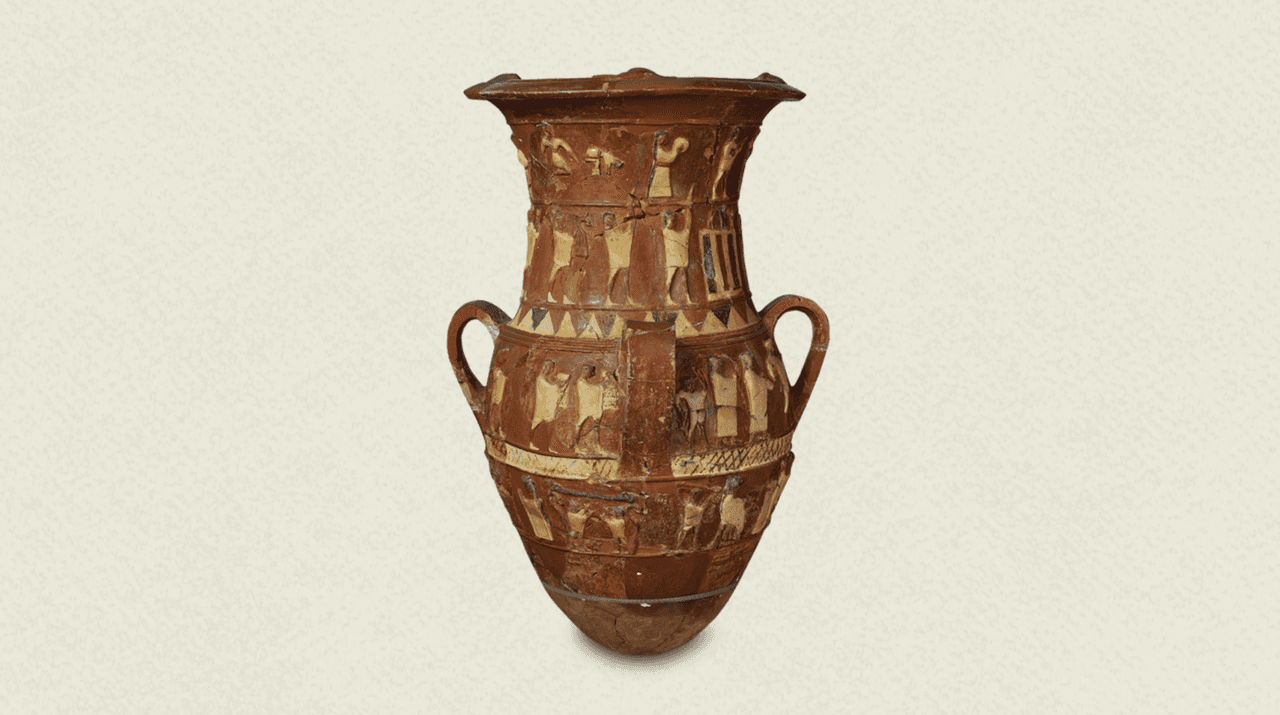
In Hittite art, human figures were not portrayed to depict daily life but to illustrate rituals, priestly duties, processions, and religious services. According to detailed analyses by Köprülü, the human types represented in artistic works include:
These scenes were sometimes carved in relief on vase surfaces, sometimes monumentalized on rock walls, and sometimes integrated into architectural orthostats.
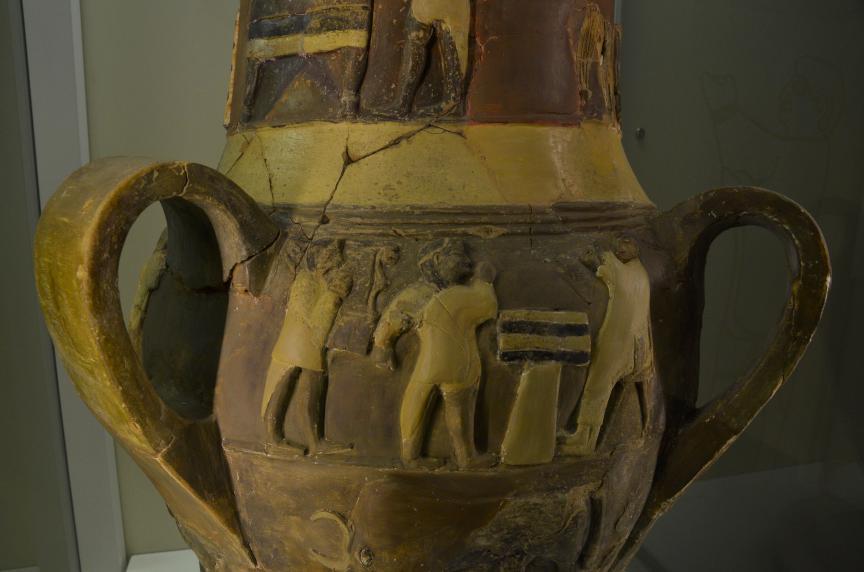
The Hüseyin Dede Vase, Çorum Museum (AA)
One of the most distinctive features of Hittite art is the depiction of animals not merely as representations of nature but as integral components of the sacred order. The bull symbolizes the storm god; the deer is associated with divine mountains and power. Ritual vessels shaped as animals, offering containers, and sacrificial scenes continue this same mythological perspective. Animals are not “secondary figures” beside human depictions; they are direct carriers of religious expression.
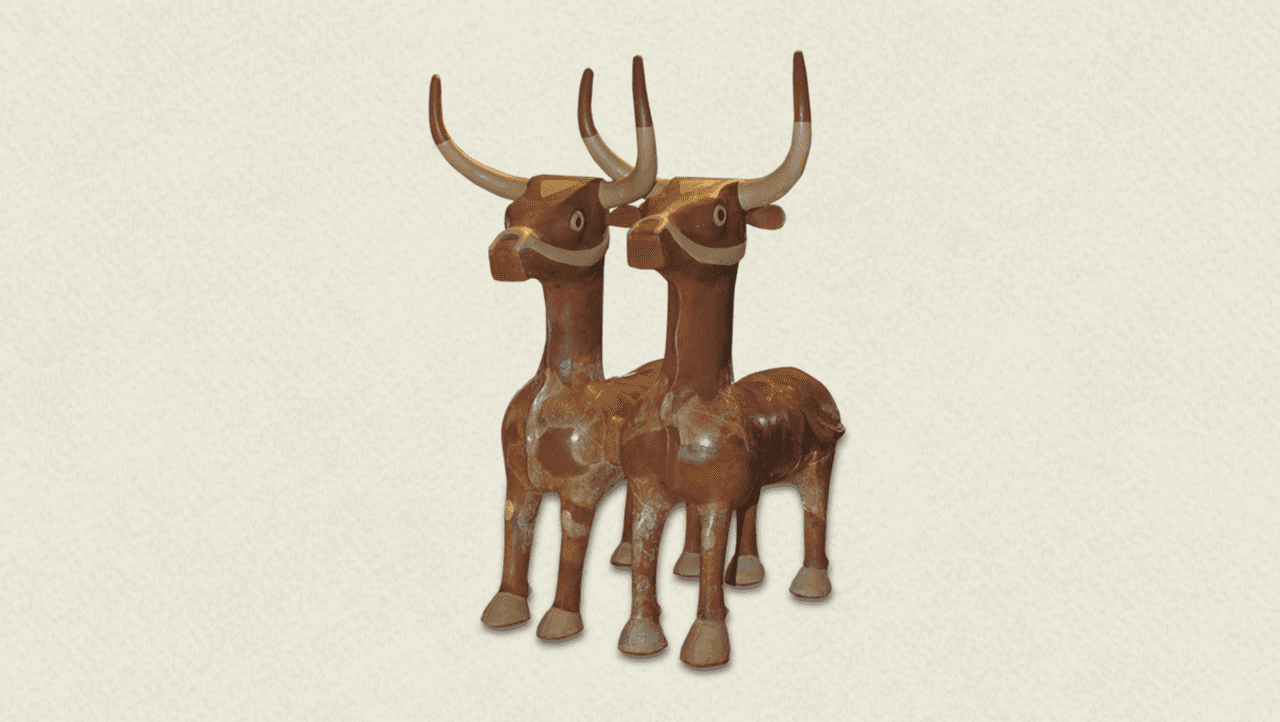
The Twin Bull Rythons (Hurri and Şerri), Sivas Archaeology Museum (Turkish Museums)
While the Hattian period favored smaller, iconographic works, Hittite art achieved monumental status. Rock reliefs, carved on temple entrances and architectural doorways, transported mythology into architectural scale.
Yazılıkaya is the most visible example: deities are arranged hierarchically side by side, while the great king is included in the composition as a participant in the ceremony. At this stage, art became the permanent memory of religious ritual.
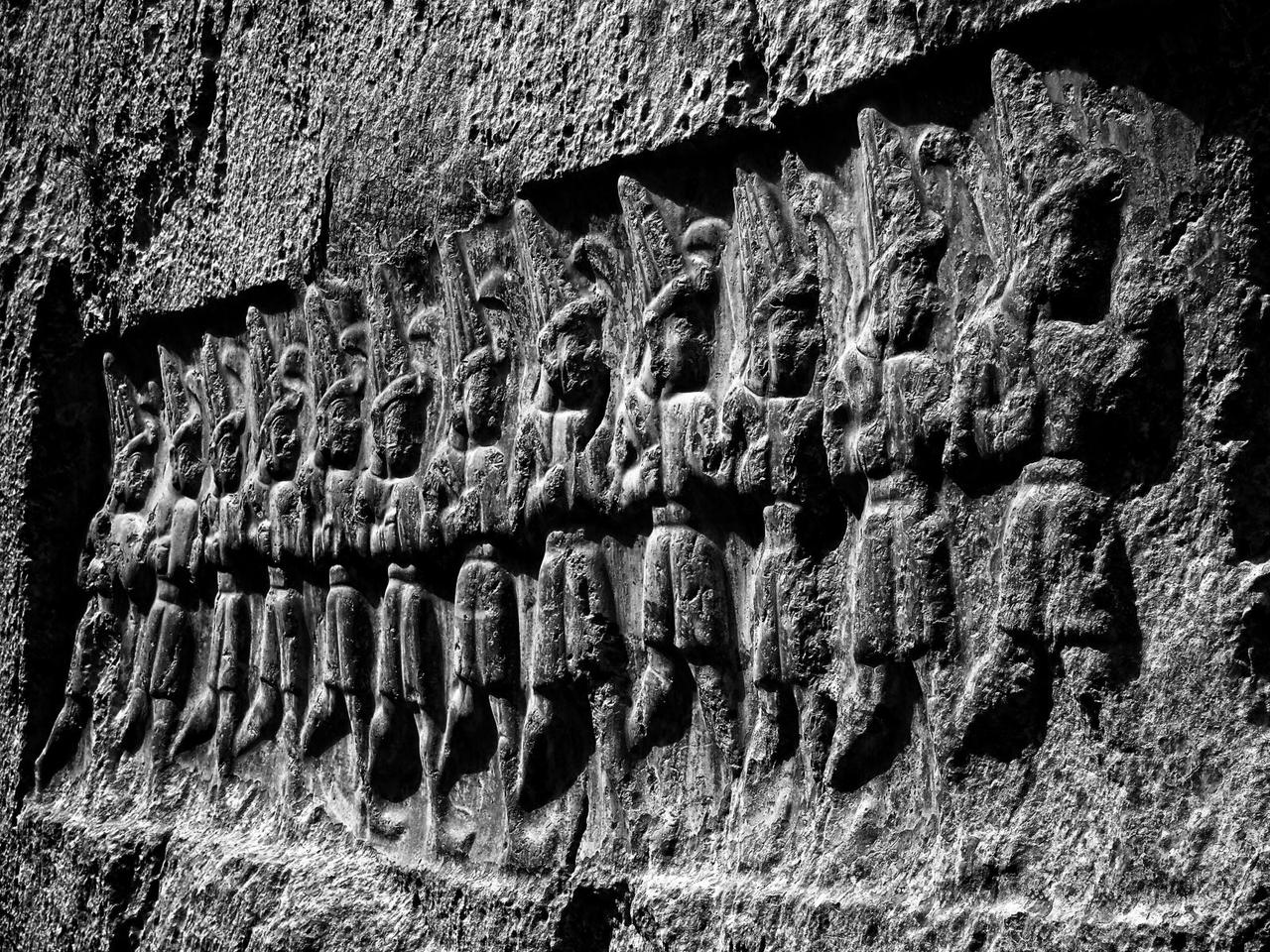
Yazılıkaya Reliefs, Çorum (Kültür Portalı)
Every material used in Hittite art served as a symbolic extension of religious thought. Gold and bronze, inherited from Hattian culture, were not merely products of craftsmanship but instruments that rendered the gods visible on earth. Gold, symbolizing light and sacredness, was especially preferred for goddess figures; the early Hattian aesthetic uniting creative power with the feminine image was institutionalized and continued during the Hittite period. Bronze was associated with celestial powers such as the storm god and used in animal-shaped ritual figurines to represent both might and protection. Thus, in Hittite art, metal was not merely a workable substance but the very material form of the sacred.
Stone, in Hittite art, fulfilled not an artistic surface function but a ritual one, representing eternity. The fact that rock reliefs were carved directly into natural cliffs rather than into temple structures is the strongest expression of this idea: the gods were inscribed directly onto stone to make the unchanging nature of cosmic order visible. Ceramics were used as narrative surfaces for ritual scenes; the relief-decorated vases depicting processions and ceremonial events preserved the memory of religious life. Ivory objects, reserved for more elite and indoor contexts, were preferred for small-scale divine representations, embodying symbolism of purity and distinction. Thus, material choices in Hittite art established an invisible hierarchy that determined both the sacredness of the object and its role within ritual practice.
Anadolu Ajansı. "Arpın Anadolu geçmişine ışık tutan vazo." Accessed October 18, 2025.https://www.aa.com.tr/tr/kultur-sanat/arpin-anadolu-gecmisine-isik-tutan-vazo/1146291
Köprülü, Gizem. *İnsan ve Hayvan Tasvirli Eserler Işığında Hitit Sanatının Temel Öğeleri*. Master's thesis, Dokuz Eylül Üniversitesi, Sosyal Bilimler Enstitüsü, 2012. Accessed October 18, 2025.https://tez.yok.gov.tr/UlusalTezMerkezi/tezDetay.jsp?id=sch7HO0E3Rk_RFS65xWHWA&no=y7fsy1Om5RFLZRKPFcyTYQ
Turkish Museums. "Hitit Uygarlığı’nın İzinde: Mutlaka Keşfetmeniz Gereken 4 Hitit Eseri." Turkishmuseums. Accessed October 18, 2025.https://www.turkishmuseums.com/blog/detail/hitit-uygarligi-nin-izinde-mutlaka-kesfetmeniz-gereken-4-hitit-eseri/10141/1
Türkiye Kültür Portalı. "Yazılıkaya Açıkhava Tapınağı - Çorum." kulturportali.gov. Accessed October 18, 2025.https://www.kulturportali.gov.tr/turkiye/corum/gezilecekyer/yazilikaya-acikhava-tapinagi
Yılmaz, Özge, and Lütfü Kaplanoğlu. "Hatti-Hitit Sanatında Tanrı ve Tanrıça Betimlemelerinin Türk Resim Sanatına Yansımaları." *İstanbul Aydın Üniversitesi Güzel Sanatlar Fakültesi Dergisi*, 8(16) (2023): 195–209. Accessed October 18, 2025.https://dergipark.org.tr/en/pub/aydinsanat/issue/74997/1119553
Depictions of Gods and Goddesses: The Face of Belief
Human Depictions in Ritual Context
Animal Figures: Not Auxiliary Elements, But Mythological Beings
Transition to Monumentality: The Relief Tradition
Materials Used