


This article was automatically translated from the original Turkish version.
+1 More
The Treaty of Kadesh, regarded as a turning point in the history of diplomacy and international relations, is the first written peace treaty ever recorded and preserved to the present day. It was signed in the 13th century BCE between the Hittite Empire and Ancient Egypt. The prolonged military and political rivalries between these two major powers of the era culminated in the Battle of Kadesh in 1274 BCE. This battle resulted in significant losses for both sides. Due to ongoing internal unrest and border threats, the parties sought to end hostilities and pursue a lasting peace.
The Treaty of Kadesh, prepared within this context, did not merely regulate relations between the two states; it also marked the first diplomatic document in history to recognize both parties as equals. The treaty texts were inscribed on clay tablets in the Akkadian language using cuneiform script and duplicated for preservation in the official archives of both nations. As a documented expression of diplomatic courtesy, the pursuit of political balance, and mutual legal commitments, the Treaty of Kadesh stands as a historically significant example in the development of international law and peacebuilding.
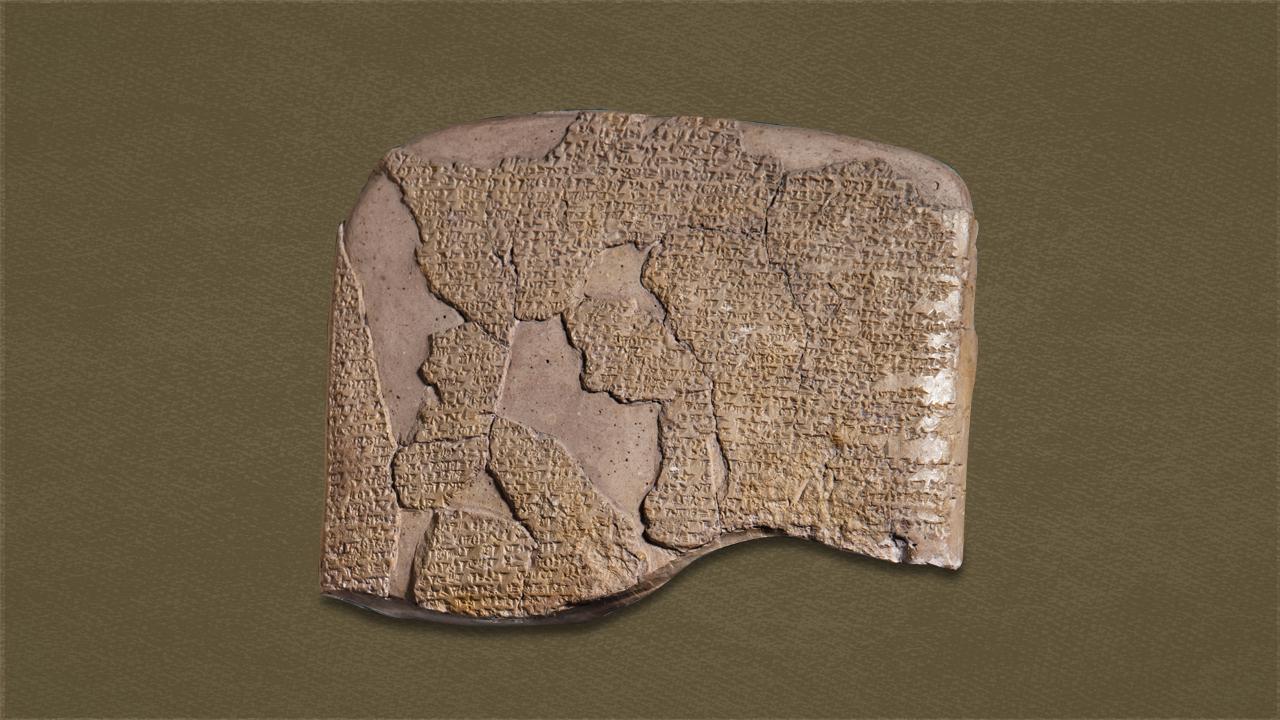
Kadeş Barış Antlaşması (Turkish Museums)
During the 14th and 13th centuries BCE, Anatolia, Mesopotamia, and Egypt became the stage for struggles for dominance among several powerful states. Two of the most significant powers of this period were the Hittite Empire, which ruled southern Anatolia, and the New Kingdom of Egypt, located in the Nile Valley. Both empires sought to assert control over regional territories, frequently leading to border disputes and warfare.
The Hittite Empire established dominance over a vast territory in Anatolia and surrounding regions since the 17th century BCE, expanding its influence particularly into Syria and Mesopotamia. During the same period, the New Kingdom of Egypt, as one of the most powerful states in the Middle East, consolidated its authority in the Nile Valley and attempted to extend its territories northward.
The most significant conflict between these two great powers was the war fought in 1274 BCE for control of the city of Kadesh. Kadesh was a strategically important city located within the borders of modern-day Syria, situated along a major trade route. The Egyptian Pharaoh Ramesses II aimed to capture Kadesh and strengthen Egypt’s influence over Syria, while the Hittite King Hattusili III refused to relinquish control of the region.
The battle resulted in heavy losses for both sides and ended without a decisive victor. The conflict around Kadesh created a situation in which neither the Hittites nor the Egyptians could claim a clear victory, and both suffered mutual losses. Consequently, both powers turned to seeking a lasting peace due to ongoing threats and internal challenges.
Diplomatic negotiations were initiated to achieve peace, culminating in the signing of the Treaty of Kadesh. This treaty is historically recognized as the first written document in which both parties mutually accepted equal rights and proposed a peaceful resolution. The text not only regulated relations between the two empires but also reflected a significant evolution in the understanding of international diplomacy of the era.
The Treaty of Kadesh is the first international peace agreement between Egypt and the Hittites that was written, mutually accepted, and recognized both parties as equals. The treaty is based on principles of mutual respect, non-aggression, and cooperation. Its core provisions were established to uphold the territorial integrity of both states and ensure lasting peace. The main clauses of the Treaty of Kadesh are as follows:
Both parties agreed not to attack each other’s territories. The treaty aimed to solidify this peace and ensure mutual non-harm. Egypt and the Hittites pledged to refrain from any hostile actions against each other.
The Hittites recognized their control over a large part of Syria, including the region of Kadesh, while Egypt continued to maintain its dominance in the Nile Valley. The treaty was founded on mutual recognition and acceptance of each other’s territorial boundaries.
The Treaty of Kadesh stipulated that if one party faced external threats and became vulnerable, the other would provide military support. This provision aimed to guarantee the durability of peace through mutual commitments of assistance. Specifically, it established a joint defense agreement against third-party threats.
Another clause of the treaty required each party to assist the other in suppressing internal revolts. This mutual cooperation aimed to preserve the internal order of both governments and ensure stability within each state.
Both parties agreed to extradite fugitives who had taken refuge in each other’s territories. This clause mandated mutual cooperation to ensure justice and punish offenders.
One of the most important provisions of the Treaty of Kadesh was the establishment of lasting peace and friendship between the parties. The treaty aimed not only to end the war but also to forge a long-term relationship of friendship and peaceful coexistence between the two empires.
In historical context, the Treaty of Kadesh made significant contributions to the development of international peace and legal understanding and served as a model for subsequent diplomatic agreements.
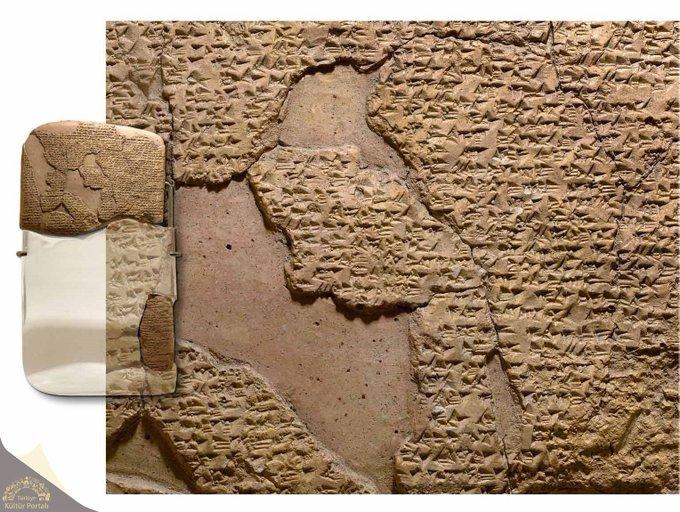
Kadeş Barış Antlaşmasının Yakın Görünümü (TKP)
As the first written international peace treaty in history, the Treaty of Kadesh holds importance not only for the relations between the Hittites and Egyptians but also for the broader development of diplomacy and law in human history. This treaty is significant not merely for ending a war but also for being the first concrete, written expression of fundamental principles in international relations: equality, mutual respect, and the supremacy of law.
The Treaty of Kadesh is preserved as a written document, establishing a permanent legal record beyond oral agreements. The treaty text was recorded in the languages of both the Hittites and Egyptians, and both parties formally confirmed their acceptance of its clauses in writing. This underscores the importance of written law in international relations.
The Treaty of Kadesh is among the earliest examples in which both parties were recognized as equals and the treaty was structured to balance the interests of both states. The treaty did not permit one party to assert superiority; instead, both were acknowledged as having equal status and equal responsibilities. This played a crucial role in shaping later international agreements.
The treaty did not merely regulate relations between two states; it also contributed to laying the foundations of international peace. Principles such as mutual trust, cooperation, and equality were established as essential for sustaining peace. These elements are still recognized today as fundamental principles in modern international law and diplomacy.
The Kadesh Treaty did not merely define the borders of the two states; it also included provisions for cooperation in addressing internal issues such as rebellions and for joint responses to external threats. This gave rise to the understanding that states must not only manage foreign policy but also regulate their internal order within the framework of international law.
The Treaty of Kadesh is also a milestone in the history of international law. The grounding of state relations in legal terms, the clarification of rights and obligations, marked the earliest steps influencing the evolution of modern legal systems. The treaty laid the foundational stones for today’s international treaties and peace agreements.
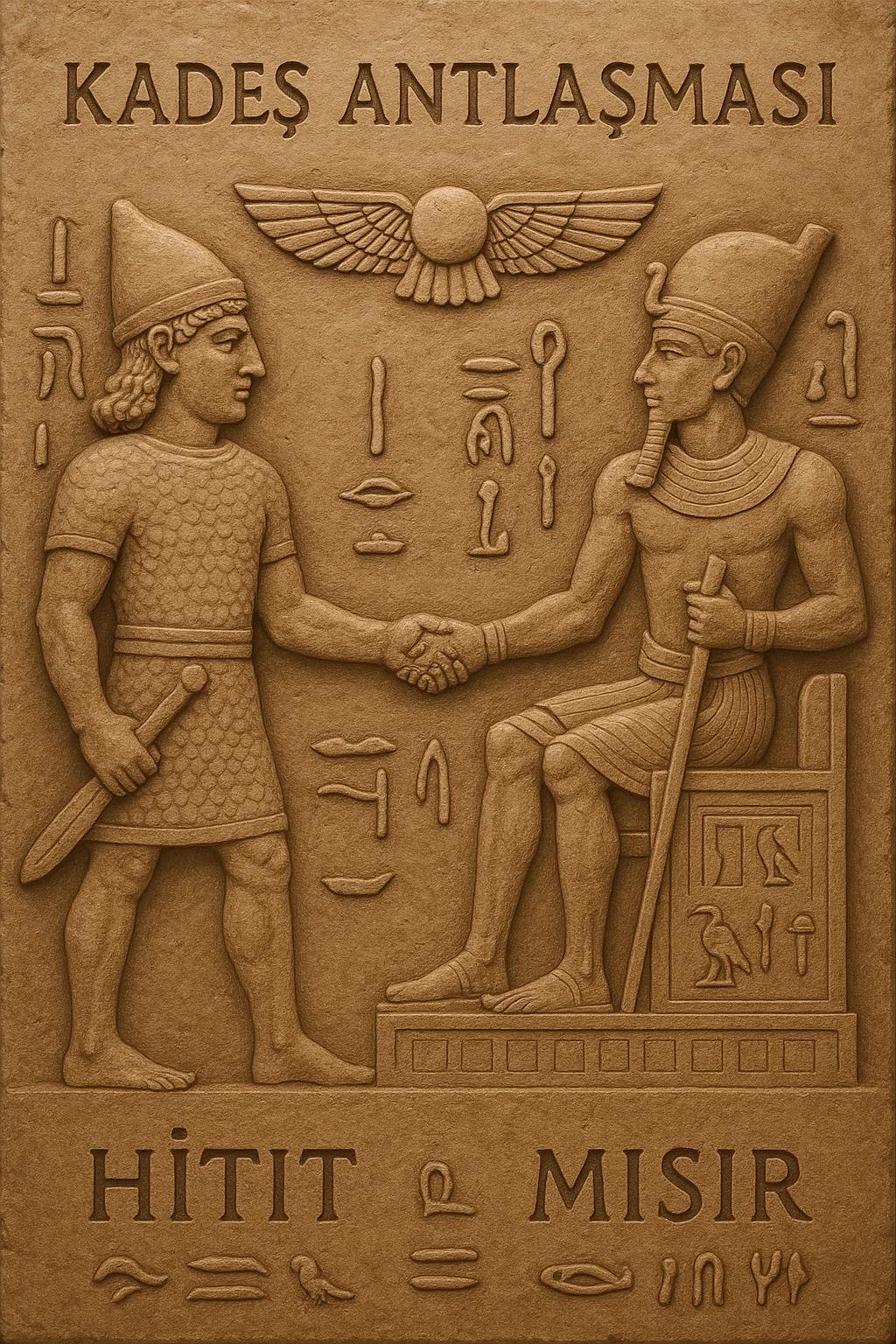
Kadeş Sözleşmesini Yansıtan Bir Görsel (Yapay Zeka İle Üretilmiştir.)
The Treaty of Kadesh is displayed in numerous museums and institutions today. Recognized as part of the diplomatic heritage of both civilizations, the treaty has increased interest in Hittite and Egyptian cultures. The treaty texts, along with other written documents from the Hittite and Egyptian archives, have been preserved and studied by historians.
The original silver tablet inscribed with the treaty text has been lost. In Egypt, the treaty text and other artifacts from this period were carved into temple walls and are exhibited at the Egyptian Museum. One copy of the treaty is housed in the Hittite Archive located in Hattusa, the capital of the Hittite Empire (modern-day Boğazköy within the boundaries of Çorum province). This archive contains written documents relating to the Treaty of Kadesh. The clay tablet from Hattusa is currently exhibited at the Istanbul Archaeology Museums.
Copies of the original texts of the Treaty of Kadesh are exhibited in various museums around the world, including prestigious institutions such as the Altes Museum in Berlin, the British Museum in London, and the Louvre Museum in Paris. These exhibitions highlight the treaty’s place and significance in human history, offering visitors both historical and cultural perspectives.
Beyond being a historical document, the Treaty of Kadesh continues to inspire contemporary discussions on peace, diplomacy, and international relations. It is frequently cited by modern diplomats and historians as an example of how interstate relations are shaped and how wars can be ended and peace established through diplomatic means.
Aydoğan, Sevim. “Uygarlık Tarihinde Hitit Uygarlığının ve Kadeş Antlaşmasının Yeri.” *Adıyaman Üniversitesi Sosyal Bilimler Enstitüsü Dergisi* 8, no. 2 (2021): 1–22. Accessed May 6, 2025.https://dergipark.org.tr/en/pub/adusobed/issue/67324/958349
T.C. Çorum Valiliği. "Kadeş Antlaşması." Accessed May 6, 2025.http://www.corum.gov.tr/kurumlar/corum.gov.tr/Genel/corum_tanitim/kades_antlasmasi.pdf
Turkish Museums. "İstanbul Arkeoloji Müzeleri’nde Mutlaka Görmeniz 5 Eser." Accessed May 6, 2025.
Turkish Museums. “Dünyanın İlk Uluslararası Barış Antlaşmasını Biliyor Musunuz?” Accessed May 6, 2025.https://turkishmuseums.com/blog/detail/dunyanin-ilk-uluslararasi-baris-antlasmasini-biliyor-musunuz/10040/1
Türkiye Kültür Portalı. "Kadeş Barış Antlaşması." Accessed May 6, 2025.https://x.com/TCKulturPortali/status/1029438082695802880
Ulaş Töre Sıvrioğlu and Muzaffer Ercan Yılmaz. “İlk Çağ uygarlıklarında diplomasi.” *International Journal of Social Inquiry* 10, no. 2 (2017): 179–227. Accessed May 6, 2025.https://acikerisim.uludag.edu.tr/items/74b6d84e-3c9a-4b2b-907c-5d6ab675973b

Historical Background
Treaty Provisions
Establishment of Peace and Non-Aggression
Recognition of Territories
Military Assistance
Intervention in Internal Revolts
Extradition of Criminals
Perpetuation of Peace and Friendship
Diplomatic and Legal Significance
First Written International Treaty
Egalitarian Diplomacy
Foundations of International Peace
Cooperation in Internal and External Affairs
Early Period of International Law
The Treaty of Kadesh in the Modern Era
Other Museums Worldwide
Modern Interpretations and Significance