

`ancienthistory` Related Article Results
Hittite Art
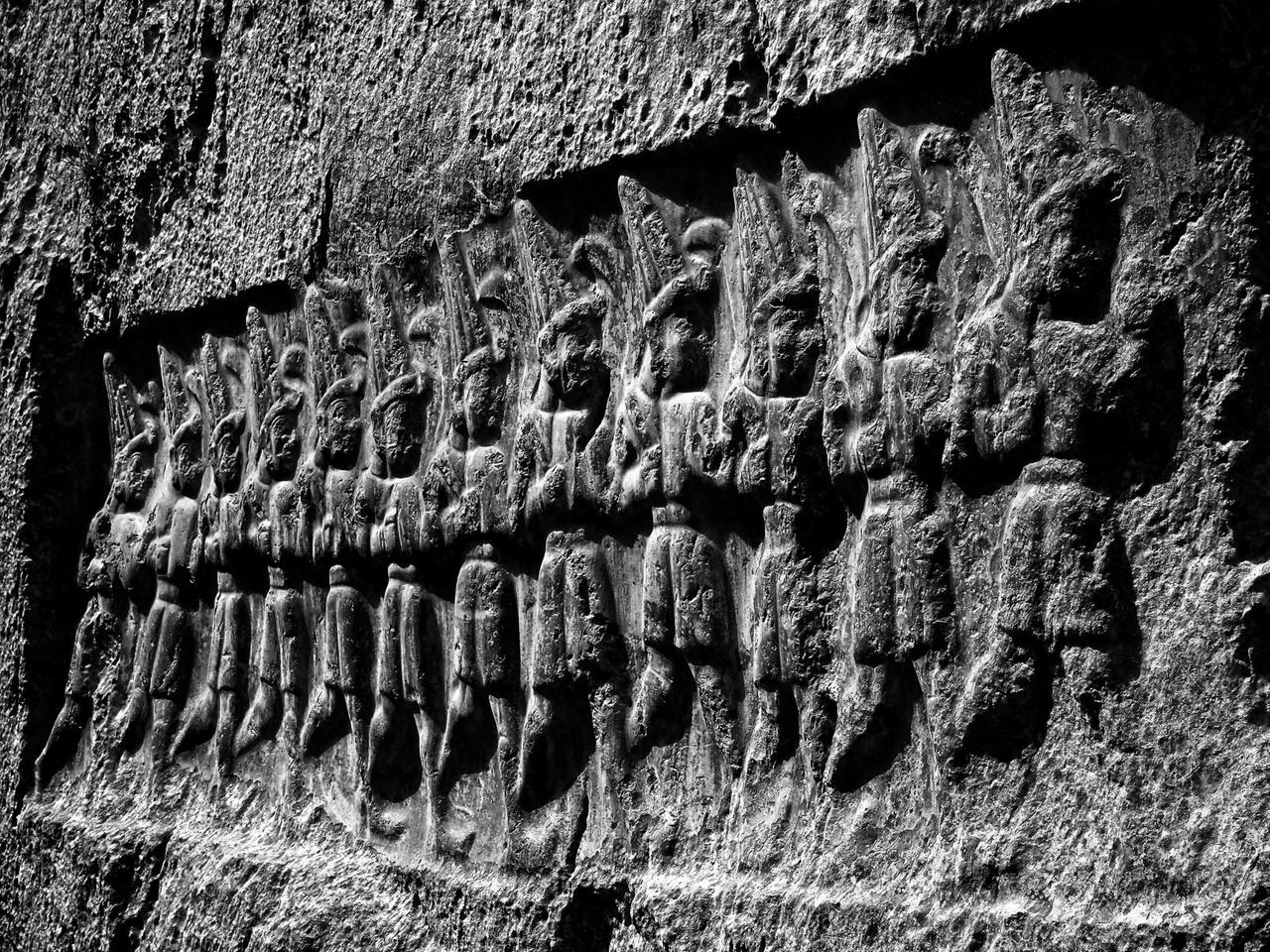
Hittite art is one of the most powerful religiously grounded artistic traditions in Anatolia. For the Hittites, art was not merely an aesthetic expression; it was a means to make the presence of the gods visible, to solidify ritual practice, and to sanctify social order. Therefore, understanding Hittite art is equivalent to understanding their religion and mythological worldview. Artistic production was constructed entirely upon the foundations of worship, ritual, and divine representation. The
EN
Meryem Şentürk Çoban
 Ai
AiAizanoi Ancient City
Aizanoi Ancient City is an ancient settlement located within the boundaries of the Çavdarhisar district of Kütahya province, and its historical origins date back to the 3rd millennium BC. As the main settlement of the Aizanitis people, who were affiliated with Phrygia, Aizanoi experienced significant development during the Roman period and particularly completed its urbanization process in the 2nd century AD. The city stood out with its commerce, agriculture, and religious structures, and became
EN
Nazlı Kemerkaya
ArArslantepe Mound
Arslantepe Mound, one of the largest mounds in Turkiye, is a multi-layered site located east of Malatya near the Euphrates River, rising to a height of about 30 meters. The earliest traces of settlement date back to 5000 BC, and the area was continuously inhabited from the Chalcolithic Age through the Byzantine period. Notably, during the 4th millennium BC, the mound served as a center of advanced administrative and social organization. The mudbrick palace complex from this era contains evidence
ENNazlı Kemerkaya
Alexander Sarcophagus
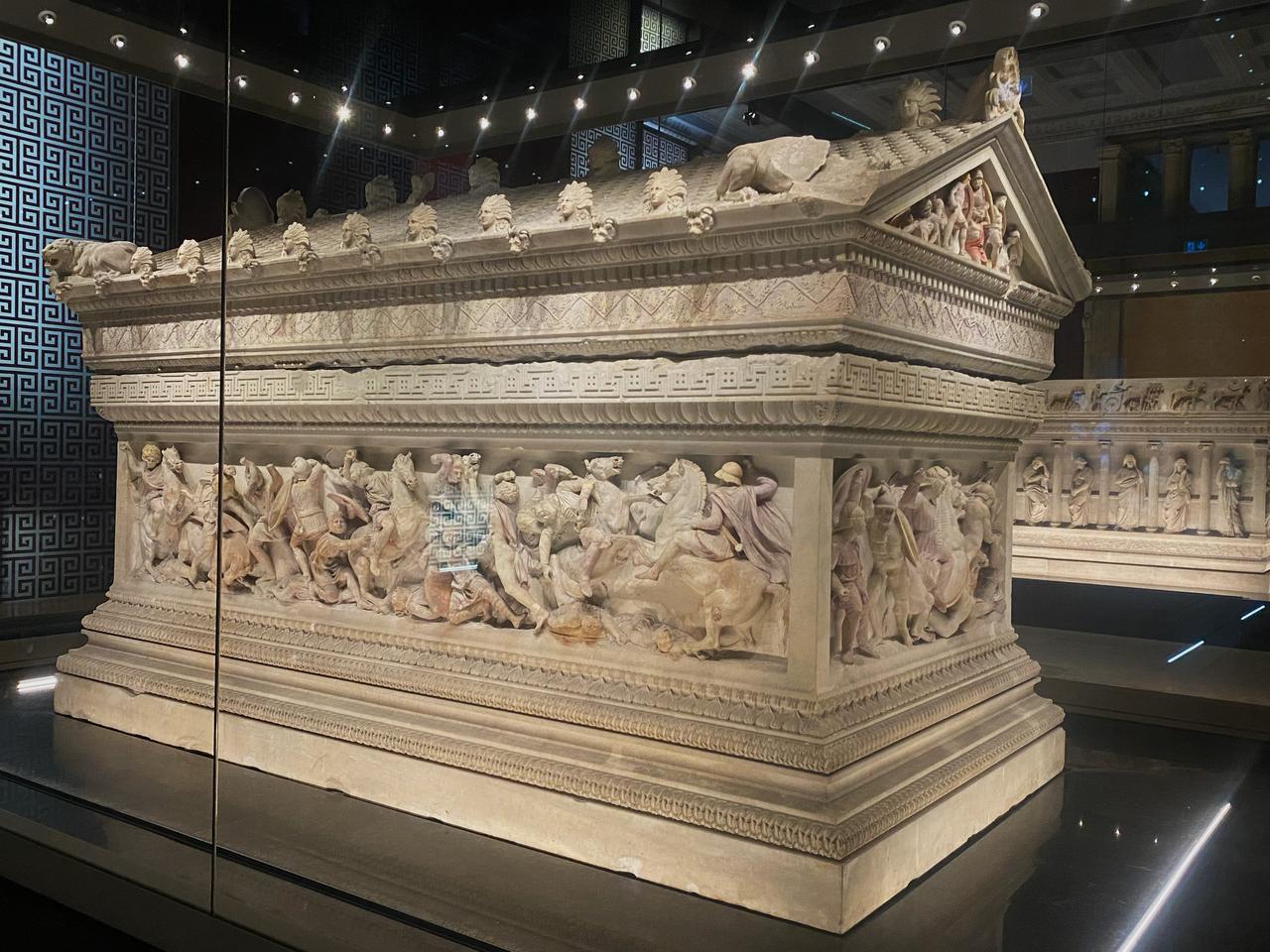
The Alexander Sarcophagus, a royal sarcophagus containing the characteristic elements of the transition from the Late Classical Period to the Hellenistic Period, was unearthed in 1887 during excavations carried out by Osman Hamdi Bey in the Royal Necropolis of Sidon (present-day city of Saida in Lebanon). Brought to the Istanbul Archaeology Museums, this sarcophagus has remained one of the museum’s most important pieces ever since. Made of high-quality limestone or a marble-like material, the sa
ENNazlı Kemerkaya
Sarcophagus of the Mourning Women
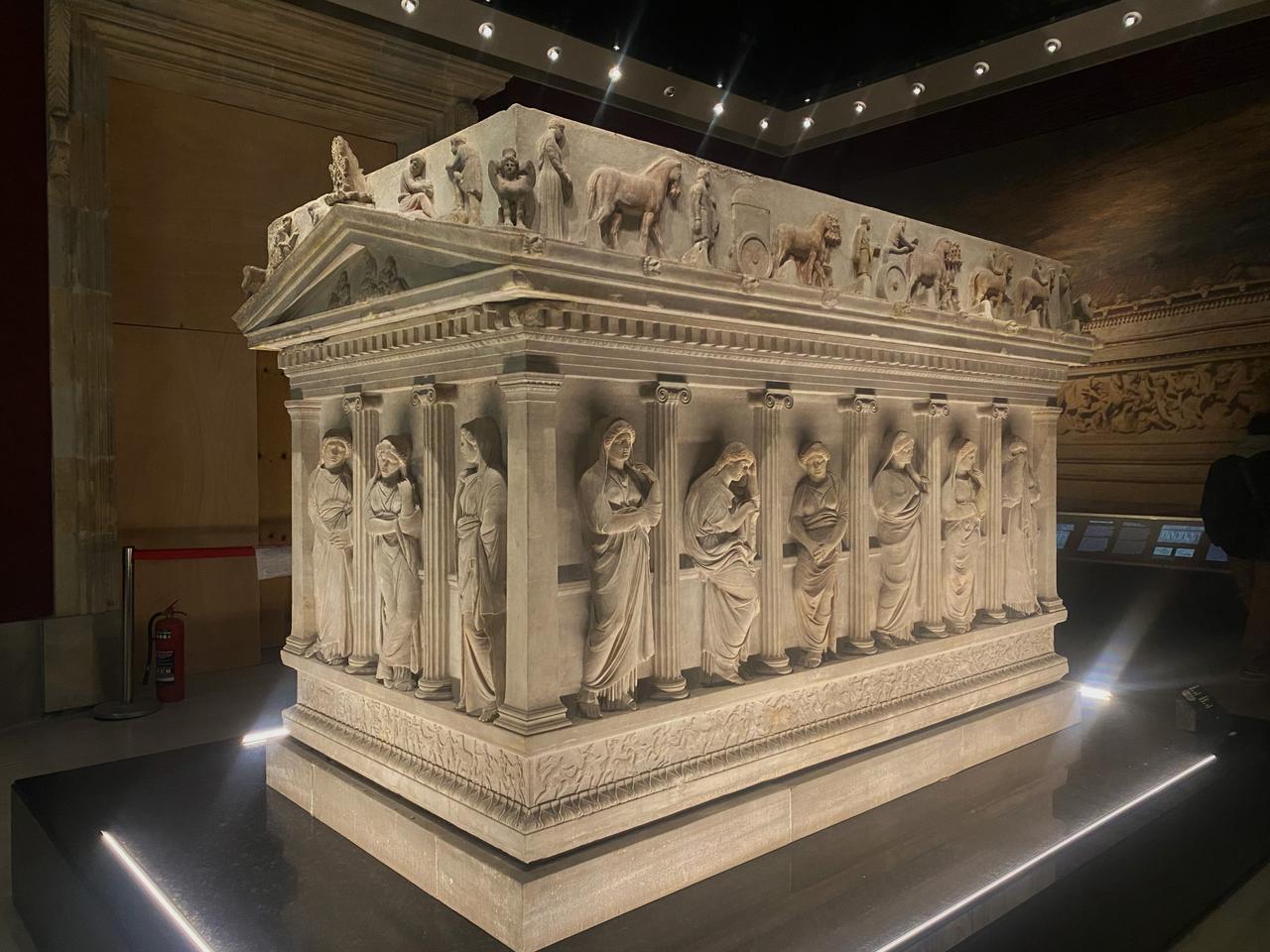
The Sarcophagus of the Mourning Women, as one of the most striking pieces in the collection of the Istanbul Archaeology Museums, holds a special position immediately following the Alexander Sarcophagus. The work received its name because of the depiction of 18 women mourning on its surface. Each of these figures, with their different postures and facial expressions, reflects a state of emotion, indicating distinct personalities. The relationship between the person interred within the sarcophagus
ENNazlı Kemerkaya
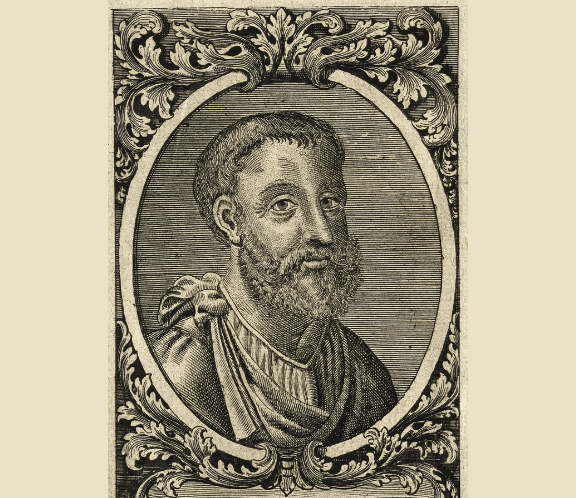
Galen
Galen (Claudius Galenus), a physician, anatomist, and philosopher who lived in the 2nd century AD, was born in Pergamon (modern-day Bergama, Türkiye). He practiced during the Roman Empire and became one of the most influential figures in ancient medicine through his extensive writings on anatomy, physiology, clinical medicine, and treatment methods. Galen’s works decisively shaped medical education and practice until the Middle Ages and the early modern period; his name continued to be associate
EN
Emine Nur ERDEM
PrPrometheus
In Greek mythology, Prometheus stands out as a figure from the generation of the Titans, particularly through his relationship with humanity. According to mythological accounts, his theft of fire from the gods and its delivery to humans has been regarded as the symbolic beginning of technological advancement and civilization. This act is not merely a physical gift but is also interpreted as a mythological representation of human reason and production power. Some narratives further state that Pro
EN
Hatice İkra Kalkan
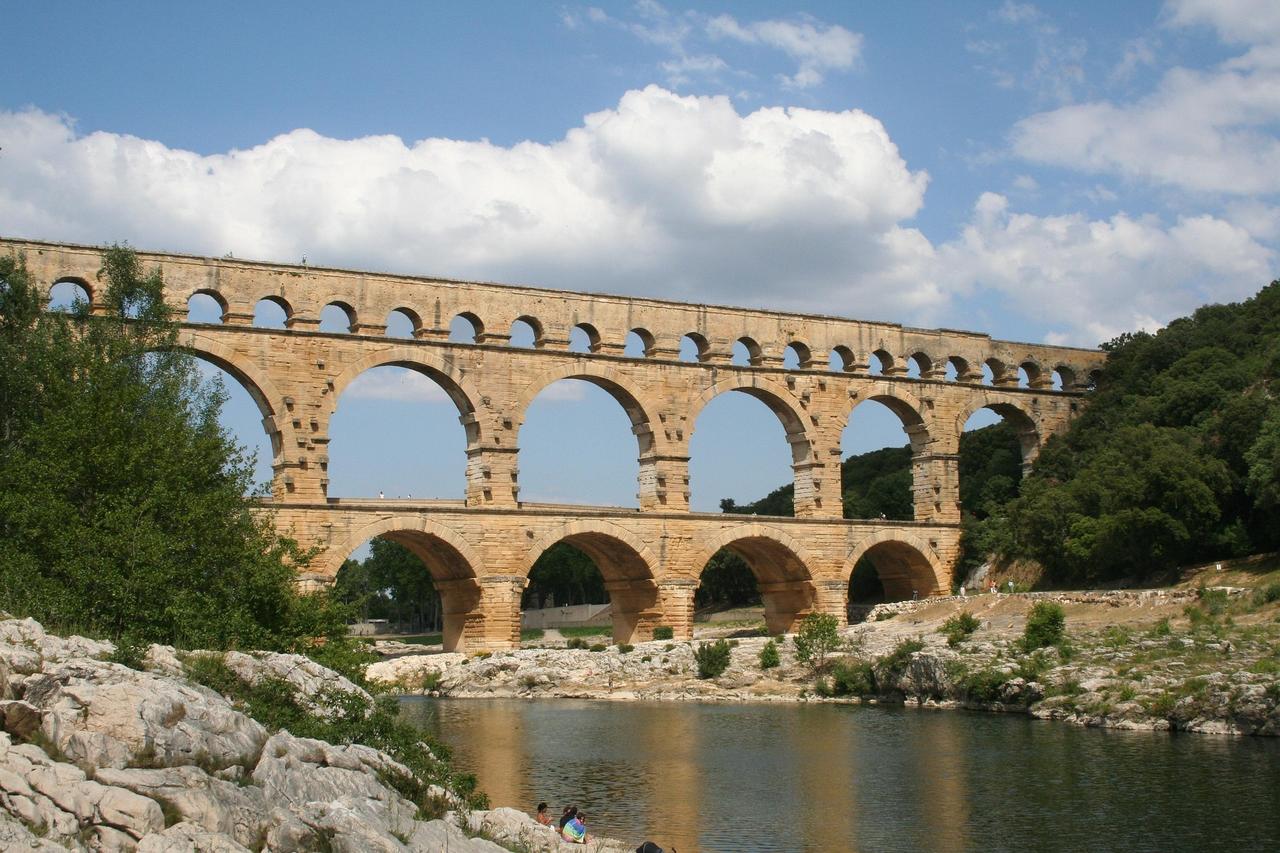
Pont du Gard Aqueduct
Pont du Gard Aqueduct is an ancient Roman aqueduct located in southern France. It spans the Gard River with a three-tiered structure and serves as a concrete example of ancient Roman engineering techniques. The primary function of the structure was to transport water from higher elevations to lower target areas through the force of gravity. The stone materials used in its construction, along with the arrangement of arches and piers, ensure both its durability and its water conveyance function. D
EN
Fatmanur Mavibaş
HaHattusha
Hattusha is one of Anatolia’s most important archaeological sites and served as the capital of the Hittite Empire. Located in the Boğazkale district of Çorum Province, this ancient city was the political, religious, and cultural center of the Hittites between 1650 and 1200 BC. The city reflects the architectural style of its time with its expansive walls, monumental gates, temples, and royal structures. Hattusha was inscribed on the UNESCO World Heritage List in 1986 and was included in the UNES
ENNazlı Kemerkaya