


This article was automatically translated from the original Turkish version.
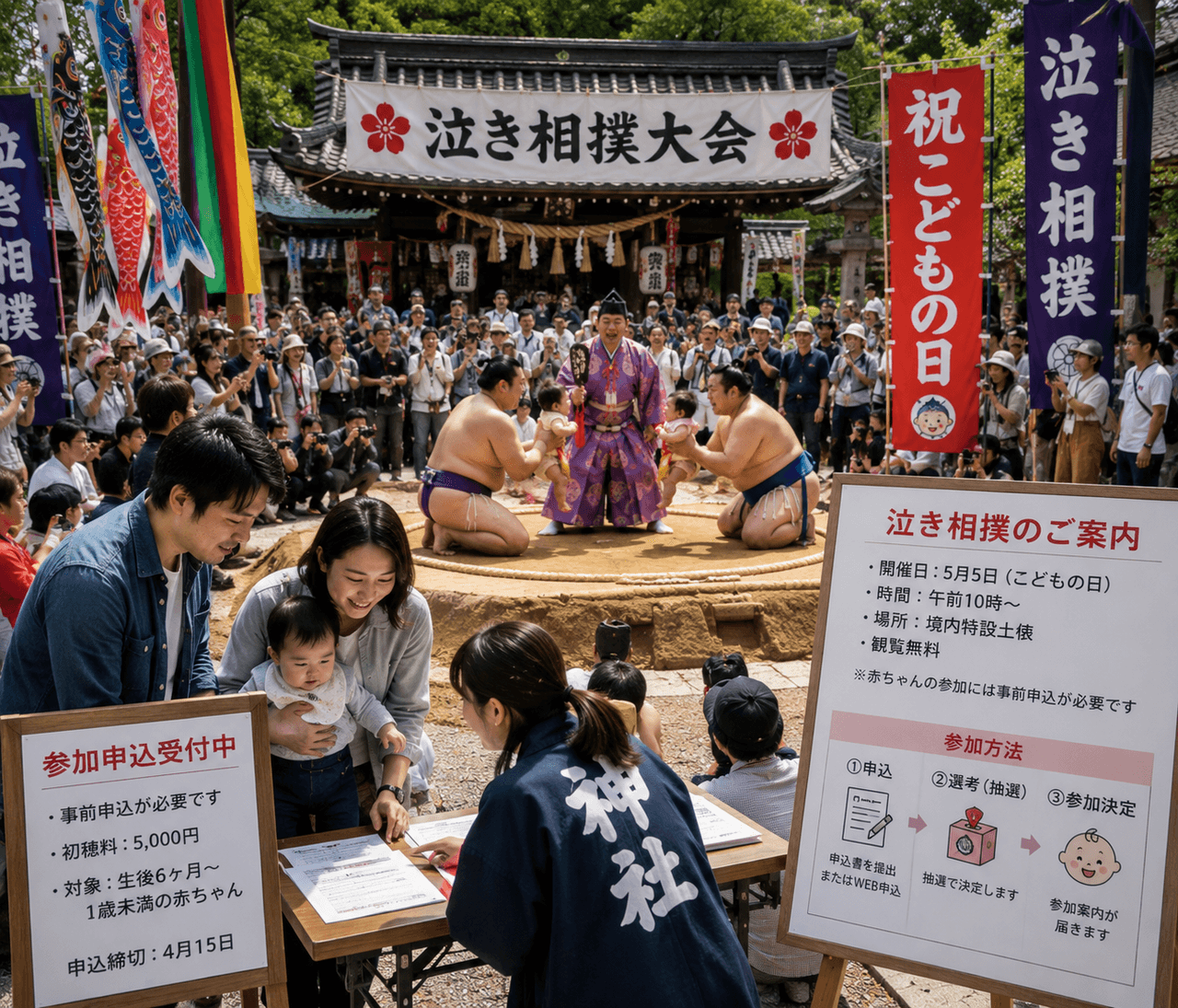
Naki Sumo (Generated with Artificial Intelligence.)
Type | Traditional Shinto Festival | ||||||||
|---|---|---|---|---|---|---|---|---|---|
Origin | A Japanese folk tradition of over 400 years | ||||||||
Fundamental Philosophy | A crying child grows quickly (Naku ko wa sodatsu) | ||||||||
Purpose | To drive away evil spirits To ensure children's health | ||||||||
Equipment Used | Protective helmets (kabuto) Sumo loincloths (mawashi) Baby handprint Lucky charm attached fan (gunbai) | ||||||||
Time | Children's Day on May 5th (Golden Week) | ||||||||
The Crying Baby Festival (Naki Sumo) Japan is a traditional festival and ritualistic competition held to encourage and sustain infants’ crying. This event, with a history spanning nearly 400 years, is conducted annually at Shinto shrines throughout Japan.
Naki Sumo is a rite of purification and transition rooted in the intersection of Shinto belief and Japanese folk philosophy. Its fundamental premise is the longstanding belief that an infant’s cries possess the power to drive away evil spirits and illness from the area.【1】
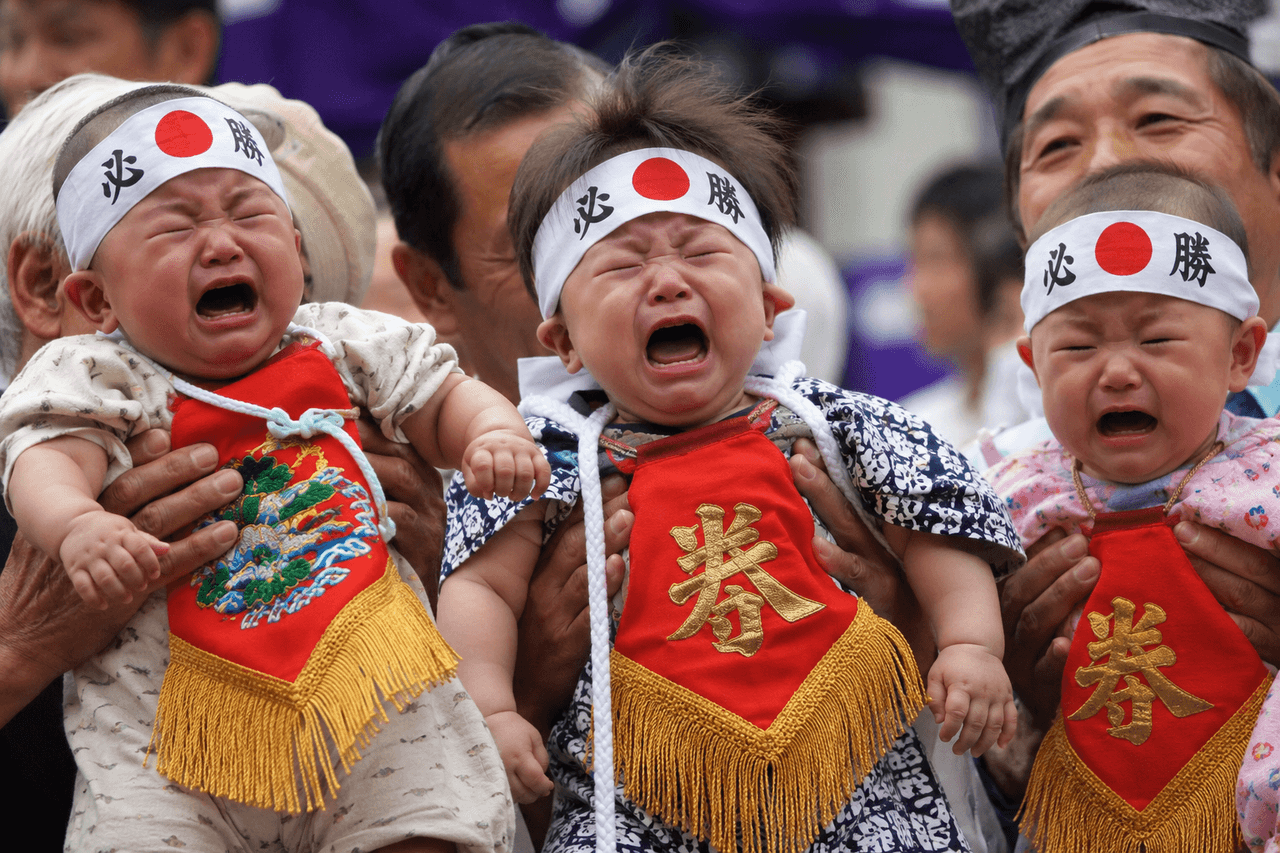
Naki Sumo Festivalini İfade Eden Bir Görsel (Yapay Zeka ile Oluşturulmuştur.)
In addition to this spiritual protective intent, the tradition is sustained by a Japanese proverb: naku ko wa sodatsu, which promises that crying babies grow faster and healthier. The sumo wrestlers who hold the infants aloft during the ritual represent a sacred power within Shinto tradition; lifting the children toward the heavens symbolizes both drawing closer to the gods and ensuring that the children will become strong, resilient, and long-lived individuals in the future.【2】
Thus, although adult caregivers deliberately provoking infants to cry may appear contradictory from an external perspective, the practice is fundamentally a cultural expression celebrating the child’s acceptance into social life, growth, and emotional development.
The festival ritual takes place in a handmade sumo ring (dohyo) set up outdoors. Typically, two infants under one year of age, brought by their parents, are held face to face by sumo wrestlers (or mock sumo wrestlers) and lifted into the air. The wrestlers and the ring official (gyoji) employ techniques such as making loud noises, forming exaggerated facial expressions, wearing frightening masks, or shouting “Ağla! Ağla! Ağla!” (“Cry! Cry! Cry!”) to provoke the babies to cry.
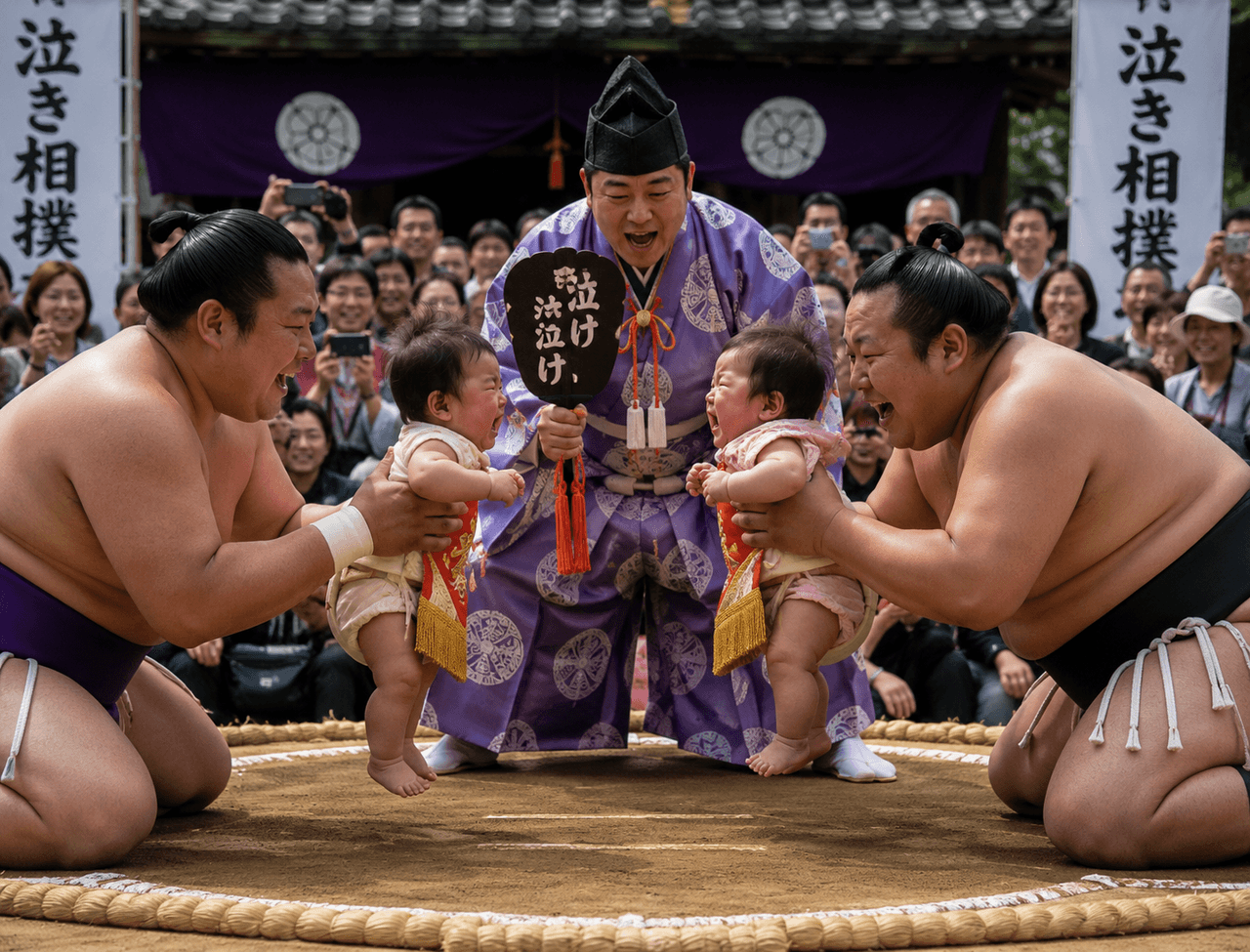
Naki Sumo Uygulanışı (Yapay Zeka ile Oluşturulmuştur.)
In this brief competition, the infant who cries first, loudest, or longest is generally declared the winner.【4】 However, since the overarching philosophy of the event centers on celebrating the child’s emotional development, some variations such as Isshin Naki Sumo do not declare winners or losers at all, and the entire occasion is conducted purely as a celebration.【5】
Cultural artifacts crafted by hand are used for each infant. The babies’ foreheads are marked with their assigned sumo ring names (shikona), and they are fitted with protective helmets (kabuto) made by artisans. Families receive ceremonial keepsakes including a banzuke (sumo ranking chart) bearing the child’s ring name, a baby handprint, and a gunbai fan adorned with talismans. Additionally, parents select from approximately 100 decorative sumo loincloths (mawashi), each carrying symbolic meaning, to dress their infants.
Naki Sumo festivals vary across Japan according to regional customs. Competitions are typically held around May 5, coinciding with Children’s Day at the end of Golden Week, or at specific times of the year according to local annual calendars in regions such as Hiroshima, Kochi (Shimanto), and Kanagawa (Morito Daimyojin Shrine).
Although the events are open to the public and free to attend, parents wishing for their infants to compete may be required to register in advance or pay a ritual fee, depending on the shrine’s regulations. In some popular shrines with high demand, participants are selected by lottery.
Japan Forward. "[Hidden Wonders of Japan] Naki Sumo in Morito Daimyojin Shrine". Accessed July 19, 2026.https://japan-forward.com/hidden-wonders-of-japan-naki-sumo-in-morito-daimyojin-shrine/
NDTV. "In Pics: Naki Sumo Crying Baby Festival Returns To Japan For First Time Since Pandemic". Accessed July 19, 2026.https://www.ndtv.com/feature/in-pics-naki-sumo-crying-baby-festival-returns-to-japan-for-first-time-since-pandemic-3980971.
TIME. "Watch These Adorable Babies Compete in a Crying Contest". Accessed July 19, 2026.
World Kings. "The unique contests around the world - P39 - Naki Sumo (Japan): A kid's 'who cries more' showdown". Accessed July 19, 2026.https://worldkings.org/news/world-tops-academy/worldkings-the-unique-contests-around-the-world-p39-naki-sumo-japan-a-kid-s-who-cries-more-showdown
[1]
World Kings. "The unique contests around the world - P39 - Naki Sumo (Japan): A kid's 'who cries more' showdown." Accessed July 19, 2026.
[2]
World Kings, "The unique contests around the world - P39 - Naki Sumo (Japan): A kid's 'who cries more' showdown".
[4]
TİME, "Watch These Adorable Babies Compete in a Crying Contest", erişim 19 Temmuz 2026, https://time.com/90981/watch-these-adorable-babies-compete-in-a-crying-contest/.
[5]
Japan Forward, "[Hidden Wonders of Japan] Naki Sumo in Morito Daimyojin Shrine", erişim 19 Temmuz 2026, https://japan-forward.com/hidden-wonders-of-japan-naki-sumo-in-morito-daimyojin-shrine/.

Naki Sumo (Generated with Artificial Intelligence.)
Type | Traditional Shinto Festival | ||||||||
|---|---|---|---|---|---|---|---|---|---|
Origin | A Japanese folk tradition of over 400 years | ||||||||
Fundamental Philosophy | A crying child grows quickly (Naku ko wa sodatsu) | ||||||||
Purpose | To drive away evil spirits To ensure children's health | ||||||||
Equipment Used | Protective helmets (kabuto) Sumo loincloths (mawashi) Baby handprint Lucky charm attached fan (gunbai) | ||||||||
Time | Children's Day on May 5th (Golden Week) | ||||||||
No Discussion Added Yet
Start discussion for "Crying Baby Festival (Naki Sumo)" article
Origins
Procedure and Rules
Equipment
Schedule and Participation Requirements