


This article was automatically translated from the original Turkish version.

When you give a child paper and a pencil, what emerges is not merely a drawing. Those lines, those colors, those arrangements are in fact a map of the child’s emotions, fears, and hopes—things they cannot yet express in words. Young children cannot articulate their feelings in sentences the way adults do. Instead of saying “I feel insecure today,” they might draw a tiny house or forget the windows. Instead of saying “I feel alone in my family,” they position themselves in the corner of the family drawing, far away from the others.
Drawing is a natural gateway into a child’s unconscious mind.
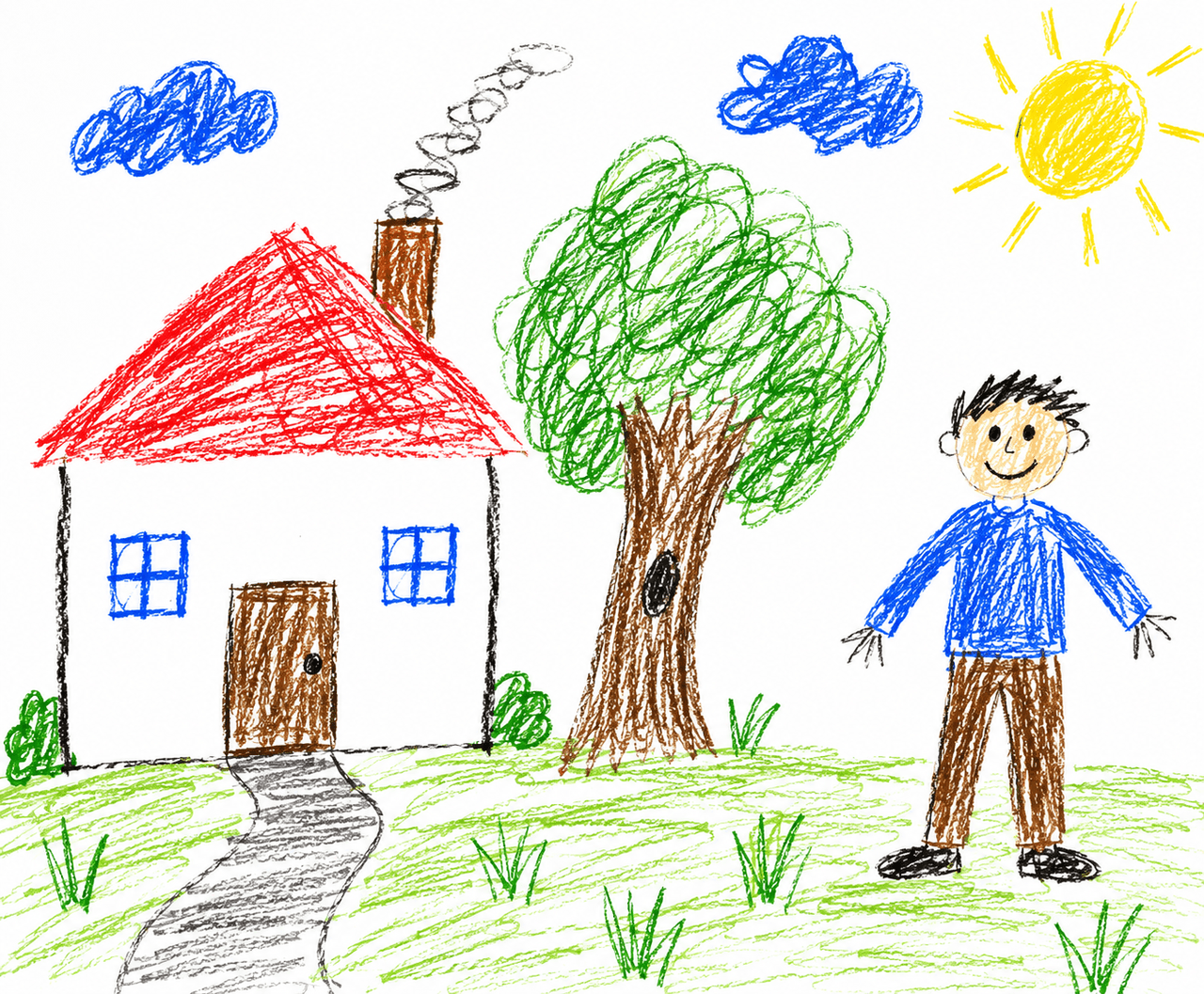
Visual Representing Children’s Drawings (Generated by Artificial Intelligence)
For this reason, child psychologists and therapists frequently use drawing techniques when working with children. One of the best known of these is the House-Tree-Person (HTP) Test.
In this technique, the child is asked to draw a house, a tree, and a person in sequence. These three seemingly simple drawings reveal layered insights into the child’s inner world:
House reflects the child’s family life, sense of safety within the home, and feeling of belonging. A house without a door may indicate an inward-looking, closed-off inner world. A house with thick smoke rising from the chimney may symbolize tension felt within the household.
Tree represents the child’s self-perception and process of growth. A tree with prominent roots and a sturdy trunk often reflects a sense of secure grounding, while thin, fragile trunks may be associated with feelings of vulnerability.
Person reveals how the child sees themselves and their perception of their body and environment. If the hands are tucked into pockets or hidden behind the back, this may signal shyness or a need for control.
The colors children choose are also meaningful. Consistent use of dark, somber tones may indicate internal distress, while bright and varied colors often reflect emotional comfort. But it is important to emphasize here: it is incorrect to draw definitive conclusions from a single drawing. A child may simply have chosen a different color because their favorite one ran out that day.
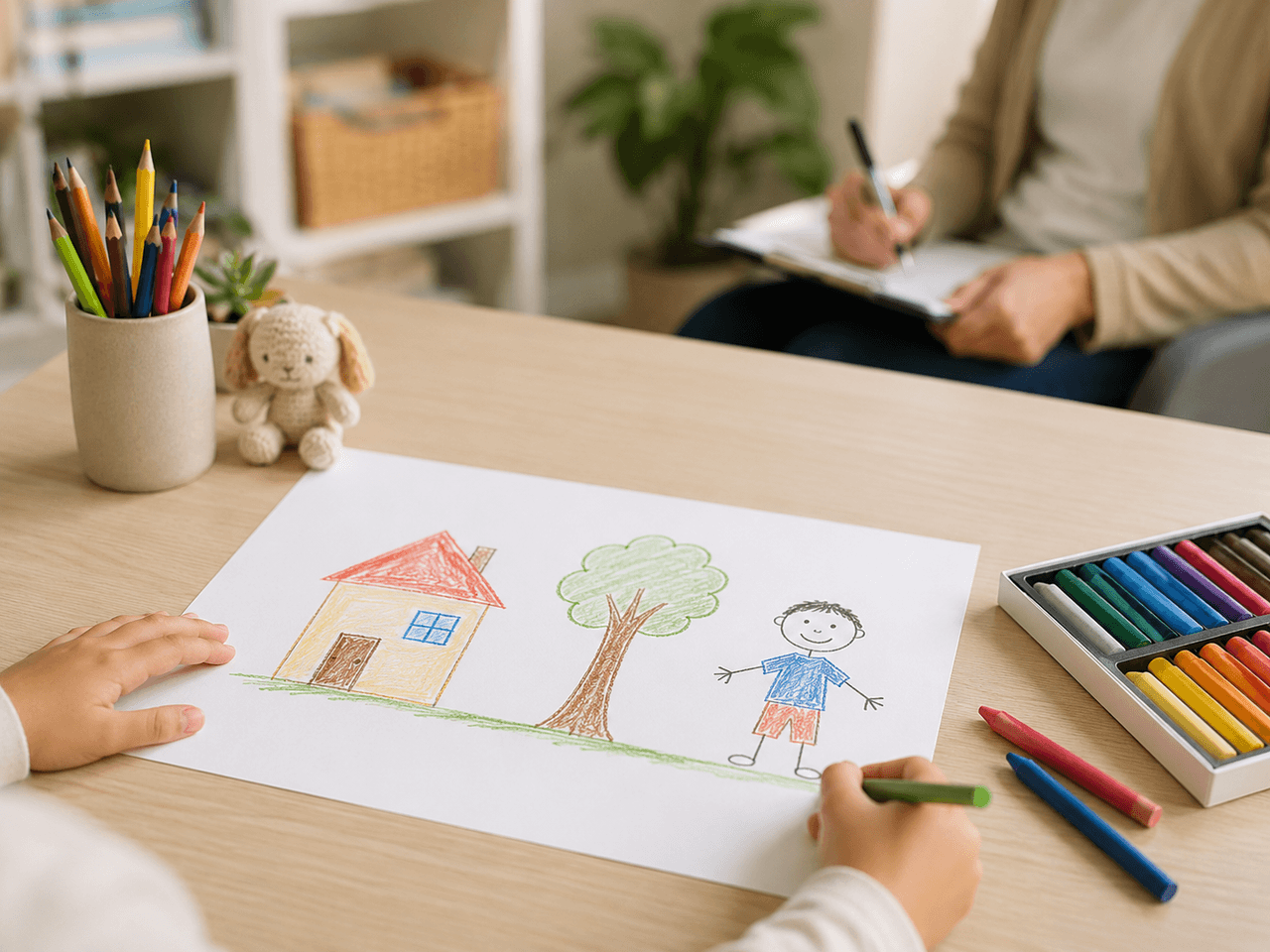
Visual Representing Children’s Drawings (Generated by Artificial Intelligence)
It is crucial to underscore this point: no drawing alone is a diagnostic tool. A child drawing a small house does not necessarily mean there is a problem in the family. Perhaps they were cramped by the edge of the paper that day, or perhaps their attention was distracted. Drawing analyses only become meaningful when interpreted by an expert in conjunction with the child’s overall behavior, speech, and life context.
You can observe your child’s drawings with curiosity, not judgment. Instead of asking “Why did you draw this like that?”, try asking “Can you tell me about this picture?” This opens space for the child to share their inner world in their own words. Often, the most valuable information is not in the drawing itself but in what the child says about it.
Ultimately, every drawing is a small window into the child’s emotional state at that moment. When looking through this window, patience, curiosity, and compassion may be the most appropriate approach.
Why Is Drawing So Important?
Colors Also Speak
Is It Sufficient on Its Own?
A Small Note for Parents