

`digitalpsychology` Related Article Results

Genogram Analysis
Genogram Analysis is a clinical assessment tool developed as part of Bowen’s Family Systems Theory, which schematically represents an individual’s intergenerational relationships, medical history, demographic characteristics, and key family turning points.【1】 Also known as a family pedigree, gene map, or genetic chart, this tool facilitates the collection of detailed information about a family’s formation and internal dynamics, enables the analysis of complex relational patterns, and allows for
EN
Nida Üstün

When Do People Surrender Their Decisions to Black Box Algorithms?
Artificial intelligence systems have moved beyond merely suggesting films or displaying advertisements. Today, many critical decisions—from credit applications to medical diagnoses, hiring processes to autonomous vehicles—are made or guided by AI-supported systems. However, this advancement brings forward a crucial question: How much trust can people place in algorithms whose workings they do not understand? At the heart of this question lies the “Black Box,” that is, opaque algorithms. Particul
EN
Ömer Said Aydın
 Di
DiDigital Stacking
Digital Hoarding is defined as a condition in which individuals continuously acquire digital content such as emails, digital images, videos, electronic documents, and software, experience significant difficulty in deleting or organizing these contents, and suffer stress or psychological distress due to the accumulation of data creating an unmanageable disorder. This phenomenon, also referred to in the literature as "e-hoarding," "data hoarding," or "cyber hoarding," is regarded as the digital ma
EN
Yunus Emre Yüce
RaRage Bait
“Rage bait” is a term referring to provocative, disturbing, or aggressive content specifically designed to trigger negative emotions such as anger and outrage in online environments. Such content is produced primarily to increase engagement (clicks, comments, shares) and traffic on digital platforms, especially social media. Oxford University Press defines it as “content deliberately crafted to provoke anger or outrage, typically published online to boost traffic or interaction on a specific web
EN
Hamza Aktay
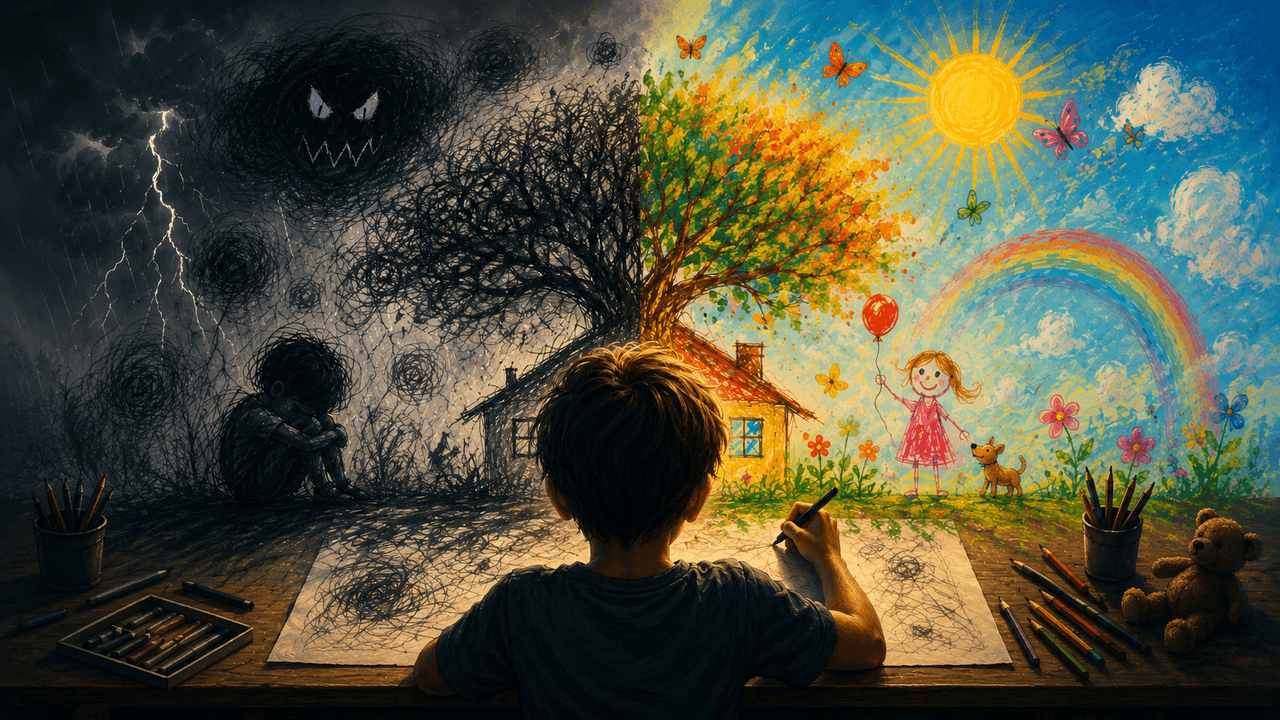
Children's Drawings: A Piece of Paper, a Pen, and Thousands of Unspoken Emotions
When you give a child paper and a pencil, what emerges is not merely a drawing. Those lines, those colors, those arrangements are in fact a map of the child’s emotions, fears, and hopes—things they cannot yet express in words. Young children cannot articulate their feelings in sentences the way adults do. Instead of saying “I feel insecure today,” they might draw a tiny house or forget the windows. Instead of saying “I feel alone in my family,” they position themselves in the corner of the famil
ENNida Üstün