


This article was automatically translated from the original Turkish version.
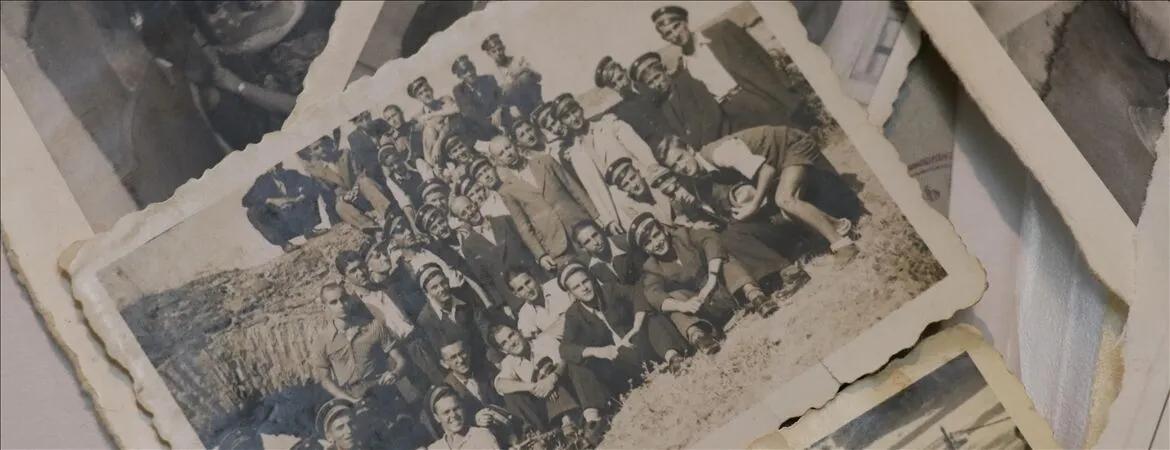
Yücelciler(AA)
Yücel Organization (Yücelciler)
Establishment | 1941 (different interpretations exist) | ||||||||
|---|---|---|---|---|---|---|---|---|---|
Place of Establishment | Skopje, Socialist Federal Republic of Yugoslavia | ||||||||
Headquarters | Skopje | ||||||||
Main Founders | Shuayb Aziz, Nazmi Ömer Yakup, Ali Abdurrahman, Adem Ali | ||||||||
Organization President | Shuayb Aziz | ||||||||
Primary Areas of Activity | Turkish education, culture, literature, press and publishing activities and social solidarity initiatives | ||||||||
Organization General Secretary | Sherafettin Ferit Yücelden | ||||||||
Main Founders | Shuayb Aziz Nazmi Ömer Yakup Ali Abdurrahman Adem Ali | ||||||||
Number of Executions | 4 (Shuayb Aziz, Ali Abdurrahman, Nazmi Ömer Yakup, Adem Ali) | ||||||||
Primary Areas of Activity | Turkish education Culture Literature Press and publishing activities Social solidarity initiatives | ||||||||
Distribution | Investigations beginning in 1947 and after the 1948 Yücel Case | ||||||||
Executed Individuals | Shuayb Aziz Ali Abdurrahman Nazmi Ömer Yakup Adem Ali | ||||||||
Yücelciler (Yücel Organization) is a secret Turkish organization established to preserve the national, cultural, and religious identity of the Turks living within the borders of the Socialist Federal Republic of Yugoslavia after World War II, particularly in Macedonia. Founded in 1941 with its center in Skopje, the organization aimed to foster national consciousness among Macedonian Turks primarily through educational, cultural, and media activities.【1】
Yücelciler (TRT Avaz)
Key figures in the founding of the organization include Şuayb Aziz, Nazmi Ömer Yakup, Ali Abdurrahman, and Adem Ali. The members of the Yücel Organization, mostly teachers, educators, and intellectuals, undertook efforts to preserve and sustain the cultural presence of the Turkish community within the new political order of Yugoslavia.【2】 The organization’s main areas of activity included supporting Turkish language education, encouraging literary works, preserving Turkish cultural heritage, and seeking solutions to the social problems faced by Macedonian Turks.【3】
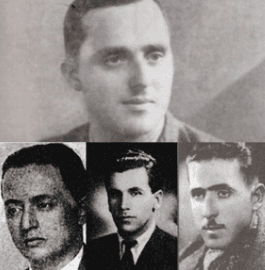
Yücelciler (YTB)
The Yücelciler presented themselves as a movement of Turkish nationalist youth committed to safeguarding national and spiritual values.【4】 The organization viewed Turkish identity not merely as an ethnic affiliation but as a composite of language, history, culture, and religion. Through educational and publishing activities, it sought to ensure the cultural continuity of the Turkish community.【5】
The Yugoslav communist regime regarded the Yücel Organization as an anti-regime structure and dismantled it through operations carried out in 1947. In the subsequent trials, several leaders were executed and many members received various sentences. Nevertheless, the Yücelciler are still regarded as one of the most significant movements in the recent history of Macedonian Turks aimed at preserving cultural identity.【6】
The social and political position of the Turks in Macedonia underwent significant changes following the end of Ottoman rule in the region. After the Balkan Wars (1912–1913), the majority of Macedonia was removed from Ottoman administration and came under the control of the Kingdom of Serbia. This period brought about major transformations in the political, cultural, and economic status of the Turkish and Muslim communities in the region.【7】
In the post-Ottoman era, the Turks of Macedonia encountered various challenges in preserving their identity within a political environment dominated by the new nation-state model. Restrictions on Turkish language education, weakening of religious institutions, and population reduction through various migration policies led to profound changes in the social structure.【8】 Especially during the interwar period, Turks living within the Kingdom of Yugoslavia had limited opportunities for political representation and cultural rights.【9】
After World War II, the region became part of the newly established Socialist Federal Republic of Yugoslavia. Although the new administration adopted a federal structure, it pursued policies aimed at limiting the public influence of religious and national identities in accordance with socialist ideology. During this period, the Turks of Macedonia simultaneously sought to adapt to the new political system as citizens of socialist Yugoslavia while also fighting to preserve their language, culture, and identity.【10】
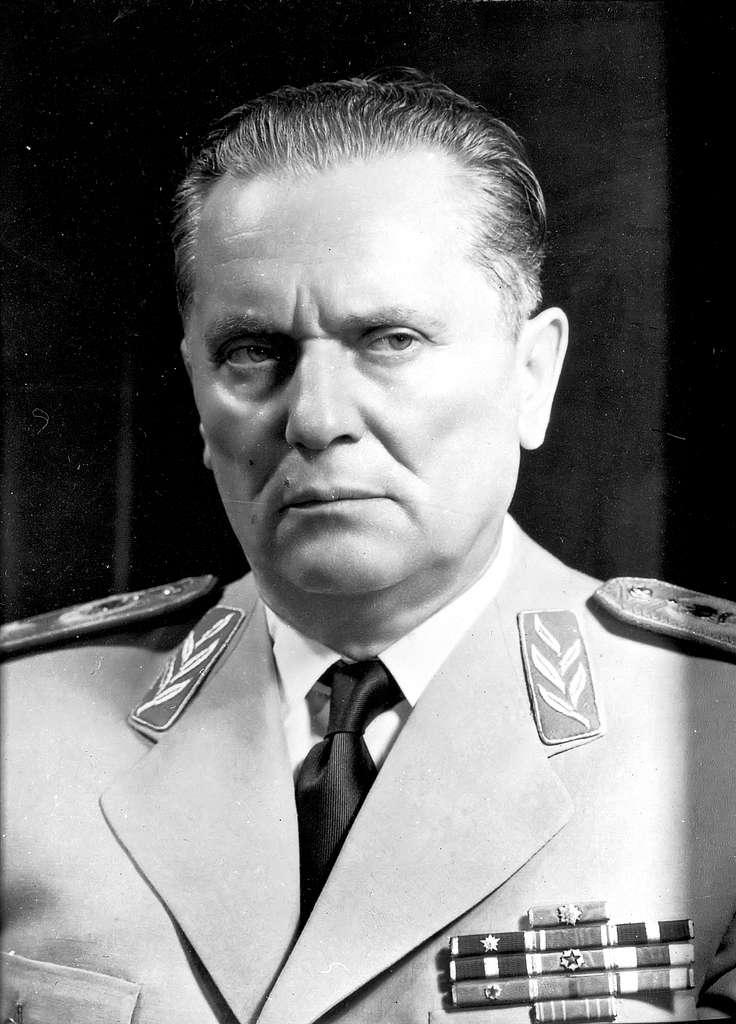
Josip Broz Tito (picryl)
After World War II, the Socialist Federal Republic of Yugoslavia, led by Josip Broz Tito, adopted a governance model aiming to unite diverse nations and communities under socialist ideology. However, the state’s secularizing policies, the reduction of religious institutions’ influence, and centralizing practices had significant effects, particularly on Muslim communities.【11】
Within this political environment, Macedonian Turkish intellectuals initiated various efforts to preserve Turkish identity and ensure cultural continuity. These initiatives, carried out through educators, teachers, and literary circles, laid the social groundwork for the emergence of the Yücel Organization in the following years.【12】 Key factors influencing the organization’s founding included preserving Turkish language education, transmitting cultural heritage, and strengthening national consciousness within the Turkish community.
The Yücel Organization is a secret organization established after World War II to preserve the national, cultural, and religious identity of the Turks living within the borders of the Socialist Federal Republic of Yugoslavia. Sources do not provide a fully agreed-upon date for its founding. Yıldırım Ağanoğlu and Şerafettin Yücel trace its origins to 1941, while Yaşar Aytek and Refik Özer date its establishment to 1945. This discrepancy is attributed to the organization’s lack of formal structure and its gradual process of organization.
The founding members of the organization consisted largely of teachers, educators, and young intellectuals. Sources list Şuayb Aziz, Şerafettin Ferid, Nazmi Ömer, Muzaffer Ahmet, Fettah Süleyman Pasiç, and Mehmet Dalip among the founding members. Organized on the principle of secrecy, the organization expanded over time to various cities and villages in Macedonia, with Skopje as its center. Official records indicate that membership reached approximately five hundred, with around fifty members actively engaged in operations.【13】
Although there are differing interpretations regarding how the organization received the name "Yücel", Şerafettin Yücel, who served as the organization’s secretary and was tried in the Yücel Case, stated that the name derives from the concept of "yüce" (exalted), symbolizing an ideal of ascent. According to Yücel, the term "Yücel" functions as an "action slogan" representing the ideal of becoming a perfect human through morality, virtue, faith, and freedom. According to Yıldırım Ağanoğlu, Yücel associated this concept with symbols important to Turks—such as the eagle, star, and crescent—to represent a commitment to national and spiritual values.【14】 【15】
The organization expanded its activities through networks established not only in Skopje but also in Gostivar, Kalkandelen, Bitola, and other Turkish settlements. As a result of the Yücel Organization’s activities, notable developments occurred in the fields of Turkish education and culture. The opening of the Tefeyyüz School in Skopje, the preparation of Turkish language teaching materials, and the commencement of Turkish-language broadcasts on Skopje Radio are considered significant achievements of this period.【16】
The activities of the Yücel Organization focused intensively on education, media and publishing, language, culture, and social organization. Members contributed to the reinvigoration of Turkish language education in postwar Macedonia by training teachers, supporting the operations of Turkish schools, and promoting the use of textbooks prepared in the new Turkish alphabet.【17】 Efforts were made to strengthen institutions offering Turkish education, including the Tefeyyüz Primary School in Skopje; members participated in developing educational materials and contributed to the compilation of Turkish–Macedonian and Macedonian–Turkish dictionaries.
On 23 December 1944, under the leadership of Nazmi Ömer, Birlik, the first Turkish-language newspaper published in Macedonia after World War II, began publication. The newspaper played an active role in disseminating articles on Turkish community life in education, culture, and literature, thereby contributing to the development of Turkish-language publishing.【18】 Simultaneously, initiatives were launched to introduce Turkish-language broadcasts on Skopje Radio, enabling Macedonian Turks to access news and cultural content in their mother tongue.
The Yücelciler did not limit their activities to education and publishing; they also circulated works by Turkish writers and poets such as Mehmet Âkif Ersoy, Ziya Gökalp, Mehmet Emin Yurdakul, Namık Kemal, and Yahya Kemal Beyatlı, obtained from Türkiye, thereby promoting awareness of Turkish national literature among Macedonian Turks.【19】
In addition, they participated in the activities of the Zafer Cultural Association, established in 1946 to promote cultural and social initiatives, organizing conferences, literary meetings, sports events, and various cultural activities.
Another area of activity for the Yücelciler was intelligence work. Some members established contact with the Turkish Consulate General in Skopje and the Turkish Embassy in Belgrade, sharing information on political and social developments in the region.【20】 These activities represent the principal examples of the Yücel Organization’s efforts in education, culture, media, and social organization in the postwar period.
The core ideological approach of the Yücel Organization centered on preserving the national and cultural identity of Macedonian Turks. Members viewed Turkish identity as a unified whole composed of language, history, culture, and religion. They identified themselves as "Turkish nationalist youth" and based their activities on sustaining the cultural existence of the Turkish community.【21】 In this framework, nationalism was not linked to the goal of political independence but rather to the preservation of the Macedonian Turks’ language, literature, historical awareness, and traditions. The organization’s emphasis on education and publishing was a direct consequence of this cultural preservation mindset.
Within the Yücel movement, Turkish identity was also addressed in conjunction with religious values. Members placed great importance on preserving Islamic values as a key component of Turkish culture. In this respect, the intellectual framework of the Yücelciler was built on the understanding that Turkish national identity and Islamic affiliation complemented each other. However, the organization’s primary focus was not on establishing a religious structure but on strengthening the cultural presence and educational opportunities of the Turkish community.
In the worldview of the Yücelciler, education was regarded as a fundamental tool for cultivating national consciousness. Through its cadre of teachers, the organization prioritized raising new generations in the Turkish language and culture, placing these efforts at the center of its identity preservation strategy. For this reason, the Yücel movement is also considered a cultural awakening movement among Macedonian Turks.
There were significant differences between the Yücelciler’s understanding of identity and the Yugoslav socialist regime’s policies regarding nation, religion, and identity. While the communist regime sought to reshape social identities within the framework of socialist citizenship, the Yücelciler advocated the preservation of the historical and cultural elements of Turkish identity.【22】 This led to the emergence of an ideological tension between the organization and the state authorities.
Shortly after its founding, the Yücel Organization attracted the attention of the communist regime in Yugoslavia and came under surveillance. The organization’s activities focused on Turkish identity, culture, and education were viewed by the authorities as an anti-regime structure. In 1947, following investigations, numerous members were arrested and put on trial.【23】
The first arrests began in August 1947. Teachers, intellectuals, and public officials linked to the organization were detained, and efforts were made during the investigation to generate public opinion against the Yücelciler.【24】 The trials commenced on 19 January 1948, and as a result, death sentences were handed down to Şuayb Aziz, Ali Abdurrahman, Nazmi Ömer Yakup, and Adem Ali. These sentences were carried out on 27 February 1948, and the four Yücelciler were executed in the Sušica region near Skopje.
After the executions, the bodies of the Yücel Organization members were not returned to their families, and the locations of their burials were not disclosed to the public. Consequently, the burial sites of the executed Yücel members remain unknown to this day.
Following investigations initiated in 1947, members of the Yücel Organization were collectively arrested and tried in the Yücel Trial held in Skopje in 1948. The defendants were charged with establishing a secret organization, attempting to alter Yugoslavia’s political and constitutional order, engaging in nationalist propaganda, conducting anti-state activities, and espionage on behalf of Türkiye. As a result of the trial, many members received prison sentences of varying lengths; four were sentenced to death, and others received long-term heavy prison terms. With these verdicts, the organizational structure of the group was largely dismantled, its activities ceased, and one of the most important civil organizations of postwar Macedonian Turks was eliminated.【25】
However, the impact of the Yücel Trial did not end in 1947–1948; it became a lasting element of collective memory within the Macedonian Turkish community.【26】 Some members and their relatives emigrated to Türkiye in subsequent years. Especially the migrations after 1953 played a significant role in reshaping perceptions of identity and historical memory among the Yücelciler.【27】 Those Yücelciler who settled in Türkiye after 1953 kept alive the memory of their organization’s members through commemorative practices and community activities. This process contributed to the perception of the Yücel Organization not merely as a historical entity but as an enduring element of identity and remembrance within the collective memory of Balkan Turks.
The Yücel Organization is regarded as one of the key initiatives in the recent history of Macedonian Turks aimed at preserving cultural identity. The organization’s activities in education, language, and culture, as well as the judicial process of 1947–1948, remain among the most remembered historical events within the Macedonian Turkish community.
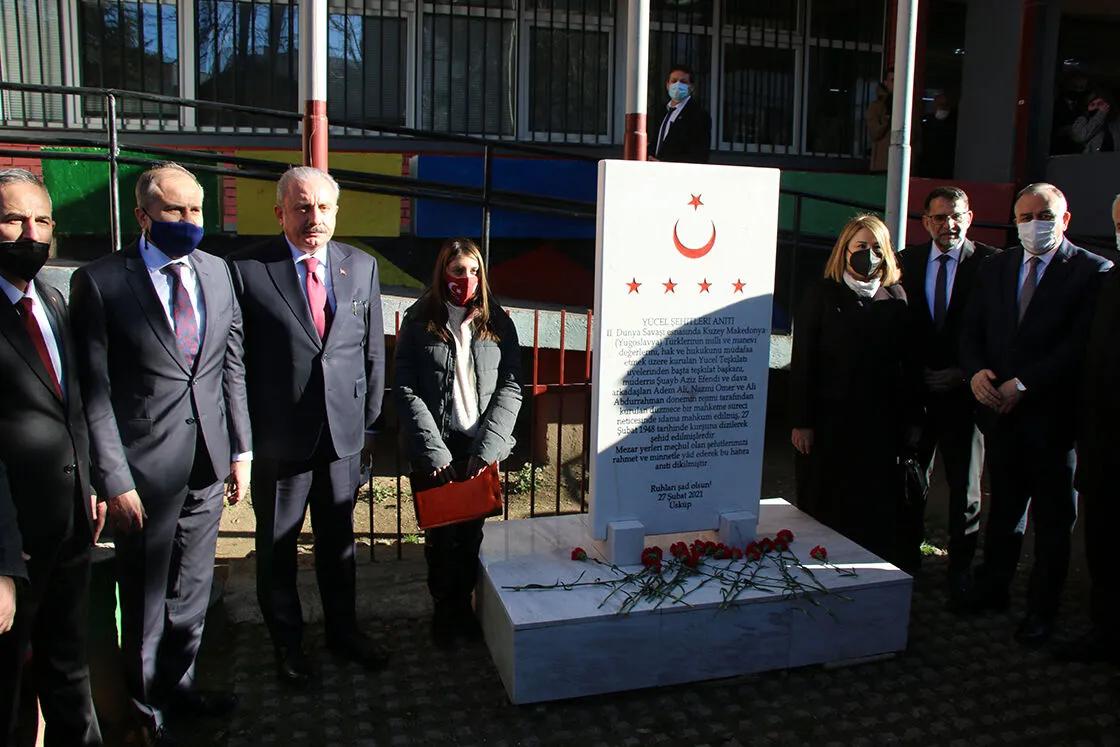
Speaker of the TBMM Şentop's Visit to Tefeyyüz Primary School in 2021 (Anadolu Ajansı)
The memory of the Yücel Organization is kept alive today through various commemorative programs and monuments. In this context, in 2021, a Yücelciler Memorial was erected in the courtyard of the Tefeyyüz Primary School in North Macedonia’s capital, Skopje. The memorial was constructed to honor the members of the Yücel Organization, especially those executed in 1948, and to transmit the cultural memory of Macedonian Turks to future generations. Annual commemorative ceremonies are held every 27 February in front of this monument.
Current studies on the Yücel Organization primarily interpret the movement within the context of the educational, cultural, and identity struggles of Macedonian Turks. Academic research evaluates the activities of the Yücelciler within the broader framework of the political and social transformations faced by Balkan Turks after World War II.【28】 The Yücelciler have become one of the primary subjects of research on the recent history of Macedonian Turks, particularly in relation to the preservation of Turkish language education, the transmission of cultural heritage, and the formation of collective memory.
Aliju, Dzihat. “TBMM Başkanı Şentop, Üsküp'te Türkçe Eğitim Veren Tefeyyüz İlköğretim Okulunu Ziyaret Etti.” Anadolu Ajansı, December 21, 2021. Accessed June 26, 2026.https://www.aa.com.tr/tr/dunya/-tbmm-baskani-sentop-uskup-te-turkce-egitim-veren-tefeyyuz-ilkogretim-okulunu-ziyaret-etti/2453571.
Bozkurt, Giray Saynur. “Tito Sonrası Dönemde Eski Yugoslavya Bölgesindeki Türkler ve Müslümanlar.” *Türk Dünyası İncelemeleri Dergisi* 10, no. 2 (2010): 51–95.
Eriş, Eren Atala. Yücelciler: Yugoslavya’da Gizli Türk Teşkilatı. İstanbul: Mavi Gök Yayınları, 2022.
Koca, Selçuk Kürşad. “Balkan Türklerinin Yakın Dönem Kahramanları: ‘Yücelciler’.” *Akademik Bakış* 60 (2017): 76–84.
Sanlı, Ferit Salim. “Yücel Hareketi ve Makedonya Türklüğü.” Düşünce Dünyasında Türkiz 3, no. 18 (2012): 33–48.
TRT Avaz. "Yücelci Türkler, Hangi İddia ile Suçlanmışlardı?" YouTube. Accessed June 26, 2026.https://www.youtube.com/watch?v=xCo3vd2eUy8
Tunç, Bilal, and Meryem Canbay. “Makedonya’daki Türklerin Özgürlük Mücadelesinde Yücel Teşkilatının Yeri ve Önemi.” *İnsan ve Toplum Bilimleri Araştırmaları Dergisi* 10, no. 4 (2021): 3884–3898.
YTB. "Makedonya Türklerinin Sessiz Ağıdı: “Yücelciler”." Accessed June 26, 2026.https://ytb.gov.tr/haberler/makedonya-turklerinin-sessiz-agidi-yucelciler
Çalışkan, Berrin. “1953 Göçü Sonrası Yücelcilerin Memleket/Yugoslavya ve Ana Vatan/Türkiye Algıları.” *İnsan ve Toplum* 4, no. 8 (2014): 137–162.
“Josip Broz Tito Uniform Portrait.” PICRYL. Accessed June 26, 2026.https://picryl.com/media/josip-broz-tito-uniform-portrait-99cc5f.
[1]
Selçuk Kürşad Koca, “Balkan Türklerinin Yakın Dönem Kahramanları: ‘Yücelciler’,” Akademik Bakış 60 (2017): 76. https://www.academia.edu/33356670/balkan_turklerinin_yakin_donem_kahramanlari_yucelciler201704_pdf
[2]
Ferit Salim Sanlı, “Yücel Hareketi ve Makedonya Türklüğü,” Düşünce Dünyasında Türkiz 3, no. 18 (2012): 44. https://dergipark.org.tr/en/download/article-file/3173662
[3]
Bilal Tunç ve Meryem Canbay, “Makedonya’daki Türklerin Özgürlük Mücadelesinde Yücel Teşkilatının Yeri ve Önemi,” İnsan ve Toplum Bilimleri Araştırmaları Dergisi 10, no. 4 (2021): 3885. https://dergipark.org.tr/tr/download/article-file/1995823
[4]
Koca, “Balkan Türklerinin Yakın Dönem Kahramanları: ‘Yücelciler’,” 76.
[5]
Sanlı, “Yücel Hareketi ve Makedonya Türklüğü,” 35.
[6]
Tunç ve Canbay, “Makedonya’daki Türklerin Özgürlük Mücadelesinde Yücel Teşkilatının Yeri ve Önemi”, 3885.
[7]
Giray Saynur Bozkurt, “Tito Sonrası Dönemde Eski Yugoslavya Bölgesindeki Türkler ve Müslümanlar,” Türk Dünyası İncelemeleri Dergisi 10, no. 2 (2010): 52. https://dergipark.org.tr/tr/pub/egetdid/article/380499
[8]
Sanlı, “Yücel Hareketi ve Makedonya Türklüğü,” 36.
[9]
Bozkurt, “Tito Sonrası Dönemde Eski Yugoslavya Bölgesindeki Türkler ve Müslümanlar,” 54.
[10]
Koca, “Balkan Türklerinin Yakın Dönem Kahramanları: ‘Yücelciler’,” 78.
[11]
Sanlı, “Yücel Hareketi ve Makedonya Türklüğü,” 38.
[12]
Tunç ve Canbay, “Makedonya’daki Türklerin Özgürlük Mücadelesinde Yücel Teşkilatının Yeri ve Önemi”, 3893.
[13]
Sanlı, “Yücel Hareketi ve Makedonya Türklüğü,” 35.
[14]
Koca, “Balkan Türklerinin Yakın Dönem Kahramanları: ‘Yücelciler’,” 77.
[15]
Koca, “Balkan Türklerinin Yakın Dönem Kahramanları: ‘Yücelciler’,” 77.
[16]
Koca, “Balkan Türklerinin Yakın Dönem Kahramanları: Yücelciler”, 78.
[17]
Koca, “Balkan Türklerinin Yakın Dönem Kahramanları: Yücelciler", 78.
[18]
Tunç ve Canbay, “Makedonya’daki Türklerin Özgürlük Mücadelesinde Yücel Teşkilatının Yeri ve Önemi”, 3892.
[19]
Koca, “Balkan Türklerinin Yakın Dönem Kahramanları: Yücelciler", 78.
[20]
Sanlı, “Yücel Hareketi ve Makedonya Türklüğü,” 43.
[21]
Koca, “Balkan Türklerinin Yakın Dönem Kahramanları: ‘Yücelciler’”, 77.
[22]
Bozkurt, “Tito Sonrası Dönemde Eski Yugoslavya Bölgesindeki Türkler ve Müslümanlar,” 73.
[23]
Sanlı, “Yücel Hareketi ve Makedonya Türklüğü”, 43.
[24]
Sanlı, “Yücel Hareketi ve Makedonya Türklüğü”, 44.
[25]
Sanlı, “Yücel Hareketi ve Makedonya Türklüğü,” 44; Tunç ve Canbay, “Makedonya’daki Türklerin Özgürlük Mücadelesinde Yücel Teşkilatının Yeri ve Önemi,” 3894.
[26]
Berrin Çalışkan, “1953 Göçü Sonrası Yücelcilerin Memleket/Yugoslavya ve Ana Vatan/Türkiye Algıları,” İnsan ve Toplum 4, no. 8 (2014): 154. https://dergipark.org.tr/tr/download/article-file/2453604
[27]
Çalışkan, “1953 Göçü Sonrası Yücelcilerin Memleket/Yugoslavya ve Ana Vatan/Türkiye Algıları,” 148.
[28]
Çalışkan, “1953 Göçü Sonrası Yücelcilerin Memleket/Yugoslavya ve Ana Vatan/Türkiye Algıları”, 152.

Yücelciler(AA)
Yücel Organization (Yücelciler)
Establishment | 1941 (different interpretations exist) | ||||||||
|---|---|---|---|---|---|---|---|---|---|
Place of Establishment | Skopje, Socialist Federal Republic of Yugoslavia | ||||||||
Headquarters | Skopje | ||||||||
Main Founders | Shuayb Aziz, Nazmi Ömer Yakup, Ali Abdurrahman, Adem Ali | ||||||||
Organization President | Shuayb Aziz | ||||||||
Primary Areas of Activity | Turkish education, culture, literature, press and publishing activities and social solidarity initiatives | ||||||||
Organization General Secretary | Sherafettin Ferit Yücelden | ||||||||
Main Founders | Shuayb Aziz Nazmi Ömer Yakup Ali Abdurrahman Adem Ali | ||||||||
Number of Executions | 4 (Shuayb Aziz, Ali Abdurrahman, Nazmi Ömer Yakup, Adem Ali) | ||||||||
Primary Areas of Activity | Turkish education Culture Literature Press and publishing activities Social solidarity initiatives | ||||||||
Distribution | Investigations beginning in 1947 and after the 1948 Yücel Case | ||||||||
Executed Individuals | Shuayb Aziz Ali Abdurrahman Nazmi Ömer Yakup Adem Ali | ||||||||
Historical Background
The Status of Turks in Post-Ottoman Macedonia
Post-World War II Yugoslavia and the Tito Era
Founding
Activities
Ideological Approach
The Yücel Trial and Its Aftermath
Legacy and Contemporary Significance