This article was automatically translated from the original Turkish version.
+2 More
Door | National Holiday | ||||||||
|---|---|---|---|---|---|---|---|---|---|
Celebrated Date | 29 October (Every Year) | ||||||||
First Celebration | 29 October 1924 | ||||||||
Official Status | National Holiday, by decision of the Grand National Assembly of Türkiye on 19 April 1925 | ||||||||
Related Days | National Sovereignty and Children's Holiday Commemoration of Atatürk, Youth and Sports Holiday | ||||||||
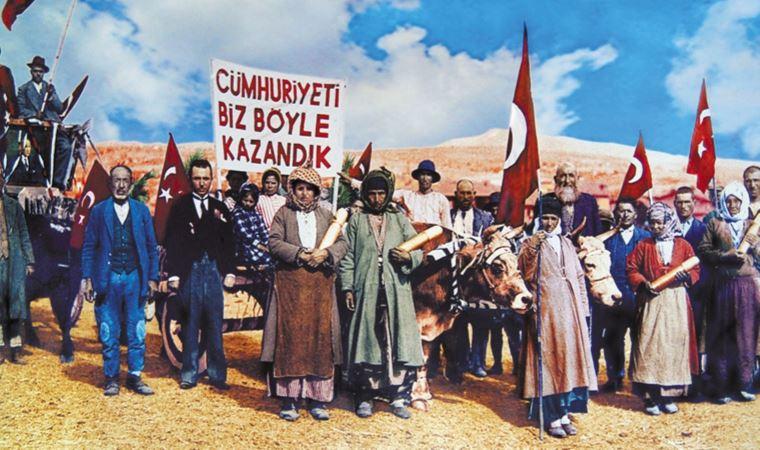
Republic Day is the anniversary of the official proclamation of the Republic of Türkiye on 29 October 1923. This date marks the establishment of the new state system whose sovereignty is explicitly rooted in the nation, and whose institutional framework was legally defined. Today it is commemorated annually on 29 October with official ceremonies and public events.
The process leading to the proclamation of the Republic began with the opening of the Grand National Assembly of Türkiye in Ankara on 23 April 1920, initiating the parliamentary government era, and became clearly defined with the abolition of the sultanate on 1 November 1922. On 29 October, the Assembly convened to resolve a government crisis that had persisted for several days. It swiftly debated the proposal for a Republic first within its party group and then in the full session of the Grand National Assembly, adopting it by the votes of the 158 deputies present. With this decision, the parliamentary government system was replaced by a cabinet system in which the President of the Republic appoints a Prime Minister, who in turn forms the Council of Ministers. Following the adoption of the decision, elections were held and Mustafa Kemal Atatürk became the first President of the Republic of Türkiye.
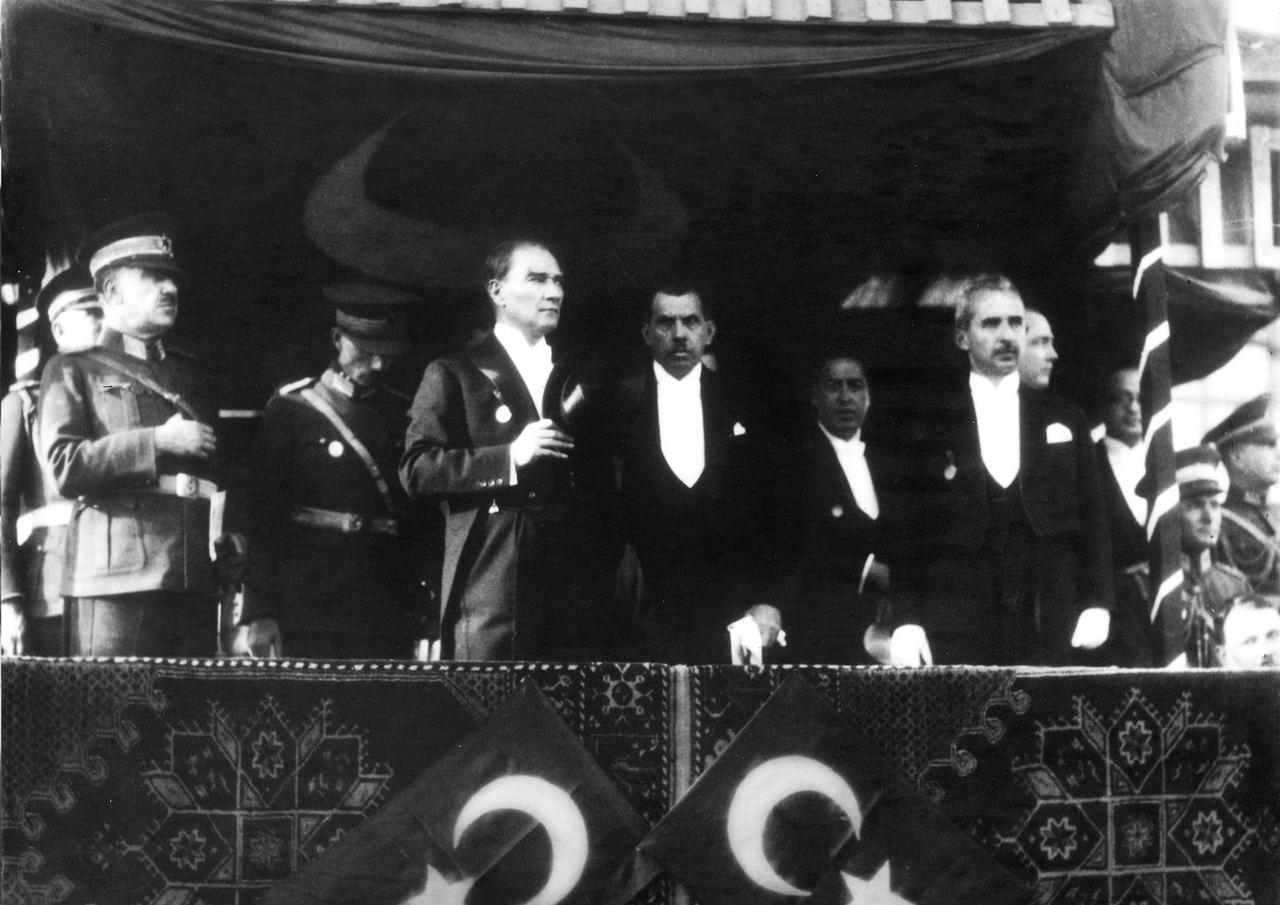
Atatürk at the 10th Anniversary Celebrations of the Proclamation of the Republic (AA)
The tradition of celebrating Republic Day began on 26 October 1924 with a decision to fire 101-gun salutes and hold ceremonies; the program of 29 October 1924 marked the first nationwide anniversary. On the proposal of the Ministry of Foreign Affairs, the Grand National Assembly adopted a resolution on 19 April 1925 granting 29 October the status of a “National Holiday.” Preparations for the tenth anniversary in 1933 were extended over three days; parades, exhibitions, radio broadcasts, and public podiums were standardized under the supervision of the High Commission attached to the Prime Ministry and provincial committees. The “Tenth Anniversary March” was performed collectively across the country; on the same day, Atatürk delivered his Tenth Anniversary Speech at the Ankara Hippodrome, presenting a general assessment and key objectives of the first decade to the public.
The process leading to the proclamation of the Republic began with the opening of the Grand National Assembly on 23 April 1920. The new administrative structure established in Ankara assumed responsibility for directing and managing the National Struggle. After the Mudanya Armistice and the Lausanne negotiations, the transition to the Republican regime became unmistakable with the abolition of the sultanate on 1 November 1922.
Following the occupation of Istanbul and the dissolution of the last Ottoman Parliament, the Grand National Assembly opened in Ankara on 23 April 1920. This assembly was composed of representatives from the dissolved Ottoman Chamber of Deputies and the Defense of Rights organizations. This structure, operating under the parliamentary government system, directly assumed executive and judicial authority. Mustafa Kemal Pasha served simultaneously as Commander-in-Chief and President of the Assembly. During the years of the National Struggle from 1920 to 1922, the direction of the war and state administration were largely conducted through this body.
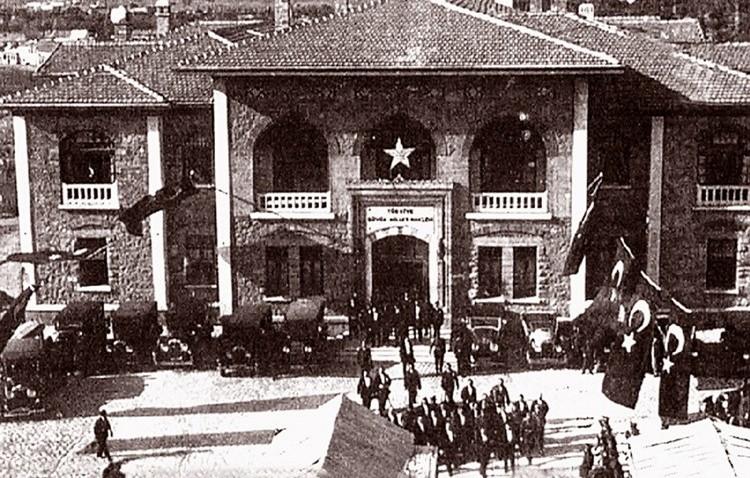
The First Assembly Building in Ankara During the National Struggle (AA)
After the Mudanya Armistice, active hostilities ceased and negotiations for the Treaty of Lausanne began. In response to demands from both Ankara and Istanbul for delegations to participate in the Lausanne talks, the Ankara Government abolished the sultanate on 1 November 1922. From that date onward, the sultanate ended; the Grand National Assembly in Ankara, led by its President and the Executive Committee (Council of Ministers), continued to manage state affairs. The caliphate, which held no executive authority, was preserved following the abolition of the sultanate, and Abdülmecid Efendi, the heir apparent, was elected caliph by the Assembly. During this period, the caliphate and the Assembly in Ankara coexisted; the legal and political framework of the head of state was publicly debated.
The executive deadlock and resignations of 24–27 October initiated on the evening of 28 October the constitutional process leading to the proclamation of the Republic in Çankaya.
On 24 October, Prime Minister Fethi Bey resigned from the Ministry of the Interior, citing the need to focus on prime ministerial duties. On the same day, parliamentary commanders Kâzım (Karabekir) Pasha, Ali Fuat (Cebesoy) Pasha, and Cevat (Çobanlı) Pasha were appointed as Inspectors of the First, Second, and Third Armies respectively, upon their own requests.
In accordance with the 1921 Constitution, the People’s Party Group nominated candidates for the vacant positions of Minister of the Interior and Second Deputy Speaker of the Assembly before any vote was held in the Assembly. In this nomination, the group selected Rauf Bey and Sabit Bey, supported by the opposition, over Yusuf Kemal Bey (backed by Mustafa Kemal Pasha for the position of Second Deputy Speaker) and Ferit Bey (for the Ministry of the Interior). These developments reinforced the perception in Ankara that opposition forces within the Assembly were gaining strength.
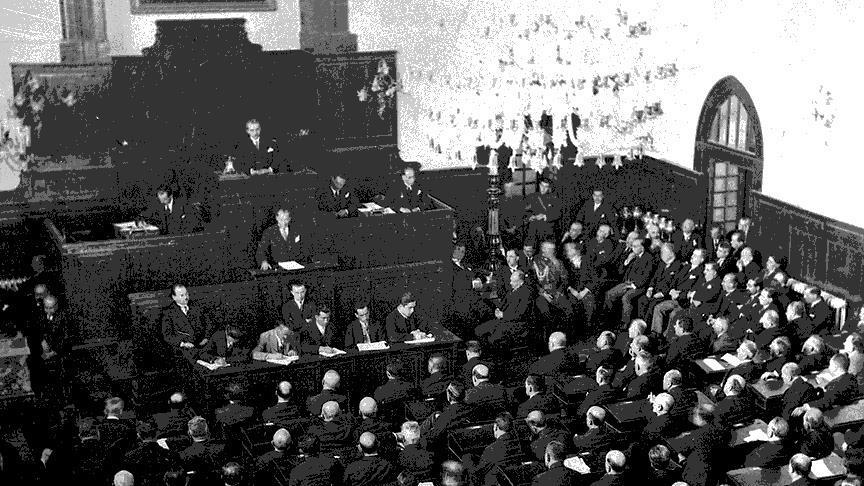
A Scene from the Assembly Debates (AA)
The resignations of Prime Minister Fethi Bey and all ministers except Fevzi Pasha were accepted, with the justification that the parliamentary government system, in which the Prime Minister and ministers were individually elected by the Assembly, created problems of cohesion and stability. It was announced that the new government would be elected on Monday, 29 October. This interlude pushed the executive crisis into a phase where a constitutional solution became unavoidable.
As Atatürk recounted in his Nutuk, on the evening of 28 October he declared, “Tomorrow we shall proclaim the Republic!” and outlined the procedure to be followed the next day. According to this plan, speeches would be made within the party group to prevent the formation of a government, thereby leaving the resolution of the crisis to Gazi; it was anticipated that Kemalettin Sami Pasha would formally propose the motion. On the evening of 28 October, Mustafa Kemal, as recorded in the Nutuk, stated the following regarding the draft law prepared for the establishment of the Republic:【1】
“That night, the friends who were with me left early. Only İsmet Pasha was a guest at Çankaya. After being alone with him, we drafted a law. In this draft, I altered the articles of the 20 January 1921 Constitution concerning the form of state as follows:
To the end of the First Article I added the sentence: ‘The form of government of the State of Türkiye is a Republic.’
I revised the Third Article as follows: ‘The State of Türkiye is governed by the Grand National Assembly. The Assembly administers the executive branches through the Council of Ministers.’
In addition, Articles 8 and 9, fundamental provisions of the Constitution, were revised and clarified to read as follows:
‘Article – The President of the Republic is elected by the General Assembly of the Grand National Assembly from among its own members for a term. The presidency continues until a new President is elected. The former President may be re-elected.’
‘Article – The President of the Republic is the head of state. In this capacity, he presides over the Assembly and the Council of Ministers whenever necessary.’
‘Article – The President of the Republic selects the Prime Minister from among the members of the Assembly. The Prime Minister then selects the other ministers from among the members of the Assembly, and all are submitted by the President to the Assembly for approval. If the Assembly is not in session, approval is deferred until its next meeting.’
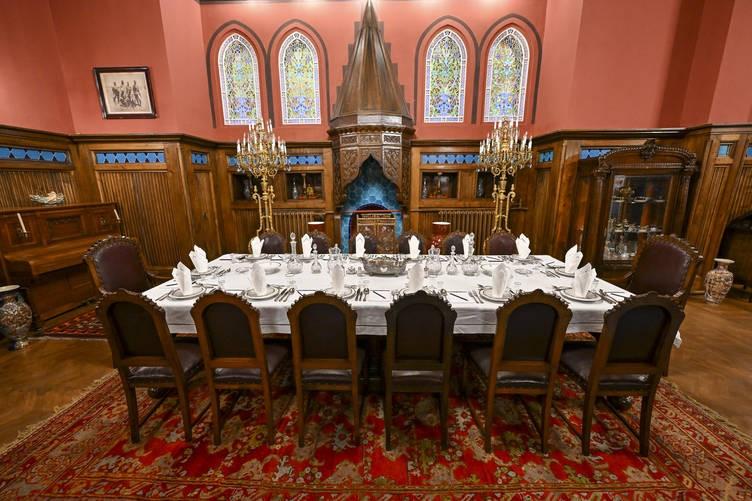
The Table at Çankaya Palace Where Gazi Mustafa Kemal Pasha Said, ‘Gentlemen, tomorrow we shall proclaim the Republic.’ (AA)
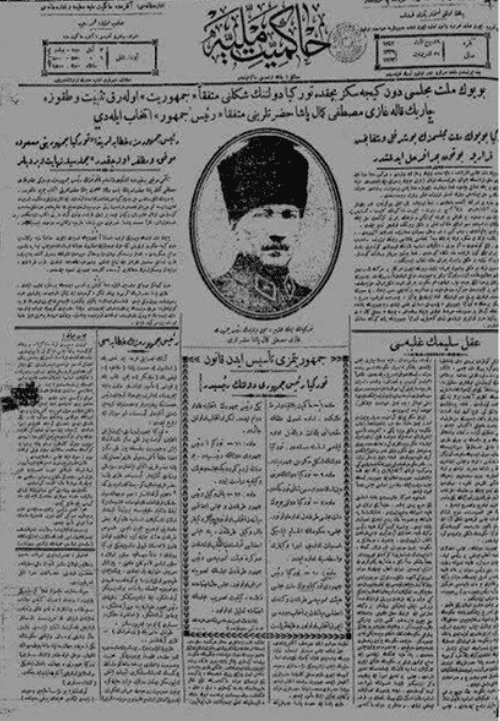
Hakimiyet-i-Milliye Newspaper of 30 October 1923 (mcbu)
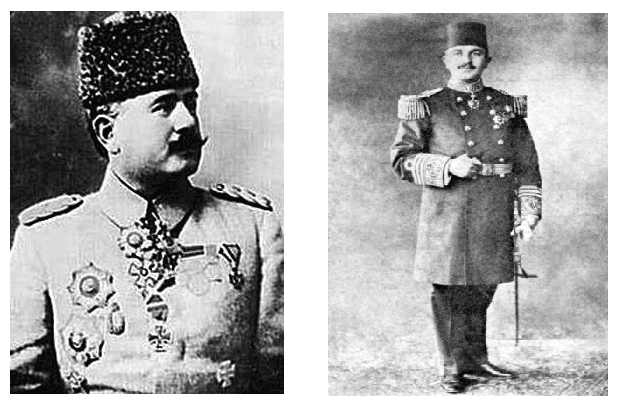
In the press and political circles of the time, opposition to the principle of the Republic was not wholesale; rather, criticism focused on the timing and speed of the proclamation and the scope of powers granted to the President. The debate centered on whether the Republic was compatible with the principle of national sovereignty (democracy) and on the extent of the President’s authority. It is noted that what the opposition opposed was not the Republic itself, but fears of authoritarianism.
The proclamation of the Republic was carried out with a timing and speed designed to leave no opportunity for opposition, and party discipline was strictly enforced. The Assembly debates were approved as “immediate” and “hasty”; contemporary witnesses described the proclamation as “unexpected and sudden.”【2】
Negative votes were recorded on Article 11 of the draft by the deputies of Niğde (Hâzım Tepeyran), Bursa (Refet Canıtez), Balıkesir (Ahmet Süreyya Örgeevren), and Kırşehir (Ali Rıza).
No abstentions were recorded during the vote, but approximately 100 deputies were absent from the session;【3】 the decision was adopted by 158 votes. According to another source, 158 of the 291 members were present at the time of voting;【4】 another source states that 158 of the 328 members voted “yes.” Additionally, some sources note that the two-thirds majority required for constitutional amendments was not applied in this vote.
The absence of several leading opposition figures from Ankara enabled the rapid advancement of the Assembly’s agenda. It is reported that Atatürk did not consider it necessary to invite all his associates in Ankara, and that some individuals outside Ankara, who had not been informed of the proclamation, felt offended.【6】 In this context, Rauf Bey stated in a 30 October interview that the term “Republic” would only be meaningful if respect were shown to the people’s wishes; he affirmed his support for the Republican system but criticized the haste of the proclamation, warning that such speed might lead to future problems.【7】
Kâzım Karabekir learned of the proclamation on the morning of 30 October while in Trabzon; on the morning of 31 October, he ordered a gun salute and organized an official ceremony. Expressing his satisfaction at the end of the caliphate and sultanate, he sent congratulatory telegrams to President Mustafa Kemal and Prime Minister İsmet Pasha.
Nevertheless, he expressed regret that he, as both a deputy and a military commander, had not been informed of the proclamation. On the morning of 10 November, he told journalists, citing information from Rauf Bey and Refet Pasha, that “a personal regime was being established under the name of the Republic” and that “the people and the press were being transferred from one form of pressure to another.”【8】
The tradition of celebrating Republic Day began on 26 October 1924 with a decision to fire 101-gun salutes and hold ceremonies; the program of 29 October 1924 marked the first nationwide anniversary. On the proposal of the Ministry of Foreign Affairs, the Assembly adopted a regulation on 19 April 1925 granting 29 October the status of a “National Holiday.”
The tenth anniversary celebrations were extended over three days (29–31 October) by a regulation dated 11 June 1933; a High Commission under the Prime Ministry and provincial committees were established. The program included parades, lantern processions, exhibitions, radio broadcasts, city decorations, and “public podiums.” The symbol of the celebrations, the “Tenth Anniversary March” (lyrics by Faruk Nafiz Çamlıbel and Behçet Kemal Çağlar; music by Cemal Reşit Rey), was taught and performed collectively across the country; on 29 October 1933, it was sung together with the İstiklâl Marşı in public squares and broadcast on radio at 12:04.
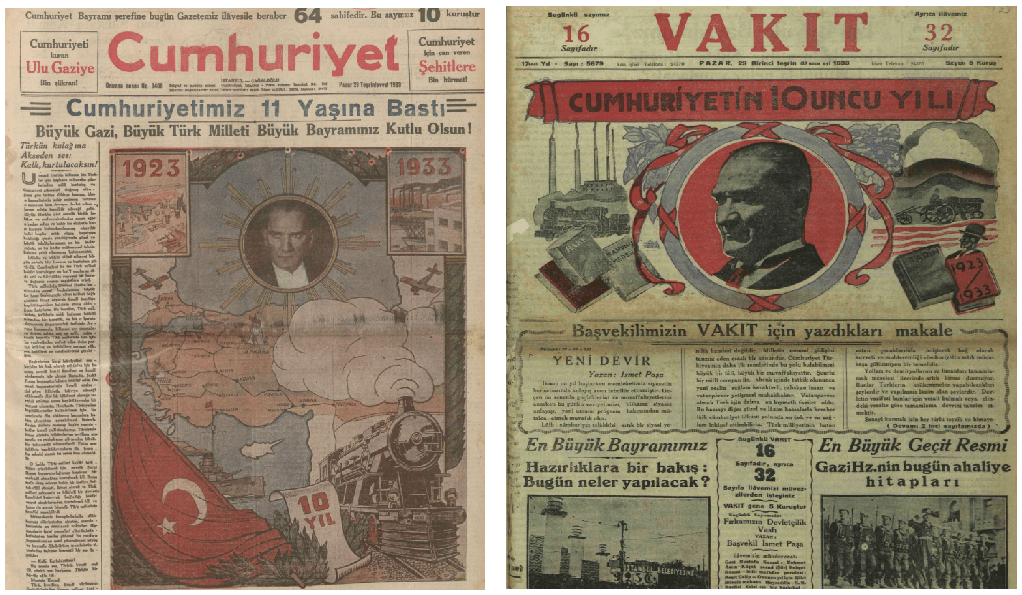
10th Anniversary Celebrations, Cumhuriyet Newspaper (Gaste Archive) 10th Anniversary Celebrations, Vakit Newspaper (Gaste Archive)
During the ceremonies, Atatürk delivered his Tenth Anniversary Speech at the Ankara Hippodrome, marking the tenth year of the Republic of Türkiye. The speech offered a brief summary of the five years of the National Struggle and the first decade of the Republic; it lasted approximately six minutes.
Tenth Anniversary Speech (TRT Archive)
Celebrations begin in the morning with an official ceremony at Anıtkabir. The delegation led by the President lays a wreath at the mausoleum, observes a moment of silence, and the İstiklâl Marşı is performed; the Anıtkabir Special Register is then signed. In provinces and districts, wreaths are laid at Atatürk monuments under the coordination of governors and district governors, congratulations are received, and protocol speeches are delivered. During the day, a special session is convened in the Grand National Assembly, where party groups and members of parliament deliver speeches on the meaning and importance of the day.
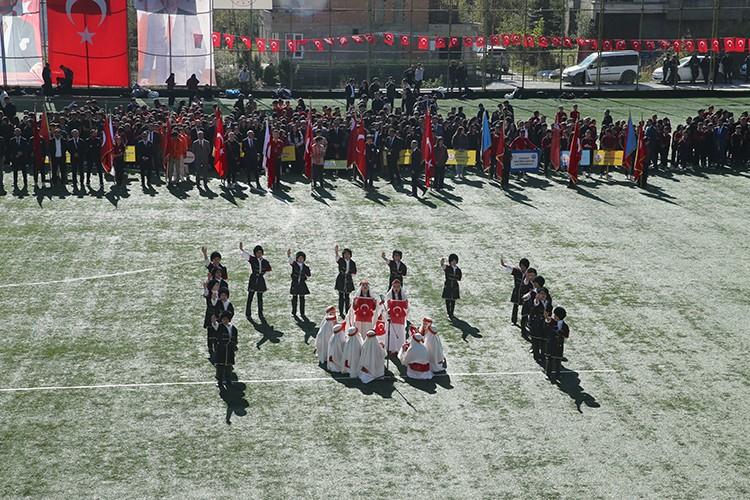
A Scene from 29 October Republic Day Events (AA)
29 October is a full public holiday. On the morning of 28 October, programs are organized in schools; parades involving garrison and police units are held in city centers; depending on the program, band concerts, scout and youth processions, and in some years, aerial flypasts take place. In the evening, lantern processions, torchlight marches, concerts, and light and reflection displays are held in main squares; official buildings, bridges, and symbolic structures are illuminated with red-and-white themes.
Akyol, Taha. Atatürk’ün İhtilal Hukuku. Cilt 6. Doğan Kitap, 2012.
Alpkaya, Faruk. Türkiye Cumhuriyeti’nin Kuruluşu (1923–1924). İstanbul: İletişim Yayınları, 1998.
Anadolu Ajansı (AA). "Türkiye Cumhuriyeti 102 yaşında." Accessed October 28, 2025.https://www.aa.com.tr/tr/gundem/turkiye-cumhuriyeti-102-yasinda/3728448.
Anadolu Ajansı (AA). “Cumhuriyet 97 yaşında.” Accessed October 28, 2025.https://www.aa.com.tr/tr/turkiye/cumhuriyet-97-yasinda/2023001.
Anadolu Ajansı (AA). “Cumhuriyetin 101. yılı kutlandı.” Accessed October 28, 2025.https://www.aa.com.tr/tr/gundem/cumhuriyetin-101-yili-kutlandi/3377685.
Anadolu Ajansı (AA). “Cumhuriyetin sessiz tanığı: Atatürk Müze Evi ziyaretçilerini bekliyor.” Accessed October 28, 2025.https://www.aa.com.tr/tr/kultur/cumhuriyetin-sessiz-tanigi-ataturk-muze-evi-ziyaretcilerini-bekliyor/3114693.
Atatürk Ansiklopedisi. "10. Yıl Marşı." Accessed October 28, 2025.https://ataturkansiklopedisi.gov.tr/detay/165/10.-Y%C4%B1l-Mar%C5%9F%C4%B1.
Atatürk Ansiklopedisi. "Cumhuriyet’in Onuncu Yıl Kutlamaları." Accessed October 28, 2025.https://ataturkansiklopedisi.gov.tr/detay/606/Cumhuriyet%E2%80%99in-Onuncu-Y%C4%B1l-Kutlamalar%C4%B1.
Atatürk Ansiklopedisi. "Cumhuriyet’in İlanı." Accessed October 28, 2025.https://ataturkansiklopedisi.gov.tr/detay/608/Cumhuriyet%E2%80%99in-%C4%B0lan%C4%B1.
Atatürk Ansiklopedisi. "Hüseyin Rauf (Orbay) (1880–1964)." Accessed October 28, 2025.https://ataturkansiklopedisi.gov.tr/detay/785/H%C3%BCseyin-Rauf-%28Orbay%29-%281880-1964%29.
Atatürk Ansiklopedisi. "Kâzım Karabekir (1882–1948)." Accessed October 28, 2025.https://ataturkansiklopedisi.gov.tr/detay/552/K%C3%A2z%C4%B1m-Karabekir-%281882-1948%29.
Atatürk, Mustafa Kemal. *Nutuk*. İz Bırakan Kalemler Yayınevi, 2015. Accessed October 28, 2025.https://books.google.com.tr/books?id=Xdm0EAAAQBAJ
Bilgiç, Ahmet Timur. Gençler İçin Nutuk: A. Timur Bilgiç’in Açıklamalarıyla. Ankara: Puslu Yayıncılık, 2022.
Ekinci, Ekrem Buğra. “Cumhuriyet Gerçekte Ne Zaman İlan Edildi?” Ekrem Buğra Ekinci. Accessed October 28, 2025.https://www.ekrembugraekinci.com/article/?ID=981&cumhuriyet-ger%C3%A7ekte-ne-zaman-ilan-edildi-.
Gaste Arşivi. "Cumhuriyet Gazetesi, 29 Ekim 1933, 1. sayfa." Accessed October 28, 2025.https://www.gastearsivi.com/gazete/cumhuriyet/1933-10-29/1.
Gaste Arşivi. “Vakit Gazetesi, 29 Ekim 1933, 1. sayfa.” Accessed October 28, 2025.https://www.gastearsivi.com/gazete/vakit/1933-10-29/1.
Goloğlu, Mahmut. Türkiye Cumhuriyeti Tarihi I: Devrimler ve Tepkileri (1924–1930). İstanbul: Türkiye İş Bankası Kültür Yayınları, 2011.
Karabekir, Kazım. Paşaların Kavgası. İstanbul: Truva Yayınları, 2022.
Kinross, Lord. Atatürk: Bir Milletin Yeniden Doğuşu. Çev. Necdet Sander. Altın Kitaplar, 1994.
Mango, Andrew. Atatürk: Modern Türkiye’nin Kurucusu. Remzi Kitabevi, 1999.
Manisa Celal Bayar Üniversitesi. "30 Ekim 1923 Tarihli Hakimiyet-i Milliye Gazetesinde ‘Cumhuriyetin İlanı’ Haberleri ve Latin Alfabesine Transkripsiyonu." Accessed October 28, 2025.https://www.mcbu.edu.tr/Etkinlik/30-Ekim-1923-Tarihli-Hakimiyet-i-Milliye-Gazetesinde--Cumhuriyetin-Ilani-Haberleri-ve-Latin-Alfabesine--Transkripsiyonu_16_04_41.
Mecliste.org. "Teşkilât-ı Esasiye – Cumhuriyet’in ilanı ve Meclis." Accessed October 28, 2025.https://www.mecliste.org/icerik/143/Teskilat-i-Esasiye--Cumhuriyet-in-ilani-ve-Meclis.
Picryl. “Rauf Orbay (1922).” Accessed October 28, 2025.https://picryl.com/media/rauf-orbay-1922-04e84a.
TRT Archive. "Onuncu Yıl Nutku – TRT Arşiv." YouTube video. Accessed October 28, 2025.https://www.youtube.com/watch?v=goL8l6U8KHk.
Vatandaş, S., Avcı, M. G., & Vatandaş, C. (2024). TÜRKİYE’DE CUMHURİYET’İN 10. YILI KUTLAMALARI. HUMANITAS - Uluslararası Sosyal Bilimler Dergisi, 12(Cumhuriyet’in 100. Yılı Özel Sayısı), 238-265. Accessed October 28, 2025.https://doi.org/10.20304/humanitas.1404879
[1]
Ahmet Timur Bilgiç, Gençler İçin Nutuk: A. Timur Bilgiç’in Açıklamalarıyla (Ankara: Puslu Yayıncılık, 2022).
[2]
Taha Akyol, Atatürk’ün İhtilal Hukuku, cilt 6 (Doğan Kitap, 2012).
[3]
Lord Kinross, Atatürk: Bir Milletin Yeniden Doğuşu, çev. Necdet Sander (İstanbul: Altın Kitaplar, 1994).
[4]
Kâzım Karabekir, Paşaların Kavgası (İstanbul: Emre Yayınları, 2005), Yayın No. 8.
[6]
“Kâzım Karabekir (1882–1948),” Atatürk Ansiklopedisi, erişim 28 Ekim 2025, https://ataturkansiklopedisi.gov.tr/detay/552/K%C3%A2z%C4%B1m-Karabekir-%281882-1948%29.
[7]
Mahmut Goloğlu, Türkiye Cumhuriyeti Tarihi I: Devrimler ve Tepkileri (1924–1930) (İstanbul: Türkiye İş Bankası Kültür Yayınları, 2011), Sayfa 5.
[8]
Kazım Karabekir, Paşaların Kavgası Inkılap Hareketlerimiz, Emre Yayınları, Baskı 6, Yayın No. 8, sayfa 192-195.

Door | National Holiday | ||||||||
|---|---|---|---|---|---|---|---|---|---|
Celebrated Date | 29 October (Every Year) | ||||||||
First Celebration | 29 October 1924 | ||||||||
Official Status | National Holiday, by decision of the Grand National Assembly of Türkiye on 19 April 1925 | ||||||||
Related Days | National Sovereignty and Children's Holiday Commemoration of Atatürk, Youth and Sports Holiday | ||||||||
No Discussion Added Yet
Start discussion for "October 29 Republic Day" article
Historical Background
Opening of the Grand National Assembly on 23 April and the National Struggle Period
Abolition of the Sultanate
The Process of Proclaiming the Republic
24 October: Resignation of the Ministry of the Interior and the Return of Pashas to the Army
25 October: Selection of New Government Members
26–27 October: Resignation of the Council of Ministers
28 October: Tomorrow We Shall Proclaim the Republic
29 October 1923: Constitutional Step and Assembly Proceedings
Political Context and Opposing Views
Objections Regarding Timing and Procedure
Opposition Remarks During the Commission Stage
Opposition Within the Assembly and Level of Participation
Political Context
Official Ceremonies and Celebrations
Tenth Anniversary Celebrations
Tenth Anniversary Speech
Celebrations of 29 October Today