


This article was automatically translated from the original Turkish version.
Nevşehir Cuisine represents the culinary culture of Nevşehir, located at the heart of the historical Cappadocia region in Central Anatolia. This cuisine is the product of thousands of years of historical accumulation, shaped by contributions from numerous civilizations including the Hittites, Phrygians, Assyrians, Persians, Romans, Seljuks, and Ottomans. The province’s continental climate and fertile soils have played a decisive role in determining the diversity of agricultural and livestock products that form the foundation of its cuisine.
Nevşehir cuisine is primarily based on wheat (especially bulgur and cracked wheat), legumes (chickpeas, beans, lentils), potatoes, onions, tomatoes, peppers, squash, and products derived from viticulture such as grapes and grape derivatives. Animal-based foods prominently feature lamb and beef, milk, yogurt, and cheese. The cuisine is characterized by its dough-based dishes, winter preparations (drying, sauce-making, pickling, grape molasses production), and long-duration cooking techniques using earthenware vessels (testi, çömlek).
The most distinctive feature of traditional Nevşehir cuisine is its comprehensive preparations for winter months. These preparations also serve as an expression of communal solidarity (imece).
After the grape harvest, grapes are collected and crushed in special areas called "şırahane" to extract their juice. This juice, after treatment with "pekmez toprağı", is boiled in large troughs to produce pekmez. From pekmez, additional products are made: köftür (a sweet made by mixing grape juice with flour and starch) and şire tarhanası (a dried fruit-like product made by boiling and drying grape juice with cracked wheat).
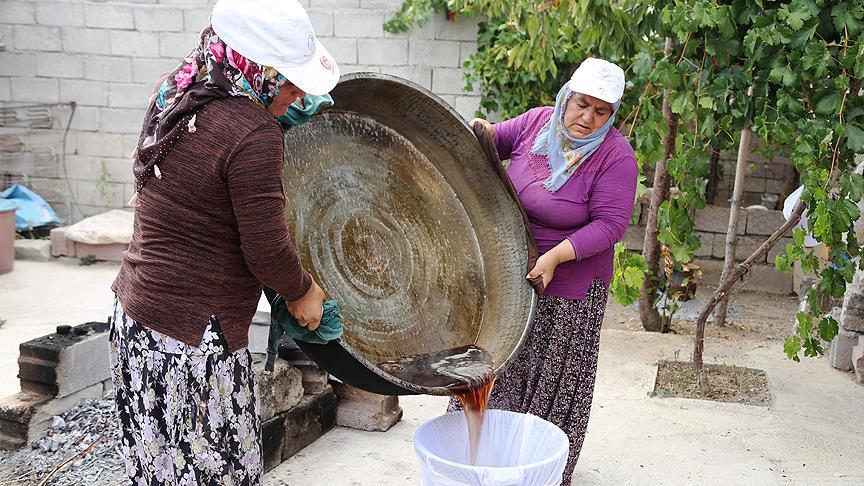
Pekmez Production Stage (Anadolu Ajansı)
Tomatoes harvested in summer are left in the sun, mashed, strained, and then boiled again until concentrated into sauce. Tomato and pepper are used to make "açılı" (spicy sauce), while various vegetables such as beans, eggplant, and peppers are preserved as canned goods.
Almost all vegetables (okra, eggplant, squash, peppers, tomatoes, beans) are thinly sliced or threaded onto strings and dried under the summer sun, then stored for use in winter dishes.
Fruits are dried in the sun and used in winter to make hoşaf (fruit compote).
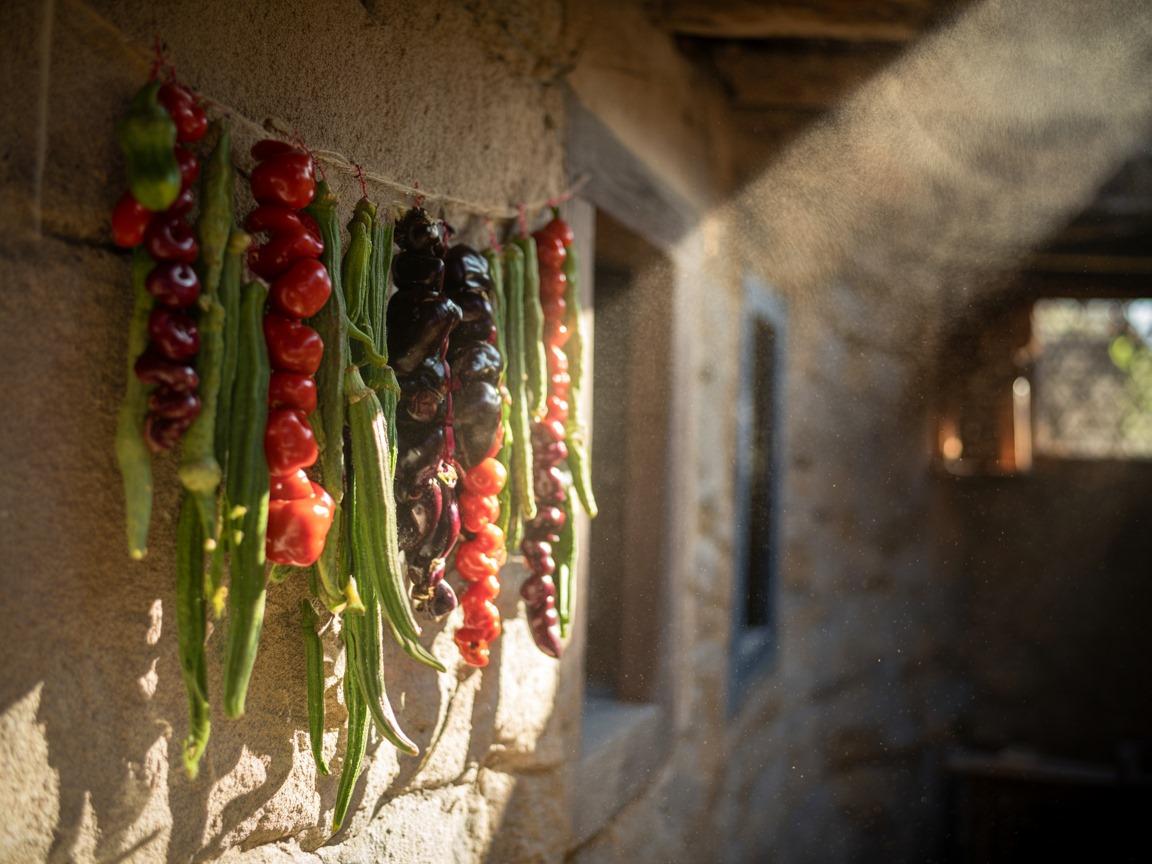
Representative Winter-Dried Vegetables (Generated by Artificial Intelligence)
Vegetables such as peppers, tomatoes, cabbage, beans, and even grapes and watermelon are pickled in a mixture of vinegar (made from grape must), water, and salt. The brine of grape pickles is even consumed as a drink.
Two types of tarhana are made. "Şire tarhanası" is made from grape must and cracked wheat, while "Yoğurt tarhanası" is made from strained yogurt and cracked wheat. The mixture is formed into dough, dried, and stored, then consumed as soup.
Dough made from flour, water, and salt is rolled into thin sheets, baked on a griddle, and stored for winter consumption. When ready to eat, it is moistened with water to soften.
Meat from animals slaughtered in autumn is cut into cubes, fried, and preserved as "sızgıt" in cool places. "Çömlek peyniri" is produced by packing salted cheese tightly into earthenware jars, sealing them from air, and burying them in the ground to mature.
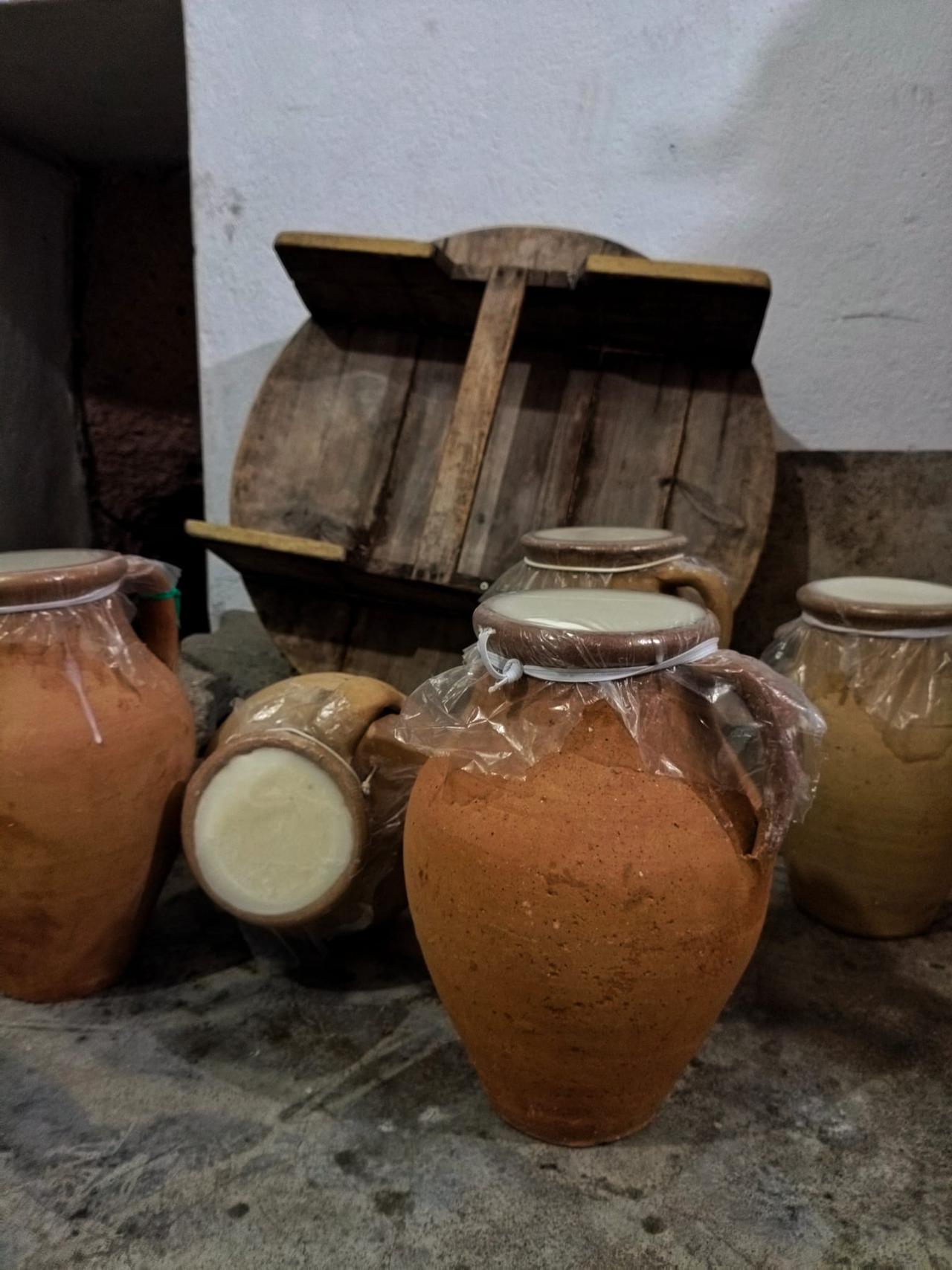
Çömlek Peyniri (Photo: Mehtap Pamuk)
Nevşehir cuisine offers a rich variety of dishes ranging from soups to meat dishes, from dough-based items to desserts, all shaped by regional ingredients and traditional cooking methods passed down through generations. These dishes center around staple ingredients such as bulgur, cracked wheat, potatoes, dried legumes, grapes, and grape products (pekmez, pestil). Slow, prolonged cooking in earthenware vessels (testi, çömlek, güveç) is one of the most characteristic features defining the flavor profile of this cuisine.
Soups include wedding soup, tarhana soup, kesme soup, beet soup, tandır soup, and green lentil soup.
Testi kebabı (meat and vegetables slow-cooked for a long time in a sealed clay pot), dried beans cooked in a çömlek, chickpea yahni, meatballs in broth, and dried beans cooked in a tandır (ağpakla) are prepared.

Testi Kebabı (Anadolu Ajansı)
Stuffed flowers (zucchini blossoms), stuffed green tomatoes (göyönü), pezik sarması (beetleaf wraps), madımak dish, potato meatballs, and dıvıl (boiled potato and bulgur meatballs) are prepared.
Dolma mantı, meat-filled mantı, erişte, Nevşehir mantı, bulgur pilaf, lentil pilaf, and potato pilaf are prepared.
Desserts include aside (roasted flour mixed with pekmez and sugar), baklava, quince dessert, squash dessert, stuffed apricots, köftür, and bulamaç.
Nevşehir cuisine is an integral part of social life and beliefs. Special dishes are prepared and served during life transitions such as birth, circumcision, military send-offs, weddings, and death. For example, new mothers are given bulgur soup and syrups to promote milk production; at weddings, chickpea yahni, grape leaves stuffed with rice, and meatballs in broth are highlighted; neighbors bring food to the home of the bereaved. On Aşure Day, "şire çorbası" is prepared and distributed. Special preparations are made for Ramadan and Eid al-Adha.
Anadolu Ajansı. “Kapadokya Üzümünün Pekmeze Yolculuğu.” AA. Accessed August 16, 2025.https://www.aa.com.tr/tr/yasam/kapadokya-uzumunun-pekmeze-yolculugu/1260750
Anadolu Ajansı. “Nevşehir’in Tescilli Lezzeti Testi Kebabı.” AA. Accessed August 16, 2025.https://www.aa.com.tr/tr/ramazan-2022/nevsehirin-tescilli-lezzeti-testi-kebabi/2572250
Güldemir, Osman, and Işık, Nermin. “Nevşehir Mutfak Kültürü ve Yemekleri”. I. Uluslararası Nevşehir Tarih ve Kültür Sempozyumu, 2011. Accessed August 16, 2025.https://www.researchgate.net/publication/330520523_Nevsehir_Mutfak_Kulturu_ve_Yemekleri
Yolcu, Mehmet Ali. “NEVŞEHİR YÖRESİNDE AİLELERİN GELENEKSEL KIŞ HAZIRLIKLARI”. Kültür Araştırmaları Dergisi 1, no. 1 (December 2018): 7–22. Accessed August 16, 2025.https://dergipark.org.tr/en/download/article-file/596311
Şahin Perçin, Nilüfer, Emrah Örgün, Erol Günay, and Emrah Keskin. GASTRONOMİK BİR DEĞER OLARAK NEVŞEHİR MUTFAĞI. (2019). Accessed August 16, 2025https://www.researchgate.net/publication/351307871_GASTRONOMIK_BIR_DEGER_OLARAK_NEVSEHIR_MUTFAGI

Core Characteristics and Ingredients
Winter Preparations and Preservation Methods
Pekmez and Its Products
Sauce and Canned Goods
Drying
Vegetable Drying
Drying of Plums, Apricots, and Grapes
Pickles
Tarhana
Yufka Bread
Preservation of Animal Products
Signature Dishes
Soups
Meat Dishes
Vegetable Dishes
Dough-Based Dishes and Pilafs
Desserts
Cultural and Social Dimensions