


This article was automatically translated from the original Turkish version.

Imagine you need to add a new structure next to a historic building. The most immediate solution is often to mimic the existing structure: using the same materials, a similar facade arrangement, comparable proportions, and similar details. This is because most of us define harmony through similarity. But is this truly necessary? Must a new addition resemble the historic structure to become part of it?
Contemporary interventions added to historic buildings have long remained one of the most debated topics in architecture and conservation disciplines. Especially when functional changes, reuse, or expansion are required, the relationship between the new structure and its historic context becomes a critical design challenge. This relationship is not merely an aesthetic preference; it also reveals how we view the past and interpret architectural heritage.
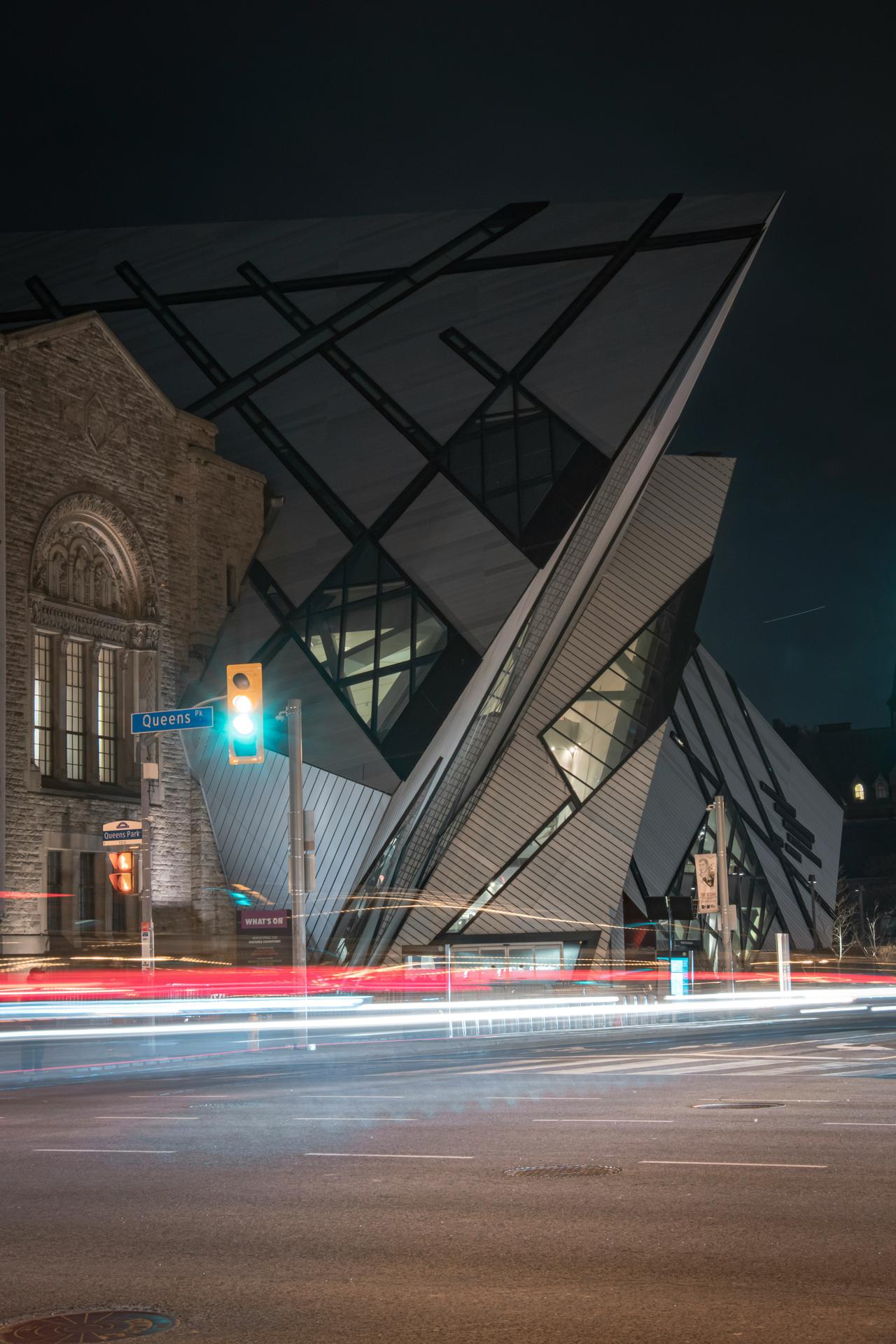
Royal Ontario Museum (unsplash)
Different design approaches exist for this issue. According to the classification developed by Pınar Öktem Erkartal and Mustafa Orkun Özüer, interventions can be categorized as: replication, which duplicates the historic structure exactly; resemblance, which references the existing structure through various design decisions; neutrality, which aims to recede into the background; abstract reference, which reinterprets the characteristics of the historic context; and contrast, which consciously diverges from the existing fabric.【1】This diversity demonstrates that similarity is not the only way to establish a relationship with a historic environment.
In fact, many of the most celebrated examples in architectural history are not those that attempt to imitate the historic structure, but those that engage it in a powerful dialogue. Sometimes difference, rather than obscuring the values of the historic building, makes them more visible. When the new element represents its own era rather than imitating the old, it allows the historical layers of the building to be read clearly. Thus, past and present come together within the same space.
One of the best-known examples is CaixaForum in Madrid. In this project, which transformed an old industrial building, the contemporary addition adopts a language distinctly different from the historic brick structure. Although the new volume appears detached from the ground and contrasts sharply with the historic mass at first glance, this contrast actually enhances the visibility of the original building’s character. Here, the goal is not to recreate the past, but to add a new layer upon it.
A similar approach can be seen at the Royal Ontario Museum in Toronto. The extension, designed by Daniel Libeskind and known as “The Crystal,” uses a completely different language characterized by its sharp geometry and contemporary form, standing in stark contrast to the museum’s historic stone facade. Though this intervention sparked intense debate when first built, it has since become an inseparable part of the museum’s identity. Its value lies not in resembling the old structure, but in its ability to bring the museum into the present. The contemporary addition did not merely provide new exhibition spaces; it also granted the museum renewed visibility and a contemporary identity.
The Tate Modern in London can be evaluated similarly. The tower added later to the converted former power station does not copy the character of the existing building. Instead, it continues its industrial heritage through a contemporary interpretation. In this way, the structure becomes a living space that responds to today’s cultural needs without losing its historical identity.
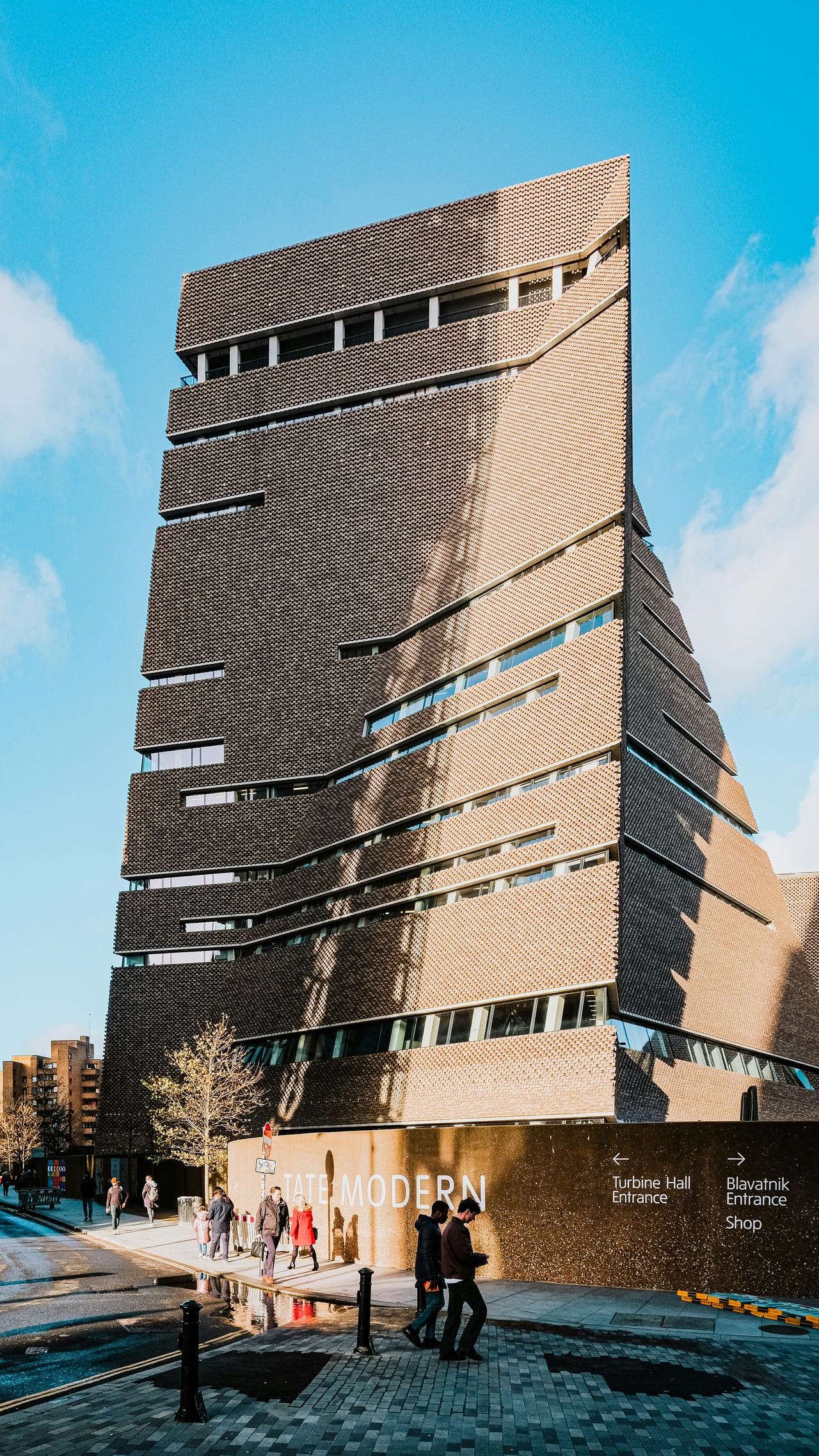
Tate Modern (unsplash)
These examples demonstrate that the success of contemporary interventions in historic buildings cannot be explained by the degree of similarity or difference alone. The central issue is how the new structure relates to the existing one. Sometimes this relationship is established through similarity; at other times, through deliberate contrast. Yet in both cases, the goal must be the same: to preserve the values of the historic structure while giving it new life.
Perhaps this is why, when considering contemporary additions to historic buildings, the question should not be “similarity or contrast?” The more accurate question is: how does the new intervention complete the historic structure? Because unity in architecture does not always arise from similarity. Sometimes contrast can establish a bond as powerful as similarity; it makes the past visible without erasing it, carries the historic structure into the present without imitating it, and adds a new layer of meaning.
Erkartal, Pınar Öktem, and Mustafa Orkun Özüer. 2016. “Tarihi Dokuyu Taklit Etme/Yok Sayma.” In *Fill in the Blanks: Fener-Balat Workshop*, 145–155. İstanbul. Accessed June 16, 2026. https://www.academia.edu/24349692/TARİHİ_DOKUYU_TAKLİT_ETME_YOK_SAYMA
Qu, Lianhao. “Time-Lapse Photography of Cars on Road During Night-Time.” Unsplash. Accessed June 16, 2026. https://unsplash.com/photos/time-lapse-photography-of-cars-on-road-during-night-time-RJeaWuYcNWA.
Suen, Joshua. “A Group of People Walking in Front of a Tall Building.” Unsplash. Accessed June 16, 2026. https://unsplash.com/photos/a-tall-building-with-people-walking-in-front-of-it-8wLNJVKpAV8
[1]
Pınar Öktem Erkartal and Mustafa Orkun Özüer, “Taklit Etme/Yok Sayma,” FillInTheBlanks, Fener-Balat Workshop, Istanbul, 2016, 148–149. https://www.academia.edu/24349692/TARİHİ_DOKUYU_TAKLİT_ETME_YOK_SAYMA