


This article was automatically translated from the original Turkish version.

The title of our article is taken from a poem written by Sezai Karakoç in February 1959. However, in this piece we will address a different subject than a poetic analysis: wearing a dress stained with blood and never wanting to change it…
The poem begins with these lines:
“You added something of yourself
You made death beautiful”【1】
Today I learned of the death of Sultan Özcan, known on social media as “the red-clad woman.”
The Story of Sultan Özcan (Al Jazeera Turk)
Who was this red-clad woman and why were they calling her that?
I first encountered the red-clad woman during my university years. I cannot recall which year I was in, but I believe it was during Türkan Alvan’s course on folk literature. Our topic was folk songs. I do not remember exactly how the subject came up, but Professor Alvan showed us a video of the red-clad woman. We saw how love can transform a person and reshape their entire life.
So who was this red-clad woman?
The red-clad woman was in fact Sultan Özcan. In brief, Sultan Özcan was a woman from Konya known as “the red-clad woman” due to her consistent use of red clothing, intense red makeup, and her deep attachment to the color red in daily life. Özcan lived for many years in the Parsana neighborhood and became known for her marriage, the violence she endured, her inability to have children, the conditions of her life after her mother’s death, and her daily routines in the city center.
To elaborate further on her life story: Sultan Özcan married the man she had loved since childhood at the age of seventeen. Although she had previously been engaged to someone else, she broke off that engagement to marry the man she loved. Due to her husband’s profession, part of their married life was spent in Hakkâri and Giresun.
Her inability to bear children became one of the central problems in her marriage. After many years, the marriage ended due to childlessness. Although the duration of the marriage is described differently in various accounts, Özcan stated that she lived with her husband for a long time and that their separation was directly linked to their inability to have children.
After the divorce, her former husband remarried and had two sons. Özcan never remarried. She explained that her decision not to remarry was shaped by the fear stemming from her experiences in the previous marriage. Nevertheless, when speaking of her former husband, she continued to describe their relationship in terms of love.
Sultan Özcan faced her husband’s jealousy and physical violence throughout her marriage. Simply speaking to another man or sitting near one could trigger violent outbursts. Her husband also restricted her from going to the market. Özcan described the eight to ten years she spent under these conditions as akin to life in prison.
She recounted how her husband’s jealousy led him to physically assault her, sometimes knocking her to the ground, and how he prevented her from participating in social life. Despite the violence, her loyalty to the marriage and to her former husband endured. She described her marriage as a life marked by mutual affection yet overshadowed by violence.
Her inability to have children further intensified the pressure she faced during the marriage. Özcan believed that if she had borne children, the marriage would not have ended. She endured prolonged grief after the divorce.
After her divorce, Sultan Özcan lived for a time with her mother. Following her mother’s death, she was left alone. During this period, she lived for approximately eight years in the coal cellar beneath her brother Necati Özcan’s home. Later, a single-room unit adjacent to her brother’s apartment building was converted into her living space.
In this single room, the kitchen, toilet, bathroom, and bed all occupied the same space. The bathroom area was separated from the kitchen counter only by a curtain. Despite the limited physical conditions of the space, Özcan arranged it according to her own color and object preferences.
Red dominated her living space: the bedspread, the area around the mirror, various household items, and even pots and pans. Red became the fundamental color not only in her clothing but also in the arrangement of her home and the objects she used daily.
Sultan Özcan’s attraction to the color red began during her time in Hakkâri, when she saw a woman dressed in red. After admiring the outfit, she had a similar dress made. Over time, red clothing became an unchanging part of her daily appearance.
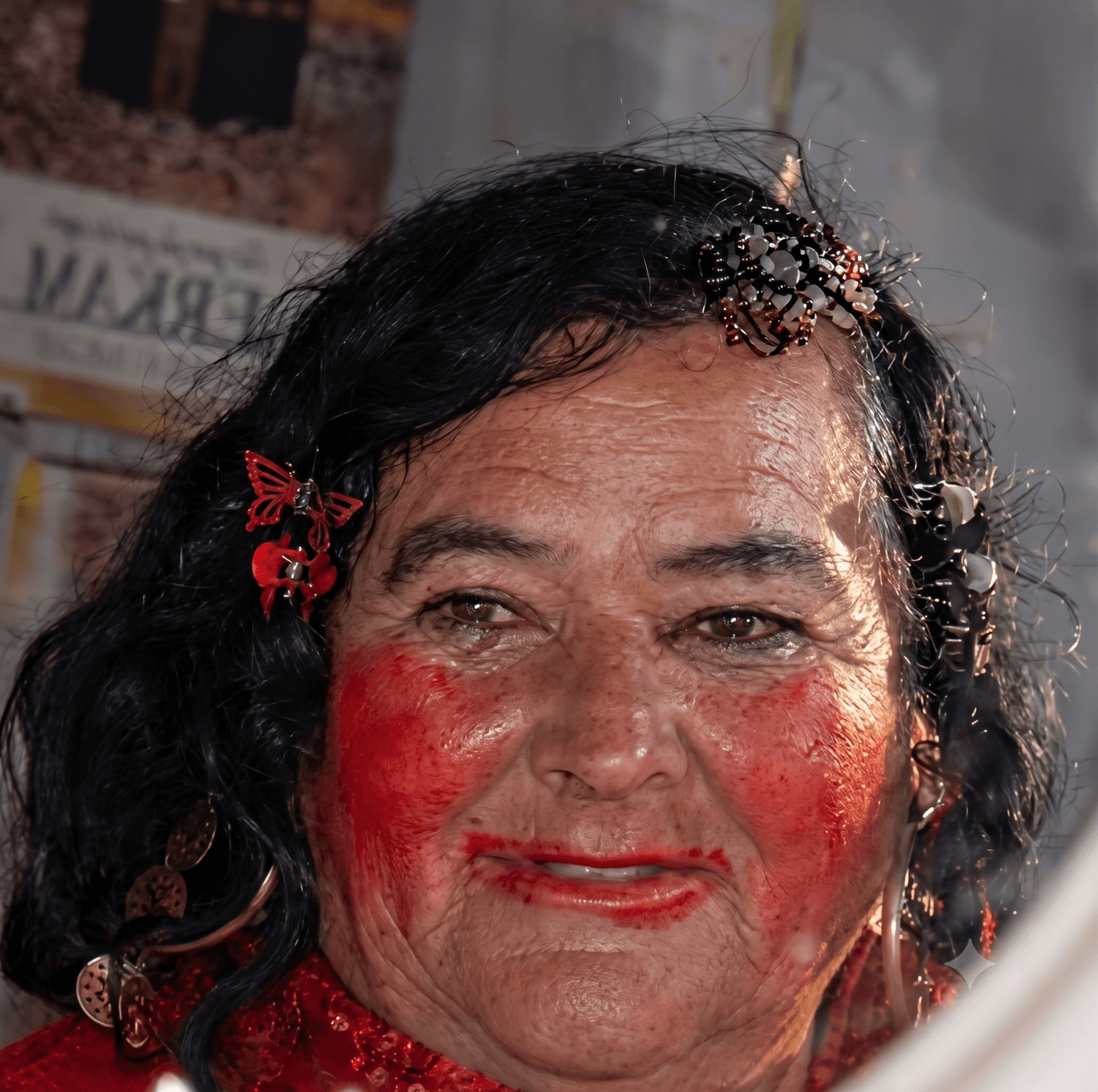
Kırmızılı Kadın (Al Jazeera Turk)
Özcan sewed most of her own clothes. During winter months she used velvet fabric for its warmth, and in warmer seasons she prepared lighter garments. She said the color red suited her and that she felt different when wearing it.
She also used red in her makeup. She applied red lipstick generously to her lips and cheeks and used black eyeliner on her eyes. When attending weddings or similar gatherings, she sometimes preferred blue eyeliner instead of black.
She purchased her makeup supplies from specific shops in Konya’s bazaar. Although shopkeepers occasionally suggested other colors, she continued to buy only red lipstick. She complained that the lipstick she once bought at low prices had become increasingly expensive over time. Because she used her lipstick for long periods, she did not frequently replace her makeup products.
Sultan Özcan dressed entirely in red in her daily life. Her dress, headscarf or shawl, pants, and all other clothing items were predominantly red. Her red makeup made her easily recognizable throughout the center of Konya.
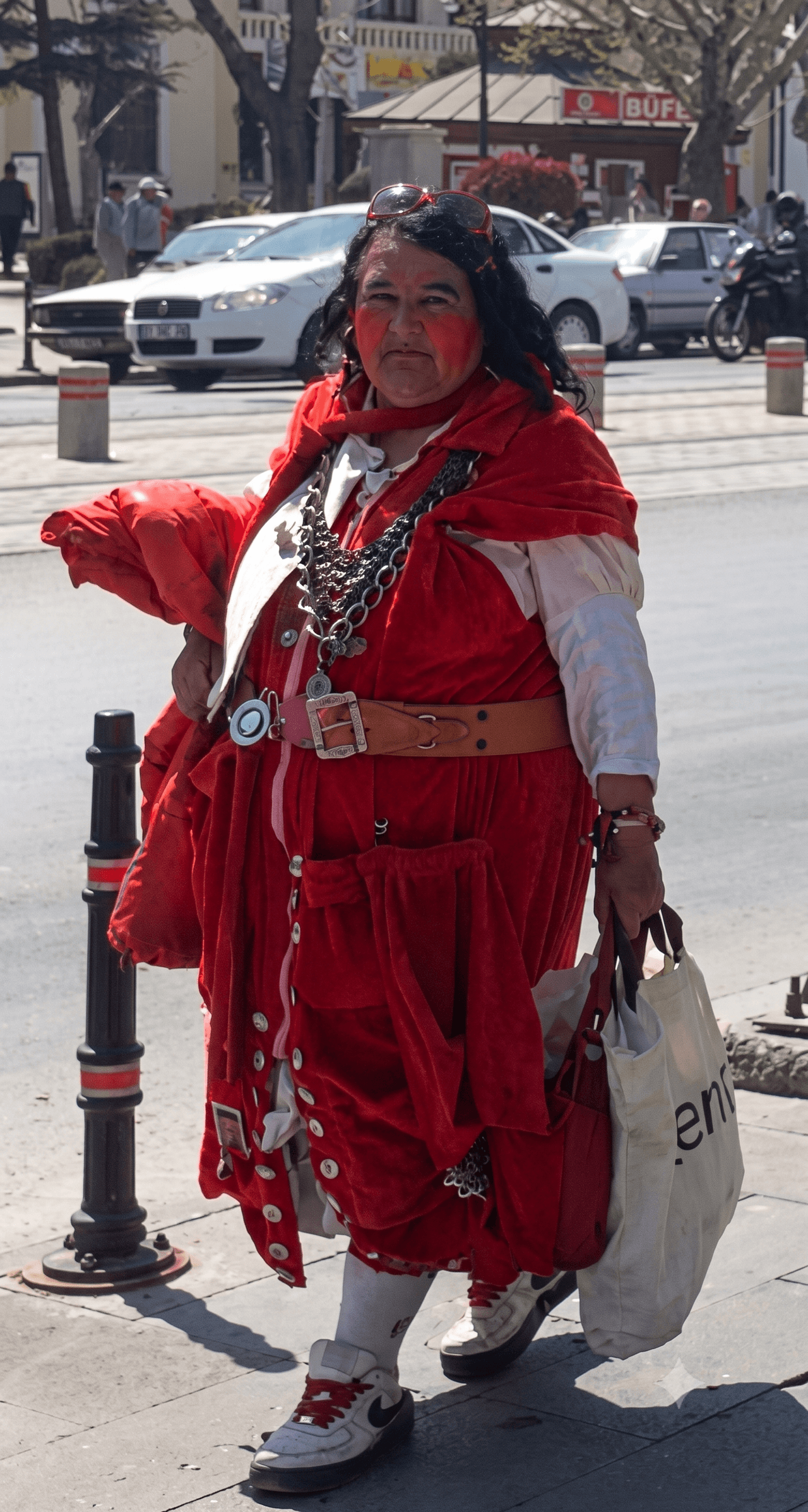
Sultan Özcan (Al Jazeera Turk)
Because of this appearance, she began to be known in the city as “the red-clad woman.” Her regular presence in places such as Kayalıpark, Şerafettin Camii, Kadınlar Pazarı, Aziziye Camii, and around the old garage increased her visibility in the city center.
Her consistent use of red clothing in daily life led to the color becoming inseparable from her identity. Local shopkeepers, park-goers, bus passengers, and others she encountered along her daily route recognized her by this appearance.
In 2016, Özcan lived in the Parsana neighborhood, approximately ten kilometers from the center of Konya. Her home was a single-room unit adjacent to the apartment building where her brother lived. This space was arranged more like a communal dwelling than an independent residence.
The single room served for sleeping, cooking, and personal hygiene. The bed, kitchen area, bathroom, and toilet were all located within the same space. The bathroom area was separated from the rest of the room only by a curtain.
Although Özcan loved her home, she did not enjoy staying indoors all day. When at home, she cooked meals or watched Turkish films on television. She was dissatisfied with the decreasing number of Turkish films shown on television channels. Her favorite film actress was Türkân Şoray.
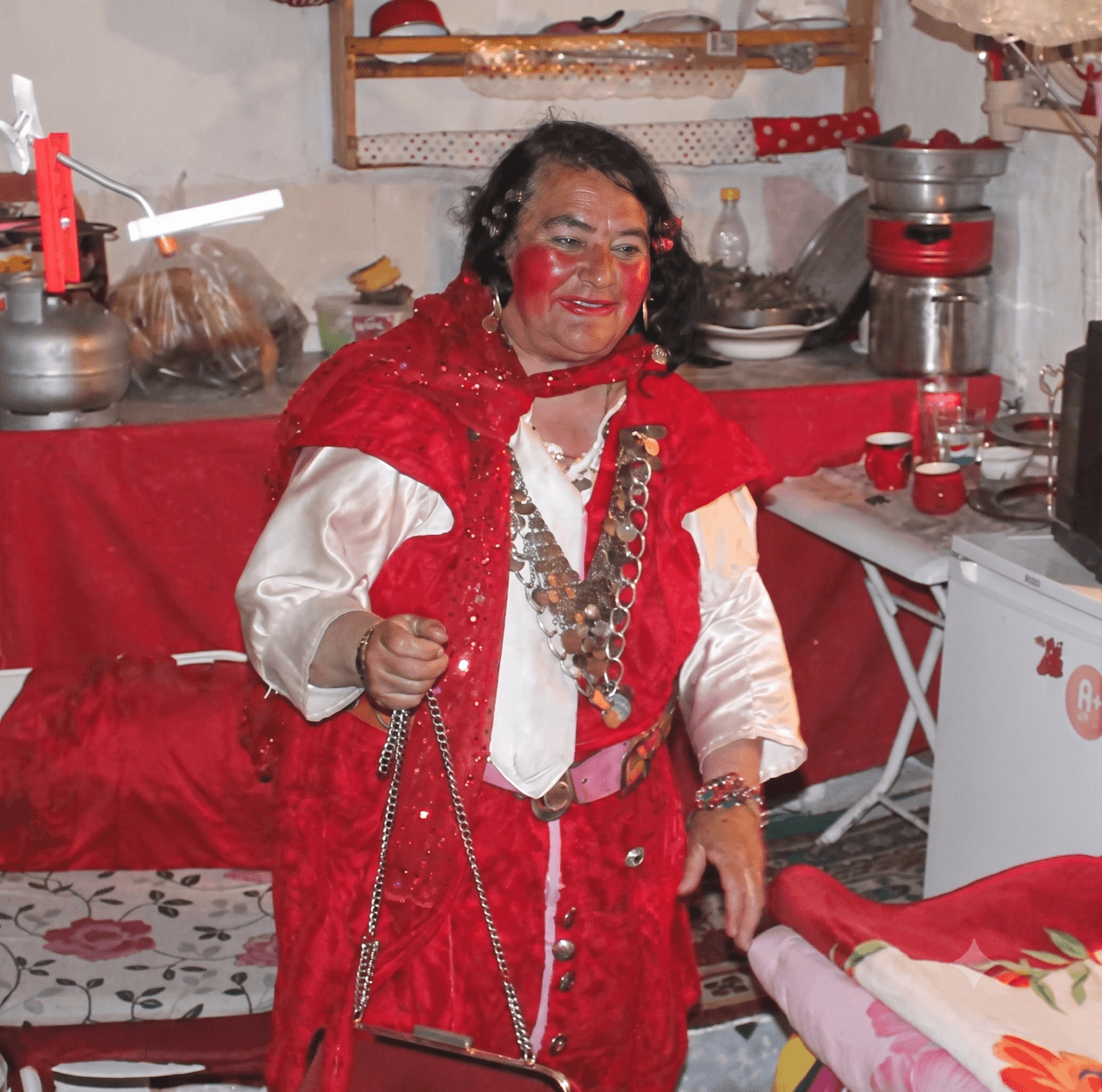
Sultan Özcan's Red House (Al Jazeera Turk)
Unless snowfall disrupted transportation, Sultan Özcan left her home every morning around 10 a.m. She took the municipal bus from Parsana neighborhood to Kayalıpark in the Karatay district.
Upon arriving at Kayalıpark, she first drank water from the fountain of Şerafettin Camii. She preferred this water over all others. Then she began her daily walk through the city center.
She did not remain in one place for long during the day. After Kayalıpark, she walked around Kadınlar Pazarı, Aziziye Camii, and the area surrounding the old garage. Parks served as places for resting and for brief conversations with people around her.
Since the last bus to Parsana neighborhood departed at 5:30 p.m., she extended her city center walks until that time. At the end of the day, she boarded the municipal bus again and returned home.
Because Sultan Özcan followed the same route regularly, she was well known by local shopkeepers in the city center. She greeted people she met but kept conversations mostly brief. She maintained a certain distance from others and could end a conversation if that boundary was crossed.
One of the people she saw most frequently around Kayalıpark was Hasan Küçükkarapınar, who ran the Halk Ekmek snack stand. She had known him for approximately ten years. Every day she bought bread from him and never passed without greeting him.
She often responded with a smile to comments people made about her makeup and red clothing. Rather than offering lengthy explanations about her appearance, she gave only brief replies.
In her daily life, she never accepted money from others. With the limited amount of cash she carried, she occasionally purchased food, kitchen supplies, or makeup products. She sustained her daily walks through the city center entirely on her own means.
The relationships Sultan Özcan maintained with her mother and brother were decisive in her life. After her divorce, living with her mother allowed her to sustain her life with family support. After her mother’s death, Özcan, now alone, began living in the coal cellar beneath her brother’s building.
Her brother Necati Özcan was aware of her past life and marriage. After the eight years she spent in the coal cellar, her family played a role in preparing her current living space.
Family members also managed Özcan’s financial affairs. Her disability pension was collected by her sister-in-law, who served as her legal representative. Thus, the management of her regular income was carried out through a legal familial representation.
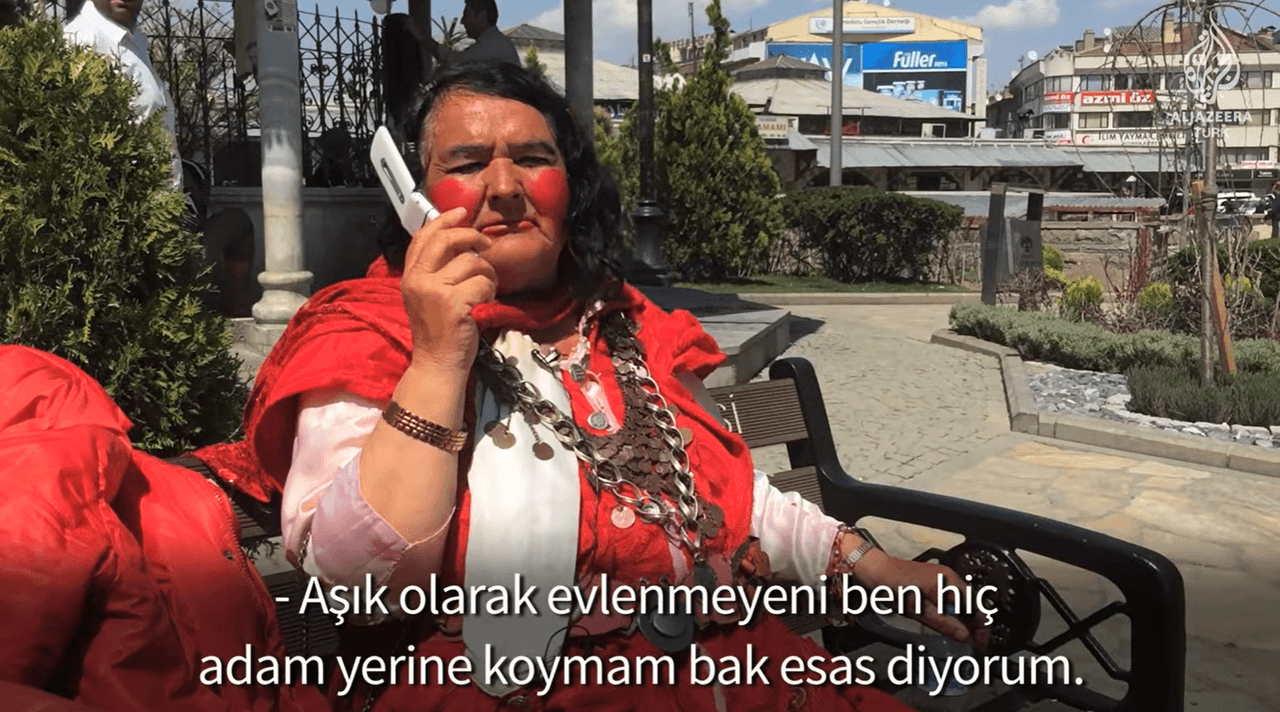
Kırmızılı Kadın (Al Jazeera Turk)
Despite the hardships she endured, Sultan Özcan continued to regard love as one of the central concepts of her life. Although she never remarried after separating from her husband, she maintained that mutual love must exist in marriage.
She believed that marriages without love inevitably led to problems. She urged young people to marry only if they loved each other and rejected marriages devoid of love. Despite having experienced a marriage that ended in violence and separation, she preserved her commitment to the idea of love.
Even when speaking of the violence her former husband inflicted on her, she continued to describe their past relationship in terms of love. She continued to associate their lifelong connection, which began in childhood, with the concept of love even after the marriage ended.
In 2006, Sultan Özcan received a medical report from Konya Numune Hospital. The report diagnosed her with chronic psychosis and assigned a disability rate of 80 percent.
Based on this report, she began receiving a disability pension. According to financial conditions in 2016, her quarterly payment amounted to 1,300 liras. The collection and management of her pension were handled by her sister-in-law, her legal representative.
The medical report enabled Özcan to be officially recognized as disabled and to receive a regular income under social assistance programs. Yet she largely managed her daily life independently: she traveled from her home to the city center using public transportation, walked her designated route throughout the day, and returned home in the evening.
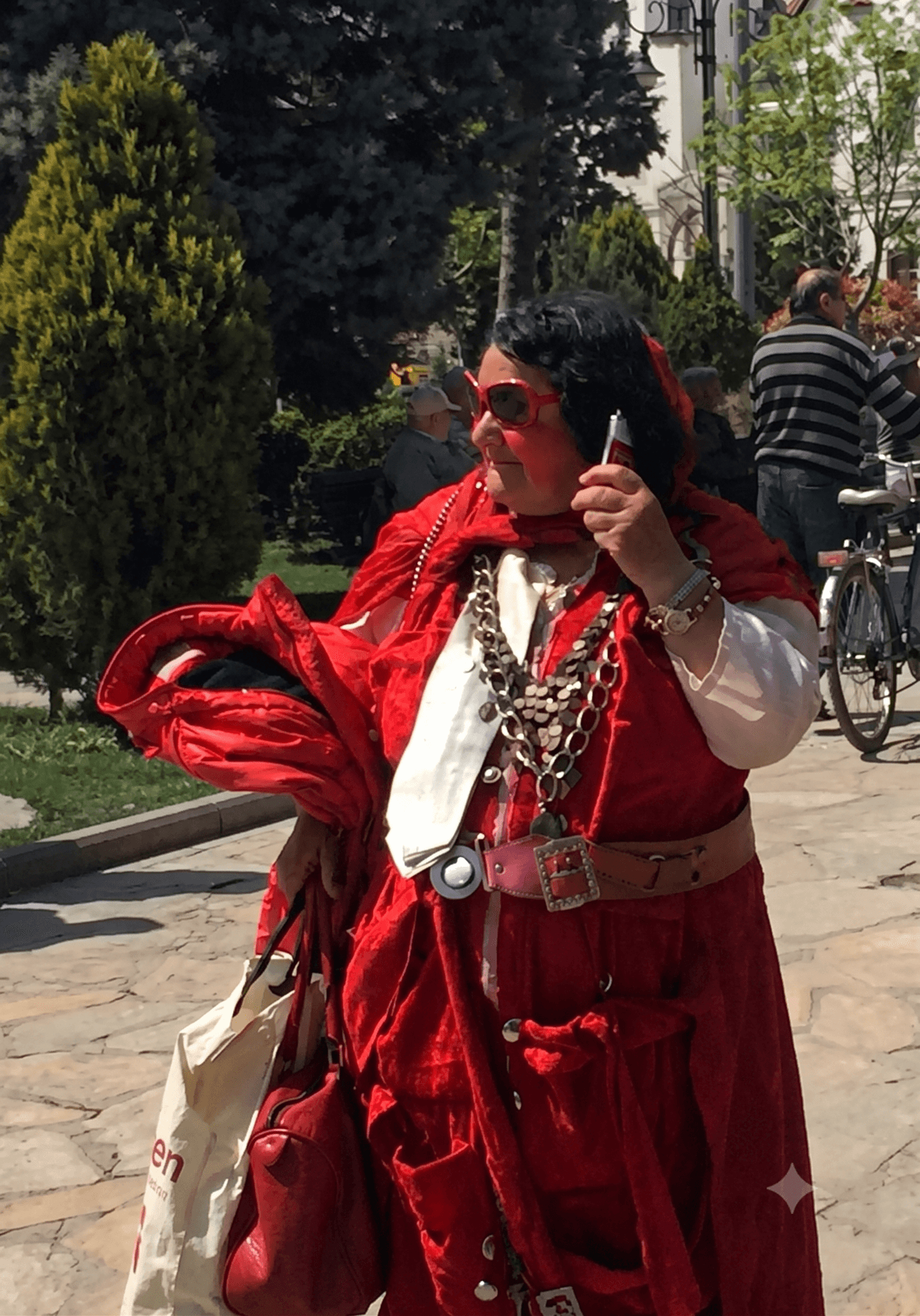
Sultan Özcan (Al Jazeera Turk)
Sultan Özcan became known as “the red-clad woman” over many years due to her consistent use of red clothing and red-dominated makeup. The extension of the color red into her household objects demonstrated that this preference was not a temporary fashion choice but an enduring element of her daily life.
Her presence at the same times and along the same routes every day in the center of Konya led to her recognition by a wide circle of people. Residents of the city knew her not by her personal name but by this designation based on the color of her clothing.
Her sewing her own red garments, selecting fabrics according to the season, completing her makeup with the same color, and furnishing her home with red objects gave her appearance a cohesive integrity. Over time, this appearance became the fundamental element of Sultan Özcan’s public identity.
Yes, the life story of the red-clad woman was as described above. In her story we see how love can transform a person and how one may abandon their own life for another.
In our culture, we call those who lose themselves for love “Leyla.” We also see that the red-clad woman was called Leyla. Sezai Karakoç, in his poem “Köşe,” describes Leyla with these lines:
“When I say Leyla, I mean Leyla with her cut cheeks
With her three-cornered world
With her arrow, bow, highland, and sorrow
When I say Leyla, I mean our true Leyla
This is how we love you, Leyla
She left and all that remains for us is weeping”【2】
I chose to use Sezai Karakoç’s poem as the title of this article for a specific reason. Karakoç himself loved, never attained the object of his love, and never married. One of my other professors, Dursun Ali Hoca, once told us in class:
“Love is the story of those who never reach the one they love. Those who attain the one they love are not truly in love.”
Therefore, my reason for choosing Karakoç’s poem was not merely that its title matched the red-clad woman’s life. His own experience of love and his ability to reflect that emotion in his poetry also influenced this choice.
To me, Sezai Karakoç is one of the poets who expressed love with the most delicate and authentic emotions, because he translated what he lived and felt into poetry. The stories of red-clad women can find their reflection only in poems born from such authentic feelings.
We wished the red-clad woman had not been dyed in blood-stained garments. We wished she could have chosen every color that suited her and heard that choice praised by the one she loved. But some lives are bound by a fate that forces them to wear dresses stained with blood.
Red was not merely a color in Sultan Özcan’s life. It was the trace of her past, the path of her visibility, and the language of the world she constructed for herself. Red is also considered the color of love; perhaps in Sultan’s decades-long devotion to this color, the love she placed at the center of her life played a part. Love and blood are two meanings that meet within red but are entirely distinct: one evokes devotion and affection, the other injury and pain. In Sultan’s red, these two meanings intertwined. Behind the red garments people saw from the outside lay a life shaped by violence, loneliness, loss, and unceasing love. Perhaps red was, for her, the color of both the love she cherished and the wounds she bore for that love. Therefore, remembering her only as “the red-clad woman” is insufficient. Her name was Sultan; her story was too heavy to fit within the color red.
The final lines of the poem with the same title are as follows:
“I could have died now
All of Istanbul is my witness
I wore dresses stained with blood
Do you know about this?”【3】
Al Jazeera Türk. “Konya’nın ‘Deli’ Kızı.” YouTube video. Accessed July 12, 2026.https://www.youtube.com/watch?v=fMRsuDEkECI
Karakoç, Sezai. Şahdamar, Körfez, Sesler. İstanbul: Diriliş Yayınları, 2017.
Konhaber. “Konya’nın ‘Kırmızılı Kadın’ Olarak Tanıdığı Sultan’ın Yaşam Hikayesi.” Konhaber. Accessed July 12, 2026.https://www.konhaber.com/yasam/konya_nin_kirmizili_kadin_olarak_tanidigi_sultan_in_yasam_hikayesi-530541h
[1]
Sezai Karakoç, “Ben Kandan Elbise Giydim Hiç Değiştirsinler İstemezdim,” Şahdamar, Körfez, Sesler (İstanbul: Diriliş Yayınları, 2017), 67.
[2]
Sezai Karakoç, “Köşe,” Şahdamar, Körfez, Sesler (İstanbul: Diriliş Yayınları, 2017), 29.
[3]
Karakoç, “Ben Kandan Elbise Giydim Hiç Değiştirsinler İstemezdim,” 67.
Violence in Her Marriage
Life After Divorce
Preference for the Color Red
Dress and Public Appearance
Place of Residence and Home Arrangement
Daily Routine
Relationships in the City Center
Family Relationships
Concept of Love and Marriage
Health Condition and Disability Report
Being Known as “The Red-Clad Woman”
A Life Behind a Color