


This article was automatically translated from the original Turkish version.

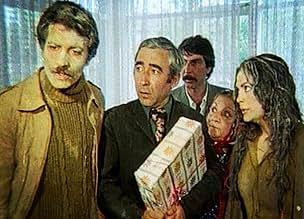
Sultan (1978) is one of the Yeşilçam films directed by Kartal Tibet and starring Türkan Şoray in the lead role. The film focuses on the daily life of a woman named Sultan and her neighbors in one of Istanbul’s informal settlements. A mother of four children, Sultan works as a cleaner to support her family. Her developing relationship with Kemal, a man living in the neighborhood, forms the romantic thread of the film, but its primary focus is on the everyday reality of life in the informal settlement and the struggle for survival among urban poor.
In this regard, Sultan is not merely a love story but also a powerful narrative that reveals the social inequalities and urban poverty generated by Türkiye’s rapid urbanization period.

Sultan (1978) (IMDb)
The neighborhood depicted in the film is an informal settlement built by migrants from rural areas using their own resources. Such neighborhoods became widespread in Türkiye especially from the 1960s onward. These areas, excluded from state housing policies, represent the efforts of urban poor to carve out living spaces within the city.
Sociologist Asef Bayat’s concept of the “quiet encroachment of the ordinary” offers a useful framework for understanding this phenomenon. According to Bayat, urban poor often do not engage in organized political movements but instead use small, continuous daily practices to access urban opportunities. The emergence of informal settlements is the result of such a process: families settle individually over time, gradually forming a new neighborhood within the city and securing a permanent place for themselves.【1】
The neighborhood in Sultan can be seen as a reflection of this process.
Sultan (1978) (IMDb)
One of the most striking elements in the film is the strong sense of solidarity among neighbors. Mutual aid, children growing up together, and the collective maintenance of daily life are integral parts of neighborhood culture.
This solidarity is not merely a social bond but also a survival strategy. The film shows this clearly when the neighborhood headman, attempting to evict residents, insists he must do so “quietly and without noise, otherwise the people will unite.” The neighborhood’s capacity to act collectively is perceived by local authorities as a potential threat.
The film critically portrays the inequalities produced by urbanization. A key example is the neighborhood headman’s attempt to buy land plots from residents at extremely low prices, knowing they will increase in value in the future.
This scene illustrates how lower-class residents are often placed at a disadvantage during urban transformation processes due to lack of information and economic hardship. The headman, representing local authority, exploits the residents’ vulnerable situation to secure economic gain.
Sultan (1978) (IMDb)
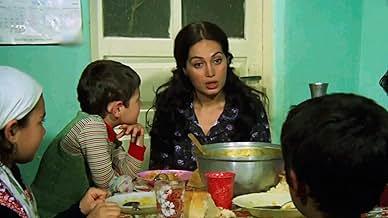
Another contradiction highlighted in the film is the tension between consumer culture and poverty. In one scene, a child demands a product he sees advertised, prompting his mother to say, “The best thing would be to ban advertisements from poor neighborhoods.” This statement sharply exposes the contradiction.
Products promoted through advertising are visible to everyone, yet access to them is not always possible. As a result, people living in the city are exposed to the same cultural world but remain economically excluded from it.
Sultan is not merely a Yeşilçam melodrama but also an important social narrative on Türkiye’s urbanization process. The informal settlement, neighborhood solidarity, and the small daily struggles of everyday life are powerfully portrayed. From this perspective, Sultan presents urban poor not as passive and submissive individuals but as people who persistently navigate difficult conditions and carve out their own paths to survival.
Bayat, Asef. Ortadoğu’da Maduniyet: Siyaset ve Hareketler. İstanbul: İletişim Yayınları, 2006.
IMDb. "Sultan." Accessed March 15, 2026. https://www.imdb.com/title/tt0264051/?ref_=mv_close
Tibet, Kartal, dir. Sultan. Türkiye: Arzu Film, 1978.
[1]
Asef Bayat, Ordinary Politics in the Middle East: Politics and Movements (Istanbul: İletişim Yayınları, 2006), 130-132.
The Informal Settlement and the Struggle for Space in the City
Neighborhood Solidarity
Urbanization and Exploitation
Consumer Culture and Poverty
Evaluation