This article was automatically translated from the original Turkish version.
+1 More
Location | Istanbul, Eyüpsultan, Baybaba Street | ||||||||
|---|---|---|---|---|---|---|---|---|---|
Definitions | Feridun Ahmed Pasha | ||||||||
Construction Date | 1583 (Hijri 991) | ||||||||
Founder | Feridun Ahmed Pasha | ||||||||
Building Material | Regular cut stone masonry; a cradle roofed portico carried by four columns with baklava-style capitals at the entrance. | ||||||||
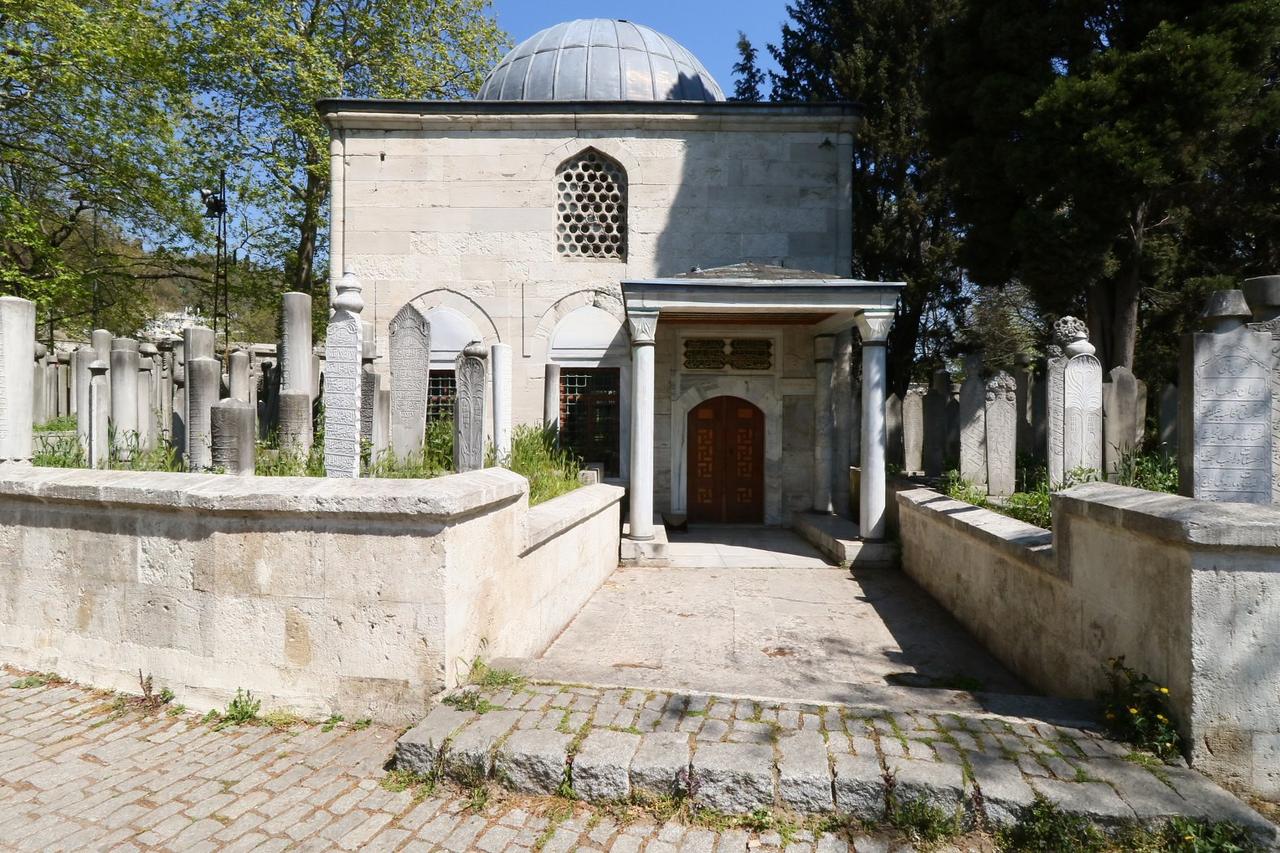
Feridun Ahmed Pasha Tomb, built in 1583 in the Eyüpsultan district of İstanbul, is a square-plan, single-dome funerary structure erected in honor of Feridun Ahmed Pasha, a 16th-century Ottoman bureaucrat, chancellor, poet, and writer.【1】
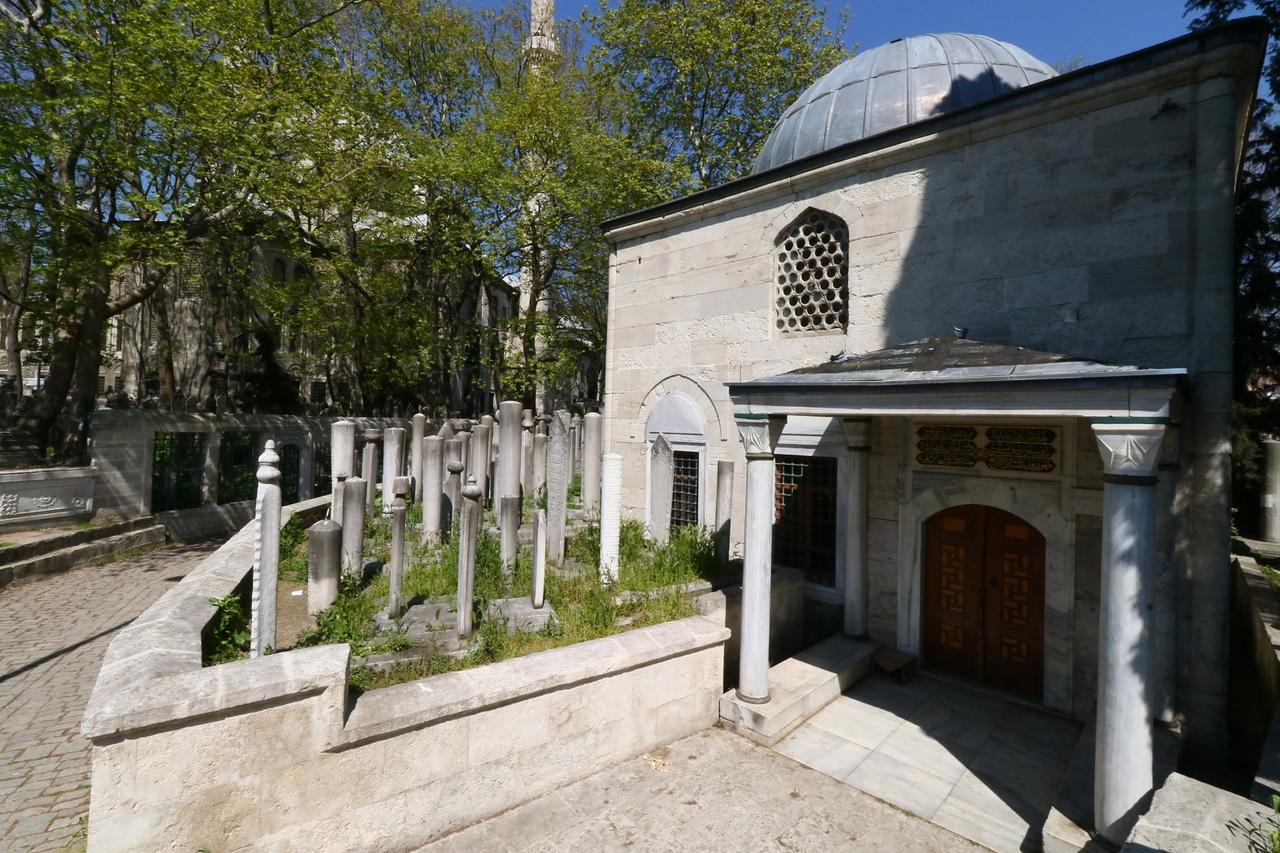
Feridun Paşa Türbesi (Eyüpsultan Belediyesi)
Feridun Ahmed Pasha was educated in the imperial court during the reign of Suleiman the Magnificent under the tutelage of Çivizade Abdullah Çelebi, the Grand Treasurer, and rose through the bureaucratic ranks under the patronage of Sokollu Mehmed Pasha.【2】
He was appointed Reisülküttab in 1570 and became Nişancı in 1573. After serving briefly as Sanjak Bey of Semendire, he was appointed Nişancı for a second time in 1581. Pasha died on 16 March 1583 (21 Sefer 991) and produced significant works in both prose and poetry, including the important texts "Münşeâtu's-Selâtin", "Nüshet'ül-ahbâr", and "Miftah-i Cennet". Known among the public as "Hızır Baba" for his philanthropy, Feridun Pasha married Ayşe Hümaşah Sultan, granddaughter of Suleiman the Magnificent, in 1582.【3】
The tomb is located in the Eyüpsultan district of Istanbul, on Baybaba Street, directly opposite the Mir-i Miran Mehmed Pasha Tomb. The architect is unknown; the structure is built of finely cut stone and features a square base crowned by a single small dome.【4】
At the entrance, a vaulted portico supported by four columns with bulbous capitals spans the facade. The exterior walls feature two rows of windows, upper and lower; the upper windows are stained glass, while the lower ones originally had marble latticework. During repairs in 1945, the marble lattices of the lower windows were removed and the openings sealed.【5】
Above the tomb’s marble-arched entrance, an inscription in three lines bears the date 991 (1583). The inscription contains prayers for Feridun Pasha’s passing and the sanctity of his resting place. The interior of the tomb is adorned with penwork decorative motifs and has undergone restoration in recent years. Until 1945, the left side of the tomb door featured calligraphic works by Hasan Üsküdari and a gate to a burial enclosure; these elements were removed during later historical renovations.【6】
Inside the tomb stands a marble sarcophagus belonging to Feridun Ahmed Pasha. On each of the sarcophagus’s four slender corner pillars rests a marble dome-shaped cap, and large rosette reliefs adorn the side panels of the sarcophagus. No inscription or date is present on the sarcophagus itself. Beside the main sarcophagus, a second grave remains, with only its side stones (pehles) intact; it is believed to belong to Halil Bey, Bey of Eskişehir and Feridun Pasha’s son, who died in 1592.【7】
Dijital İstanbul. "Feridun Ahmed Paşa Türbesi." Accessed July 13, 2026.https://dijitalistanbul.org/feridun-ahmed-pasa-turbesi
Eyüpsultan Belediyesi. "Feridun Paşa Türbesi." Accessed July 13, 2026.https://www.eyupsultan.bel.tr/tr/main/pages/feridun-pasa-turbesi/969
[1]
Dijital İstanbul. "Feridun Ahmed Paşa Türbesi." Erişim Tarihi 13 Temmuz 2026. https://dijitalistanbul.org/feridun-ahmed-pasa-turbesi
[2]
Dijital İstanbul. "Feridun Ahmed Paşa Türbesi."
[3]
Eyüpsultan Belediyesi. "Feridun Paşa." Erişim Tarihi 13 Temmuz 2026. https://www.eyupsultan.bel.tr/tr/main/pages/feridun-pasa-turbesi/969
[4]
Eyüpsultan Belediyesi. "Feridun Paşa."
[5]
Dijital İstanbul. "Feridun Ahmed Paşa Türbesi."
[6]
Eyüpsultan Belediyesi. "Feridun Paşa."
[7]
Eyüpsultan Belediyesi. "Feridun Paşa."

Location | Istanbul, Eyüpsultan, Baybaba Street | ||||||||
|---|---|---|---|---|---|---|---|---|---|
Definitions | Feridun Ahmed Pasha | ||||||||
Construction Date | 1583 (Hijri 991) | ||||||||
Founder | Feridun Ahmed Pasha | ||||||||
Building Material | Regular cut stone masonry; a cradle roofed portico carried by four columns with baklava-style capitals at the entrance. | ||||||||
No Discussion Added Yet
Start discussion for "Feridun Paşa Türbesi" article
The Life and Literary Identity of Feridun Ahmed Pasha
Location and Architectural Structure
Inscriptions and Interior Decorations
Graves and Burials