This article was automatically translated from the original Turkish version.
+1 More
Name | Dikilitaş | ||||||||
|---|---|---|---|---|---|---|---|---|---|
Type | Monument | ||||||||
Period | Rome | ||||||||
Location | Bursa/Iznik | ||||||||
Current Status | Standing | ||||||||
Approximate Year | 2000 Years | ||||||||
Material | Stone | ||||||||
Cultural Significance | Historical Artifact | ||||||||
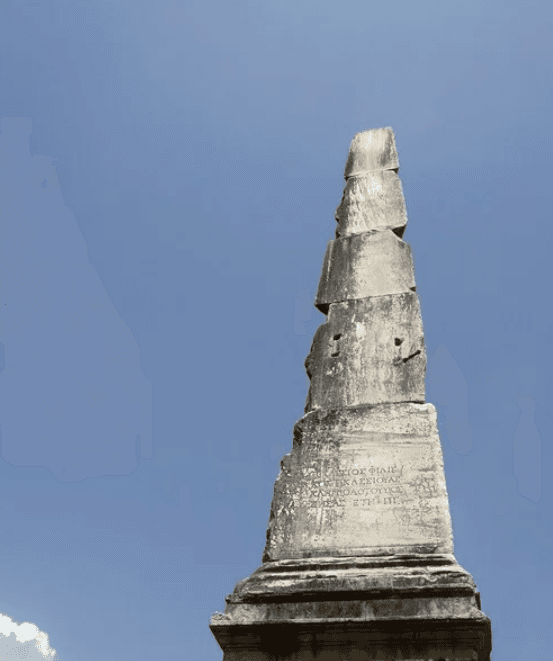
Dikilitaş is an monumental burial structure located in the district of İznik, Bursa Province, dating to the second century of the Roman Empire. It is believed to have been erected in memory of Lucius Cassius Philiscus, son of Asklepiodos, and is regarded as one of the significant examples of Roman commemorative and funerary architecture in Anatolia. Situated within the İznik Plain, the structure has survived largely intact despite its nearly two-thousand-year history, making it one of the rare ancient monuments to endure in such a condition.
Dikilitaş is situated outside the center of İznik district, on an open and flat terrain. This location aligns with the Roman tradition of placing burial and commemorative monuments away from urban centers, in highly visible areas. The broad and level topography of the İznik Plain facilitates the monument’s visibility from a distance and enhances its monumental impact.
According to historical sources, Dikilitaş was constructed during the second century, when Roman authority was established in Anatolia. It is stated that the monument was erected in honor of Lucius Cassius Philiscus, son of Asklepiodos. This confirms its function as both a commemorative and funerary monument. During the Roman period, such monuments were erected to emphasize the social status of individuals and to ensure the permanence of their memory.
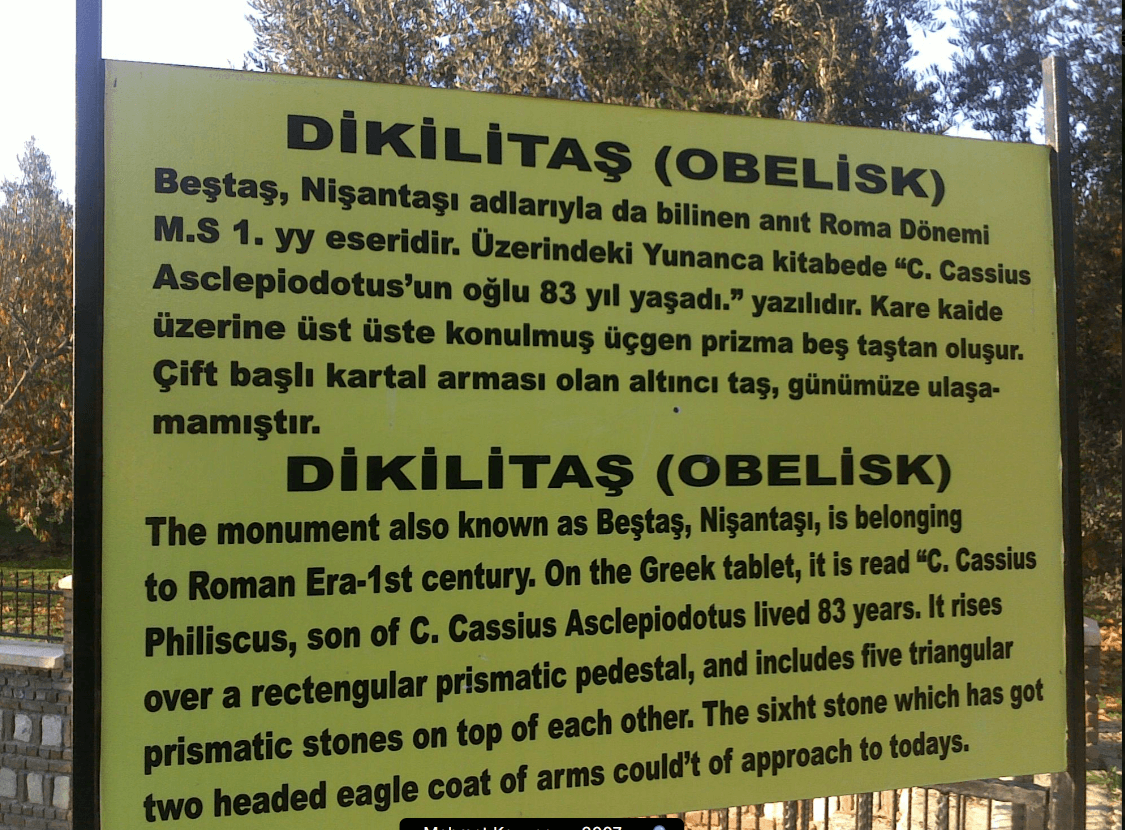
Dikilitaş Historical Information (EBA)
Dikilitaş rests on a square prism base. The main body rising above the base begins thicker at the bottom and tapers regularly upward, creating a shape resembling a wedge or obelisk. This vertical, narrowing form corresponds to the characteristic features of Roman obelisk traditions.
Research indicates that Dikilitaş was originally constructed in six segments and reached a height of approximately 15.5 meters. It is believed that a bird statue once crowned the monument’s summit. Over time, due to various causes, this statue was lost and did not survive to the present day. Today, the monument stands in five segments at a height of approximately 12 meters above its base.
On the sides of the triangular prism base, footprints and connection sockets indicate that bronze statues once stood there in antiquity. These structural traces reveal that Dikilitaş was not merely a single stone monument but part of a more elaborate commemorative arrangement enriched with sculptural elements.
It is accepted that beneath the lower portion of Dikilitaş lies a burial structure now buried under soil. Excavations following illegal digs have uncovered large rubble stones and wall remains. These findings suggest that the tomb was constructed in the form of a tumulus-type burial chamber. This confirms that Dikilitaş served not only as a commemorative monument but also as a funerary structure.
Today, Dikilitaş stands largely intact in its original form within the İznik Plain. Due to its cultural and historical significance, it is a visited monument. Despite physical losses, its architectural features and structural traces continue to provide valuable insights into its original appearance.
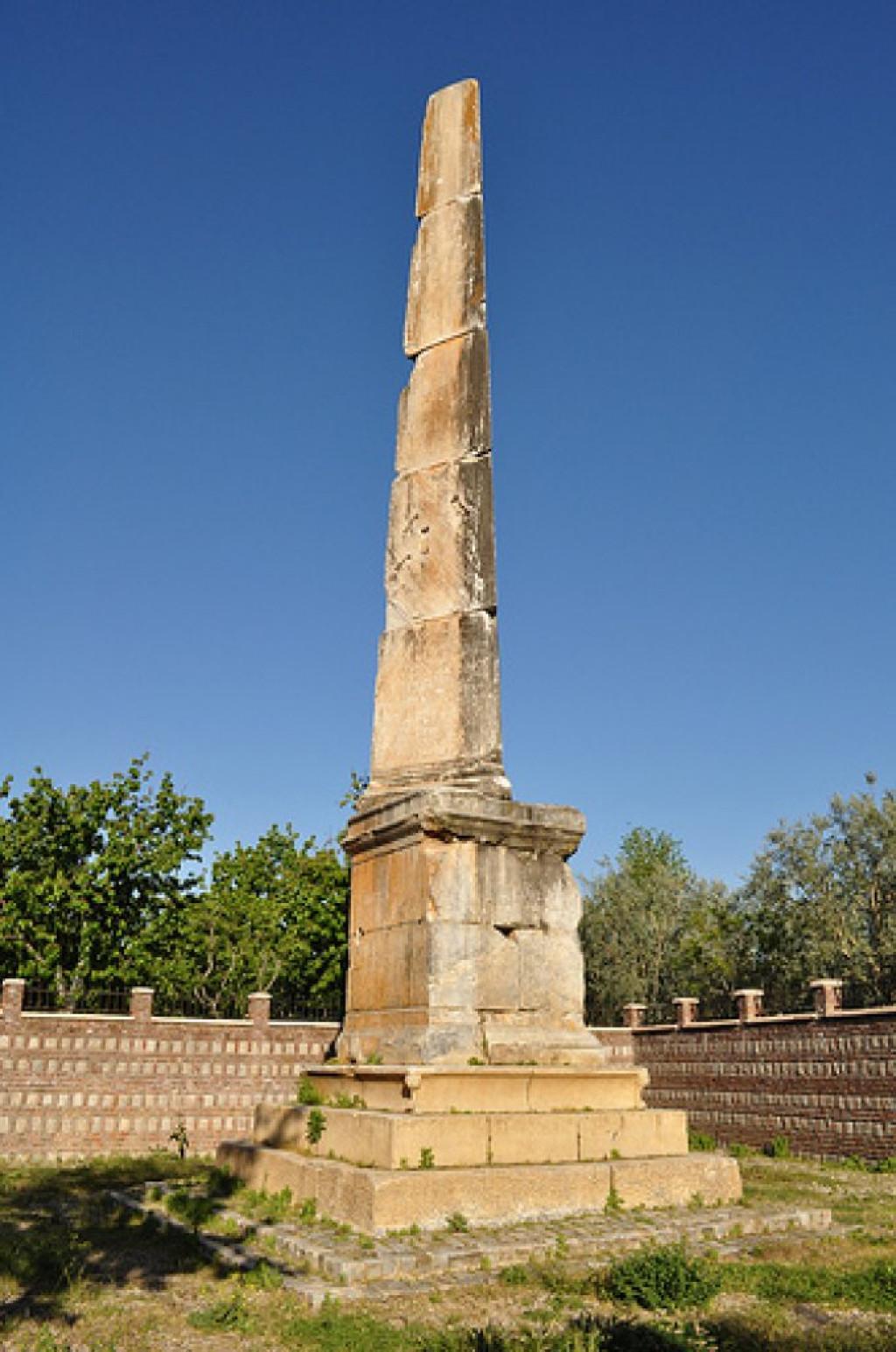
Dikilitaş (İznik Municipality)
Dikilitaş is known locally by several names. Sources indicate that the structure has been referred to as “Beş Taş”, “Dikilitaş”, and “Nişantaşı”. These names are linked to the monument’s physical appearance and its perception in local memory.
The İznik Dikilitaş is one of the foremost examples of Roman funerary and commemorative architecture in Anatolia. Through its architectural features and the information it provides about the individual it honors, it sheds light on the ancient history of İznik. The monument holds an important place within the region’s tangible cultural heritage and is regarded as a historical artifact requiring preservation.
EBA. "İznik Dikilitaş." Accessed January 13, 2026.
Kültür Portalı. "Dikili Taş (Obelisk)." Accessed January 13, 2026.
T.C. İletişim Başkanlığı. "İznik'teki Dikilitaş 2 Bin Yıldır Ayakta." Accessed January 13, 2026.
İznik Belediyesi. "İznik Dikilitaş (Obelisk)." Accessed January 13, 2026.

Name | Dikilitaş | ||||||||
|---|---|---|---|---|---|---|---|---|---|
Type | Monument | ||||||||
Period | Rome | ||||||||
Location | Bursa/Iznik | ||||||||
Current Status | Standing | ||||||||
Approximate Year | 2000 Years | ||||||||
Material | Stone | ||||||||
Cultural Significance | Historical Artifact | ||||||||
Geographical Location and Environmental Context
Historical Background and Dedication
Architectural Features
Structural Components and Original Condition
Base and Statue Plinths
Burial Structure and Archaeological Finds
Current Condition
Nomenclature and Local Usage
Significance in Cultural Heritage