This article was automatically translated from the original Turkish version.
Type | Cultural and Religious Festival / Commemoration Day | ||||||||
|---|---|---|---|---|---|---|---|---|---|
Origin | Mesoamerica (Aztec, Maya, Toltec civilizations) | ||||||||
Official Dates | 1–2 November | ||||||||
Main Geography | Mexico Central and South America | ||||||||
Four Elements Symbols | Water (pitcher) Earth (food/bread) Fire (candles) Wind (papel picado – perforated paper) | ||||||||
Symbols | Marigold (cempasúchil) Monarch butterflies Sugar skulls (calavera) | ||||||||
Cultural Icon | Calavera Catrina | ||||||||
Traditional Foods | Pan de muerto (Bread of the Dead) Pulque Atole porridge | ||||||||
UNESCO Status | Representative List of the Intangible Cultural Heritage of Humanity | ||||||||
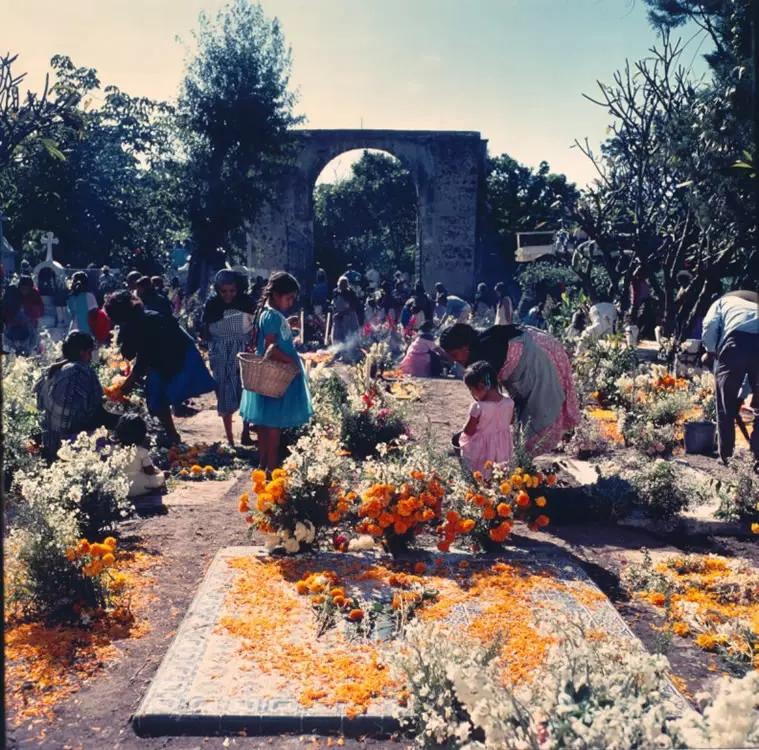
Day of the Dead (Spanish: Día de los Muertos) is a traditional cultural and religious holiday observed in various regions of Latin America, especially Mexico, dedicated to honoring deceased family members and ancestors. Celebrated annually on November 1 and 2, the festivities are based on the belief that the souls of the deceased return briefly to the world of the living. The holiday is known for its colorful rituals that emphasize the continuity of life, family bonds, and intergenerational memory rather than fear or grief in the face of death.
The holiday’s roots lie in the belief systems of Mesoamerican civilizations such as the Aztec, Maya, Toltec, and Nahua, who around 3,000 years ago regarded mourning the dead as disrespectful. 【1】 Indigenous pre-Columbian rituals merged with the Catholic observances of All Saints’ Day and All Souls’ Day, forming a new synthesis. 【2】 Introduced to the United States through Mexican immigrants beginning in the 1890s, the tradition was initially maintained as a religious cemetery visit.
Ölüler Günü (UNESCO)
However, in the 1970s, Chicano (Chicanx) movement activists and artists, particularly through public events initiated in 1973 by Self Help Graphics & Art in East Los Angeles, transformed the holiday into a political and cultural identity that embraced its indigenous roots and addressed contemporary social issues such as gang violence. 【3】
Today, influenced by popular culture, the celebration has become widespread both in Latin America and among diaspora communities, evolving into festivals such as the grand parades held in Mexico City.
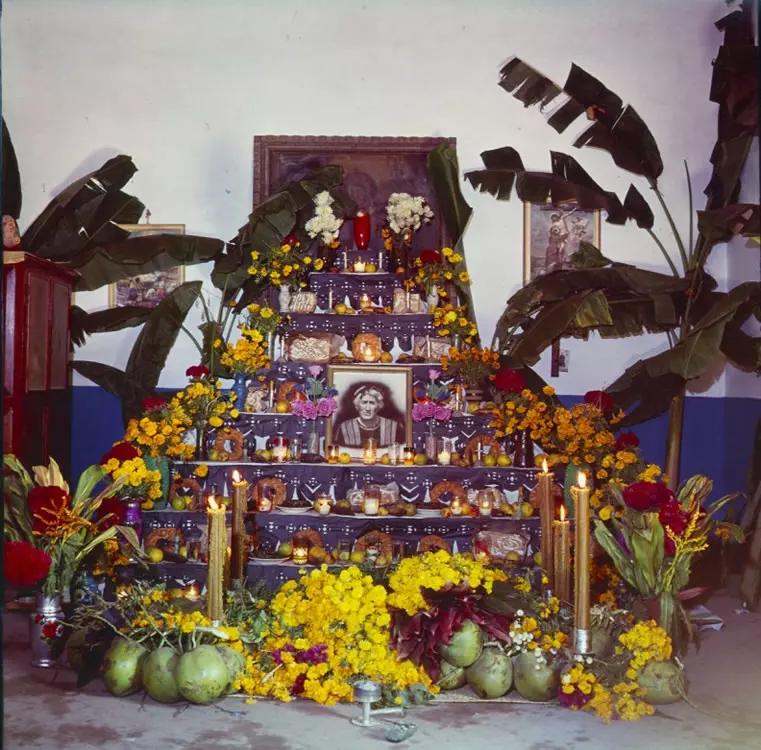
At the heart of the celebrations is the belief that the souls of the deceased return to earth to visit their families. To welcome them, temporary altars called ofrenda are constructed in homes and cemeteries. These altars, not intended for worship, are adorned with photographs of the deceased, personal belongings, and objects that recall their lives.
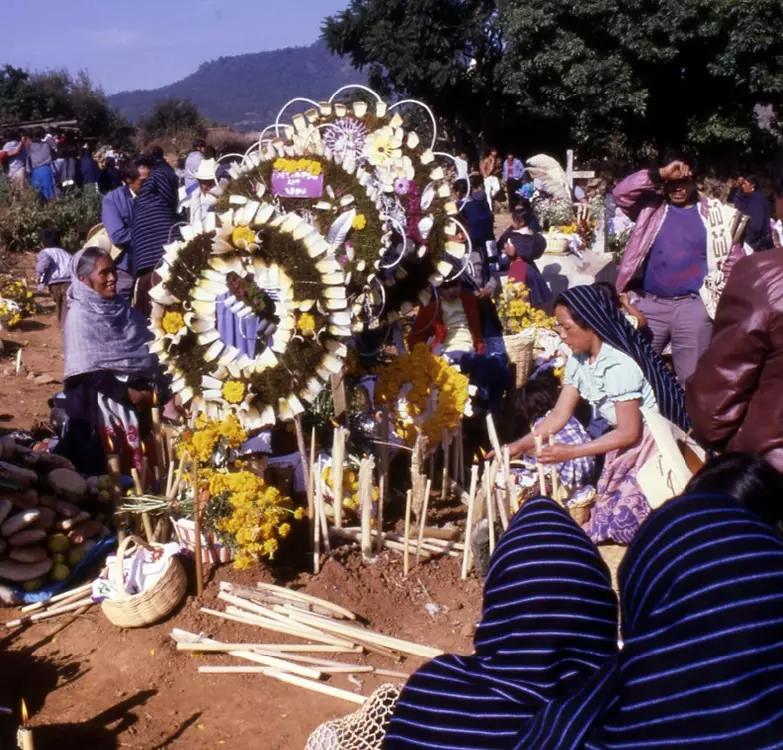
Ölüler Günü Anma Etkinlikleri (UNESCO)
Each ofrenda includes elements representing the four natural elements: water to quench the souls’ thirst after their long journey, colorful perforated paper banners (papel picado) symbolizing air and the fragility of life, food representing earth, and candles whose flames guide the souls along their path, representing fire.
Great care is taken in every stage of preparation, as it is believed that the souls’ satisfaction with the rituals determines whether they bring prosperity and abundant harvests—or disaster and illness—to their families.【4】
Central symbols of the Day of the Dead include the marigold flower (cempasúchil), monarch butterflies, and sugar skulls (calavera). The native Mexican cempasúchil petals form a path that guides the souls from the cemetery to the family homes. It is believed that monarch butterflies, which arrive in Mexico precisely on November 1 each autumn as they begin their winter hibernation, carry the spirits of the deceased.【5】
Sugar skulls are placed on altars with the names of the deceased written on them. Additionally, the skeletal figure known as “Calavera Catrina,” originally drawn by José Guadalupe Posada to satirize wealthy Mexicans who admired European customs under the name “Calavera Garbancera,” emphasized equality with the message “we are all skeletons.” It later attained its final form through Diego Rivera’s 1947 mural and has become the global symbol of the holiday. 【6】 Literary calaveras, humorous and satirical epitaphs written on mock tombstones, are also an integral part of the celebration, published in print and performed orally.
During the festivities, people of all ages paint their faces as skulls, wear skeleton costumes, and carry noisemakers to awaken the dead. Traditional foods include pan de muerto, a sweet bread decorated with dough bones and tear shapes symbolizing the cycle of life; alongside pulque, a fermented agave beverage; atolé, a warm corn-based gruel; and hot chocolate.
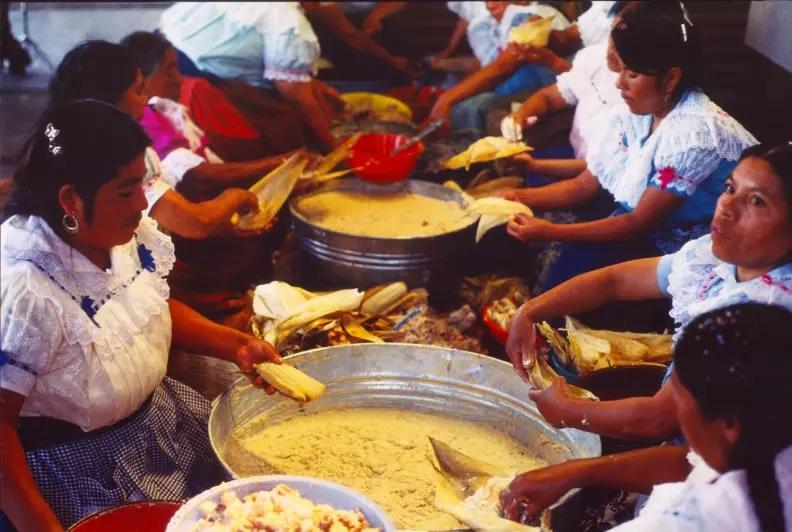
Ölüler Günü ve Geleneksel Gıdalar (UNESCO)
Celebration styles vary across Mexico according to local traditions.
In Pátzcuaro, locals travel by canoe to the cemetery on Janitzio Island to keep a night vigil, while in Mixquic, church bells accompany the cleaning of graves.【7】
In Tuxtepec, streets are decorated with carpets made of colored sawdust and flowers, while in Aguascalientes a week-long Skull Festival is held.【8】
The Day of the Dead was inscribed in 2008 on UNESCO’s Representative List of the Intangible Cultural Heritage of Humanity to recognize the cultural significance of this traditional practice sustained by Mexico’s indigenous communities.【9】
Anderson, Maria. "Five facts about Día de los Muertos (The Day of the Dead)." Smithsonian Edu. Accessed July 17, 2026.https://www.si.edu/stories/5-facts-about-dia-de-los-muertos-day-dead.
John, Tara. "What to Know About Dia De Los Muertos 2016". TIME. Accessed July 17, 2026.https://time.com/4551366/dia-de-los-muertos-day-dead-halloween/.
Mejorado, Rebekah. "Traditions and Change: The Transformation of Día de los Muertos in the United States." SAAM. Accessed July 17, 2026.https://americanart.si.edu/blog/dia-de-los-muertos-united-states.
UNESCO. "Indigenous festivity dedicated to the dead." Accessed July 17, 2026.https://ich.unesco.org/en/RL/indigenous-festivity-dedicated-to-the-dead-00054.
Ward, Logan. "Top 10 things to know about the Day of the Dead". National Geographic. Accessed July 17, 2026.https://www.nationalgeographic.com/culture/article/top-ten-day-of-dead-mexico.
[1]
Rebekah Mejorado, "Traditions and Change: The Transformation of Día de los Muertos in the United States ", SAAM, erişim 17 Temmuz 2026, https://americanart.si.edu/blog/dia-de-los-muertos-united-states.
[2]
Logan Ward, "Top 10 things to know about the Day of the Dead", National Geographic, erişim 17 Temmuz 2026, https://www.nationalgeographic.com/culture/article/top-ten-day-of-dead-mexico.
[3]
Mejorado, "Traditions and Change: The Transformation of Día de los Muertos in the United States ", SAAM.
[4]
UNESCO, "Indigenous festivity dedicated to the dead", erişim 17 Temmuz 2026, https://ich.unesco.org/en/RL/indigenous-festivity-dedicated-to-the-dead-00054.
[5]
Maria Anderson, "Five facts about Día de los Muertos (The Day of the Dead)", Smithsonian Edu, erişim 17 Temmuz 2026. https://www.si.edu/stories/5-facts-about-dia-de-los-muertos-day-dead.
[6]
Ward, "Top 10 things to know about the Day of the Dead", National Geographic.
[7]
Ward, "Top 10 things to know about the Day of the Dead", National Geographic.
[8]
Ward, "Top 10 things to know about the Day of the Dead", National Geographic.
[9]
UNESCO, "Indigenous festivity dedicated to the dead".

Type | Cultural and Religious Festival / Commemoration Day | ||||||||
|---|---|---|---|---|---|---|---|---|---|
Origin | Mesoamerica (Aztec, Maya, Toltec civilizations) | ||||||||
Official Dates | 1–2 November | ||||||||
Main Geography | Mexico Central and South America | ||||||||
Four Elements Symbols | Water (pitcher) Earth (food/bread) Fire (candles) Wind (papel picado – perforated paper) | ||||||||
Symbols | Marigold (cempasúchil) Monarch butterflies Sugar skulls (calavera) | ||||||||
Cultural Icon | Calavera Catrina | ||||||||
Traditional Foods | Pan de muerto (Bread of the Dead) Pulque Atole porridge | ||||||||
UNESCO Status | Representative List of the Intangible Cultural Heritage of Humanity | ||||||||
No Discussion Added Yet
Start discussion for "Day of the Dead (Día de los Muertos)" article
Historical Origins and Cultural Evolution
The Ofrenda (Altar) Tradition and Core Beliefs
Key Symbols and Iconography
Rituals and Traditional Foods
Regional Diversity
UNESCO Status