


This article was automatically translated from the original Turkish version.
+1 More
Concept mapping is a graphical teaching, learning, and assessment strategy that enables individuals to visualize concepts within their knowledge structures and the meaningful relationships between these concepts through two-dimensional diagrams.
Developed initially in 1972 by Joseph D. Novak and his research team at Cornell University, this method emerged to track changes in students’ knowledge structures over extended educational processes. Concept maps, directly linked to constructivist learning theory and Ausubel’s theory of meaningful learning, facilitate durable learning by helping learners connect new information with prior knowledge already present in their cognitive structures. This method, used in educational settings both as an instructional material and as an assessment tool for measuring students’ conceptual understanding, finds application across a broad spectrum of disciplines ranging from the natural sciences to the social sciences.
The origins of the concept mapping method lie in a comprehensive research program conducted at Cornell University that aimed to examine changes in students’ conceptual structures throughout their twelve-year educational journey from first grade to twelfth grade. During this program, researchers conducted regular face-to-face interviews with students to observe how they perceived fundamental scientific concepts such as the particulate nature of matter. The inadequacy of traditional methods in analyzing the vast amount of data collected from these interviews and in concretely representing the complex changes in students’ knowledge structures drove Novak and his team to seek a more effective visualization tool. The outcome of this process was the development of the concept mapping method, which reflects the hierarchy and connections among concepts in the learner’s mind.
The method developed by Novak is recognized not only as a data analysis tool but also as an educational instrument that plays a critical role in the process of “learning how to learn.” Research at Cornell revealed that the concepts in students’ minds are not isolated but are instead interconnected in a hierarchical structure. Novak defined a concept as “regularities in events or objects, represented by symbols,” emphasizing that concept maps serve to visualize these regularities.
Concept maps are built upon the constructivist principles of cognitive psychology and particularly Ausubel’s theory of meaningful learning. Meaningful learning involves the learner consciously relating new information to existing schemas in their mind, rather than rote memorization. Concept maps act as a bridge by making this relational process concrete. In this context, maps do not merely present information but also reflect how the learner organizes knowledge in their mind.
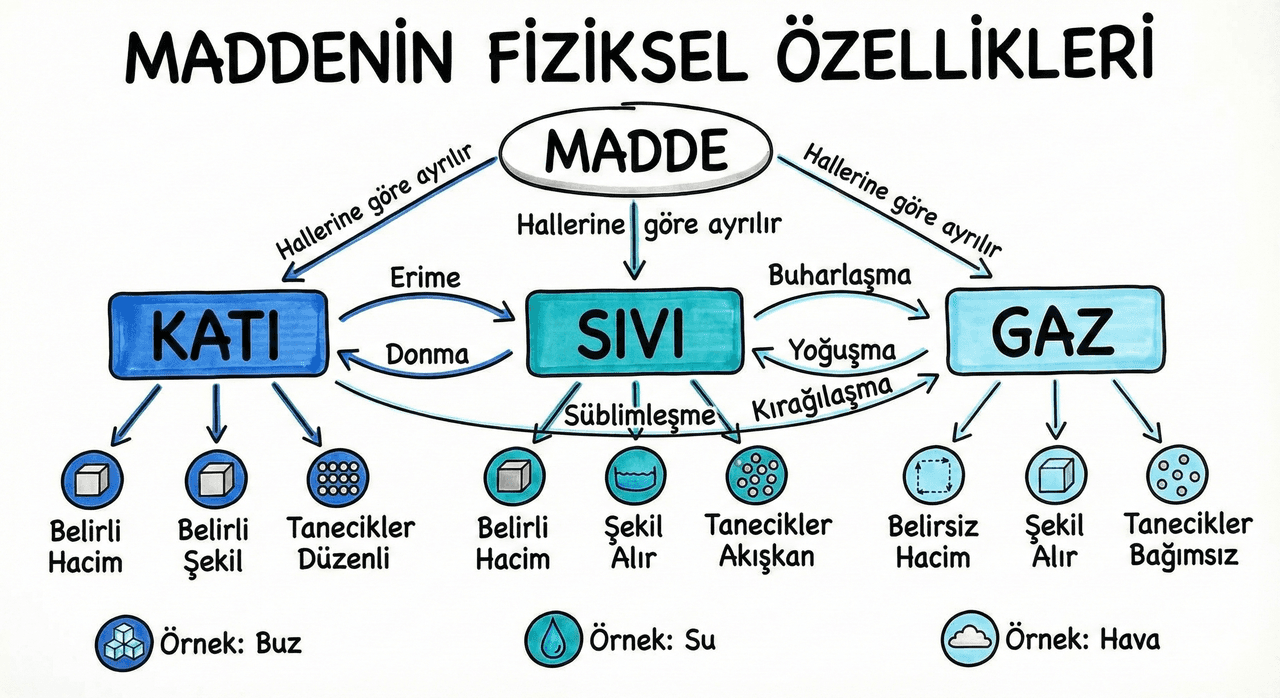
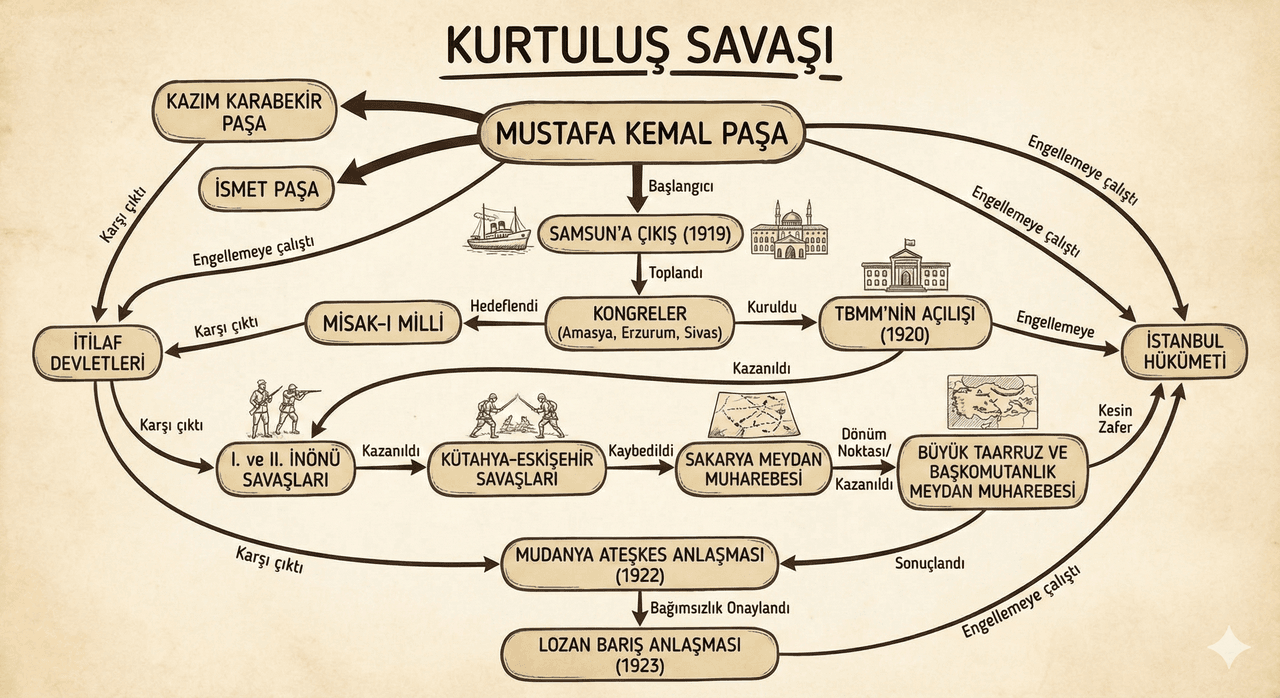
A concept map is a two-dimensional diagram that illustrates the semantic relationships between secondary-level concepts under a more general and inclusive overarching concept. A map consists of boxes or ellipses containing concept names and connecting lines that represent relationships between these concepts. This structure constitutes a network with logical hierarchy and semantic coherence, rather than a random list of information.
Concepts, the most basic units of a map, are typically represented by nouns denoting events or objects. On the connecting lines between concepts, linking words such as “includes,” “causes,” or “is part of” are written to clarify the nature of the relationship. The meaningful unit formed when a concept is joined to another concept via a linking word is called a proposition. Propositions constitute the fundamental units of semantic depth in concept maps.
An effective concept map typically follows a hierarchical structure, with the most general and inclusive concept placed at the top and more specific and detailed concepts arranged downward. Connections established between concepts in different segments of the map, which reveal the holistic nature of knowledge, are termed cross-connections. The number and quality of cross-connections serve as a significant indicator of the map creator’s mastery of the subject and their ability to grasp deep relationships among concepts.
class=\
In educational settings, concept maps are used for multiple purposes including lesson planning, presentation of knowledge, and assessment of student learning levels. This method encourages students to learn by discovering meaningful connections between concepts rather than memorizing disconnected facts. It also serves as an effective planning tool for teachers to organize curriculum content and determine how key concepts should be hierarchically structured.
Research has demonstrated that the use of concept maps positively impacts students’ meaningful connections between concepts. In particular, in concept-intensive subjects such as social studies and natural sciences, information presented through maps is more easily understood by students and more effectively stored in long-term memory. Presenting knowledge in a visual structure also positively influences students’ attitudes toward the subject and enhances their motivation to learn.
One of the most critical roles of concept maps in education is identifying students’ conceptual misconceptions. Misunderstandings that cannot be detected through traditional assessment methods can be easily revealed through incorrect connections or missing propositions in a student’s map. For example, in abstract physics concepts such as electric current or momentum, erroneous relationships constructed by students become visible through concept maps, enabling teachers to intervene. However, some studies have observed that the experimental method is more effective than concept mapping in completely eliminating conceptual misconceptions.
Creating a concept map is a systematic process requiring cognitive effort and consisting of distinct stages. The process typically begins with identifying the main topic, followed by listing concepts in order of importance. When teaching students how to construct maps, it is recommended to start with a small number of concepts and gradually progress from simple to complex structures.
The first step in creating a concept map is selecting the topic area or text to be analyzed. Next, the key concepts within the text are identified and listed (concept list). In the third stage, these concepts are arranged from the most general to the most specific and placed on the map paper. Relationships between concepts are connected by lines, and short lowercase linking words are written on these lines to specify the nature of each relationship. Finally, the map is finalized by checking for meaningful cross-connections between different parts of the map.
Concept maps can be evaluated using both qualitative and quantitative methods. In quantitative evaluation, a scoring system is developed based on factors such as the number of valid concepts, the number of connections, the depth of hierarchical levels, and the frequency of cross-connections. In qualitative evaluation, the focus is on the accuracy of relationships between concepts and the learner’s overall understanding of the subject. It is recommended that maps not be graded during initial stages to help students overcome fear of making mistakes, but later used as a performance assessment tool after they have gained sufficient practice.
The concept mapping method has been widely tested in various fields including the natural sciences, social sciences, and teacher education. Empirical data exists regarding the implementation and benefits of the method in each discipline.
In physics education, concept maps serve as a vital supportive tool for teaching abstract and complex topics. For instance, studies examining the relationship between momentum and impulse found that teacher candidates were successful in listing these concepts but struggled to establish meaningful connections between them. Similarly, in identifying misconceptions about electric current, concept maps used alongside three-stage tests and analogies proved effective in uncovering incorrect beliefs such as “current is stored in the battery.” In chemistry education, maps have been shown to improve academic achievement in topics such as classification of matter, solutions, and acid-base concepts.
Research has demonstrated that concept maps are effective not only in quantitative subjects but also in verbal disciplines such as history and social studies. In elementary social studies, this method has helped students better analyze cause-and-effect relationships between historical events. It has also been found to be feasible as a student-centered technique in large classrooms and has positively influenced students’ attitudes toward the subject.
class=\
The concept mapping method is frequently compared with traditional lecture methods, laboratory work, and experiments in educational research. These comparisons highlight the strengths of the method and indicate situations in which it should be supplemented by other techniques.
Experimental studies have shown that both the laboratory method and concept mapping significantly improve learning outcomes compared to traditional instruction. In applied subjects such as chemistry, the experimental method may be more effective in helping students overcome conceptual misconceptions through direct experience, while concept maps excel in organizing the theoretical structure of knowledge and establishing conceptual bridges. In some cases, combining laboratory work with concept mapping integrates the advantages of both approaches and maximizes learning efficiency.
When traditional methods encourage rote memorization and hinder meaningful learning, concept maps transform students into active participants. However, for the method to be effective, students must receive adequate training in map construction techniques. Additionally, since there is no single correct way to represent a concept on a map, the evaluation process may introduce subjectivity; therefore, it is essential to clearly define scoring criteria (rubrics).
Aykutlu, Işıl, and Ahmet İlhan Şen. "Üç Aşamalı Test, Kavram Haritası ve Analoji Kullanılarak Lise Öğrencilerinin Elektrik Akımı Konusundaki Kavram Yanılgılarının Belirlenmesi." *Eğitim ve Bilim* 37, no. 166 (2012). Accessed December 24, 2025.https://educationandscience.ted.org.tr/article/view/1094
Bayram, Hale, Nihal Sökmen, and Hikmet Savcı. "Önbilgi, Mantıksal Düşünme Yeteneği, Laboratuvar ve Kavram Haritası Yöntemlerinin Temel Kimya Kavramlarının Öğretilmesinde Başarıya Etkisi." M.Ü. Atatürk Eğitim Fakültesi Eğitim Bilimleri Dergisi, no. 9 (1997). Accessed December 24, 2025.https://dergipark.org.tr/en/pub/maruaebd/issue/364/2128
Bayram, Hale, and Nilgün Ersoy. "7. Sınıf Öğrencilerinin Maddelerin Sınıflandırılması ve Değişimi Konusundaki Kavram Yanılgılarının Deney ve Kavram Haritası Yöntemi ile Giderilmesi." *Eğitim Bilimleri Dergisi / Journal of Educational Sciences* 40 (June 2014). Accessed December 24, 2025.https://dergipark.org.tr/en/pub/maruaebd/issue/389/2704
Kaptan, Fitnat. "Fen Öğretiminde Kavram Haritası Yönteminin Kullanılması." *Hacettepe Üniversitesi Eğitim Fakültesi Dergisi* 14 (1998). Accessed December 24, 2025.https://dergipark.org.tr/en/download/article-file/88113
Yılmaz, Kaya, and Ramazan Çolak. "Sosyal Bilgiler Öğretiminde Kavram Haritaları Kullanımının Öğrencilerin Tutum, Akademik Başarı ve Bilgilerinin Kalıcılık Düzeylerine Etkisi." *Uluslararası Cumhuriyet Eğitim Dergisi / Cumhuriyet International Journal of Education* 1, no. 1 (March 2012). Accessed December 24, 2025.https://dergipark.org.tr/en/download/article-file/48589
Ünlü, Pervin, Şebnem Kandil İngeç, and Mehmet Fatih Taşar. "Öğretmen Adaylarının Momentum ve İmpuls Kavramlarına İlişkin Bilgi Yapılarının Kavram Haritaları Yöntemi ile Araştırılması." *Eğitim ve Bilim* 31, no. 139 (2006). Accessed December 24, 2025.https://educationandscience.ted.org.tr/article/view/689

No Discussion Added Yet
Start discussion for "Concept Mapping Method" article
Historical Development and Theoretical Foundations
Joseph D. Novak and the Cornell Research Program
Meaningful Learning Theory and Constructivism
Definition and Structural Components of Concept Maps
Core Elements: Concepts, Linking Words, and Propositions
Hierarchical Organization and Cross-Connections
Purposes of Concept Mapping in Education
Enhancing Academic Achievement and Retention
Identifying and Correcting Conceptual Misconceptions
Process of Creating Concept Maps
Steps in Map Construction
Evaluation and Scoring Methods
Interdisciplinary Applications and Case Studies
Applications in Natural Sciences and Physics Education
Applications in Social Studies and History Education
Comparative Analysis with Other Teaching Methods
Comparison with Laboratory and Experimental Methods
Advantages and Limitations Compared to Traditional Methods