

`learningpsychology` Related Article Results
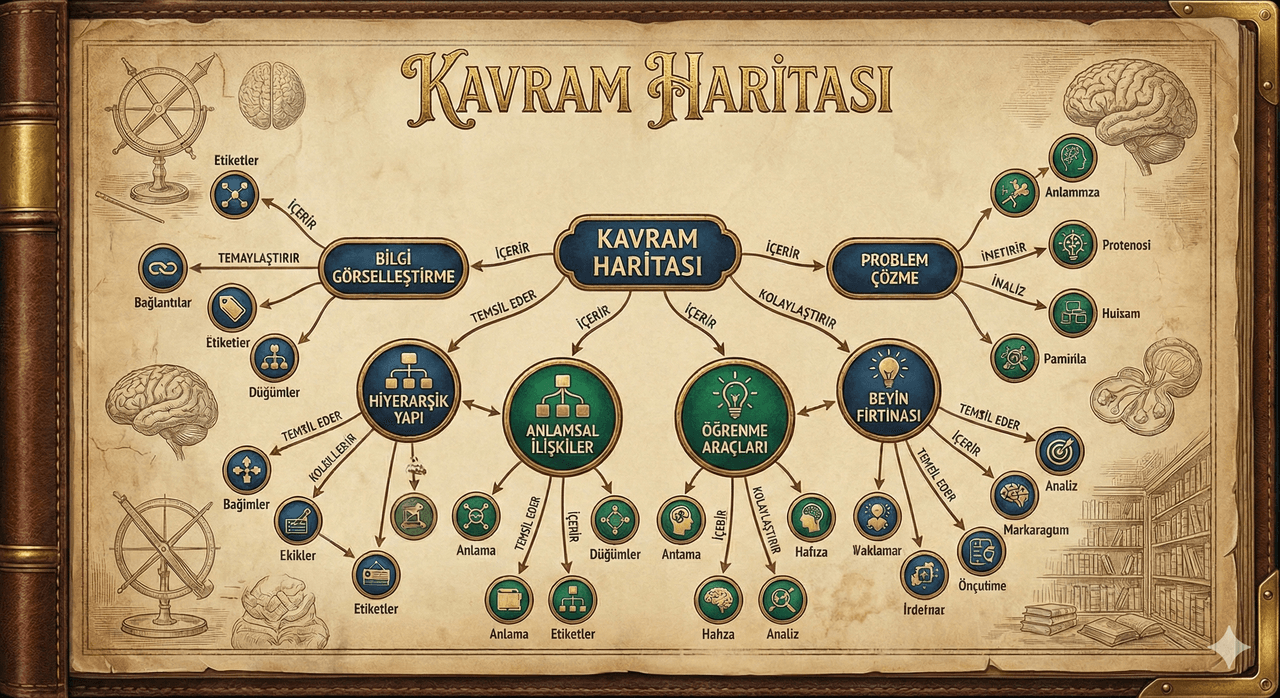
Concept Mapping Method
Concept mapping is a graphical teaching, learning, and assessment strategy that enables individuals to visualize concepts within their knowledge structures and the meaningful relationships between these concepts through two-dimensional diagrams. Developed initially in 1972 by Joseph D. Novak and his research team at Cornell University, this method emerged to track changes in students’ knowledge structures over extended educational processes. Concept maps, directly linked to constructivist learni
EN
Muhammed Samed Acar
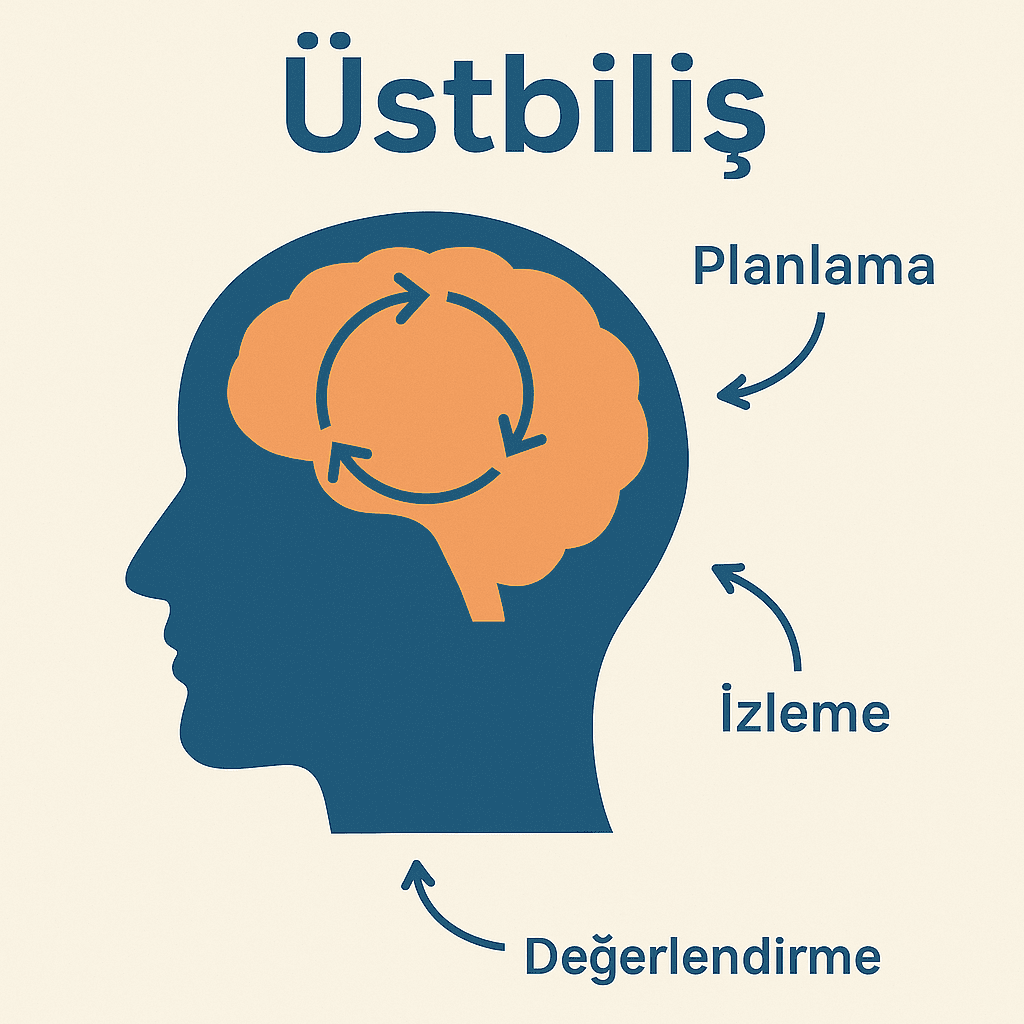
Metacognition (Upper Cognition)
Metacognition refers to an individual’s ability to recognize, monitor, and consciously regulate their own thinking processes. Translated into Turkish as "üstbiliş", this concept denotes the capacity to evaluate and strategically control mental functions such as information acquisition, comprehension, problem solving, and learning. Metacognitive awareness enables individuals to understand the limits of their cognitive processes and to restructure them when necessary. In this context, metacognitio
EN
Asusena Ela Öztürk

Testing Effect (Sınama Etkisi)
Testing Effect is a cognitive phenomenon indicating that individuals achieve more durable and deeper learning by actively retrieving information through testing, compared to merely reading or engaging in passive review. This effect demonstrates that the practice of retrieval during learning strengthens the retention of information in long-term memory. History and Theoretical Foundations The concept of the Testing Effect was first proposed in the early 20th century by psychologist Edward L. Thorn
ENAsusena Ela Öztürk
 Du
DuDual Coding Theory
The Dual Coding Theory (English: Dual Coding Theory) is a cognitive learning theory that posits individuals learn and recall information more effectively when both verbal and visual representations are used simultaneously. Proposed in 1971 by Canadian psychologist Allan Paivio, this theory is based on the assumption that information processing occurs through two fundamental systems: the verbal system and the nonverbal or imagery system. According to the theory, the interaction and parallel opera
ENAsusena Ela Öztürk
EbEbbinghaus Forgetting Curve
Ebbinghaus Forgetting Curve is a mathematical and psychological model first demonstrated experimentally by German psychologist Hermann Ebbinghaus, quantifying the decline in memory retention over time. This model describes how memory traces fade at varying rates when information is not rehearsed and captures the temporal dynamics of memory. Historical Development and Methodology The curve’s origins lie in systematic experiments conducted by Ebbinghaus on himself between 1879–1880 and 1883–1884.
EN
Yunus Emre Yüce