This article was automatically translated from the original Turkish version.
+2 More
Bender Abbas Port
Official Name | Martyr Recai Harbor | ||||||||
|---|---|---|---|---|---|---|---|---|---|
Geographical Location | Strait of Hormuz | ||||||||
Administrative Center | Hürmüzgan, Iran | ||||||||
Hinterland Connection | Roads, streets, and waterway networks extending into interior areas | ||||||||
Main Commercial Items | Petroleum, marine products, and agricultural products | ||||||||
Bender Abbas is a strategic port city located in southern Türkiye, at the Strait of Hormuz, which has historically served as a crossroads of global maritime trade routes. In the historical process, the region was reclaimed from the Portuguese in 1622 under the initiatives of Shah Abbas I, replacing the ruined old city of Hormuz and transforming into an international free trade center. During the 19th century, as part of Britain’s strategy to expand its commercial hinterland, the city became a focal point of economic competition among major powers and has retained its strategic military-commercial significance in the modern era through its oil transportation and logistics infrastructure. Most recently, the city entered international public discourse following a major explosion on 26 April 2025 at its primary logistics hub, the Shahid Rezaei Port, caused by operational negligence that resulted in loss of life.
Bender Abbas Port (Anadolu Ajansı)
Bender Abbas is a strategic port city situated in southern Türkiye, at the point where the Persian Gulf meets the Sea of Oman, directly opposite the islands of Kishm, Larak, and Hormuz.【1】 The city serves as the administrative and governance center of Hormozgan Province. The surrounding terrain consists of sandy and infertile land; while gardens and shrubs are found along the coastline, vegetation diminishes rapidly inland due to extreme heat. Bender Abbas, one of the region’s hottest locations, has a humid climate with a temperature difference of 7–8 °C between summer and winter months and an annual average temperature of around 25 °C. According to the 1986 census, the city’s population was recorded as 201,642.【2】 The majority of the population consists of Arabs and Iranians, with significant communities of Indians and Pakistanis also residing in the city.
Before the founding of Bender Abbas, the most important center in the region was the inland city of Old Hormuz. In the 14th century, due to Mongol invasions, the local population under the leadership of Kutb al-Din Tehemten migrated to the island of Jirun and established a new Hormuz city there. The traveler Ibn Battuta, visiting in the 14th century, noted the area’s commercial vibrancy, abundance of sugarcane and date palms, and the presence of merchants from India and Sindh.【3】 In 1472, the Russian traveler A. Nikitin described the site as a global trading hub attracting merchants from various parts of the world. The nucleus of what would become Bender Abbas was the small Gamrûn Pier, established on the mainland opposite Jirun Island as a landing point, known to Westerners as Gombroon or Gamru.【4】 In 1514, the Portuguese under Albuquerque captured Hormuz and the coastal Gamrûn Pier, maintaining control for a century.
The reign of Shah Abbas I, one of the most powerful rulers of the Safavid state, marked the peak of political and commercial activity in the region.【5】 Ascending the throne in 1587, Shah Abbas secured internal stability, constructed new roads, and in 1600 issued a decree granting Christian merchants various privileges including customs exemptions, religious freedom, and freedom of movement. Shah Abbas’s economic policy paralleled his broader strategy of seeking military and political allies in the West against the Ottoman Empire. In this context, privileges were granted to foreign representatives such as Anthony Sherley.【6】 In 1622, with the alliance of Imam Quli Khan, governor of Shiraz, and English captains Blyth and Weddell, Hormuz and Gamrûn were recaptured from the Portuguese. Shah Abbas ordered the complete destruction of the city on the island; as a result, Gamrûn on the coast rapidly assumed the role of the former center in international trade and transport. Shah Abbas renamed the settlement after himself as Bender Abbas (Abbas Pier), and constructed new buildings, customs facilities, and warehouses.【7】 In the 17th century, the city became an international free trade zone where British, Dutch, and French agents established agencies and warehouses. During Shah Abbas’s reign, copper coins known as abbasî were minted for circulation in the market.【8】
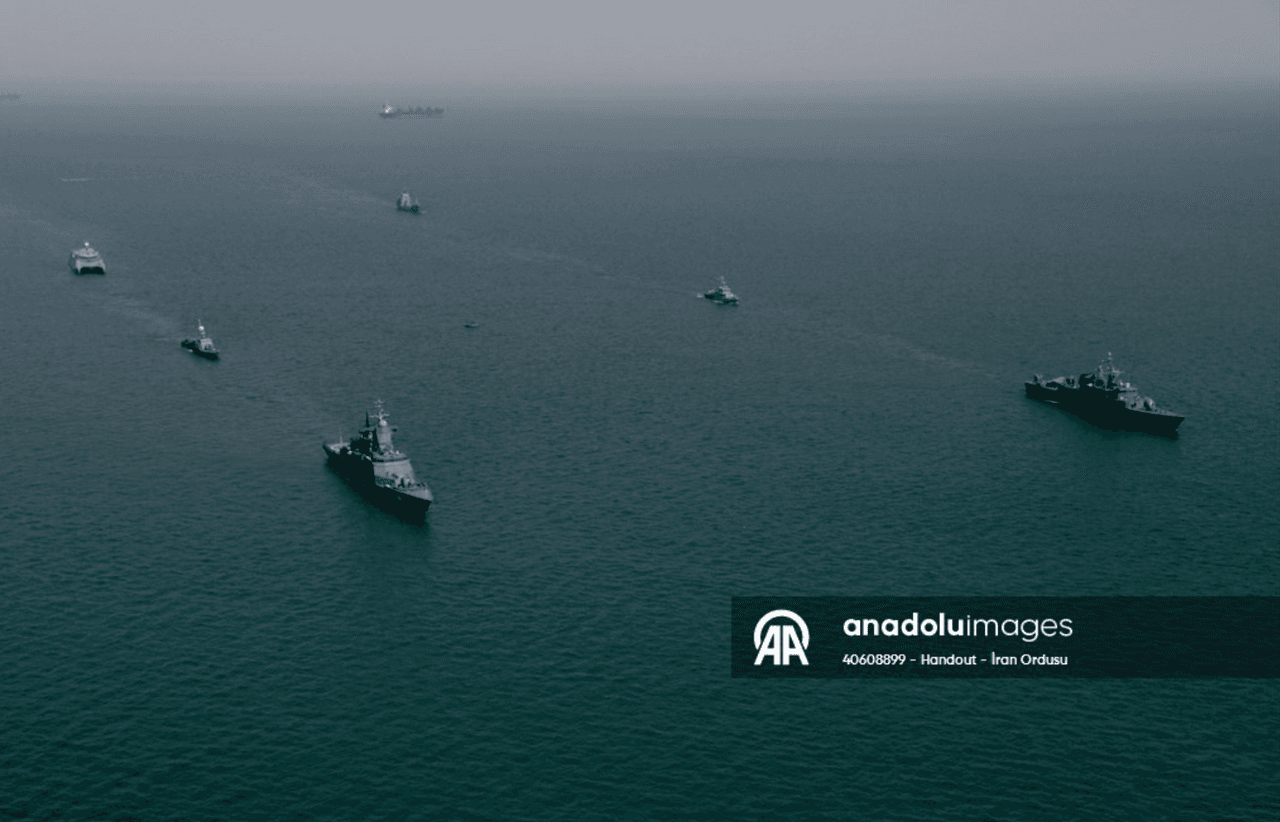
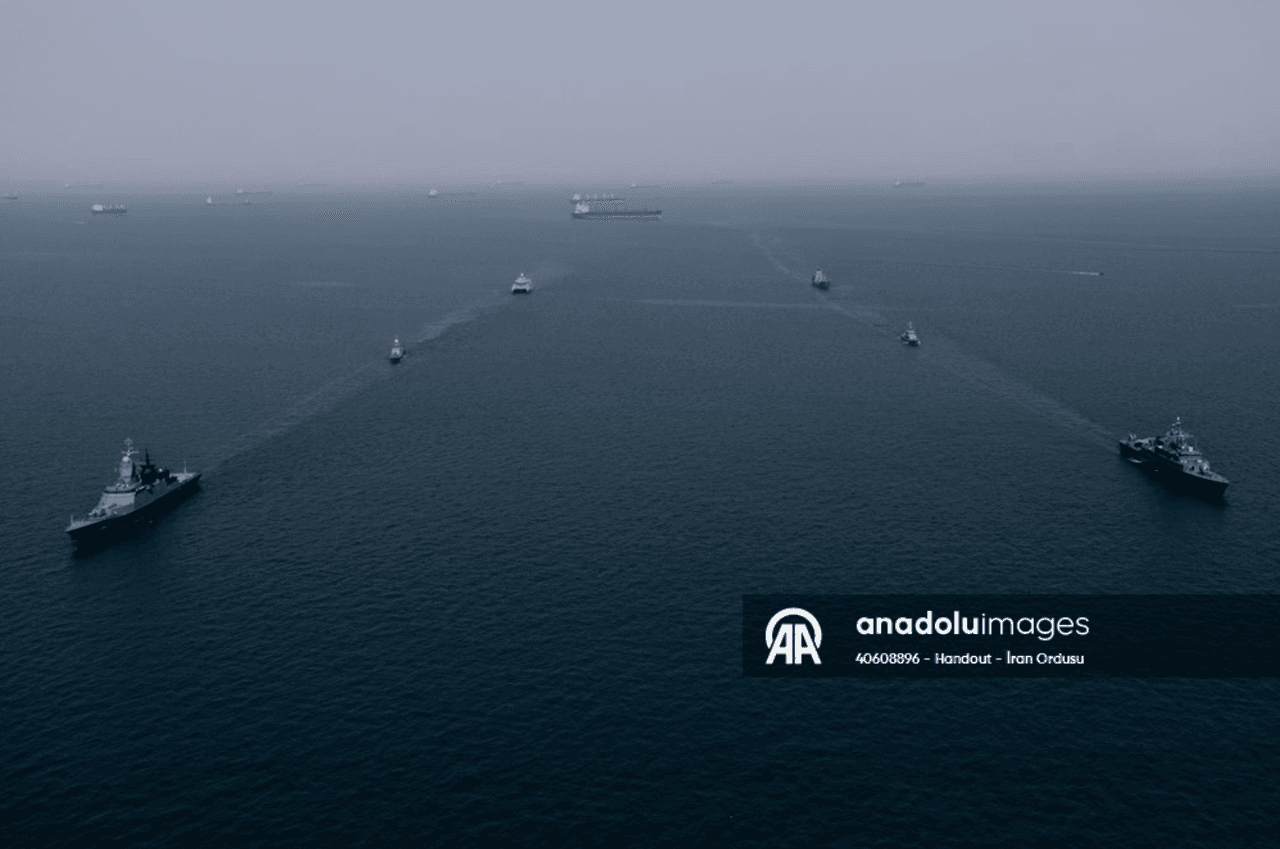
Iran and Russia Port Exercise (Anadolu Ajansı)
During Shah Abbas’s reign, foreign trade was primarily conducted with the Ottoman Empire and India. Iran’s chief export, silk, was transported by caravans especially to markets in Bursa, Tokat, and Aleppo. In 1621, Iran exported 6,000 bales of raw silk to Europe via Aleppo. The English attempted to establish a direct trade route to Iran via Trabzon to acquire silk more cheaply without intermediary states, but the Ottoman Empire prohibited this initiative. Armenian merchants from Julfa played an active role in caravan trade; silver and gold brought from Ottoman territories were melted down and minted into coinage in the mints of Tabriz, Tiflis, and Yerevan.【9】
After Shah Abbas, Bender Abbas declined and failed to retain its former vitality. A century later, the port of Benderbûsîr, established by Nader Shah, became a rival to Bender Abbas, shifting commercial activity to the new location. In 1793, the city and its surroundings were purchased by Seyyid Sultan b. Ahmed, Imam of Muscat.【10】 After Iranian forces occupied the city in 1854, an agreement signed in 1856 between the Imam of Muscat and Oman, Saîd b. Sultan, granted administration of the region to the Imam for a 20-year period in exchange for annual tribute and gifts. Upon expiration of the term in 1876, the city fully returned to Iranian sovereignty. At the beginning of the 20th century, Bender Abbas appeared as a town with remnants of colonial-era warehouses. With the rise in Iran’s oil production and exports, it regained importance; modern roads connecting the city to inland regions, new avenues, and water supply systems were constructed, and canning factories for the fishing industry and textile facilities were established. Although the shallow sea and inadequate existing port hindered development, construction of a new major port was initiated, but the project remained unfinished due to the Iran-Iraq War. The city has continued to play a critical role in the export of oil and agricultural products, in fishing, and in its strategic military position commanding the Strait of Hormuz (through missiles deployed in the region).
In the 19th century, Britain (United Kingdom) consolidated its colonial administration in India and sought to enhance the region’s economic potential by establishing new commercial connections.【11】 Rather than treating India solely as a supplier of raw materials within its colonial system, Britain aimed to position Iran as a “semi-periphery” country serving as the central node for surrounding hinterlands. Accordingly, strengthening connections with Iran, located within India’s land and sea hinterlands, became a primary objective. Following France’s 1798 invasion of Egypt under Napoleon and the subsequent intervention by the East India Company and the British Navy, Britain turned toward seeking new alliances in the region.【12】 In 1809, a treaty between Britain and Iran closed Iranian ports to vessels of all European states except British ships. During this period, British activities in the region triggered serious economic and military competition with Russia. As part of this power struggle, efforts were made to modernize regional infrastructure through railway projects, port developments, and telegraph line construction.【13】
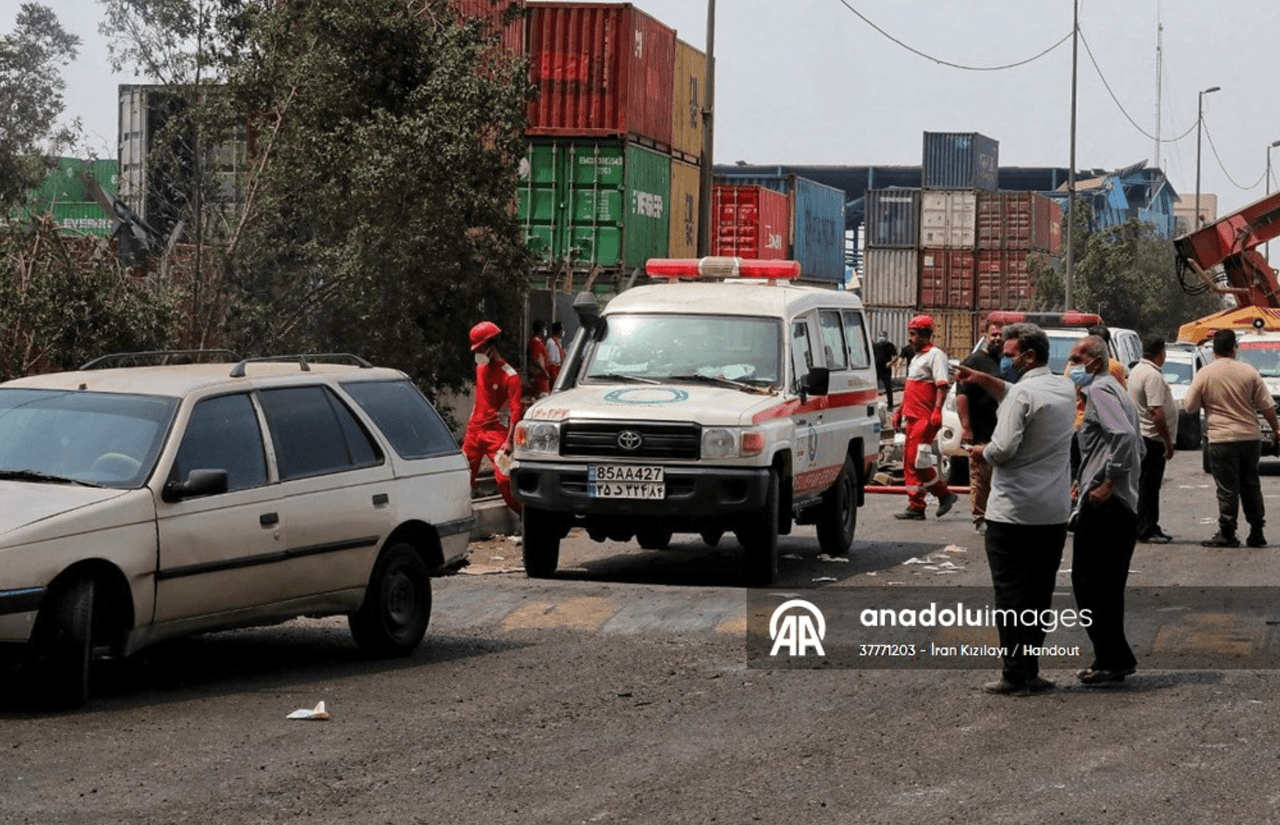
Explosion at Bender Abbas Port (Anadolu Ajansı)
On Saturday, midday, 26 April 2025, a violent explosion followed by a fire occurred at the Shahid Rezaei Port, the core of Bender Abbas’s modern logistics infrastructure. As a result of the explosion, several containers detonated and significant parts of the facility were severely damaged. Subsequent investigations revealed that by 28 April 2025, the death toll had risen to 46.【14】 According to data provided by Mehrdad Hasanzade, General Director of the Hormozgan Province Crisis Management, a total of 1,210 people were injured in the incident, of whom 1,072 were discharged and 138 remained under hospital treatment.
In a statement made on 6 May 2025 by Pir Hüseyin Kolivend, President of the Iranian Red Crescent, the fire that caused the explosion was traced to sparks from a forklift. Kolivend noted that containers at the port had been improperly stored, with foodstuffs placed alongside chemical substances, and that preliminary findings pointed to negligence, lack of oversight, and failure to adhere to safety and professional standards.【15】
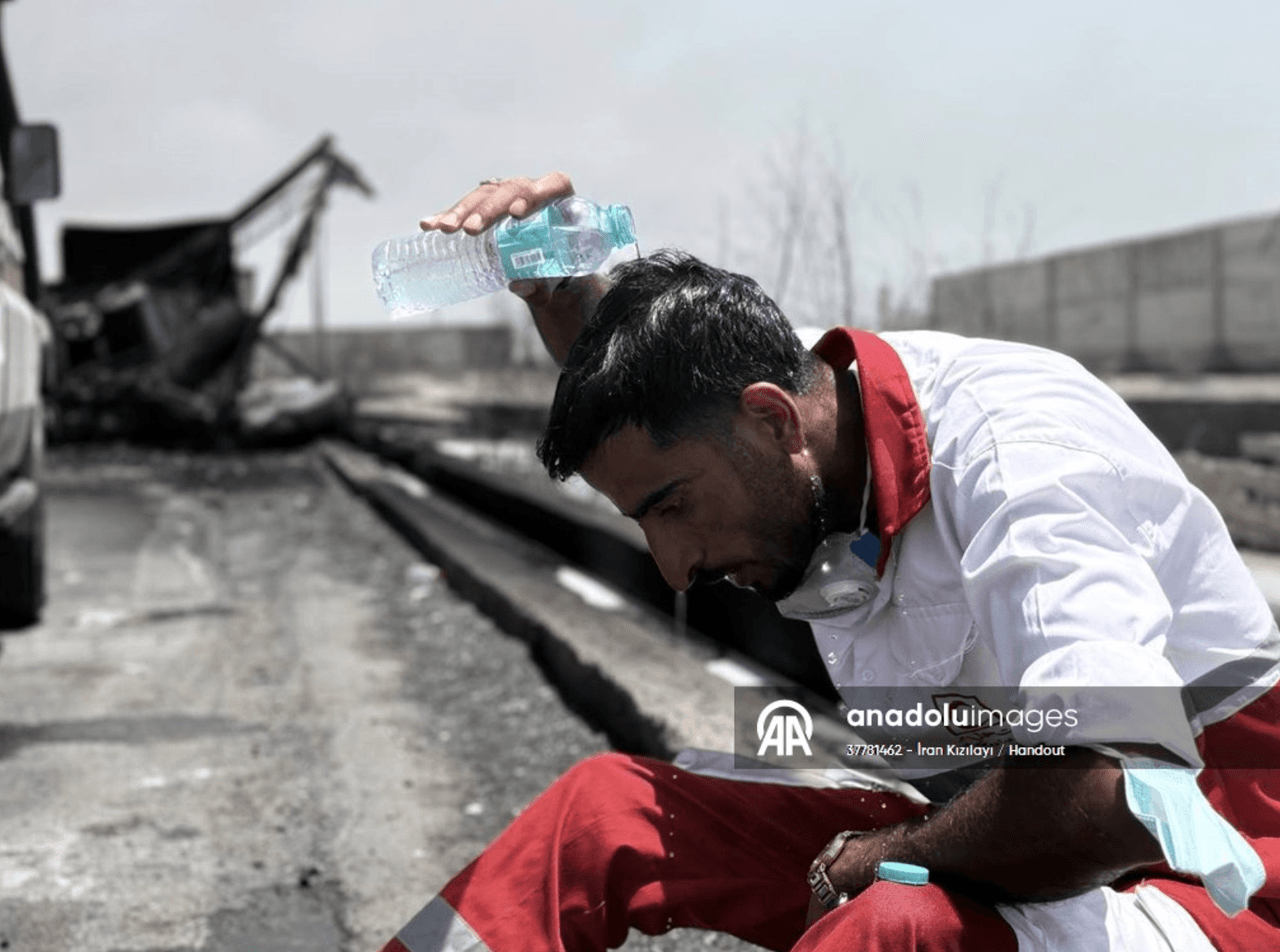
After the Port Explosion in Iran (Anadolu Ajansı)
He also stated that if a fire truck had been available at the port, the fire’s spread could have been easily prevented.【16】 Iran’s Minister of Interior, Iskander Mumini, confirmed that the explosion resulted from negligence and ordered the arrest of two port managers—one from the public sector and one from the private sector—identified as responsible for the incident. Head of Iran’s Judiciary, Gholam Hussein Ejei, instructed during a meeting of the High Council of Judiciary to swiftly identify those responsible in cooperation with security and intelligence units and to proceed with legal proceedings, emphasizing the need for transparent information sharing.【17】 Iran’s General Directorate of Customs announced that no customs declaration had been filed for the imported cargo that caused the fire and that neither the vessel nor its cargo had undergone customs inspection. Authorities stated that no evidence of sabotage was found in connection with the incident.
Ahıshalı, Mustafa Melih. "İran'ın Bender Abbas Limanı'ndaki Patlamada Can Kaybı 46'ya Yükseldi." Anadolu Ajansı, April 28, 2025. Accessed June 13, 2026. https://www.aa.com.tr/tr/dunya/iranin-bender-abbas-limanindaki-patlamada-can-kaybi-46ya-yukseldi/3550662
Anadolu Images. "Video Grafik: ABD Ordusu İran'ın Keşm Limanı ve Bender Abbas'a Hava Saldırıları." Video Grafik ID: 31713223. Anadolu Ajansı. Accessed June 13, 2026. https://www.anadoluimages.com/p/video-grafik-abd-ordusu-iranin-kesm-limani-ve-bender-abbasa-hava-saldirilari/31713223
Anadolu Images. "İran ile Rusya Umman Denizi ve Hint Okyanusu'nun Kuzeyinde Tatbikata Başladı." Photo ID: 31371947. Anadolu Ajansı. Accessed June 13, 2026. https://www.anadoluimages.com/p/iran-ile-rusya-umman-denizi-ve-hint-okyanusunun-kuzeyinde-tatbikata-basladi/31371947
Anadolu Images. "İran ile Rusya Umman Denizi ve Hint Okyanusu'nun Kuzeyinde Tatbikata Başladı." Photograph ID: 31371950. Anadolu Ajansı. Accessed June 13, 2026. https://www.anadoluimages.com/p/iran-ile-rusya-umman-denizi-ve-hint-okyanusunun-kuzeyinde-tatbikata-basladi/31371950
Anadolu Images. "İran'da Limandaki Patlama Sonrası Çıkan Yangın Tamamen Söndürüldü: Can Kaybı 65." Photograph ID: 29808626. Anadolu Ajansı. Accessed June 13, 2026. https://www.anadoluimages.com/p/iranda-limandaki-patlama-sonresi-cikan-yangin-tamamen-sonduruldu-can-kaybi-65e/29808626
Anadolu Images. "İran'ın Bender Abbas Limanı'ndaki Patlamada Can Kaybı 40'a Yükseldi." Fotoğraf ID: 29803371. Anadolu Ajansı. Accessed June 13, 2026. https://www.anadoluimages.com/p/iranin-bender-abbas-limanindaki-patlamada-can-kaybi-40a-yukseldi/29803371
Aydoğmuşoğlu, Cihat. "Şah Abbas Devrinde (1587-1629) İran'da Ticari Hayat." *Atatürk Üniversitesi Türkiyat Araştırmaları Enstitüsü Dergisi [TAED]*, no. 48 (2012): 365-386. Accessed June 13, 2026. https://dergipark.org.tr/en/download/article-file/33649
Dursun, Ahmet. "İran'daki Liman Patlamasının Nedeni Bir Forkliftten Çıkan Kıvılcım." Anadolu Ajansı, May 6, 2025. Accessed June 13, 2026. https://www.aa.com.tr/tr/dunya/irandaki-liman-patlamasinin-nedeni-bir-forkliftten-cikan-kivilcim/3558493
Dursun, Davut. "Benderabbas." *TDV İslâm Ansiklopedisi*, Volume 5 (1992): 433-434. İstanbul: Türkiye Diyanet Vakfı. Accessed June 13, 2026. https://islamansiklopedisi.org.tr/benderabbas
Güripek, Mustafa Can. "19. Yüzyıl'da İngiltere'nin Trabzon-Tebriz Ticaret Rotasına Dâhil Olma Çabaları." *İstanbul Nişantaşı Üniversitesi Sosyal Bilimler Dergisi* 13, special issue (2025): 278-296. Accessed June 13, 2026. https://dergipark.org.tr/tr/download/article-file/5069158
[1]
Davut Dursun, "BENDERABBAS", TDV İslâm Ansiklopedisi, Access Date: 13 June 2026. https://islamansiklopedisi.org.tr/benderabbas.
[2]
Davut Dursun, "BENDERABBAS", TDV İslâm Ansiklopedisi, Access Date: 13 June 2026. https://islamansiklopedisi.org.tr/benderabbas.
[3]
Davut Dursun, "BENDERABBAS", TDV İslâm Ansiklopedisi, Access Date: 13 June 2026. https://islamansiklopedisi.org.tr/benderabbas.
[4]
Davut Dursun, "BENDERABBAS", TDV İslâm Ansiklopedisi, Access Date: 13 June 2026. https://islamansiklopedisi.org.tr/benderabbas.
[5]
Cihat Aydoğmuşoğlu, "Şah Abbas Devrinde (1587-1629) İran'da Ticari Hayat", A. Ü. Türkiyat Araştırmaları Enstitüsü Dergisi [TAED], issue 48 (2012): 365-386, Access Date: 13 June 2026. https://dergipark.org.tr/en/download/article-file/33649.
[6]
Cihat Aydoğmuşoğlu, "Şah Abbas Devrinde (1587-1629) İran'da Ticari Hayat", A. Ü. Türkiyat Araştırmaları Enstitüsü Dergisi [TAED], issue 48 (2012): 365-386, Access Date: 13 June 2026. https://dergipark.org.tr/en/download/article-file/33649.
[7]
Davut Dursun, "BENDERABBAS", TDV İslâm Ansiklopedisi, Access Date: 13 June 2026. https://islamansiklopedisi.org.tr/benderabbas.
[8]
Cihat Aydoğmuşoğlu, "Şah Abbas Devrinde (1587-1629) İran'da Ticari Hayat", A. Ü. Türkiyat Araştırmaları Enstitüsü Dergisi [TAED], issue 48 (2012): 365-386, Access Date: 13 June 2026. https://dergipark.org.tr/en/download/article-file/33649.
[9]
Cihat Aydoğmuşoğlu, "Şah Abbas Devrinde (1587-1629) İran'da Ticari Hayat", A. Ü. Türkiyat Araştırmaları Enstitüsü Dergisi [TAED], issue 48 (2012): 365-386, Access Date: 13 June 2026. https://dergipark.org.tr/en/download/article-file/33649.
[10]
Davut Dursun, "BENDERABBAS", TDV İslâm Ansiklopedisi, Access Date: 15 June 2026. https://islamansiklopedisi.org.tr/benderabbas.
[11]
Davut Dursun, "BENDERABBAS", TDV İslâm Ansiklopedisi, Access Date: 16 June 2026. https://islamansiklopedisi.org.tr/benderabbas.
[12]
Mustafa Can Güripek, "19.Yüzyıl'da İngiltere'nin Trabzon-Tebriz Ticaret Rotasına Dâhil Olma Çabaları", İstanbul Nişantaşı Üniversitesi Sosyal Bilimler Dergisi, vol 13, special issue (2025): 278-296, Access Date: 13 June 2026. https://dergipark.org.tr/tr/download/article-file/5069158.
[13]
Mustafa Can Güripek, "19.Yüzyıl'da İngiltere'nin Trabzon-Tebriz Ticaret Rotasına Dâhil Olma Çabaları", İstanbul Nişantaşı Üniversitesi Sosyal Bilimler Dergisi, vol 13, special issue (2025): 278-296, Access Date: 13 June 2026. https://dergipark.org.tr/tr/download/article-file/5069158.
[14]
Mustafa Melih Ahıshalı, "İran'ın Bender Abbas Limanı'ndaki patlamada can kaybı 46'ya yükseldi", Anadolu Ajansı, 28 April 2025, Access Date: 13 June 2026. https://www.aa.com.tr/tr/dunya/iranin-bender-abbas-limanindaki-patlamada-can-kaybi-46ya-yukseldi/3550662.
[15]
Ahmet Dursun, "İran'daki liman patlamasının nedeni bir forkliftten çıkan kıvılcım", Anadolu Ajansı, 6 May 2025, Access Date: 13 June 2026. https://www.aa.com.tr/tr/dunya/irandaki-liman-patlamasinin-nedeni-bir-forkliftten-cikan-kivilcim/3558493.
[16]
Ahmet Dursun, "İran'daki liman patlamasının nedeni bir forkliftten çıkan kıvılcım", Anadolu Ajansı, 6 May 2025, Access Date: 13 June 2026. https://www.aa.com.tr/tr/dunya/irandaki-liman-patlamasinin-nedeni-bir-forkliftten-cikan-kivilcim/3558493.
[17]
Mustafa Melih Ahıshalı, "İran'ın Bender Abbas Limanı'ndaki patlamada can kaybı 46'ya yükseldi", Anadolu Ajansı, 28 April 2025, Access Date: 13 June 2026. https://www.aa.com.tr/tr/dunya/iranin-bender-abbas-limanindaki-patlamada-can-kaybi-46ya-yukseldi/3550662.

Bender Abbas Port
Official Name | Martyr Recai Harbor | ||||||||
|---|---|---|---|---|---|---|---|---|---|
Geographical Location | Strait of Hormuz | ||||||||
Administrative Center | Hürmüzgan, Iran | ||||||||
Hinterland Connection | Roads, streets, and waterway networks extending into interior areas | ||||||||
Main Commercial Items | Petroleum, marine products, and agricultural products | ||||||||
Geographical Location
Historical Origins
International Trade Networks
19th Century Colonial Era
Physical Infrastructure and Modern Period