


This article was automatically translated from the original Turkish version.
+1 More
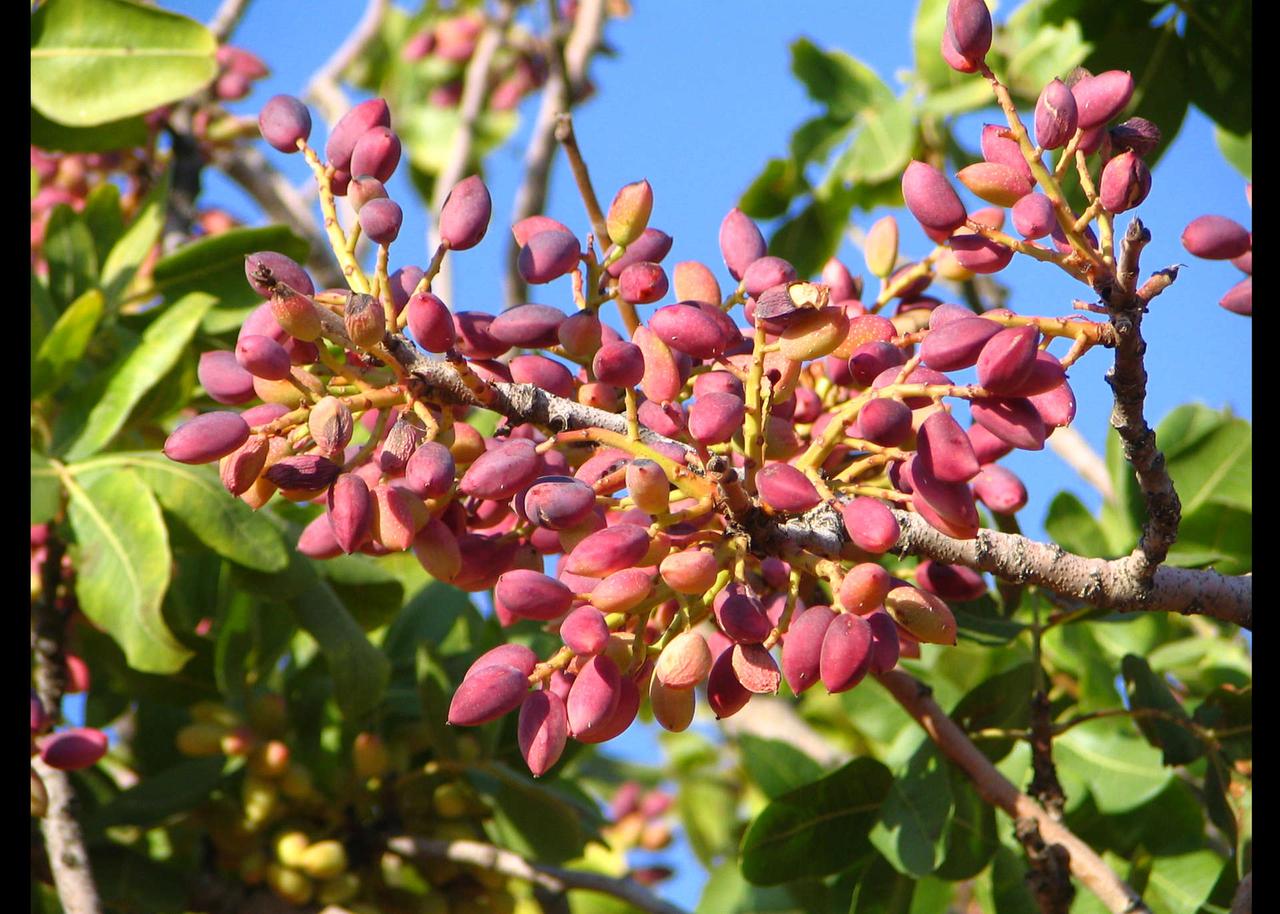
Antep Pistachio (Pistacia vera L.)
Scientific Name | Pistacia vera Linnaeus | ||||||||
|---|---|---|---|---|---|---|---|---|---|
Biological Classification | Type: Pistacia vera Kingdom: Plantae Phylum: Tracheophyta Class: Magnoliopsida Order: Sapindales Family: Anacardiaceae Genus: Pistacia | ||||||||
Tree Lifespan | Average lifespan 100-150 years | ||||||||
Native Range | Caucasus Anatolia Iran Central Asia | ||||||||
Production in Türkiye | Siirt Gaziantep Şanlıurfa | ||||||||
Pistachio belongs to the family Anacardiaceae. It is a commercially significant tree that produces edible nuts. Fruit production originates from its native regions of Anatolia, Iran, Caucasus and Central Asia. Historically, this plant was cultivated in southern Anatolia during the Hittite period and spread to Europe via Rome in the first century AD. Today, Iran, USA and Türkiye share the top three positions in global pistachio production.
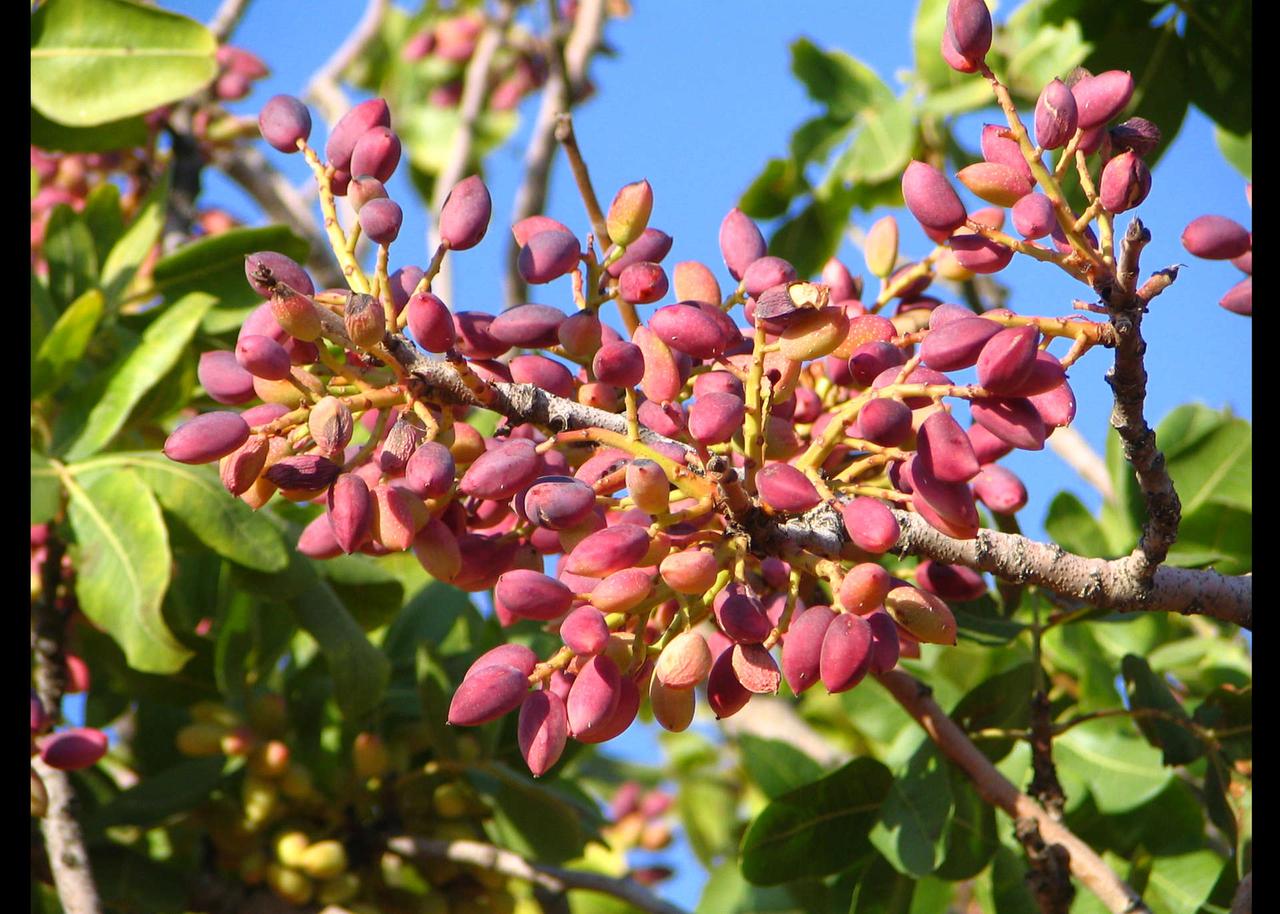
Pistachio (Gaziantep Metropolitan Municipality)
Pistachio is a hardy plant that thrives in dry, calcareous and stony soils and is tolerant of hot summers and cold winters. It is dioecious, meaning male and female trees are separate. A newly planted sapling begins producing fruit after about ten years and can live for approximately 100 to 150 years. On average, a single tree yields about 10 kg of nuts per year.
In Türkiye, pistachio cultivation is concentrated primarily in the Southeastern Anatolia Region, especially in Gaziantep, Siirt and Şanlıurfa, and is practiced in a total of 56 provinces. As of the 2020s, Türkiye accounts for approximately 14 percent of global pistachio production. Periodicity in yield, the proportion of empty nuts and shell splitting rate are among the key factors affecting production stability.
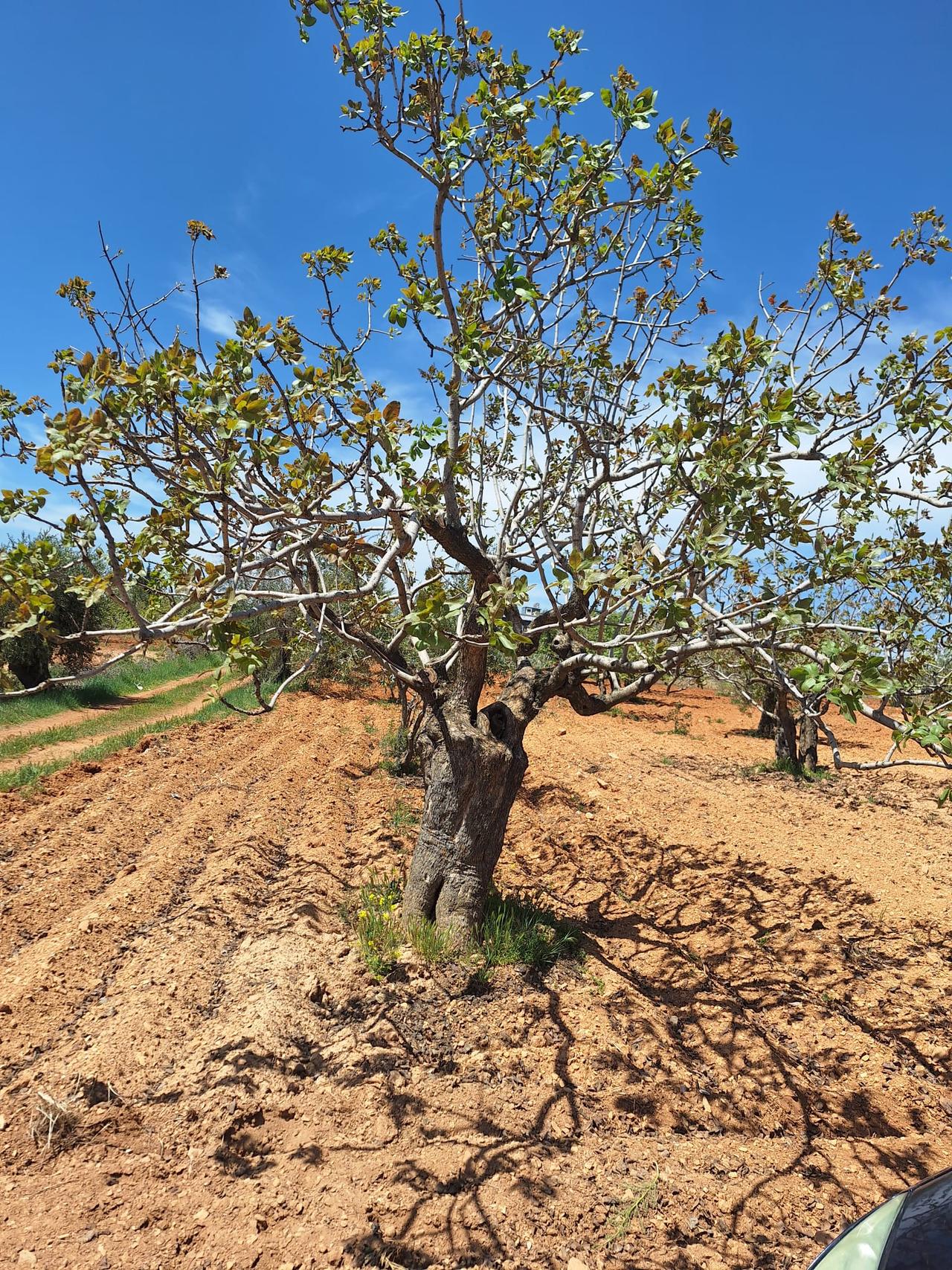
A Pistachio Tree in Battal Village, Gaziantep, 2025 (Photo: Özkan Çelik)
The most well-known varieties of pistachio are “long,” “red,” “Siirt,” “ohadi,” and “Halebi.” Additional classifications based on usage include boz iç, kırmızı iç, and meverdi iç. Boz iç pistachio is the highest quality variety, characterized by its green hue, and is preferred for baklava production. Red-kerneled pistachios are used in snack and confectionery industries. Meverdi iç is an intermediate variety with reddish tones, commonly used in pastry and halva production.
Pistachio is a nutrient-dense food rich in energy, protein, dietary fiber, unsaturated fatty acids, phenolic compounds, vitamins (E, B1, B6, K) and minerals (potassium, magnesium, iron). Its high antioxidant capacity has been scientifically proven to have beneficial effects on conditions such as diabetes, cardiovascular diseases and hypercholesterolemia. A 28 g serving provides 8 percent of the daily recommended intake of vitamin E and 37 percent of vitamin B6.
Issues such as periodicity in yield, high rates of empty nuts and insufficient pollination reduce production consistency. To improve agricultural productivity, recommendations include irrigation, pruning, balancing the ratio of male to female trees, using certified saplings and developing new cultivars.
Gaziantep Büyükşehir Municipality. "Antep Fıstığı." Gaziantep.bel.tr. Accessed April 20, 2025.https://www.gaziantep.bel.tr/tr/gaziantepi-kesfet/antep-fistigi
Yavuz, Mehmet Ali, Hakan Yıldırım, and Ahmet Onay. "Dünya Antepfıstığı Üretiminde Son On Yılın Değerlendirilmesi." Yaşam Bilimleri Dergisi 6, no. 2/2 (2016): 22–30.
Çağlar, Abdullah; Oktay Tomar, Hülya Vatansever, and Elif Ekmekçi. "Antepfıstığı (Pistacia vera L.) ve İnsan Sağlığı Üzerine Etkileri." Akademik Gıda 15, no. 4 (2017): 436–447.
Çınar, Başak, and Yeşim Okay. "Vitaminler Yönüyle Antepfıstığı." Bahçe Dergisi, 42, no. 1–2 (2013): 35–43.

Antep Pistachio (Pistacia vera L.)
Scientific Name | Pistacia vera Linnaeus | ||||||||
|---|---|---|---|---|---|---|---|---|---|
Biological Classification | Type: Pistacia vera Kingdom: Plantae Phylum: Tracheophyta Class: Magnoliopsida Order: Sapindales Family: Anacardiaceae Genus: Pistacia | ||||||||
Tree Lifespan | Average lifespan 100-150 years | ||||||||
Native Range | Caucasus Anatolia Iran Central Asia | ||||||||
Production in Türkiye | Siirt Gaziantep Şanlıurfa | ||||||||
No Discussion Added Yet
Start discussion for "Antep Pistachio (Pistacia vera L.)" article
Botanical and Ecological Characteristics
Agricultural and Economic Importance
Varieties and Uses
Nutritional Value and Health Effects
Agricultural Challenges and Strategies