


This article was automatically translated from the original Turkish version.
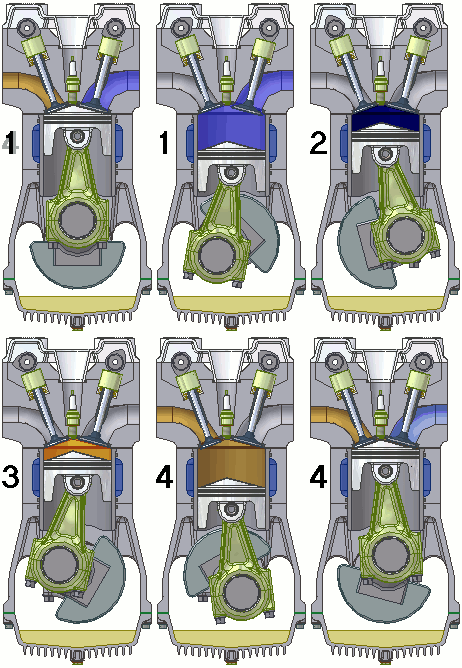
Figure 1 | Subap | ||||||||
|---|---|---|---|---|---|---|---|---|---|
The valve is the system in internal combustion engines that enables the intake and exhaust processes. Intake valves allow the fuel-air mixture into the combustion chamber, while exhaust valves permit the expulsion of gases produced after combustion. Valves are vital for the proper operation of the engine and are typically mounted on the cylinder head.
Valves regulate the intake and exhaust processes by opening and closing the pathways for gas flow in the engine. Each cylinder has at least one intake valve and one exhaust valve. Modern engines increase this number to enhance efficiency.
Valves are operated by the camshaft and synchronized with the crankshaft via the timing belt.
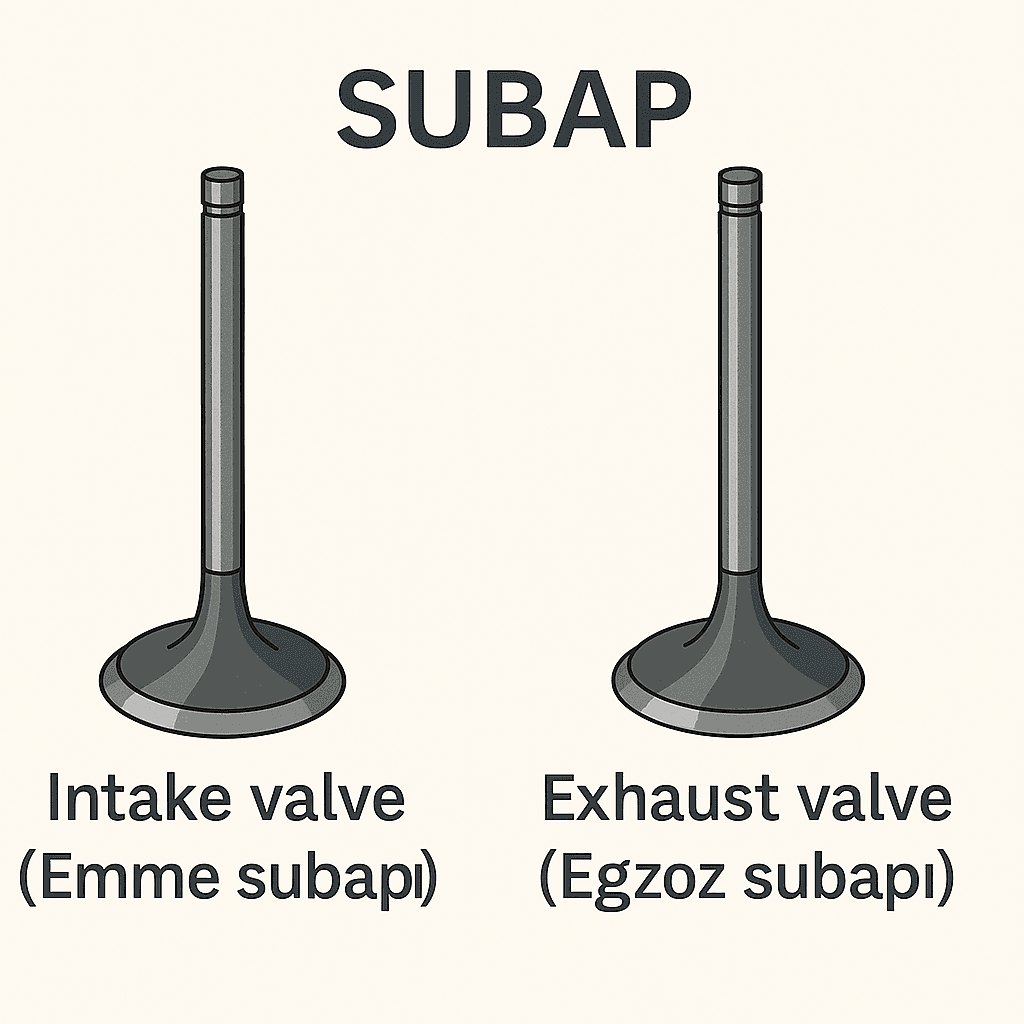
Valve (AI-Generated Image)
Valve malfunctions directly impair engine performance. Common symptoms include:
Valve tapping is a metallic noise caused by excessive clearance in the valve mechanism, leading to hard contact between components. This noise may occur briefly when the engine is cold. However, if it persists when the engine is warm, it indicates incorrect adjustment or component wear.
Valve adjustment is the process of setting the clearance between the valve and the rocker arm to the manufacturer’s specified values. This clearance changes due to thermal expansion during engine operation and must be checked periodically. It is generally recommended to inspect it every 30,000 to 120,000 kilometers.
Each vehicle has a different valve clearance specification; the manufacturer’s data must be followed.
Valve breakage typically occurs when the timing belt snaps. In this case, the pistons collide with the valves, causing them to bend or break. When a valve breaks, the engine stops completely and suffers severe damage. The engine becomes inoperable and repair costs are high.
Valves are present in all internal combustion engines. Therefore, valve adjustment is necessary for all gasoline, diesel, and LPG-powered vehicles. Electric vehicles do not have valves. Valve adjustment is typically performed at authorized service centers using specialized equipment.
Valves are critical components that determine fuel efficiency, engine power, and smooth operation. Regular valve inspections must be carried out, and valve adjustments must not be neglected at recommended mileage intervals. If valve system faults are not detected early, they can lead to irreversible engine damage. When symptoms such as valve noise, smoke, or performance loss are observed, immediate attention from a technical service is required.
Behçet Safgönül, H. Ertuğrul Arslan, Metin Ergeneman, and Cem Soruşbay, İçten Yanmalı Motorlar (İstanbul: Birsen Yayınevi, 2016).
Enbahçe. "2 ve 4 Zamanlı Motor Yağı Doğru Kullanım." Enbahçe Blog. Accessed March 31, 2025.https://www.enbahce.com/blog/icerik/2-ve-4-zamanli-motor-yagi-dogru-kullanim
Willard W. Pulkrabek, İçten Yanmalı Motorlar: Mühendislik Temelleri, trans. Bülent Uluışık, Hakan Serhat Soyhan, and İmdat Taymaz, ed. Halit Yüksel (Ankara: Güven Bilimsel, 2013).

Figure 1 | Subap | ||||||||
|---|---|---|---|---|---|---|---|---|---|
What Is the Purpose of a Valve?
Symptoms of Valve Failure
Valve Tapping Noise
What Is Valve Adjustment?
How Is Valve Adjustment Performed?
What Happens If Valve Adjustment Is Not Performed?
Valve Breakage
Which Vehicles Require Valve Adjustment?