


This article was automatically translated from the original Turkish version.
The rocker arm is a lever system that serves as a crucial component of the valve mechanism in internal combustion engines, providing a mechanical connection between the camshaft and the valves. Mounted on the upper part of the engine, attached to the cylinder head, the rocker arm receives motion directly from the camshaft or indirectly through pushrods and converts it to open and close the valves. This ensures precise timing for the intake of the air-fuel mixture into the cylinders and the expulsion of exhaust gases after combustion.
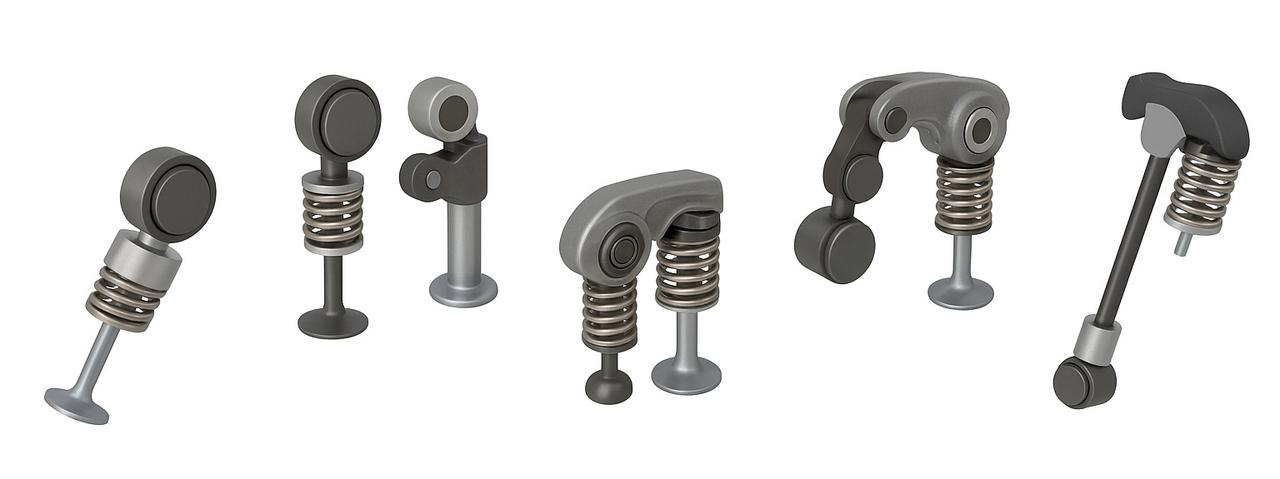
Various valve mechanisms. (Generated by artificial intelligence.)
Rocker arms are typically manufactured from steel castings or aluminum alloys. Forged variants are also commonly seen. The rocker arm mechanism has a lever structure that rotates around an axis. One end receives force from the camshaft or pushrod while the other end presses against the valves to open them. During this process, the valve spring performs the task of closing the valve. In some systems, rocker arms feature adjustment screws and nuts that allow precise setting of the valve clearance, also known in industry as valve lash adjustment. In modern engines, hydraulic valve lifters integrated into the rocker arm system automatically maintain this clearance, ensuring continuous optimal valve timing.
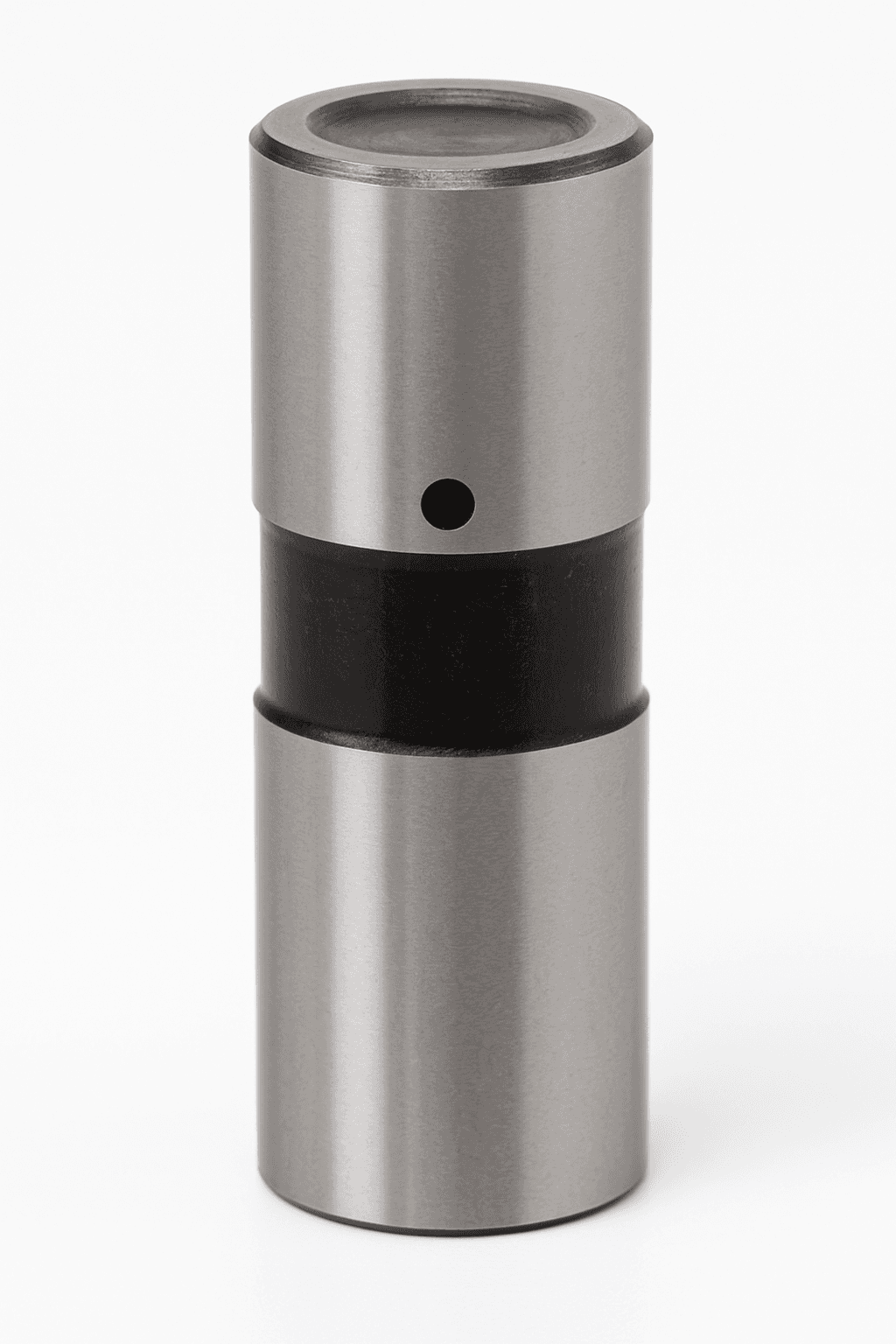
Hydraulic valve lifter. (Generated by artificial intelligence.)
The design and operation of the rocker arm system are of great importance for engine performance, fuel efficiency, and emissions. In high-revving engines, lighter and more rigid structures are preferred, while in applications demanding durability, material strength takes precedence. Furthermore, in some advanced engines, variable valve timing mechanisms integrated into the rocker arm system enable the engine to operate more efficiently and flexibly under varying operating conditions.
In conclusion, the rocker arm is a fundamental component of internal combustion engine technology, functioning as a mechanical actuator that ensures the proper operation of the engine’s intake and exhaust systems and plays a vital role in timing during the power generation process.
Çalica, Kayhan. Dizel Motorlarda Kam Mili Tasarımı – Valf ve Valf Yaylarında Hata Analizi. Master's thesis,Sakarya Üniversitesi Institute of Natural Sciences, 2021.
