


This article was automatically translated from the original Turkish version.
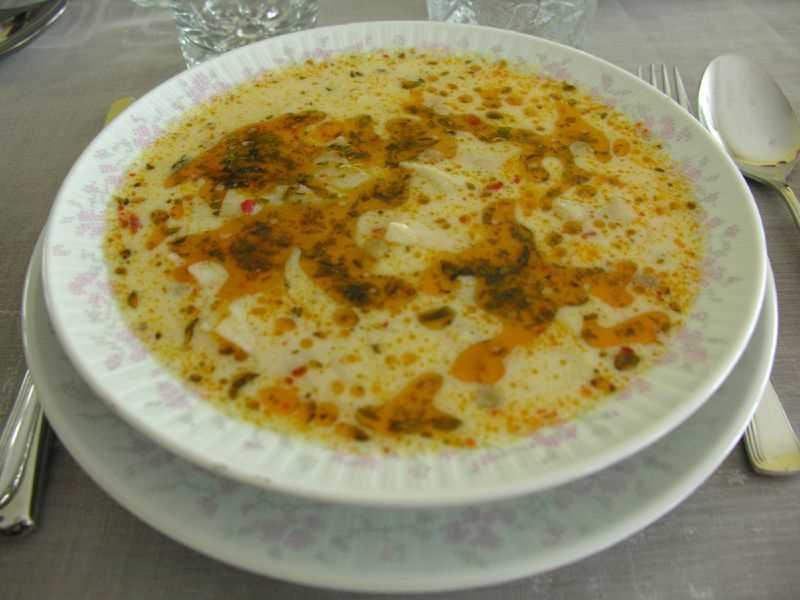
Tutmaç Soup
Materials | Chicken breast, egg, flour, yogurt, garlic, salt, clarified butter | ||||||||
|---|---|---|---|---|---|---|---|---|---|
Tutmaç Çorbası is a traditional dish of Turkish cuisine, prepared by cooking small pieces of dough with meat or minced meat and pouring yogurt over it. This dish is widely recognized across a broad geographical area stretching from Central Asia to Anatolia and is considered one of the national dishes of the Turks.
The oldest and most detailed information about tutmaç is found in the 11th-century work Divânu Lügâti’t-Türk by Kaşgarlı Mahmud. According to Kaşgarlı, tutmaç has been known and consumed by Turks since the time of Zülkarneyn. The word “tutmaç” is derived from the phrase “bizi tutma aç,” meaning “do not leave us hungry; eat this dish.” This explanation is believed to stem from folk traditions.
Although Kaşgarlı Mahmud does not provide a direct recipe for tutmaç, the terminology used offers insight into its preparation. According to these sources, tutmaç is made by boiling thicker-cut pieces of dough in water, straining them, and then serving them with meat and yogurt. The ingredients and utensils used in the dish are also detailed in the text. For instance, the dough pieces are strained through a sieve called çovlı, and flavoring agents such as yogurt and vinegar are referred to as katık. Additionally, various plant extracts such as the fruit of the avılku tree and the nectar of the tagna yava plant were mixed with yogurt for use in the dish.
Throughout history, tutmaç spread to the regions where Turks migrated and became known under different names in many areas including China, Iran, India, Syria, Egypt, Anatolia, and the Balkans. For example, the 14th-century Chinese dietary text Yinshan Zhengyao also mentions tutmaç. Similar dishes are found in Arab, Persian, Albanian, Greek, Bosnian, Bulgarian, Russian, and Georgian cuisines.
Ibn Sînâ, in his work Kitâbü’l-Kânûn el-Sağîr fi’t-Tıbb, recommended eating tutmaç during winter months. The historian Ibnü’l-Esîr evaluated the tutmaç eaten by Great Seljuk Sultan Tuğrul Bey in Nishapur as “good but lacking garlic.” Tutmaç is also mentioned in the works of historians such as Cüzcânî, Cüveynî, and Şerefüddin Ali Yezdî, as well as literary figures like Ali Şîr Nevâî and Mevlânâ Ebû İshak Hallâc-ı Şirâzî. In Mevlevi sources, particularly in the texts of Mevlânâ Celâleddîn-i Rûmî and Şems-i Tebrizî, tutmaç soup is frequently referenced.
From the time of the Anatolian Seljuks onward, tutmaç held an important place on both folk and palace tables. Information about the dish appears in works such as Dânişmendnâme, Ibn Bîbî’s El-Evâmirü’l-Alâ’iyye, the attributed Kenzü’l-Menâfi by Şeyhî, and Ibn-i Şerîf’s Yâdigâr. During the Ottoman period, it was widely consumed; it was served to pashas at the court during the reign of Fatih Sultan Mehmet and was presented at the circumcision feast of III. Mehmet in 1582. The name tutmaç also appears in Gelibolulu Mustafa Âli’s Câmiu’l-buhûr Der-Mecâlis-i Sûr and Şeyhzâde’s Tabîbnâme.
Today, tutmaç is still prepared in Anatolia, particularly in regions with a high concentration of Turkmen populations. In Turkish, tutmaç is known by various regional names such as dutmaç, dutmeç, kesme aşı, elevese, erişte aşı, kikirdekli kesme, börek çorbası, bacaklı çorba, hamur tutma çorbası. While ingredients and preparation methods vary by region, the essential element remains the cooking of dough pieces with yogurt, meat, and/or legumes.
In Konya cuisine, tutmaç soup is a traditional dish made with erişte, chickpeas, and yogurt. The tutmaç dough, prepared in summer and dried for winter consumption, can be stored for long periods. In its preparation, boiled chickpeas, lentils, and erişte are used; a mixture of yogurt, flour, and egg is added as a thickener. It is served with hot oil infused with mint poured over the top. In some regions, small fried dough pieces known as “çığırtmaç” or “mangır” are also added to the soup.
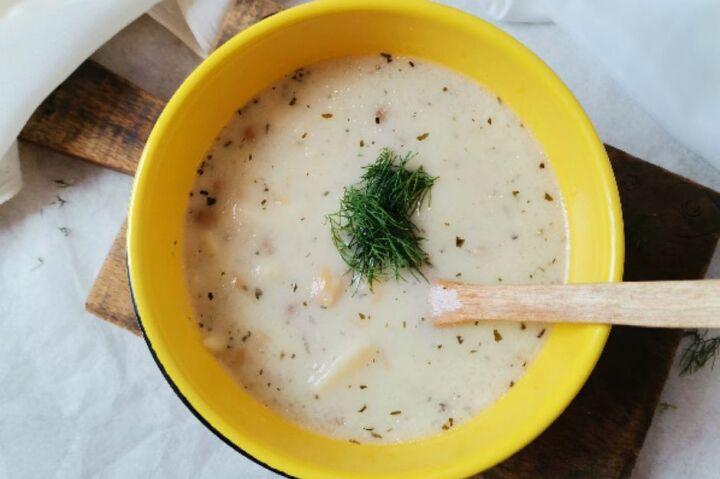
Tutmaç Çorbası (TürkiyeTurizmAnsiklopedisi)
Mix the egg, water, salt, and flour to form a dough with the softness of an earlobe. Let it rest under a damp cloth for approximately 20 minutes. Then roll out the dough to a thickness of 2 mm and cut into 1 cm² squares or erişte shapes. Allow the cut pieces to dry slightly.
Add 1 dessertspoon of salt to 5 glasses of water and boil the prepared dough pieces in this water.
Place the cubed lamb in 5 glasses of water and bring to a boil. Skim off any foam that rises to the surface. Cook until the meat is completely tender.
Mix the boiled dough water with yogurt, crushed garlic, and one egg, and blend thoroughly. Then add the boiled dough and cooked meat to this mixture.
Bring the entire mixture to a gentle boil over low heat.
Mix one egg, salt, and sufficient flour to form a soft dough. Roll the dough into long sticks and cut into lentil-sized pieces. Fry these pieces in hot plain oil. Sprinkle the fried kıkırdağ over the soup before serving.
Note: The soup can also be prepared without meat, using only water, according to preference.
Halıcı, Nevin. *Türk Mutfağı*. İstanbul: Oğlak Yayıncılık, 2002. Accessed May 17, 2025.https://www.oglak.com/app/books/pdf/10720321.pdf
ResearchGate. “Tutmac Soup (Tutmac Çorbası).” ResearchGate. Accessed May 17, 2025.https://www.researchgate.net/publication/378395856_Tutmac_Soup_Tutmac_Corbasi.
Türkiye Turizm Ansiklopedisi. "Tutmac Çorbası." *turkiyeturizmansiklopedisi.com*. Accessed May 17, 2025.https://turkiyeturizmansiklopedisi.com/tutmac-corbasi
Türkiye Turizm Ansiklopedisi. "Tutmac." *turkiyeturizmansiklopedisi.com*. Accessed May 17, 2025.https://turkiyeturizmansiklopedisi.com/tutmac
Tutmaç Soup
Materials | Chicken breast, egg, flour, yogurt, garlic, salt, clarified butter | ||||||||
|---|---|---|---|---|---|---|---|---|---|
Ingredients
For the dough
For the boiling water
For the meat and yogurt mixture
For the kıkırdağ (topping and flavoring)
Preparation
Preparing the dough
Boiling the dough
Cooking the meat
Yogurt mixture
Simmering
Preparing the kıkırdağ