


This article was automatically translated from the original Turkish version.
The Treaty of Turkmenchay is a peace agreement signed on 10 February 1828 between the Russian Empire and Iran’s Qajar dynasty, following the Russo-Persian War of 1826–1828.
The Russo-Persian War was part of Iran’s struggle over territory with Russia. The war began in 1826 with a military campaign launched by the Russian Empire against Iran.
Russia sought to expand its influence in Iranian territory and particularly strengthen its dominance in the Caucasus region. Iran resisted these expansionist policies. However, Iran found itself in a difficult position due to prolonged conflicts and the superior strength of the Russian army.
From the 19th century onward, the Caucasus region held important strategic value in Russia’s expansionist policy. Russia justified its intervention by positioning itself as the protector of Georgia, a Christian state, thereby increasing its influence in the region. Georgia became a military outpost for Russia. Thus, Russia occupied the fragmented and scattered Turkic khanates in the region and established a centralized authority.
As a result, Russia signed the Treaty of Turkmenchay with Iran, formalizing its annexation of Iranian territories.
Signed in 1828, the Treaty of Turkmenchay laid the foundation for the later cultural, political and demographic shaping of the region. The treaty provided support for Qajar princes seeking to ascend the Iranian throne. It also permitted both states to maintain commercial vessels on the Caspian Sea, and explicitly allowed Russia to station warships there. Azerbaijan was divided by this treaty. Northern Azerbaijan remained under Russian control.
As a result, the Turkic populations of Northern Azerbaijan could not unite with those in Iran. While Iran had a Turkic population of 30 million, Northern Azerbaijan retained a Turkic population of 10 million. This division of Muslim Turkic communities into Northern and Southern Azerbaijan is considered one of the most significant consequences of the Treaty of Turkmenchay. Another major consequence affecting the present day is the establishment of the Armenian state in the region. Russia did not stop at territorial gains; it also orchestrated large-scale Armenian migrations into the area. Alongside this, Iran was required to pay reparations to Russia—20 million silver rubles. Furthermore, Iran was prohibited from appointing individuals to territories occupied by Russia without Russian approval.
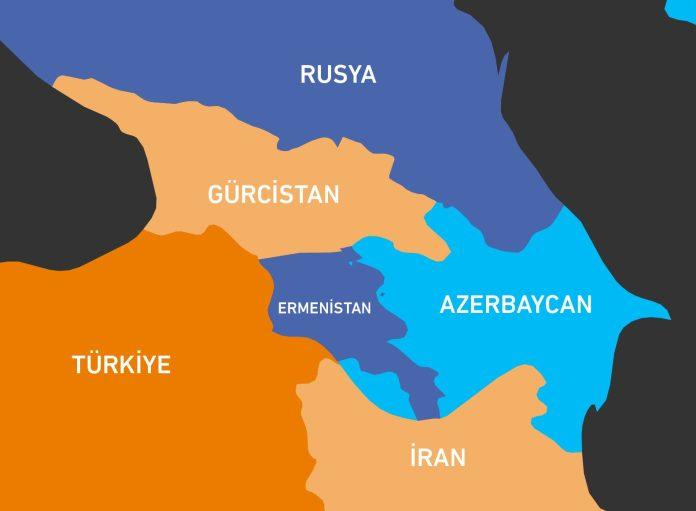
(Source: Fikirturu)
Following the treaty, Turkic and Muslim khanates that resisted were renamed and consolidated under the administrative unit known as the Union of Muslim Provinces, placed under the control of a Russian officer.
Under the terms of the treaty, Turkic populations in Azerbaijan could benefit from only one-fifth of the region’s resources. Financial opportunities granted to Russia were denied to the Turkic population. Muslim Turkic lands could be easily transferred to others. The courts established by the Tsarist regime conducted proceedings in Russian, and laws were often enacted against the interests of Muslims. The Russian authorities settled Russian populations in the region to Russify it. Additionally, Turkic men were encouraged or forced to marry Russian women in an effort to sever their cultural ties.
Yeşilot, Okan. Ateş Çemberinde Azerbaycan. İstanbul: Yeditepe Yayınları, 2021

No Discussion Added Yet
Start discussion for "Treaty of Turkmenchay" article
Cause of the Treaty
Terms of the Treaty
Consequences and Impact on the Present