This article was automatically translated from the original Turkish version.
System Name | Presidential Government System | ||||||||
|---|---|---|---|---|---|---|---|---|---|
Admission Process | 16 April 2017 referendum | ||||||||
Implementation Start | After the 24 June 2018 elections | ||||||||
Legal Basis | Constitution of the Republic of Türkiye Presidential Decree No 1 Law No 6771 | ||||||||
Management Model | Presidential system based government system | ||||||||
Executive Authority | President | ||||||||
First Elected President | Recep Tayyip Erdoğan | ||||||||
Prime Ministry | Has been abolished | ||||||||
Election System | Direct election by popular vote | ||||||||
Presidential Term | 5 years (One term) | ||||||||
Presidential Government System is the government system adopted in Türkiye through the 2017 constitutional amendment and put into practical effect following the 2018 elections. The system is based on the principle that executive power is exercised by the President. Law No. 6771 amended Article 8 of the Constitution to assign executive power to the President; Article 104 was revised to state: “The President is the head of the state. Executive power belongs to the President.” With this change, the parliamentary executive structure centered on the Prime Ministry and the Council of Ministers was abolished, and the President became the central actor of the executive branch through presidential assistants, ministers, senior public officials, and presidential decrees.【1】
The transition process acquired institutional form with the constitutional amendment proposal submitted to the Grand National Assembly of Türkiye on 10 December 2016. The proposal was introduced with the first signature of Binali Yıldırım and was supported by 316 signatories, all of whom were members of the Justice and Development Party according to the signature list provided by the user.【2】 The Law No. 6771, adopted on 21 January 2017, was submitted to a referendum on 16 April 2017. According to the official record of the Supreme Election Council, out of 58,291,898 registered voters, 49,798,855 participated in the vote; of the valid votes, 25,157,463 were “Yes” and 23,779,141 were “No,” resulting in the amendment being approved with a 51.41 percent “Yes” majority.【3】 The practical commencement of the Presidential Government System occurred after the Presidential and 27th Term Parliamentary General Elections held on 24 June 2018; Recep Tayyip Erdoğan was elected as the first President of the new system with 25,436,238 votes, or 52.38 percent, according to domestic results.【4】
The Presidential Government System is the system in which executive power in Türkiye is organized around the President, replacing the previous parliamentary structure centered on the Prime Ministry and the Council of Ministers. The structure altered the relationship between the legislative and executive branches and the organization of executive power, but did not change the state’s regime. Constitutional principles such as the Republic, unitary state, legislative power vested in the Grand National Assembly of Türkiye, and independent and impartial judiciary were preserved; however, the composition and functioning of the executive were restructured. Following the 2017 amendment, Article 8 of the Constitution stipulates that executive power and duties shall be exercised by the President in accordance with the Constitution and laws.【5】
At the center of the system is the President, directly elected by the people. According to Article 101 of the Constitution, the President is elected from among Turkish citizens who have reached the age of forty, completed higher education, and are eligible to be elected as a member of parliament. A presidential candidate may be nominated in three ways: by political parties with a parliamentary group; by political parties that received at least five percent of the vote either individually or jointly in the last general election; or by the signatures of at least 100,000 voters. If the elected President is a member of parliament, their membership in the Grand National Assembly of Türkiye terminates.【6】 This provision is one of the key elements distinguishing the system from the parliamentary model, as it establishes the legitimacy of the executive directly through the will of the electorate.
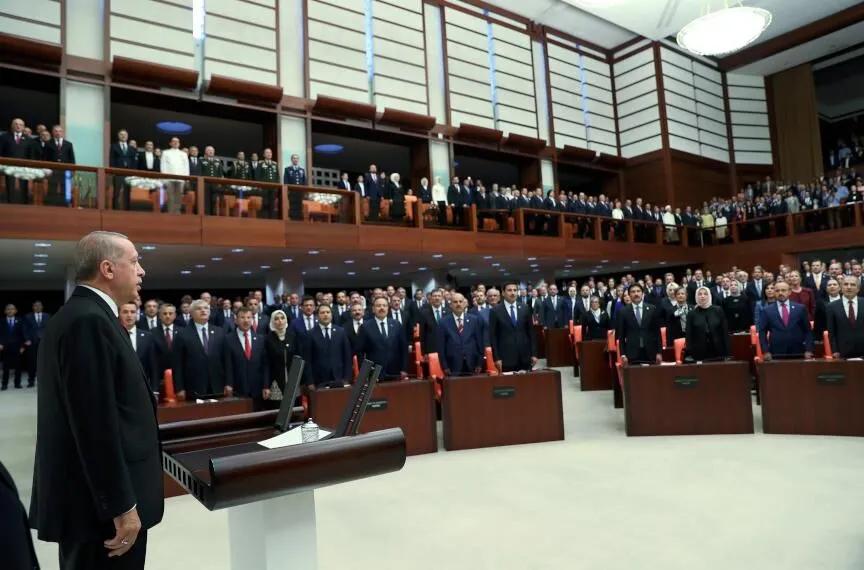
The Oath-Taking Ceremony of Recep Tayyip Erdoğan, the First President of the Presidential Government System, in Parliament (Anadolu Ajansı)
Article 104 of the Constitution is the principal provision defining the executive architecture of the Presidential Government System. It explicitly states: “The President is the head of the state. Executive power belongs to the President.” The same article stipulates that the President shall represent the unity of the Republic of Türkiye and the Turkish nation, ensure the implementation of the Constitution, and guarantee the regular and harmonious functioning of state organs. The President is granted powers and duties including promulgating laws, returning laws to the Grand National Assembly of Türkiye for reconsideration, initiating annulment proceedings before the Constitutional Court, appointing and dismissing presidential assistants and ministers, appointing senior public officials, ratifying international treaties, determining national security policies, and taking necessary measures.【7】
Under the new system, the executive branch has become a centralized structure. The Prime Ministry and the Council of Ministers were removed as constitutional executive organs following the 2017 amendment; presidential assistants and ministers became executive actors appointed and dismissed by the President. This structure is generally regarded in academic literature as a presidential system adapted to Türkiye’s constitutional and political framework. Güler notes that Türkiye is undergoing a transition to “a new system based on the presidential model and tailored specifically to Türkiye, referred to as the Presidential Government System”; Demirci emphasizes that the model differs from the parliamentary system in the functioning of the legislative, executive and judicial branches, but is not a new regime but rather a new government system.【8】
Presidential decrees also hold a significant place within the constitutional framework of the Presidential Government System. Article 104 of the Constitution grants the President the authority to issue presidential decrees on matters relating to executive power; however, it imposes certain limitations. Fundamental rights, personal rights and duties, and political rights and duties cannot be regulated by presidential decree. Furthermore, presidential decrees cannot be issued on matters exclusively reserved for regulation by law or in areas explicitly regulated by law. In case of conflict between a presidential decree and a law, the provisions of the law prevail; if the Grand National Assembly of Türkiye enacts a law on the same matter, the presidential decree becomes null and void.【9】
The transition to the Presidential Government System emerged from a long-standing accumulation of debates on government systems in Türkiye. One of the recent critical turning points in these debates was the 2007 constitutional amendment allowing the President to be directly elected by the people. This granted the presidency, previously a figurehead within the parliamentary system, an independent democratic legitimacy derived directly from the electorate, shifting the focus of government system debates to the relationship between the two executive branches. The political deadlock in government formation following the 2015 general elections also revived discussions on the parliamentary system’s capacity to ensure stability.【10】
The concrete transition process began with the constitutional amendment proposal submitted to the Grand National Assembly of Türkiye on 10 December 2016. The proposal’s heading stated: “Our Bill and its justification regarding amendments to the Constitution of the Republic of Türkiye are attached”; the document bore the signature of Binali Yıldırım as a Member of Parliament from İzmir. According to the signature list, the proposal was supported by 316 signatories, all of whom were members of the Justice and Development Party. The first signatories were recorded as Binali Yıldırım, Mustafa Elitaş, Mehmet Naci Bostancı, İlknur İnceöz, Bülent Turan, and Mehmet Muş.【11】
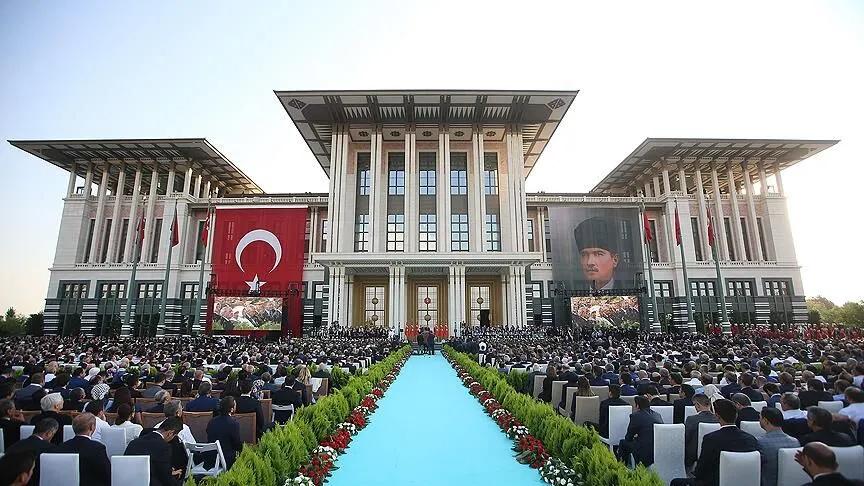
Cumhurbaşkanlığı Külliyesinde Yapılan Göreve Başlama Töreni (Anadolu Ajansı)
The final text approved after the legislative process was published in the Official Gazette on 11 February 2017 under the name “Law No. 6771 on Amendments to the Constitution of the Republic of Türkiye.” The law constitutes a comprehensive constitutional package that not only restructured the executive branch but also changed the number of members of the Grand National Assembly, the electoral term, the nomination and election of the President, the Assembly’s methods of information gathering and oversight, the powers and duties of the President, the status of presidential assistants and ministers, and the procedure for early elections. Accordingly, the number of members of the Grand National Assembly was increased from 550 to 600; the minimum age for election as a member of parliament was lowered from 25 to 18; and both parliamentary and presidential elections were scheduled to be held on the same day every five years.【12】
The constitutional amendment was submitted to a referendum on 16 April 2017. According to the official record of the Supreme Election Council, the number of registered voters on the ballot list was 58,291,898; the number of voters who participated was 49,798,855; and the total number of valid votes was 48,936,604. The number of “Yes” votes was 25,157,463 (51.41 percent), and the number of “No” votes was 23,779,141 (48.59 percent). With this result, the constitutional amendment was approved, establishing the constitutional foundation of the Presidential Government System.【13】
The practical implementation of the system occurred after the Presidential and 27th Term Parliamentary General Elections held on 24 June 2018. According to the domestic election results of the Supreme Election Council, the number of registered voters was 56,322,632; the number of voters who cast ballots was 49,671,344; and the number of valid votes was 48,562,084. Recep Tayyip Erdoğan won the presidential election in the first round with 25,436,238 votes, or 52.38 percent. He took the oath of office on 9 July 2018 before the General Assembly of the Grand National Assembly of Türkiye, beginning his term as the first President of the new system. Following the election, Law No. 703 introduced numerous amendments to align laws and decrees with the new system; on 10 July 2018, Presidential Decree No. 1 established the main structure of the Presidential organization.【14】
In the Presidential Government System, the relationship between the legislative and executive branches is based on their distinct constitutional authorities. Legislative power is vested in the Grand National Assembly of Türkiye, while executive power belongs to the President. This distinction, unlike the parliamentary system where executive power is exercised by the Prime Ministry and the Council of Ministers, results in the executive being directly represented by the President. Nevertheless, the two branches are not entirely disconnected; the presidential election and the parliamentary general election are held on the same day every five years. This arrangement preserves the separate mandates of both institutions while establishing a shared electoral calendar.【15】
The center of the legislative process is the Grand National Assembly of Türkiye. After the 2017 amendment, Article 88 of the Constitution specifies that only members of parliament have the authority to propose legislation. Consequently, the previous practice of allowing the Council of Ministers to submit draft laws was abolished; the lawmaking process became an activity of the Assembly based on parliamentary bill proposals. The President promulgates laws adopted by the Grand National Assembly of Türkiye and may return laws to the Assembly for reconsideration if they are deemed unsuitable. However, budget laws are exempt from this return power.【16】
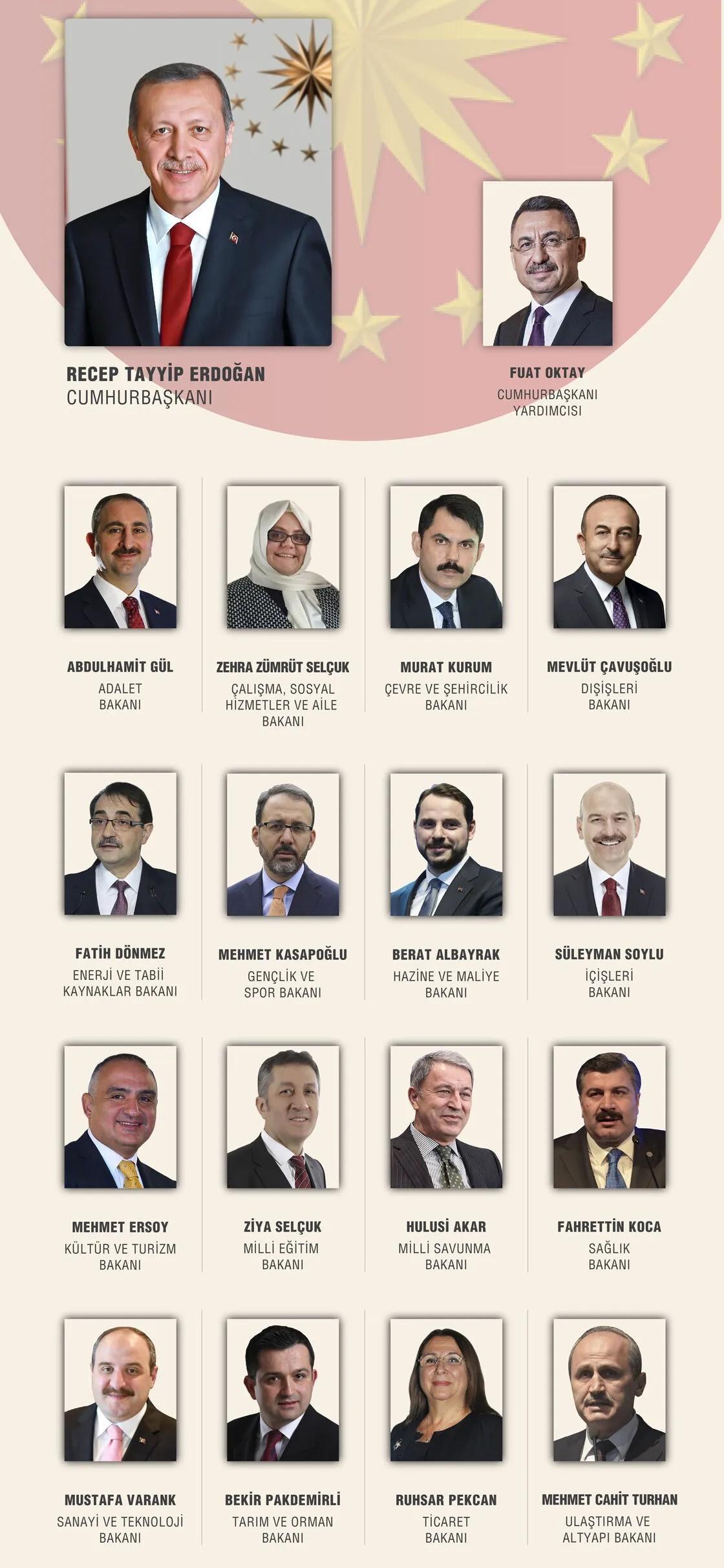
Yeni Sistemin İlk Kabinesi (Anadolu Ajansı)
The powers and duties of the Grand National Assembly of Türkiye include enacting, amending, and repealing laws; examining and approving budget and final accounts bills; deciding on currency issuance and declaration of war; approving international treaties; and deciding on general and special amnesties. Within this structure, the Assembly retains its role as the sole holder of legislative power but no longer maintains the confidence relationship characteristic of the parliamentary system. Presidential assistants and ministers are appointed and dismissed by the President; parliamentary approval is not required for these appointments.【17】
The Assembly’s mechanisms for information gathering and oversight of the executive are regulated by Article 98 of the Constitution. Under this provision, the Grand National Assembly of Türkiye exercises its authority through parliamentary investigations, general debates, parliamentary inquiries, and written questions. A parliamentary investigation is an examination conducted to obtain information on a specific issue; a general debate is the discussion of an issue concerning society or state activities in the General Assembly. A written question is a method by which members of parliament submit written inquiries to presidential assistants and ministers. A parliamentary inquiry applies specifically to presidential assistants and ministers. Thus, in the new system, oversight does not depend on the government’s confidence from the parliamentary majority but operates through constitutionally defined mechanisms of information gathering, questioning, investigation, and inquiry.【18】
The criminal liability of the President is separately regulated. A request to open an investigation against the President on allegations of a crime may be initiated by a proposal supported by a simple majority of the total membership of the Grand National Assembly of Türkiye. The Assembly may decide to open an investigation by a two-thirds majority vote in secret ballot; a decision to refer the President to the High Court may be adopted by a two-thirds majority vote in secret ballot. The President against whom an investigation has been decided cannot be re-elected. These provisions demonstrate that the President’s criminal liability during office is contingent upon qualified majorities within the Assembly.【19】
One of the most prominent mechanisms governing legislative-executive relations is the early dissolution of elections. According to Article 116 of the Constitution, the Grand National Assembly of Türkiye may decide to hold early elections by a two-thirds majority of its total membership. The President may also decide to hold early elections. In either case, both the parliamentary and presidential elections are held simultaneously. If the Assembly decides to hold early elections during the President’s second term, the President may stand for re-election once more.【20】
The budget process is another key area of the relationship between the legislative and executive branches. The President submits the budget bill to the Grand National Assembly of Türkiye at least seventy-five days before the start of the fiscal year. The bill is first examined by the Budget Committee and then by the General Assembly, and must be finalized before the start of the fiscal year. If the budget law is not enacted on time, a temporary budget law is issued; if a temporary budget law cannot be enacted either, the previous year’s budget is applied with adjustments according to the revaluation rate until a new budget is adopted. Members of the Grand National Assembly may express their views during budget discussions but may not propose amendments that increase expenditures or reduce revenues.【21】
One of the most prominent instruments of executive power in the Presidential Government System is the presidential decree. The 2017 constitutional amendment added to Article 104 of the Constitution the provision that the President “may issue presidential decrees on matters relating to executive power.” This provision restructured the decision-making and organizational capacity of the executive around the President; certain regulatory powers previously exercised by the Council of Ministers were transferred to the President under the new system. However, the authority of ministries and other public legal entities to issue regulations within their respective areas of competence was not entirely abolished and continues within the framework of the Constitution and laws.【22】
The fundamental distinction between ordinary-period presidential decrees and ordinary-period decrees with the force of law under the parliamentary system is the absence of a requirement to be based on an enabling law. Under the parliamentary system, ordinary-period decrees with the force of law are issued based on an enabling law granted by the Grand National Assembly of Türkiye to the executive; presidential decrees, however, derive their authority directly from the Constitution. Therefore, presidential decrees have acquired the nature of a regulatory act with direct constitutional basis in the executive domain. However, this does not mean that presidential decrees are an unlimited regulatory tool on par with laws.【23】
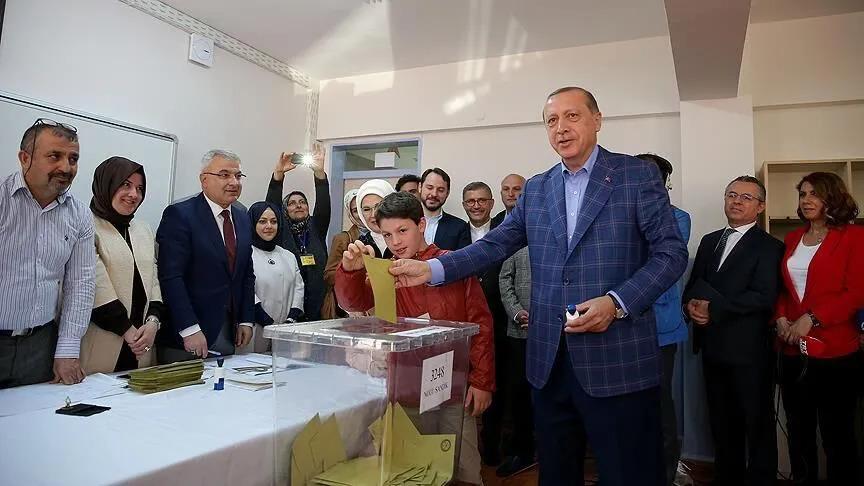
A Frame from the 2017 Public ReferendumAnadolu Ajansı)
The Constitution sets clear limits on presidential decrees. Fundamental rights, personal rights and duties, and political rights and duties cannot be regulated by presidential decree. Decrees cannot be issued on matters exclusively reserved for regulation by law or in areas explicitly regulated by law. Furthermore, if there is a conflict between a presidential decree and a law, the provisions of the law prevail; if the Grand National Assembly of Türkiye enacts a law on the same matter, the presidential decree becomes null and void. These provisions demonstrate that decrees are a normative instrument usable within the executive domain but are subordinate to law.【24】
Presidential decrees are particularly important in organizing the executive. The appointment and dismissal of senior public officials, as well as the procedures and principles governing their appointments, may be regulated by presidential decree. The establishment, abolition, duties, powers, organizational structure, and the creation of central and regional offices of ministries are among the main matters falling within the scope of presidential decrees. In this context, Presidential Decree No. 1 became one of the foundational texts regulating the Presidency, administrative units attached to the Presidency, presidential assistants, policy councils, and the main structure of the executive organization.【25】
The Constitution anticipates that certain matters shall be regulated directly by presidential decree. These include the procedures and principles for appointing senior public officials, the establishment and organization of ministries, the functioning of the State Audit Board, and the organization of the General Secretariat of the National Security Council. In these areas, the decree power functions as a tool to strengthen the executive’s capacity to establish and manage its own organization. Nevertheless, decrees are subject to review by the Constitutional Court; therefore, regulations issued by presidential decree must remain within constitutional boundaries.【26】
Presidential decrees issued during states of emergency are subject to a separate procedure. According to the Constitution, during a state of emergency, the President may issue presidential decrees on matters necessitated by the emergency. These decrees are published in the Official Gazette and submitted to the Grand National Assembly of Türkiye for approval on the same day. Except in cases where the Assembly cannot convene due to war or force majeure, presidential decrees issued during a state of emergency must be reviewed and decided upon by the Assembly within three months; otherwise, they automatically lose effect. Thus, emergency decrees constitute a distinct category dependent on Assembly approval, differing from ordinary-period decrees.【27】
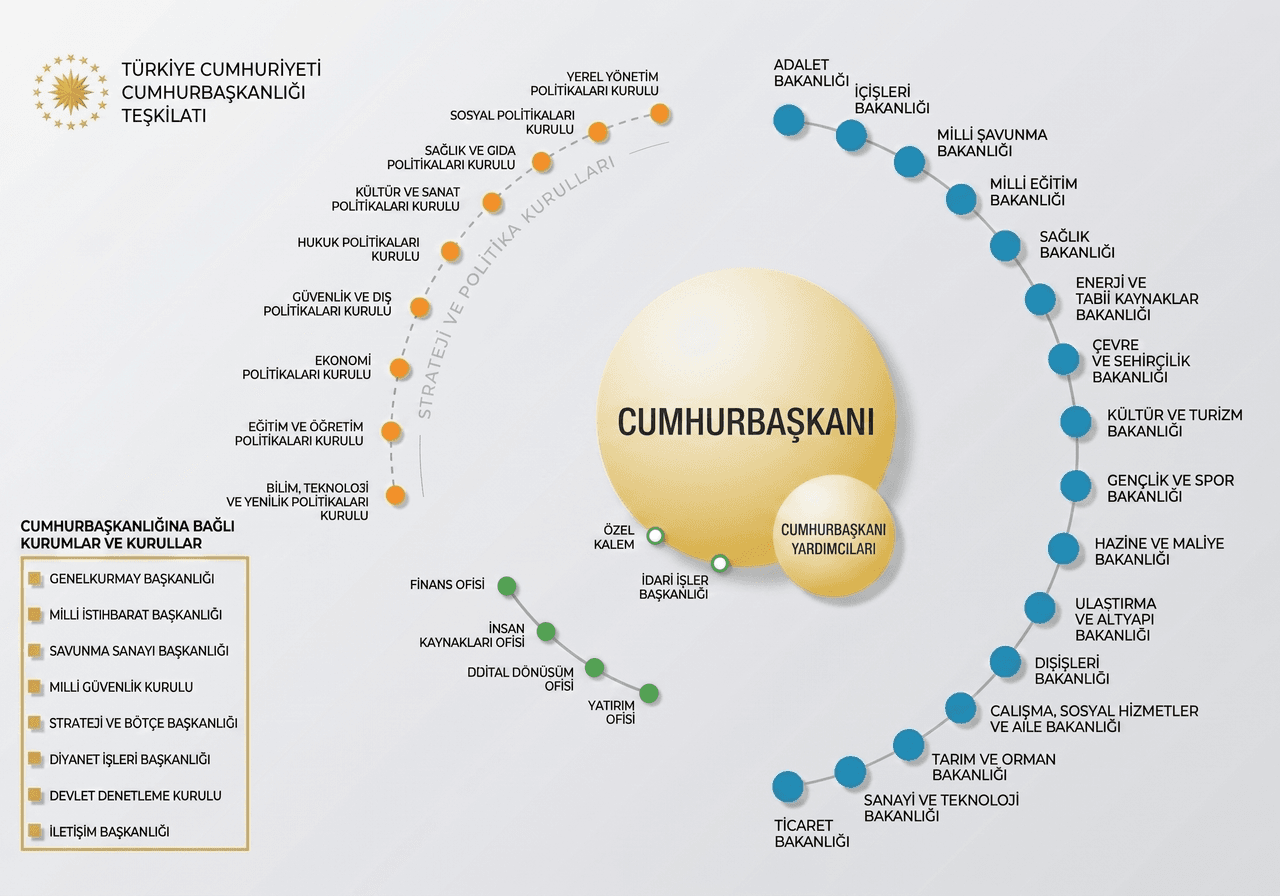
The Presidential Government System has reorganized the administrative structure of the executive around the President. The most prominent outcome of this change is the abolition of the Prime Ministry and the Council of Ministers structure, with executive functions now carried out through the President, presidential assistants, ministers, and the Presidential organization. Under the new system, the President, as head of the executive, holds the authority to appoint and dismiss ministers and presidential assistants. The establishment, abolition, duties, powers, organizational structure, and creation of central and regional offices of ministries are now matters regulated by presidential decree.【28】
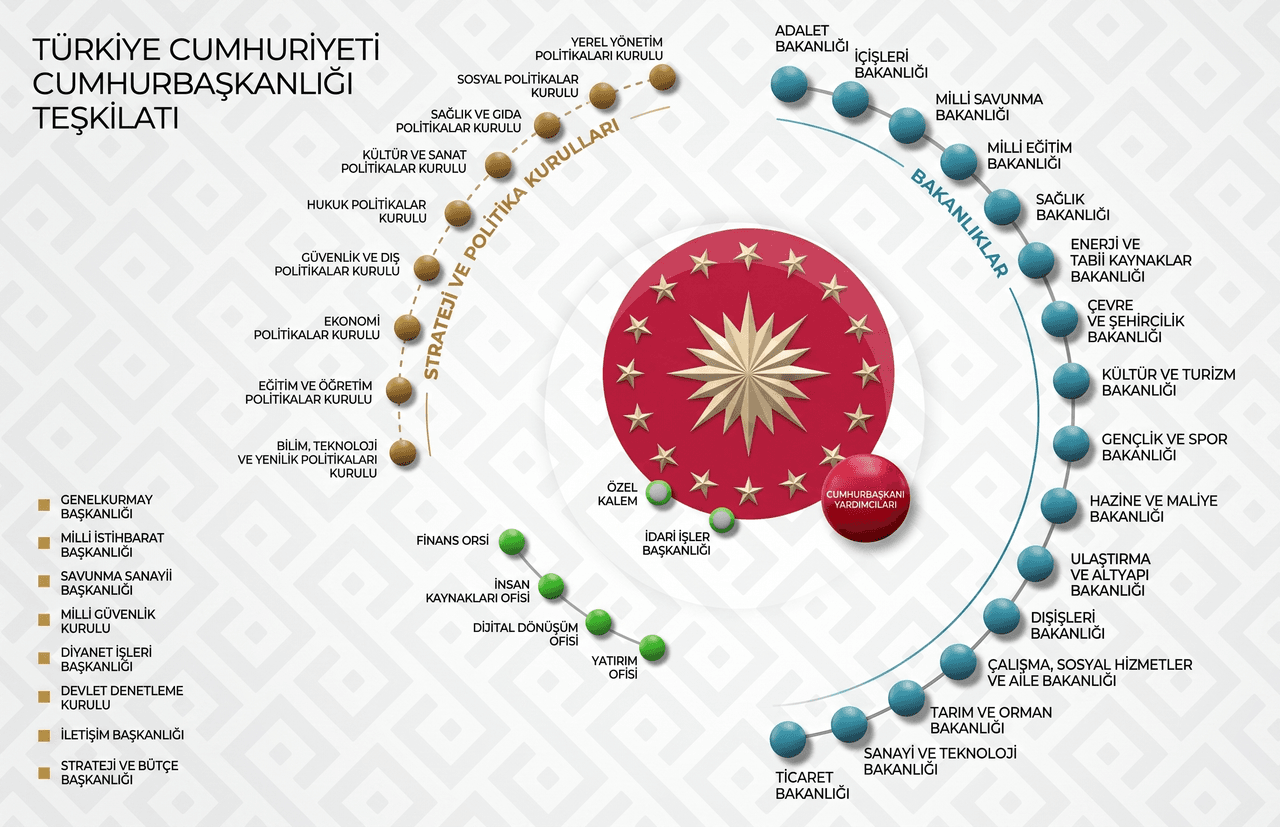
Yeni Sistemin İdari Yapısı (Anadolu Ajansı)
To adapt the administrative structure to the new system during the transition, Presidential Decree No. 703 was issued. This decree amended numerous laws and decrees with the force of law, replacing references to “Council of Ministers,” “Prime Ministry,” “Prime Minister,” and similar terms with new institutional designations under the new system; the organizational laws of certain ministries and public institutions were repealed or restructured. In particular, the repeal of the Decree with the Force of Law No. 3056 on the Organization of the Prime Ministry marked the end of the administrative foundation of the Prime Ministry, which had been at the center of executive power under the old system. During the same process, it was stipulated that references in laws and decrees with the force of law to ministries and public institutions shall be deemed to refer to the new institutions designated in presidential decrees.【29】
The main framework of the Presidential organization was established by Presidential Decree No. 1. This decree defines the Presidency, administrative units attached to the Presidency, presidential chief advisors and advisors, councils within the Presidency, general directorates, and supporting organizational structures. Units have been established within the Presidential organization to perform functions in areas such as law and legislation, personnel and principles, security, support, and financial services. Tasks such as ensuring the regular and effective functioning of the state apparatus, coordinating among public institutions, reviewing draft legislation, and managing appointments of senior public officials have been integrated into this structure.【30】
Anadolu Ajansı. "Başkan Erdoğan yemin etti." Accessed July 8, 2026.https://www.aa.com.tr/tr/gunun-basliklari/baskan-erdogan-yemin-etti/1198770.
Anadolu Ajansı. "Cumhurbaşkanlığı Külliyesi'nde tarihi gün." Accessed July 8, 2026.https://www.aa.com.tr/tr/gunun-basliklari/cumhurbaskanligi-kulliyesinde-tarihi-gun/1198930.
Anadolu Ajansı. "Yeni sistemin ilk kabinesi." Accessed July 8, 2026.https://www.aa.com.tr/tr/info/infografik/10693.
Anadolu Ajansı. "Yeni sistemle hedef verimli yönetim güçlü koordinasyon." Accessed July 8, 2026.https://www.aa.com.tr/tr/pg/foto-galeri/yeni-sistemle-hedef-verimli-yonetim-guclu-koordinasyon/0.
Bektaş, Eda. "Cumhurbaşkanlığı Hükümet Sisteminde Yasama-Yürütme İlişkisi ve Bu Sistemin Türkiye Demokrasisine Etkileri." *Yasama Dergisi*, no. 39 (January–June 2019): 199–226. Accessed July 8, 2026.https://dergipark.org.tr/tr/pub/yasamadergisi/article/743404
Demirci, Savaş. "Yasama-Yürütme ve Yargı Ekseninden Cumhurbaşkanlığı Hükümet Sistemi." Master's thesis, Necmettin Erbakan Üniversitesi Sosyal Bilimler Enstitüsü, 2018. Advisor: Prof. Dr. Şaban Tanıyıcı. Accessed July 8, 2026.https://acikerisim.erbakan.edu.tr/server/api/core/bitstreams/1d8dcfae-836d-47f0-b3d4-3d6f2f5e98a9/content
Güler, Tahsin. "Cumhurbaşkanlığı Hükümet Sistemi ve Kamu Yönetimine Etkileri." *Balıkesir Üniversitesi Sosyal Bilimler Enstitüsü Dergisi* 21, no. 1 (2018). Accessed July 8, 2026.https://doi.org/10.31795/baunsobed.443821
Güney, Emrah, and Çiğdem Alyanak. "Cumhurbaşkanı Erdoğan: Milletimiz tercihini yaparak geleceğe yürüyecektir." Anadolu Ajansı. Accessed July 8, 2026.https://www.aa.com.tr/tr/gunun-basliklari/cumhurbaskani-erdogan-milletimiz-tercihini-yaparak-gelecege-yuruyecektir/797847.
Küçük, Adnan, and Bayram Doğan. "Türkiye’de 2017 Anayasa Değişikliği Kapsamında Yürütmenin Asli Düzenleme Yetkisi ve Mahfuz Düzenleme Alanı." Accessed July 8, 2026.https://dergipark.org.tr/tr/download/article-file/749759
Republic of Turkey Constitution. *Türkiye Cumhuriyeti Anayasası*. Law No. 2709. Official Gazette, November 9, 1982. Accessed July 8, 2026.https://www.anayasa.gov.tr/tr/mevzuat/anayasa/
Republic of Turkey Presidency. "Presidential Decree on Amendments to Certain Laws and Decrees with the Force of Law for the Purpose of Aligning with Constitutional Changes." Presidential Decree No. 703. *Resmî Gazete*, July 7, 2018. Accessed July 8, 2026.https://hukukmusavirligi.diyanet.gov.tr/Documents/703%20sayılı%20KHK.pdf
Republic of Turkey Presidency. "Presidential Decree on the Presidential Organization." Presidential Decree No. 1. *Resmî Gazete*, July 10, 2018. Accessed July 8, 2026.https://www.mevzuat.gov.tr/MevzuatMetin/19.5.1.pdf
T.C. Official Gazette. "Law on Amendments to the Constitution of the Republic of Turkey." Law No. 6771. *Resmî Gazete*, February 11, 2017. Accessed July 8, 2026.https://cdn.istanbul.edu.tr/statics/idarehukuku-hukuk.istanbul.edu.tr/wp-content/uploads/2017/04/11-Şubat-2017-Tarihli-Resmi-Gazetede-yayımlanan-T.C.-Anayasasında-Değişiklik-Yapılmasına-Dair-Kanun.pdf
T.C. Supreme Election Board (YSK). "24 Haziran 2018 Pazar Günü Yapılan Cumhurbaşkanı ve 27. Dönem Milletvekili Genel Seçimi Kesin Seçim Sonuçları." Accessed July 8, 2026.https://www.ysk.gov.tr/doc/dosyalar/docs/24Haziran2018/KesinSecimSonuclari/2018CB-416A.pdf
T.C. Supreme Electoral Council (YSK). "Yurt Dişı, Gümrük Kapısı ve Yurt Dışı Sandıkları Anayasa Değişikliği Halkoylaması Sonuç Tutanağı." Accessed July 8, 2026.https://www.ysk.gov.tr/doc/dosyalar/docs/2017Referandum/2017HO-Ornek135.pdf
Turkish Republic Presidency of Communication. "President Erdoğan: 'Turkey, with the Presidential Government System, Has Gained the Ability to Provide More Effective Responses to Regional and Global Crises'." *Haberler.* Accessed July 8, 2026.https://www.iletisim.gov.tr/turkce/haberler/detay/cumhurbaskani-erdogan-turkiye-cumhurbaskanligi-hukumet-sistemi-ile-bolgesel-ve-kuresel-krizlere-karsi-daha-etkin-refleksler-verebilme-imkanina-kavustu.
Turkish Republic Presidency. "Görev ve Yetkiler." Accessed July 8, 2026.https://www.tccb.gov.tr/cumhurbaskanligi/gorev_yetki/.
Turkish Republic Presidency. "The Presidential Government System is the only governance reform implemented directly by the will of our nation." *Haberler.* Accessed July 8, 2026.https://www.tccb.gov.tr/haberler/410/120667/-cumhurbaskanligi-huk-met-sistemi-dogrudan-milletimizin-iradesiyle-hayata-gecirilen-tek-yonetim-reformudur-.
Türkiye Büyük Millet Meclisi (TBMM). "Türkiye Cumhuriyeti Anayasasında Değişiklik Yapılmasına Dair Kanun Teklifi." Kanun Teklifi Metni, Esas No. 2/1504, December 10, 2016. Accessed July 8, 2026.https://cdn.tbmm.gov.tr/KKBSPublicFile/D26/Y2/T2/WebOnergeMetni/9da4a549-dc7c-4701-bd93-e6d84072a59f.pdf
Çığman, Muhammed Z. "Cumhurbaşkanlığı Hükümet Sistemi ve Türk Kamu Yönetimi: Fırsatlar, Riskler ve Kronik Sorun Alanları." Kütahya Dumlupınar Üniversitesi İktisadi ve İdari Bilimler Fakültesi, 2021. Accessed July 8, 2026.https://dergipark.org.tr/tr/download/article-file/2047742
[1]
T.C. Resmî Gazete, “Türkiye Cumhuriyeti Anayasasında Değişiklik Yapılmasına Dair Kanun,” Kanun No. 6771, 11 Şubat 2017, sayı 29976, 1–2; Türkiye Cumhuriyeti Anayasası, Kanun No. 2709, md. 8 ve 104.
[2]
Türkiye Büyük Millet Meclisi, “Türkiye Cumhuriyeti Anayasası’nda Değişiklik Yapılması Hakkında Kanun Teklifi,” Esas No. 2/1504, 10 Aralık 2016, 1.
[3]
T.C. Yüksek Seçim Kurulu, “Yurt İçi, Gümrük Kapısı ve Yurt Dışı Sandıkları Anayasa Değişikliği Halkoylaması Sonuç Tutanağı,” 27 Nisan 2017, 1.
[4]
T.C. Yüksek Seçim Kurulu, “24 Haziran 2018 Pazar Günü Yapılan Cumhurbaşkanı ve 27. Dönem Milletvekili Genel Seçimi Kesin Seçim Sonuçları,” Seçim Sonuç Bildirisi, 2018, 1.
[5]
Türkiye Cumhuriyeti Anayasası, Kanun No. 2709, md. 7, 8 ve 9; T.C. Resmî Gazete, “Türkiye Cumhuriyeti Anayasasında Değişiklik Yapılmasına Dair Kanun,” Kanun No. 6771, 11 Şubat 2017, sayı 29976, 1.
[6]
Türkiye Cumhuriyeti Anayasası, Kanun No. 2709, md. 101; T.C. Resmî Gazete, “Türkiye Cumhuriyeti Anayasasında Değişiklik Yapılmasına Dair Kanun,” Kanun No. 6771, 11 Şubat 2017, sayı 29976, 1.
[7]
Türkiye Cumhuriyeti Anayasası, Kanun No. 2709, md. 104; T.C. Resmî Gazete, “Türkiye Cumhuriyeti Anayasasında Değişiklik Yapılmasına Dair Kanun,” Kanun No. 6771, 11 Şubat 2017, sayı 29976, 1–2.
[8]
Tahsin Güler, “Cumhurbaşkanlığı Hükümet Sistemi ve Kamu Yönetimine Etkileri,” Balıkesir Üniversitesi Sosyal Bilimler Enstitüsü Dergisi 21, sayı 39 (Haziran 2018): 299–300; Savaş Demirci, “Yasama-Yürütme ve Yargı Ekseninden Cumhurbaşkanlığı Hükümet Sistemi” (Yüksek lisans tezi, Necmettin Erbakan Üniversitesi Sosyal Bilimler Enstitüsü, 2018), 89.
[9]
Türkiye Cumhuriyeti Anayasası, Kanun No. 2709, md. 104; Adnan Küçük ve Bayram Doğan, “Türkiye’de 2017 Anayasa Değişikliği Kapsamında Yürütmenin Asli Düzenleme Yetkisi ve Mahfuz Düzenleme Alanı,” Süleyman Demirel Üniversitesi Hukuk Fakültesi Dergisi 9, sayı 1 (2019): 18, 53.
[10]
Tahsin Güler, “Cumhurbaşkanlığı Hükümet Sistemi ve Kamu Yönetimine Etkileri,” Balıkesir Üniversitesi Sosyal Bilimler Enstitüsü Dergisi 21, sayı 39 (Haziran 2018): 300–301; Savaş Demirci, “Yasama-Yürütme ve Yargı Ekseninden Cumhurbaşkanlığı Hükümet Sistemi” (Yüksek lisans tezi, Necmettin Erbakan Üniversitesi Sosyal Bilimler Enstitüsü, 2018), v–vi.
[11]
Türkiye Büyük Millet Meclisi, “Türkiye Cumhuriyeti Anayasası’nda Değişiklik Yapılması Hakkında Kanun Teklifi,” Esas No. 2/1504, 10 Aralık 2016, 1.
[12]
T.C. Resmî Gazete, “Türkiye Cumhuriyeti Anayasasında Değişiklik Yapılmasına Dair Kanun,” Kanun No. 6771, 11 Şubat 2017, sayı 29976, 1.
[13]
T.C. Yüksek Seçim Kurulu, “Yurt İçi, Gümrük Kapısı ve Yurt Dışı Sandıkları Anayasa Değişikliği Halkoylaması Sonuç Tutanağı,” 27 Nisan 2017, 1.
[14]
T.C. Yüksek Seçim Kurulu, “24 Haziran 2018 Pazar Günü Yapılan Cumhurbaşkanı ve 27. Dönem Milletvekili Genel Seçimi Kesin Seçim Sonuçları,” Seçim Sonuç Bildirisi, 2018, 1; T.C. Cumhurbaşkanlığı, “Anayasada Yapılan Değişikliklere Uyum Sağlanması Amacıyla Bazı Kanun ve Kanun Hükmünde Kararnamelerde Değişiklik Yapılması Hakkında Kanun Hükmünde Kararname,” Kanun Hükmünde Kararname No. 703, 7 Temmuz 2018, 1–2; T.C. Cumhurbaşkanlığı, “Cumhurbaşkanlığı Teşkilatı Hakkında Cumhurbaşkanlığı Kararnamesi,” Cumhurbaşkanlığı Kararnamesi No. 1, Resmî Gazete, 10 Temmuz 2018, sayı 30474, 1.
[15]
Türkiye Cumhuriyeti Anayasası, Kanun No. 2709, md. 7, 8, 9 ve 77; Eda Bektaş, “Cumhurbaşkanlığı Hükümet Sisteminde Yasama-Yürütme İlişkisi ve Bu Sistemin Türkiye Demokrasisine Etkileri,” Yasama Dergisi, sayı 39 (Ocak-Haziran 2019): 208.
[16]
Türkiye Cumhuriyeti Anayasası, Kanun No. 2709, md. 88 ve 89; T.C. Resmî Gazete, “Türkiye Cumhuriyeti Anayasasında Değişiklik Yapılmasına Dair Kanun,” Kanun No. 6771, 11 Şubat 2017, sayı 29976, 1–2.
[17]
Türkiye Cumhuriyeti Anayasası, Kanun No. 2709, md. 87 ve 104; T.C. Resmî Gazete, “Türkiye Cumhuriyeti Anayasasında Değişiklik Yapılmasına Dair Kanun,” Kanun No. 6771, 11 Şubat 2017, sayı 29976, 1–2.
[18]
Türkiye Cumhuriyeti Anayasası, Kanun No. 2709, md. 98; T.C. Resmî Gazete, “Türkiye Cumhuriyeti Anayasasında Değişiklik Yapılmasına Dair Kanun,” Kanun No. 6771, 11 Şubat 2017, sayı 29976, 1.
[19]
Türkiye Cumhuriyeti Anayasası, Kanun No. 2709, md. 105.
[20]
Türkiye Cumhuriyeti Anayasası, Kanun No. 2709, md. 116; T.C. Resmî Gazete, “Türkiye Cumhuriyeti Anayasasında Değişiklik Yapılmasına Dair Kanun,” Kanun No. 6771, 11 Şubat 2017, sayı 29976, 3.
[21]
Türkiye Cumhuriyeti Anayasası, Kanun No. 2709, md. 161; T.C. Resmî Gazete, “Türkiye Cumhuriyeti Anayasasında Değişiklik Yapılmasına Dair Kanun,” Kanun No. 6771, 11 Şubat 2017, sayı 29976, 5–6.
[22]
Türkiye Cumhuriyeti Anayasası, Kanun No. 2709, md. 104; T.C. Resmî Gazete, “Türkiye Cumhuriyeti Anayasasında Değişiklik Yapılmasına Dair Kanun,” Kanun No. 6771, 11 Şubat 2017, sayı 29976, 1–2; Adnan Küçük ve Bayram Doğan, “Türkiye’de 2017 Anayasa Değişikliği Kapsamında Yürütmenin Asli Düzenleme Yetkisi ve Mahfuz Düzenleme Alanı,” Süleyman Demirel Üniversitesi Hukuk Fakültesi Dergisi 9, sayı 1 (2019): 5.
[23]
Küçük ve Doğan, “Türkiye’de 2017 Anayasa Değişikliği Kapsamında Yürütmenin Asli Düzenleme Yetkisi ve Mahfuz Düzenleme Alanı,” 12.
[24]
Türkiye Cumhuriyeti Anayasası, Kanun No. 2709, md. 104; Küçük ve Doğan, “Türkiye’de 2017 Anayasa Değişikliği Kapsamında Yürütmenin Asli Düzenleme Yetkisi ve Mahfuz Düzenleme Alanı,” 50.
[25]
T.C. Cumhurbaşkanlığı, “Cumhurbaşkanlığı Teşkilatı Hakkında Cumhurbaşkanlığı Kararnamesi,” Cumhurbaşkanlığı Kararnamesi No. 1, Resmî Gazete, 10 Temmuz 2018, sayı 30474, 1–3; Tahsin Güler, “Cumhurbaşkanlığı Hükümet Sistemi ve Kamu Yönetimine Etkileri,” Balıkesir Üniversitesi Sosyal Bilimler Enstitüsü Dergisi 21, sayı 39 (Haziran 2018): 317.
[26]
Küçük ve Doğan, “Türkiye’de 2017 Anayasa Değişikliği Kapsamında Yürütmenin Asli Düzenleme Yetkisi ve Mahfuz Düzenleme Alanı,” 50, 55; Savaş Demirci, “Yasama-Yürütme ve Yargı Ekseninden Cumhurbaşkanlığı Hükümet Sistemi” (Yüksek lisans tezi, Necmettin Erbakan Üniversitesi Sosyal Bilimler Enstitüsü, 2018), 114.
[27]
Türkiye Cumhuriyeti Anayasası, Kanun No. 2709, md. 119; T.C. Resmî Gazete, “Türkiye Cumhuriyeti Anayasasında Değişiklik Yapılmasına Dair Kanun,” Kanun No. 6771, 11 Şubat 2017, sayı 29976, 4.
[28]
Türkiye Cumhuriyeti Anayasası, Kanun No. 2709, md. 104 ve 106; T.C. Resmî Gazete, “Türkiye Cumhuriyeti Anayasasında Değişiklik Yapılmasına Dair Kanun,” Kanun No. 6771, 11 Şubat 2017, sayı 29976, 1–2; Tahsin Güler, “Cumhurbaşkanlığı Hükümet Sistemi ve Kamu Yönetimine Etkileri,” Balıkesir Üniversitesi Sosyal Bilimler Enstitüsü Dergisi 21, sayı 39 (Haziran 2018): 299–300.
[29]
T.C. Cumhurbaşkanlığı, “Anayasada Yapılan Değişikliklere Uyum Sağlanması Amacıyla Bazı Kanun ve Kanun Hükmünde Kararnamelerde Değişiklik Yapılması Hakkında Kanun Hükmünde Kararname,” Kanun Hükmünde Kararname No. 703, 7 Temmuz 2018, 1–3, 124.
[30]
T.C. Cumhurbaşkanlığı, “Cumhurbaşkanlığı Teşkilatı Hakkında Cumhurbaşkanlığı Kararnamesi,” Cumhurbaşkanlığı Kararnamesi No. 1, Resmî Gazete, 10 Temmuz 2018, sayı 30474, 1–4, 12, 17.

System Name | Presidential Government System | ||||||||
|---|---|---|---|---|---|---|---|---|---|
Admission Process | 16 April 2017 referendum | ||||||||
Implementation Start | After the 24 June 2018 elections | ||||||||
Legal Basis | Constitution of the Republic of Türkiye Presidential Decree No 1 Law No 6771 | ||||||||
Management Model | Presidential system based government system | ||||||||
Executive Authority | President | ||||||||
First Elected President | Recep Tayyip Erdoğan | ||||||||
Prime Ministry | Has been abolished | ||||||||
Election System | Direct election by popular vote | ||||||||
Presidential Term | 5 years (One term) | ||||||||
No Discussion Added Yet
Start discussion for "Presidential Government System" article
Definition and Constitutional Framework
Emergence and Transition Process
Legislative-Executive Relations
Presidential Decrees and the Power to Regulate Executive Matters
Changes in Administrative Structure