This article was automatically translated from the original Turkish version.
Location | Iznik, Bursa | ||||||||
|---|---|---|---|---|---|---|---|---|---|
Building Type | Cami | ||||||||
Period | Ottoman Period | ||||||||
Founder | Mahmut Çelebi | ||||||||
Construction Year | 1422–1423 | ||||||||
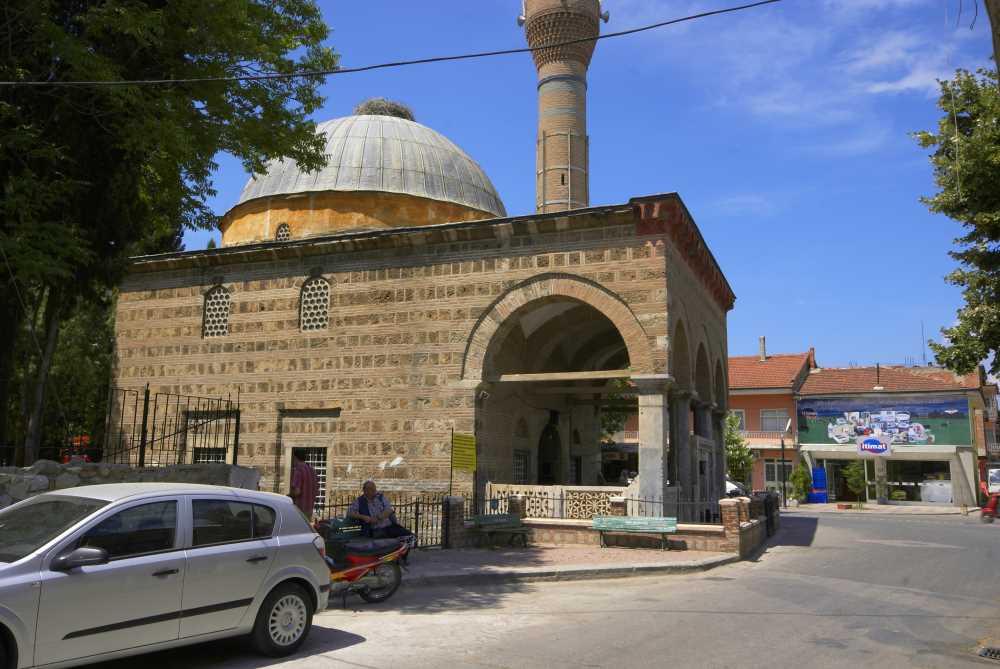
Mahmut Çelebi Cami, Bursa province’s İznik district and a historical religious structure from the Ottoman period. The mosque was built between 1422 and 1423 during the reign of Murad II by Mahmut Çelebi. The building reflects the simple and functional characteristics of local Ottoman mosque architecture and is considered one of the significant religious structures within İznik’s historical urban fabric.
Mahmut Çelebi Cami is located in the Mahmut Çelebi neighbourhood of İznik town centre. Constructed during the early period of the Ottoman State, the structure dates to the first half of the 15th century, specifically 1422–1423. The mosque is named after Mahmut Çelebi, son of Grand Vizier Çandarlı İbrahim Paşa, and has retained this name to the present day.
Mahmut Çelebi Cami reflects the simple spatial concept common in Ottoman mosque architecture. The building consists of a single prayer space, constructed using a combination of stone and brick. Decorative elements are minimal, with functionality prioritized over ornamentation. In this regard, the mosque is among the representative examples of the fundamental characteristics of local Ottoman mosque design.
The mosque comprises a square prayer hall and a rear congregational space located to the north of the main area. The main space is covered by a single dome resting on an octagonal drum connected to the square base through triangular transition elements. In the centre of the southern wall, a five-sided mihrab niche is set. On the northern façade, a central entrance opening is aligned with the axis; on either side of this entrance, symmetrical lower and upper window openings are arranged. In the northwestern corner, a staircase within the thickness of the outer wall leads to the minaret. The minaret rises from the main structure with a fluted base and a bulbous foot, has a cylindrical shaft, a single balcony, and is crowned with a pointed finial. The rear congregational space features a checkerboard wall technique on its outer walls, alternating one course of cut stone with three courses of brickwork.【1】
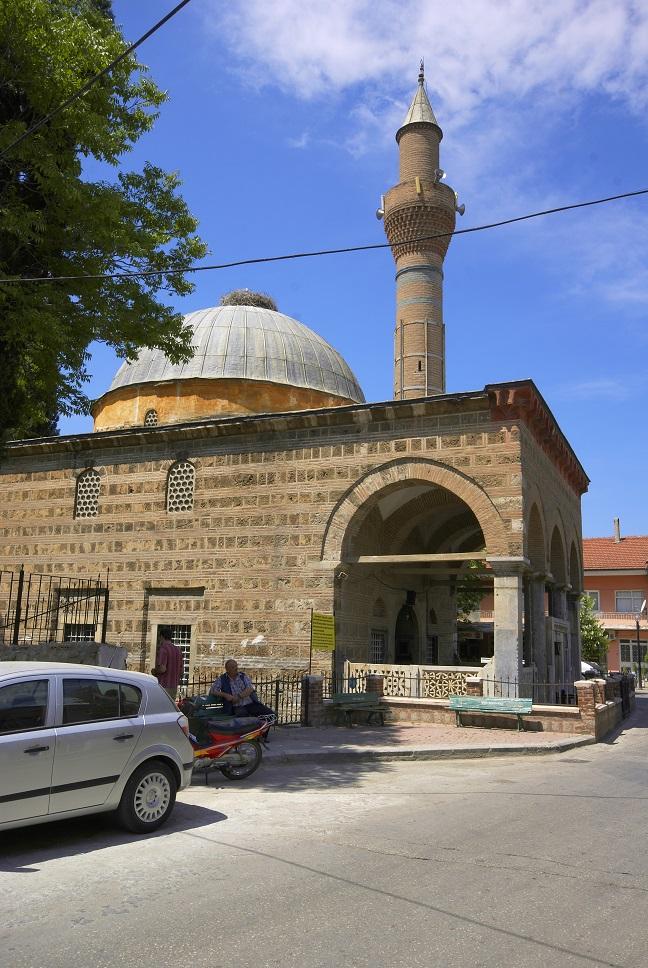
Mahmut Çelebi Cami (Bursa Provincial Directorate of Culture and Tourism)
Mahmut Çelebi Cami is counted among the mosques of İznik and, when considered alongside other religious structures in the district, provides important insights into the settlement patterns and religious life of the Ottoman period. As part of İznik’s historical and cultural fabric, the structure is regarded as an integral component of the city’s Ottoman-era religious architectural heritage and is listed among the historical monuments targeted for preservation under İznik’s cultural heritage framework.
The inscription on the mosque reads:
“This mosque was built by Mahmut Çelebi, the apple of the eye of the emirate and the fruit of the vizierial tree, possessor of good deeds and kindness, benefactor of feasts and joyful occasions, the great and noble vizier, the deceased, blessed, forgiven and martyred İbrahim Paşa, may God illuminate his resting place, may his good deeds endure and his state be exalted.”【2】
Mahmut Çelebi Cami continues to serve its religious function today. It is also visited as a historical structure and featured in educational materials as one of İznik’s significant historical sites. The mosque is included in official cultural, tourism, and educational resources. Various renovations and restoration works have been carried out over time within the building and in its courtyard area.
Bursa Büyükşehir Municipality. "Başkan Bozbey: İznik’in Mirasına Sahip Çıkıyoruz." Accessed January 15, 2026.https://www.bursa.bel.tr/haber/baskan-bozbey-iznikin-mirasina-sahip-cikiyoruz-35339
Bursa İl Kültür ve Turizm Müdürlüğü. "Camiler." T.C. Kültür ve Turizm Bakanlığı. Accessed January 15, 2026.https://bursa.ktb.gov.tr/TR-70236/camiler.html
Culture Portal. "Mahmut Çelebi Cami." T.C.Kültür Portalı Turizm Bakanlığı. Accessed January 15, 2026.https://www.kulturportali.gov.tr/turkiye/bursa/gezilecekyer/mahmut-celebi-cami
[1]
Kültür Portalı. “Mahmut Çelebi Cami.” T.C. Kültür ve Turizm Bakanlığı. Erişim tarihi: 15 Ocak 2026. https://www.kulturportali.gov.tr/turkiye/bursa/gezilecekyer/mahmut-celebi-cami
[2]
Kültür Portalı. “Mahmut Çelebi Cami.” T.C. Kültür ve Turizm Bakanlığı. Erişim tarihi: 15 Ocak 2026. https://www.kulturportali.gov.tr/turkiye/bursa/gezilecekyer/mahmut-celebi-cami
Location | Iznik, Bursa | ||||||||
|---|---|---|---|---|---|---|---|---|---|
Building Type | Cami | ||||||||
Period | Ottoman Period | ||||||||
Founder | Mahmut Çelebi | ||||||||
Construction Year | 1422–1423 | ||||||||
Location and Historical Background
Architectural Features
Role Among Religious Structures and Inscription
Current Status and Use