


This article was automatically translated from the original Turkish version.
Karaköy Underground Mosque is a historic mosque located in the Beyoğlu district of Istanbul, near the Karaköy ferry pier. This mosque stands out among Istanbul’s other mosques due to its unique construction below ground level. It is recognized as one of the important religious structures of both Istanbul and the Ottoman Empire, standing out both as a place of worship and for its historical and cultural significance.
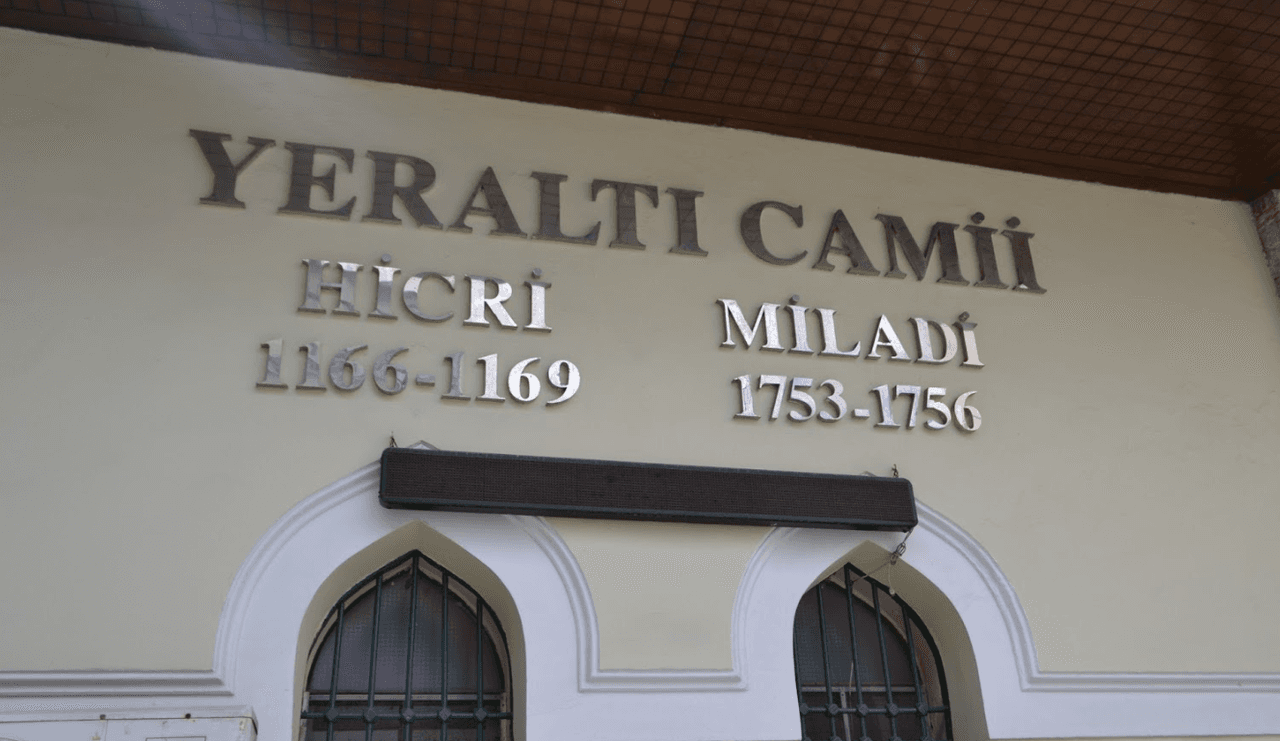
Underground Mosque (Source: Coğrafi Geziler)
The site of the Karaköy Underground Mosque corresponds to the basement level of the Galata Fortress (Kastellion), built during the Byzantine era to block ship access to the Golden Horn. It is known that this structure was used as one end of the chain stretched across the Golden Horn during the siege of Constantinople. After the Ottoman conquest, the building continued to serve various purposes under the Ottoman Empire, including as a warehouse, armory and water cistern.
In the 17th century, Nakşibendi scholar Sheikh Mehmet Efendi had a vision in which he saw the Companions of the Prophet in this area. As a result, it was discovered that the remains of these Companions were buried in the vault. This discovery laid the foundation for the mosque’s construction. In the 1750s, Grand Vizier Köse Bahir Mustafa Paşa of Sultan I. Mahmud initiated efforts to convert the vault into a mosque, incorporating the Companions’ graves. Thus, between 1753 and 1756, the Karaköy Underground Mosque was officially opened for worship.
The Karaköy Underground Mosque has a rectangular plan and consists of barrel vaults supported by 54 thick stone piers. These vaults are reinforced by semi-domes covering the upper part of the structure. Unlike other mosques, the interior space is illuminated not by natural daylight but solely by light entering through the walls facing the sea. The interior contains numerous historical and religious elements, including the Companions’ graves. Access to the mosque is possible from two directions: one from the Karaköy pier side, and the other via stairs at the end of a dead-end street reachable from Karaköy Square. Upon entering, visitors encounter a low-ceilinged, dimly lit atmosphere rather than the high-domed interiors typical of traditional mosques. This difference reflects the mosque’s subterranean location.
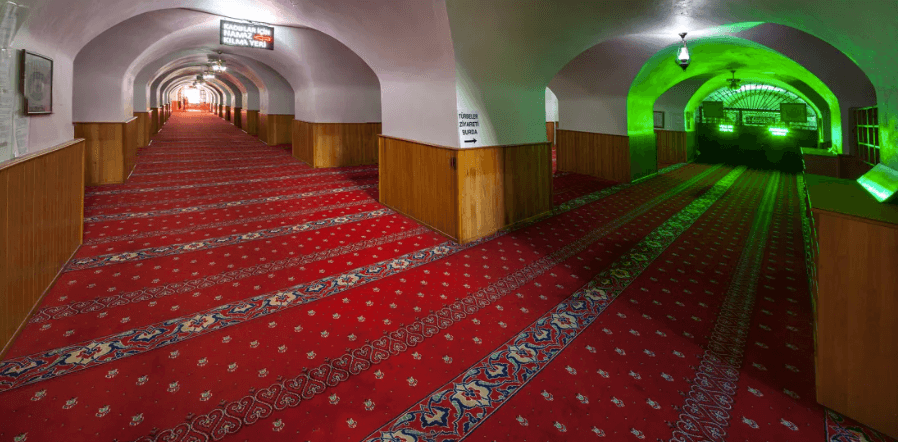
Underground Mosque. (Source: https://edition.cnn.com/travel/ancient-secret-places-hidden-under-turkey/index.html)
The mosque also holds significant religious value due to the Companions’ graves it houses. Within the structure are the tombs of Companions such as Amr ibn al-As, Wahb ibn Husayra and Sufyan ibn Uyayna, who participated in the siege of Constantinople during the Umayyad period. These tombs were marked with coffins and placed under protection by Sultan I. Mahmut during the mosque’s conversion. One of the mosque’s most notable features is that the individuals buried here were Companions who died as martyrs during the siege of Constantinople.
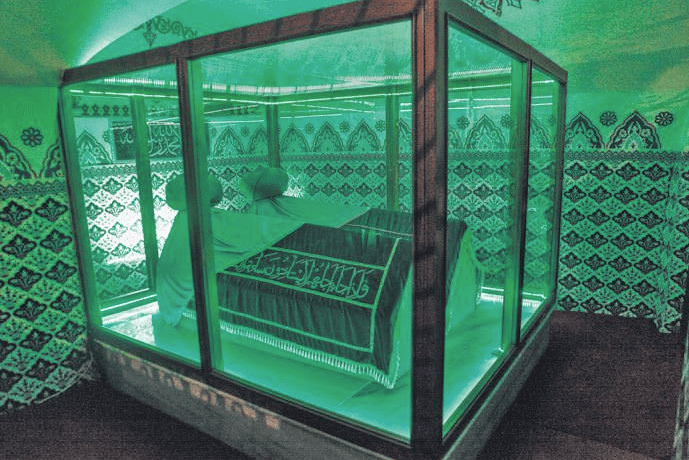
Companions’ Graves (Source: Sabah)
The Karaköy Underground Mosque is more than just a place of worship; it serves as a religious center that has hosted numerous visitors to Istanbul. In 1932, it became historically notable as the first location in Istanbul where the Qur’an was recited in Turkish. The mosque is also one of the most visited sacred sites in Istanbul after Eyüp Sultan Mosque.
Today, the Karaköy Underground Mosque continues to function as an active place of worship. Above the mosque stands a structure from the Ottoman period known as the Kurşunlu Köşk. The mosque was restored in 1985, preserving its original architectural elements. Alongside the Karaköy Ferry and other significant nearby structures, the mosque forms an essential part of Istanbul’s historical fabric. Visitors come here both for a spiritual experience and to witness Istanbul’s history. The Karaköy Underground Mosque is a structure that has served various functions and evolved through different dynamics throughout history. With its deep historical and religious significance, the mosque offers a unique experience distinct from other Istanbul mosques, thanks to the special atmosphere created by its subterranean design.
"Anadolu Evliyaları." "Yeraltı Camii." Anadoluevliyalari.com. Accessed January 20, 2025.https://www.anadoluevliyalari.com/yeralti-cami/.
"Cami ve Türbeler." "Yeraltı Camii Özellikleri: Karaköy." Camilerveturbeler.com. Accessed January 20, 2025.https://www.camilerveturbeler.com/yeralti-cami-ozellikleri-karakoy/.
"Fikriyat." "Azerbaycan’ın Dinmeyen Sızısı: Kara Yanvar." Fikriyat.com. Accessed January 20, 2025.https://www.fikriyat.com/galeri/tarih/azerbaycanin-dinmeyen-sizisi-kara-yanvar.
"Kolay Arapça." Kolayarapca1.wordpress.com. Accessed January 20, 2025.https://kolayarapca1.wordpress.com/ytsh/.
"İstanbul’un Sırları." "Hikayesi Çok Olan Bir Camii: Karaköy Yeraltı Camii." Istanbulunsirlari.net, December 26, 2023.https://www.istanbulunsirlari.net/2023/12/26/hikayesi-cok-olan-bir-cami-karakoy-yeralti-cami/.
"Şumbül Sokak." "Karaköy Yeraltı Camii." Sumbulsokak.com. Accessed January 20, 2025.https://sumbulsokak.com/karakoy-yeralti-camii/.

No Discussion Added Yet
Start discussion for "Karaköy Underground Mosque" article
History and Transformation
Architectural Structure
Companions’ Graves
Use Through Time
Current Status