This article was automatically translated from the original Turkish version.
The most general concept the human mind can reach is “existence”, and the highest concept is “God”. Al-Farabi begins precisely from this point. According to him, the human intellect can assert only two fundamental propositions about existence: either it is necessary or it is possible.【1】
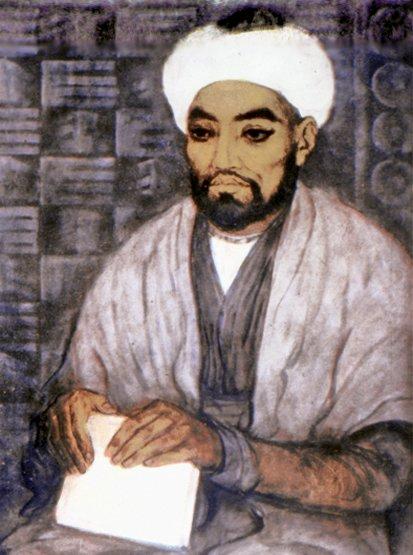
A Portrait of Al-Farabi (TDV Islamic Encyclopedia)
Necessary existence… That is, a truth whose existence is inherent and whose nonexistence cannot be conceived. According to Al-Farabi, if such an existence were denied, it would not merely mean the absence of something; the very essence of existence would lose its meaning. For He is the first being, independent of any cause, and the source of all things. Therefore, His existence is complete, perfect, and whole—that is, “ekmel”.【2】
All entities in our world are possible. That is, they may exist or may not. Their existence is not inherent; they require a cause to exist. And this chain of causes cannot extend infinitely. It must come to a halt at some point. That stopping point, that foundational basis, is the necessary being. In Al-Farabi’s words, this is the first being, devoid of any deficiency, perfect and all-powerful. That is God.【3】
Al-Farabi observes the cosmos, examines the structure of beings, observes possible existence, and from there arrives at the necessary. Thus, through this link between thought and existence, one points to the other.
This reasoning reappears in the West centuries later. It is well known that this argument became associated with Saint Anselm, the renowned Christian theologian who lived one and a half centuries after Al-Farabi.【4】
Anselm, who developed Al-Farabi’s argument, defines God as “that than which nothing greater can be conceived,” and reaches a similar conclusion through the concept of perfection.【5】
Over time, this argument began to be named after him. Yet the issue is not merely one of naming. A deeper truth lies here: knowledge travels. Thought circulates. Meaning endures.【6】
A similar line of thought continues in Descartes. He too begins from the idea of a “perfect being” in the mind. According to Descartes, the idea of an “infinite and perfect God” in the human mind cannot originate from a limited being like man; therefore, this idea must necessarily point to a truly existing God.【7】
All these efforts constitute, throughout history, a journey that begins within the human self, extends toward existence, and ultimately reaches the cause of all beings. Al-Farabi’s necessary and perfect being, Anselm’s supreme being, Descartes’ perfect being… all are seeking the same truth.
And perhaps we must return to the very beginning:
Imagine embarking on a journey whose end you do not know. You are one among countless travelers, all seeking the same destination. For centuries, people have been providing guidance about this journey. Some find it meaningless, others dismiss it entirely, some cannot determine its destination, while others, honoring the right to be a traveler, proceed with earnest desire toward the true goal.
We wish to believe. We wish to devote ourselves. We seek direction.
At this very point, a concept comes to mind:
Fitra.
The innate inclination toward belief bestowed upon us by our Lord from birth… That inner mechanism that moves us to think, to question, to seek, and to find. This precious mechanism within us drives us in this temporary world to seek not only eternal abode but above all its eternal Owner.
In essence, humanity seeks itself and its Lord.
The cosmos, then, is a book filled with signs. To read it is to perceive the Creator and draw nearer to Him. That is why the Sufis said, “He who knows himself knows his Lord.”【8】 And for centuries, humanity has been journeying—both within itself and in the cosmos—to find Him. For what is lacking seeks the complete. What is possible turns toward the necessary. And humanity… never ceases to seek Him.
Diyanet İşleri Başkanlığı. *İslam Kelamcılarına ve Filozoflarına Göre Allah’ın Varlığı*. Ankara: Diyanet İşleri Başkanlığı Yayınları, 2012. Accessed. https://https://dijital.diyanet.gov.tr/File/Download?path=4052_1.pdf&id=4052
Dölek, Haydar. “Ontolojik Delilin Oluşumunda Aristocu ve Yeni-Eflatuncu Fikirlerin Etkisi.” *Fırat Üniversitesi İlahiyat Fakültesi Dergisi* 5 (2000): 588–589. Accessed May 31, 2026. https://dergipark.org.tr/en/download/article-file/2228880
Erdem, Engin. “İbn Sînâ’nın Metafizik Delili.” *Ankara Üniversitesi İlahiyat Fakültesi Dergisi* 52, no. 1 (2011): 97–119. Accessed May 31, 2026. https://dergipark.org.tr/tr/pub/auifd/article/488224
Kaya, Mahmut, and Alaeddin Jebini. “Fârâbî.” *TDV İslâm Ansiklopedisi*. Accessed June 4, 2026. https://islamansiklopedisi.org.tr/farabi
Uludağ, Süleyman. “Mârifet.” *TDV İslâm Ansiklopedisi*. Accessed June 7, 2026. https://islamansiklopedisi.org.tr/marifet
[1]
Mahmut Kaya, Alaeddin Jebini, ''FÂRÂBÎ,'' TDV İslâm Ansiklopedisi, Son erişim 4 Haziran 2026, https://islamansiklopedisi.org.tr/farabi
[2]
Mahmut Kaya, Alaeddin Jebini, ''FÂRÂBÎ.''
[3]
Mahmut Kaya, Alaeddin Jebini, ''FÂRÂBÎ.''
[4]
Diyanet İşleri Başkanlığı, İslam Kelamcılarına ve Filozoflarına Göre Allah’ın Varlığı, (Ankara: Diyanet İşleri Başkanlığı Yayınları 2012), 67.
[5]
Engin Erdem, "İbn Sînâ’nın Metafizik Delili," Ankara Üniversitesi İlahiyat Fakültesi Dergisi 52, no.1 (2011): 111. https://dergipark.org.tr/tr/pub/auifd/article/488224
[6]
Engin Erdem, "İbn Sînâ’nın Metafizik Delili," 97-119.
[7]
Haydar Dölek, “Ontolojik Delilin Oluşumunda Aristocu ve Yeni-Eflatuncu Fikirlerin Etkisi,” Fırat Üniversitesi İlahiyat Fakültesi Dergisi 5 (2000): 588–589, https://dergipark.org.tr/en/download/article-file/2228880
[8]
Süleyman Uludağ, "MÂRİFET," TDV İslâm Ansiklopedisi, Son erişim 7 Haziran 2026, https://islamansiklopedisi.org.tr/marifet
From Al-Farabi to Descartes: Thinking the Perfect Being
What Are We Seeking? Why Are We Seeking?