


This article was automatically translated from the original Turkish version.
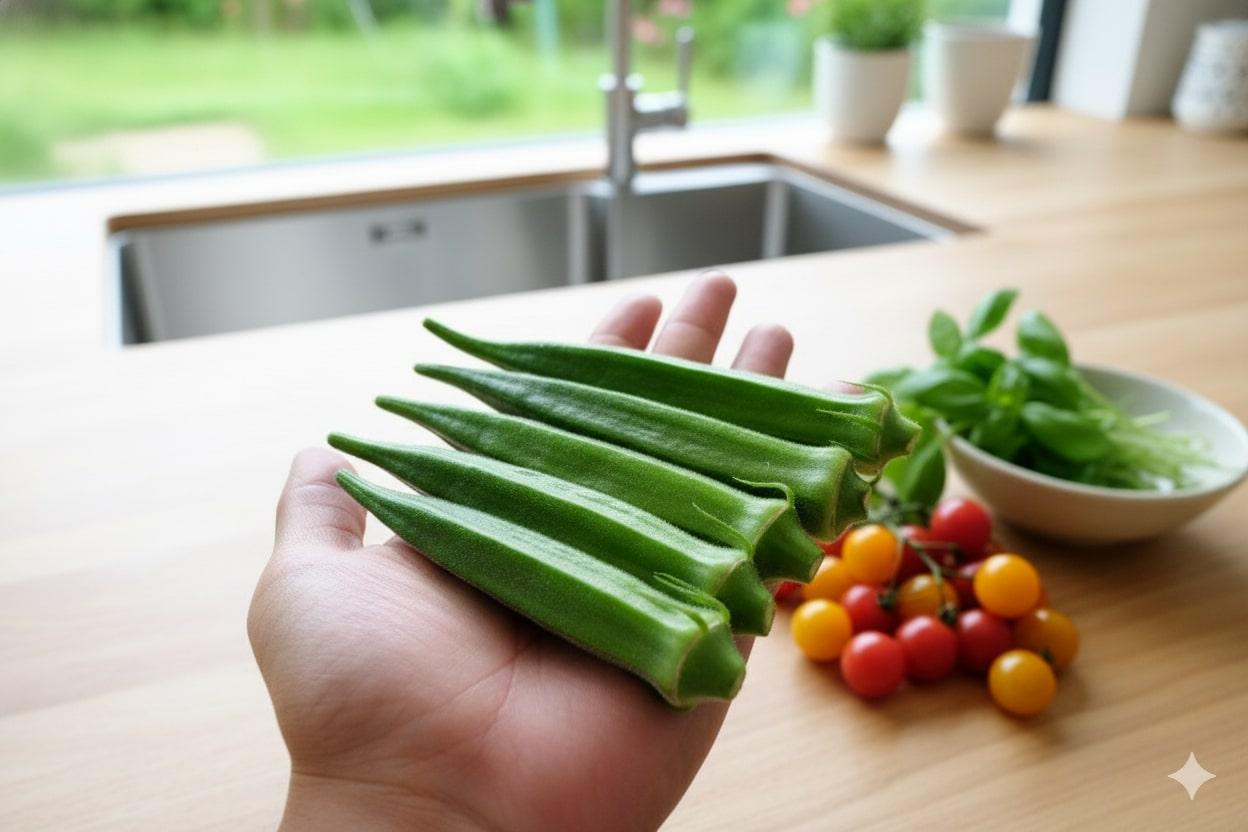
Hibarino Bamyası (Generated with Artificial Intelligence.)
Geographical Place Name | Hibarino Bamyası | ||||||||
|---|---|---|---|---|---|---|---|---|---|
Class | Vegetables/Grains/Legumes | ||||||||
Protection Date | 2017/12/15 | ||||||||
Production Area | Akita Region, Ugo Town, Ogachi District | ||||||||
Applicant | JA Ugo Niinari Horticultural Cooperative | ||||||||
Hibarino okra is a variety of okra cultivated in the town of Ugo, located in Akita Prefecture, Japan. This vegetable, known in Japanese as “okura,” is recognized for its long and thick pods.
Hibarino okra was registered under Japan’s Geographical Indication (GI) system on 15 December 2017. The product, registered under number 51, is owned by the JA Ugo Niinari Horticultural Cooperative. The production area is confined to the town of Ugo within the boundaries of Ogachi District in Akita Prefecture.【1】
This okra variety is defined by standards of 10–12 cm in length and 8 mm–1 cm in thickness. Due to its cultivation in greenhouses, Hibarino okra has a larger, softer, and faster-growing structure compared to okra grown in open fields.【2】
About Hibarino Okra (Geographical Indication Product Information Site)
The production of Hibarino okra requires careful care from the seedling stage onward. Seedlings are grown in pots; during germination, electric heating wires are used to maintain temperature and controlled irrigation methods are applied to ensure proper humidity. The seedlings are then transferred to greenhouses.
Since okra plants are heat-tolerant but sensitive to cold, producers close the roof windows of greenhouses early in the evening to maintain internal temperatures.
The name “Hibarino” derives from the geographic region within the town of Ugo where the okra is produced. Ugo is situated in a basin surrounded by the Ou Mountains and the Dewa Hills.【3】 This geographic structure allows the region to receive sunlight for longer durations, facilitating greenhouse farming.
Production of Hibarino okra began in 1976. Local producers conduct regular monitoring and inspections to enhance flavor and yield. Maintaining the product’s distinctive “large and soft” qualities has been the primary goal of producers. As of 2016, annual production reached 37 tonnes.
Hibarino okra enjoys high demand in local markets and is typically sold around May. It is priced 30–50 percent higher than okra grown in other regions.【4】
Geographical Indication Product Information Site. "Hibarino okra." YouTube. Accessed October 26, 2025.https://www.youtube.com/watch?v=qbiGYWsCT_4
Information Website on Japan’s Geographical Indications. "Hibarino Okra." Accessed October 26, 2025.https://pd.jgic.jp/en/register/entry/51.html
Ministry of Agriculture, Forestry and Fisheries. “Hibarino Okra.” Accessed October 26, 2025.https://www.maff.go.jp/e/policies/intel/gi_act/register/s51.html
[1]
Information Website on Japan’s Geographical Indications, “Hibarino Okra.” Information Website on Japan’s Geographical Indications, son erişim tarihi 26 Ekim 2025, https://pd.jgic.jp/en/register/entry/51.html
[2]
Information Website on Japan’s Geographical Indications, “Hibarino Okra,” Information Website on Japan’s Geographical Indications, son erişim tarihi 26 Ekim 2025. https://pd.jgic.jp/en/register/entry/51.html
[3]
Information Website on Japan’s Geographical Indications, “Hibarino Okra,” Information Website on Japan’s Geographical Indications, son erişim tarihi 26 Ekim 2025. https://pd.jgic.jp/en/register/entry/51.html
[4]
Information Website on Japan’s Geographical Indications, “Hibarino Okra,” Information Website on Japan’s Geographical Indications, son erişim tarihi 26 Ekim 2025. https://pd.jgic.jp/en/register/entry/51.html

Hibarino Bamyası (Generated with Artificial Intelligence.)
Geographical Place Name | Hibarino Bamyası | ||||||||
|---|---|---|---|---|---|---|---|---|---|
Class | Vegetables/Grains/Legumes | ||||||||
Protection Date | 2017/12/15 | ||||||||
Production Area | Akita Region, Ugo Town, Ogachi District | ||||||||
Applicant | JA Ugo Niinari Horticultural Cooperative | ||||||||
Geographical Indication Registration
Physical Characteristics
Cultivation Process
Production Area and Climate Characteristics
Production and Marketing