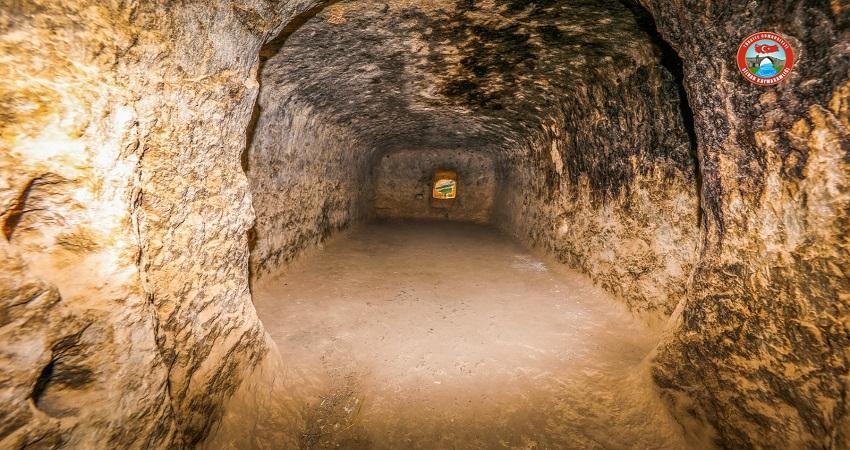
Hasuni Caves
The history of Hasuni extends back to the Mesolithic (Flaked Stone) Age, when humans transitioned to settled life and began carving stone for protection. It was continuously inhabited from the 1st millennium BCE to the 13th century CE. It is believed that the first builders of this mysterious city were the Assyrians; however, over time many civilizations including the Urartians, Medes, Persians and Alexander the Great left their marks here.
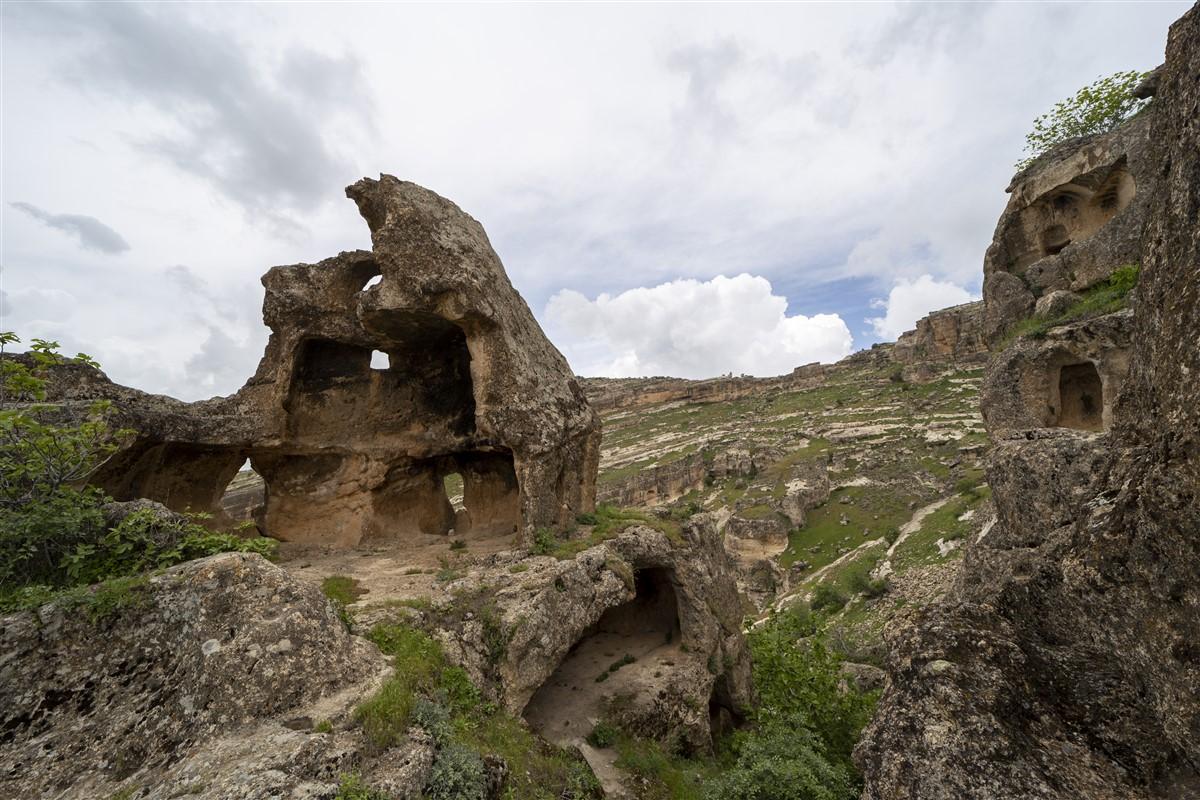
Hasuni Caves (Diyarbakır Governorship)
🏢 The World’s First “Apartment Buildings” May Be Here!
Hasuni Caves are not merely simple hollows; they form a vast complex containing over 300 rooms connected by narrow corridors staircases and water channels. The most astonishing feature of this ancient city is that it is among the world’s earliest multi-story settlements. Here are cave structures with three five and even seven levels.
🏺 Social Life in the Caves: Everything from School to Bathhouse!
The people who lived here in ancient times did not merely seek shelter; they established an organized urban life:
- 🟦 Cisterns and Canals: Massive cisterns and aqueducts carved into the rock provided their water needs.
- ♨️ Hasuni Bathhouse: They even had a bathhouse built from cut stone; however its roof has collapsed over time.
- 🎭 Mini Amphitheater: A five-step mini amphitheater located beside the rock church was likely used for educational purposes.
🧵 Workshops: Textile workshops where people produced clothing have also been found in the region.
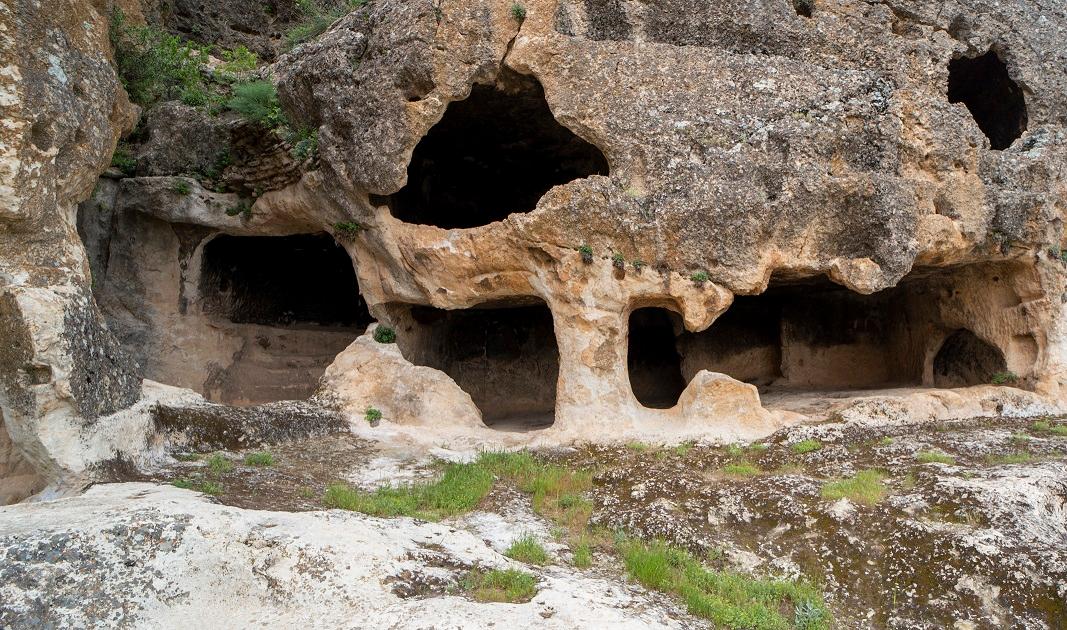
Hasuni Caves (Diyarbakır Governorship)
⛪ Religious History and Churches
Hasuni has been an important religious center since the early spread of Christianity. Two main places of worship stand out in the cave city:
- 🔸 Hasuni Rock Church: Located near the summit of the city this four-story structure with a funnel-shaped roof is considered one of Anatolia’s oldest places of worship.
- 🔸 Stone Church: Built in the 13th century on the flat area at the base of the caves using colorful cut stones characteristic of the Silvan region.
🛡️ Preserving History
Although the Hasuni Caves were damaged in the past by treasure hunters they have since been restored and cleaned and are now open to visitors. Today local and international tourists climb the stone stairways to trace the footsteps of life from thousands of years ago and photograph this “stone city”.