This article was automatically translated from the original Turkish version.
+1 More
Location | Hasuni Valley Türkiye Diyarbakır Silvan district | ||||||||
|---|---|---|---|---|---|---|---|---|---|
Coordinate(s) | 38.145° N 41.011° E | ||||||||
Settlement Period | Mesolithic Period – 13th Century | ||||||||
Material(s) | Single rock brick cut stone | ||||||||
Prominent Structures | Four-story rock church, cut stone church (13th century) | ||||||||
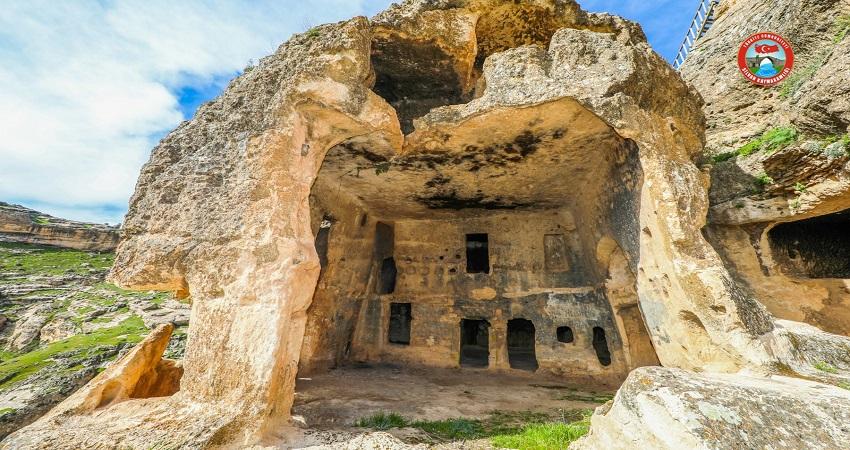
Hasuni Caves are a multi-layered rock settlement located on the southern slopes of Albat Mountain, dominating the Silvan Plain within the boundaries of the Silvan district of Diyarbakır Province, Türkiye. Situated in the Hasuni Valley, this cave complex has been continuously inhabited from the Mesolithic period through the Middle Ages, serving various functions including shelter, worship, and defense. With over 300 carved cave structures, it is recognized as one of the oldest cave settlements in Anatolia.
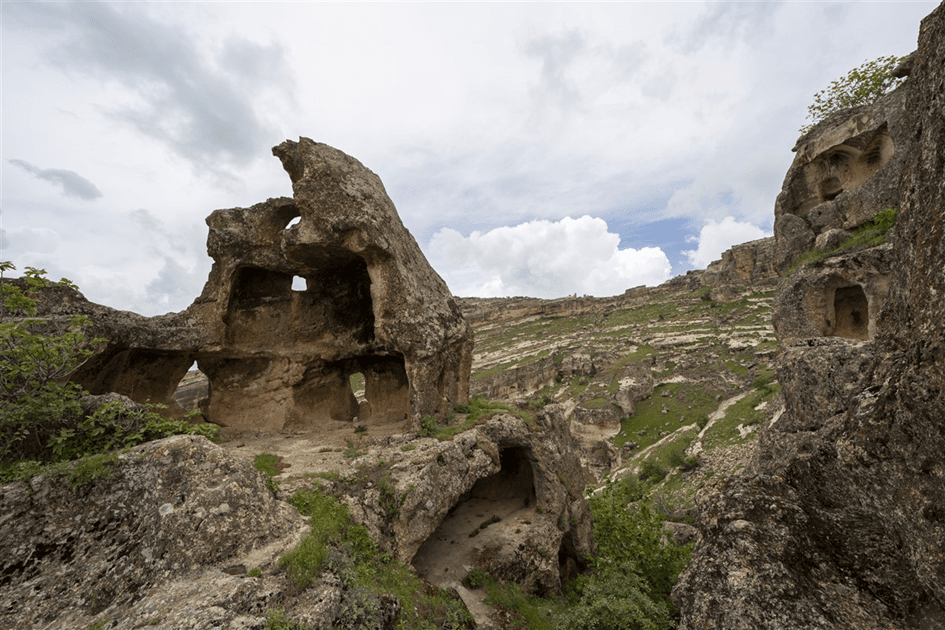
Hasuni Caves (Republic of Türkiye Diyarbakır Governorship)
The history of the Hasuni Caves extends back to the Mesolithic period. Early examples of settled life in these caves became more intensive from the first millennium BCE, and the site remained an active settlement particularly during the initial spread of Christianity and throughout the Middle Ages. The area was inhabited until the 13th century, during which religious and civil structures were constructed. Hasuni also occupied a strategic position along the historical route connecting the Malabadi Bridge to Hasankeyf.
The Hasuni Caves consist of over 300 caves carved into solid rock masses, varying in size and function. The settlement is supported by rock staircases, stone-paved pathways, rooms, corridors, cisterns, water channels, and water reservoirs. Passages, exit staircases, and connectors linking various social structures connect the caves. Two rock churches have been identified within the settlement. One of these, the Hasuni Rock Church, is notable for its four-story structure and contains a five-step amphitheater-like educational space. The other church, constructed from cut stone and brick and dated to the 13th century, features colorful local stones from the Silvan region. Its door and window frames bear carved reliefs, and wall openings have been carved directly into the rock. Structures such as weaving workshops have also been identified within the settlement area.
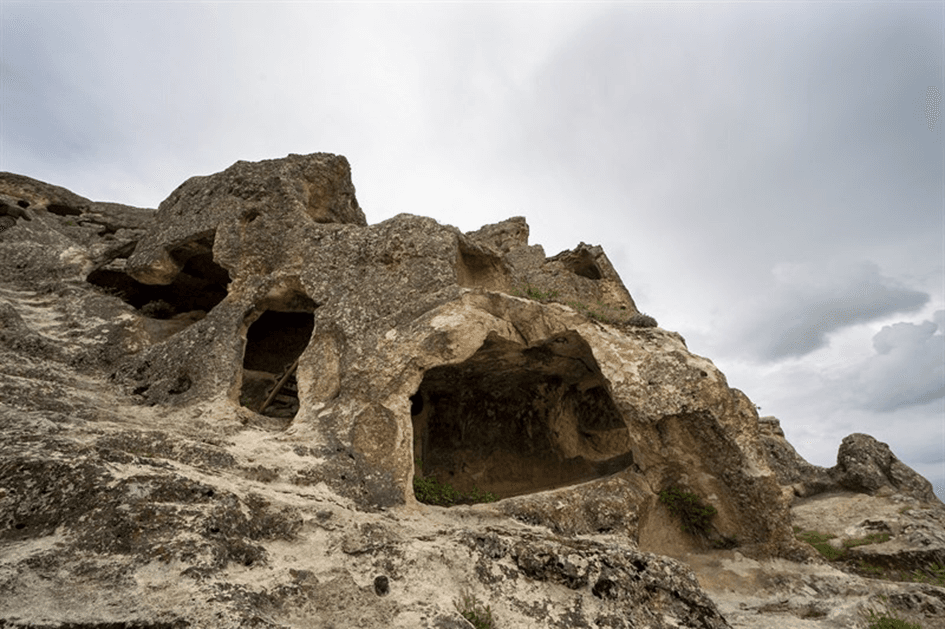
Hasuni Caves (Republic of Türkiye, Diyarbakır Governorship)
The structures surviving to the present day in the Hasuni Caves have deteriorated over time. Structural damage and surface degradation are particularly evident in the churches. Although no comprehensive restoration project has been undertaken for the archaeological and conservation activities in the region, the caves are currently open to domestic and international tourists. Despite their significant historical and archaeological value, the cave complex, which retains much of its visual integrity, remains among the sites requiring urgent protection measures.
T.C. Diyarbakır Valiliği. "Hasuni Mağaraları." T.C. Diyarbakır Valiliği Resmî Web Sitesi. Accessed August 16, 2025. http://www.diyarbakir.gov.tr/hasuni-magaralari.
T.C. Silvan District Governorship. "Hasuni Caves." T.C. Silvan District Governorship Official Website. Accessed August 16, 2025. http://www.silvan.gov.tr/hasuni-magaralari.
T.C. Silvan Municipality. “Hasuni Antik Kenti Tarihi.” Silvan Belediyesi. Accessed August 16, 2025. https://www.silvan.bel.tr/hasuni-antik-kenti-tarihi.

Location | Hasuni Valley Türkiye Diyarbakır Silvan district | ||||||||
|---|---|---|---|---|---|---|---|---|---|
Coordinate(s) | 38.145° N 41.011° E | ||||||||
Settlement Period | Mesolithic Period – 13th Century | ||||||||
Material(s) | Single rock brick cut stone | ||||||||
Prominent Structures | Four-story rock church, cut stone church (13th century) | ||||||||
History
Architectural Features
Restoration Efforts