


This article was automatically translated from the original Turkish version.
+1 More
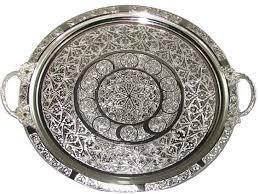
Gaziantep Copper Craftsmanship
Product / Product Group | Rugs Handicraft products other than kilims and textiles | ||||||||
|---|---|---|---|---|---|---|---|---|---|
Applicant / Registrant | Gaziantep Coppersmiths Chamber | ||||||||
Registration Date | 05.06.2012 | ||||||||
File Number | C2010/046 | ||||||||
Registration Number | 159 | ||||||||
Place of Production | Türkiye | ||||||||
Gaziantep Copper Craftsmanship represents a traditional craft of the city of Gaziantep. This craft is based on manual techniques applied in the processing of copper and is sustained primarily through knowledge passed down from master to apprentice. The production process consists of labor-intensive stages including flattening copper into sheets, shaping it, embossing patterns with hammers, and surface treatments. The resulting products typically take the form of everyday or aesthetic items such as kitchenware (pans, pots, cezve), decorative objects, and souvenirs.
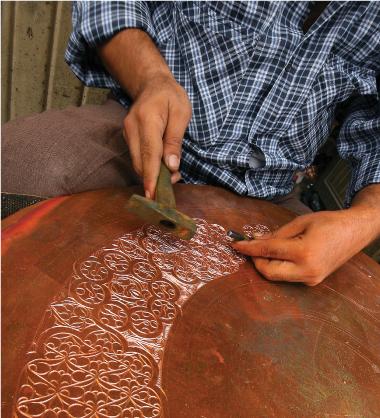
Gaziantep Bakır El İşlemeciliği (Gaziantep BB)
As a production domain that combines both functional and cultural dimensions, Gaziantep Copper Craftsmanship holds a significant place in the local economy and cultural heritage of Gaziantep. This craft-based production model differs from mechanized mass production and embodies a high level of artisanal intervention. Gaziantep Copper Craftsmanship was officially registered on 19 July 2010 by the Turkish Patent and Trademark Office under a geographical indication, granting it protection as a geographical indication. This registration certifies that the product is manufactured in a specific geographical region and that its quality or reputation is intrinsically linked to that region.
The most distinctive feature of Gaziantep Copper Craftsmanship is that its products are manufactured as single, seamless pieces. This production method avoids joining techniques such as soldering, welding, or screwing; instead, products are formed entirely through physical shaping of a single copper sheet. Shaping is carried out using traditional hand tools such as hammers and stakes, and surface treatments are applied using conventional techniques. The seamless production method is technically preferred as it ensures both the integrity and durability of the product.
In terms of decoration, Gaziantep copper craftsmanship is notable for its rich motif repertoire. Geometric patterns, plant elements, animal figures, and natural themes, inspired by Seljuk and Ottoman aesthetic traditions, are widely used. These motifs are hand-engraved directly onto the copper surface using a technique known as “kalem işi.” Each motif exhibits minor variations depending on the artisan’s skill, ensuring that every product is unique and original. This decorative method is not merely a visual element but is also regarded as a vehicle for cultural and historical transmission.
Gaziantep Copper Craftsmanship follows a traditional production process composed of several key stages:
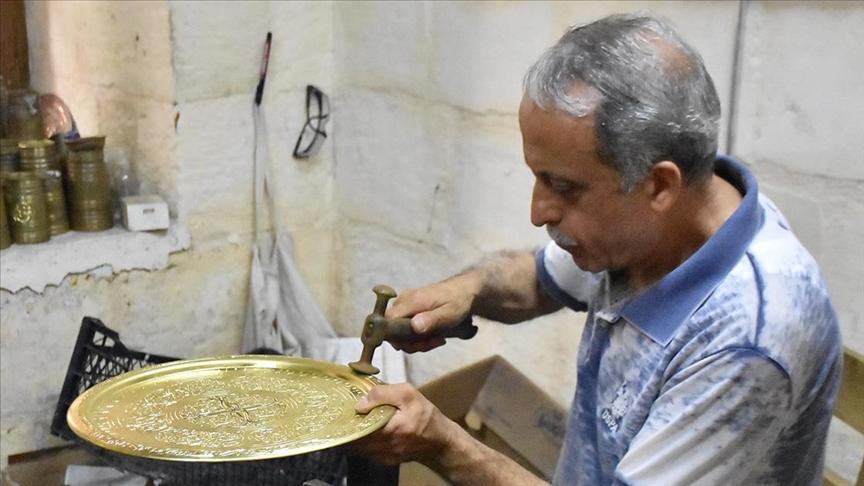
Gaziantep Bakır El İşlemeciliği (AA)
Gaziantep Copper Craftsmanship encompasses only production activities carried out within the boundaries of Gaziantep province. This geographical limitation is established to ensure that products are manufactured using traditional techniques and local knowledge. Production within the designated geographical area is a mandatory condition for preserving the product’s authenticity and registered characteristics. This restriction prevents products made elsewhere using similar methods from being marketed as “Gaziantep Copper Craftsmanship,” thereby safeguarding the name.
Oversight is conducted under the coordination of the Gaziantep Metropolitan Municipality, with participation from relevant public institutions and professional associations. Inspection criteria include the type of materials used, craftsmanship quality, originality of motifs, and adherence to traditional production techniques. This monitoring serves not only to ensure product quality but also to safeguard the continuity of the cultural heritage. Inspections are carried out at regular intervals with the aim of preventing production that fails to meet registered standards.
Gaziantep Büyükşehir Municipality. "Gaziantep Bakır El İşlemeciliği." Accessed May 25, 2025.https://ci.gaziantep.bel.tr/Urunler/gaziantep-bakir-el-islemeciligi-1004
Turkish Patent and Trademark Office. "Gaziantep Bakır El İşlemeciliği." Accessed May 25, 2025.https://ci.turkpatent.gov.tr/cografi-isaretler/detay/38030
Gaziantep Copper Craftsmanship
Product / Product Group | Rugs Handicraft products other than kilims and textiles | ||||||||
|---|---|---|---|---|---|---|---|---|---|
Applicant / Registrant | Gaziantep Coppersmiths Chamber | ||||||||
Registration Date | 05.06.2012 | ||||||||
File Number | C2010/046 | ||||||||
Registration Number | 159 | ||||||||
Place of Production | Türkiye | ||||||||
No Discussion Added Yet
Start discussion for "Gaziantep Copper Craftsmanship" article
Product Definition and Distinctive Features
Production Method
1. Copper Sheet Preparation
2. Shaping
3. Motif Engraving
4. Surface Finishing
Geographical Boundaries and Oversight