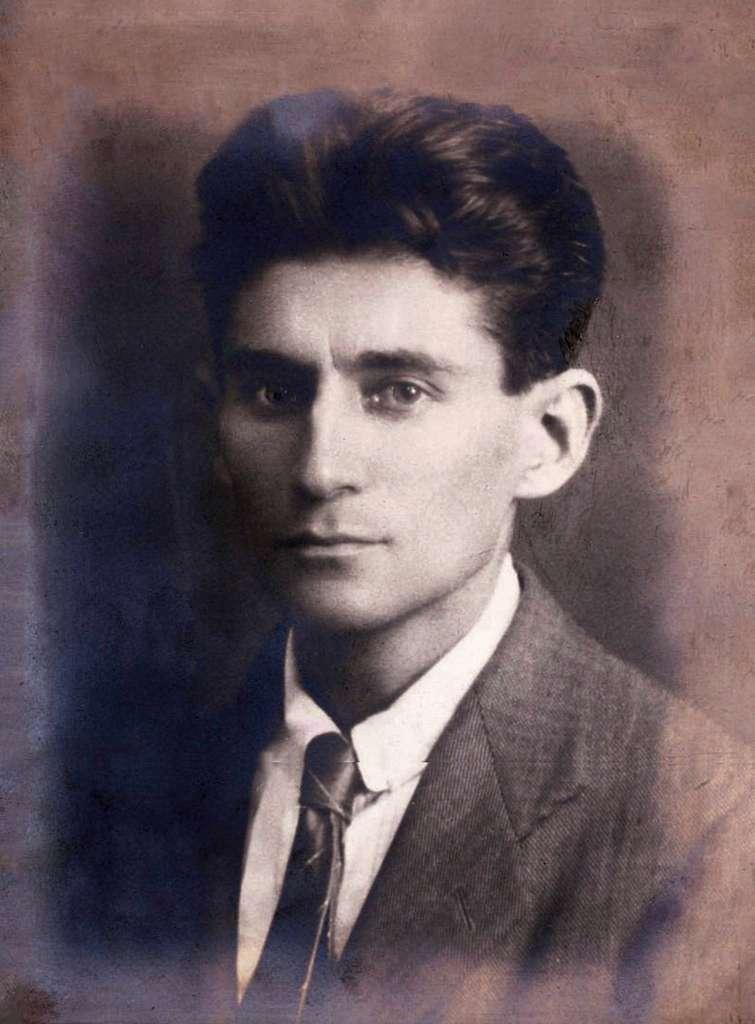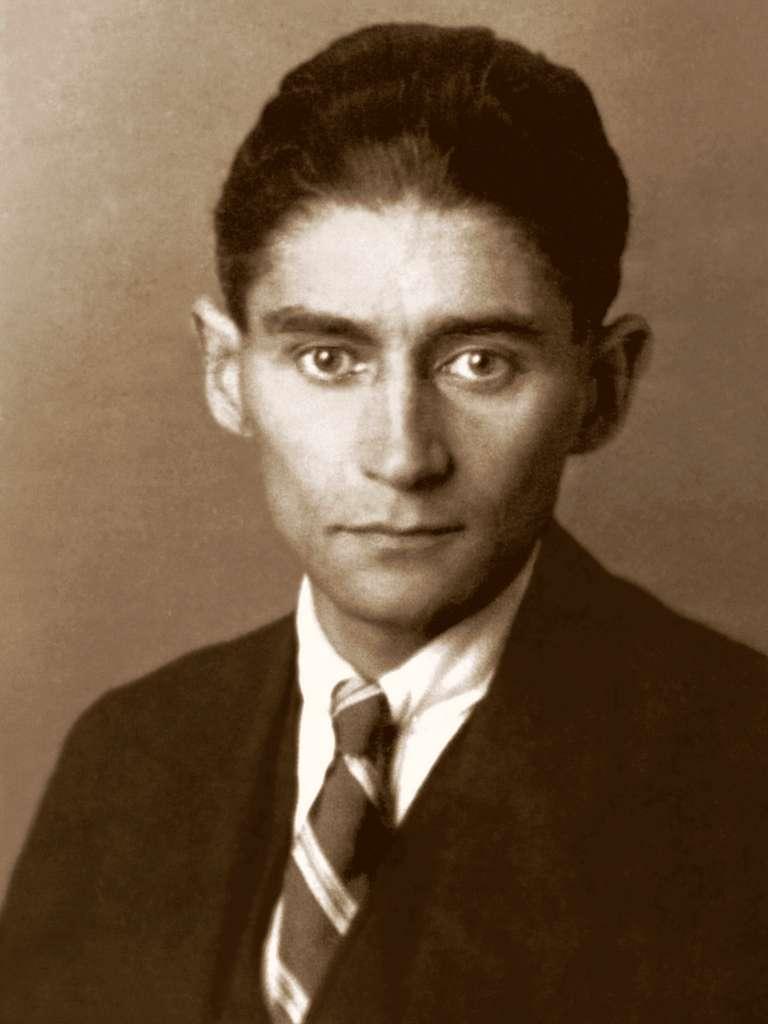
+1 More

Birth | 3 July 1883 | ||||||||
|---|---|---|---|---|---|---|---|---|---|
Death | 3 June 1924 | ||||||||
Place of Birth | Prague, Kingdom of Bohemia, Austro-Hungarian Empire | ||||||||
Place of Death | Kierling Sanatorium, near Vienna, Austria | ||||||||
Occupation | Insurance Officer (Doctor of Law) Writer | ||||||||
Education | 1906 German Male Primary School Altstadt German High School Prague German University (Doctor of Law) | ||||||||
Literary Period | 20th Century Literature | ||||||||
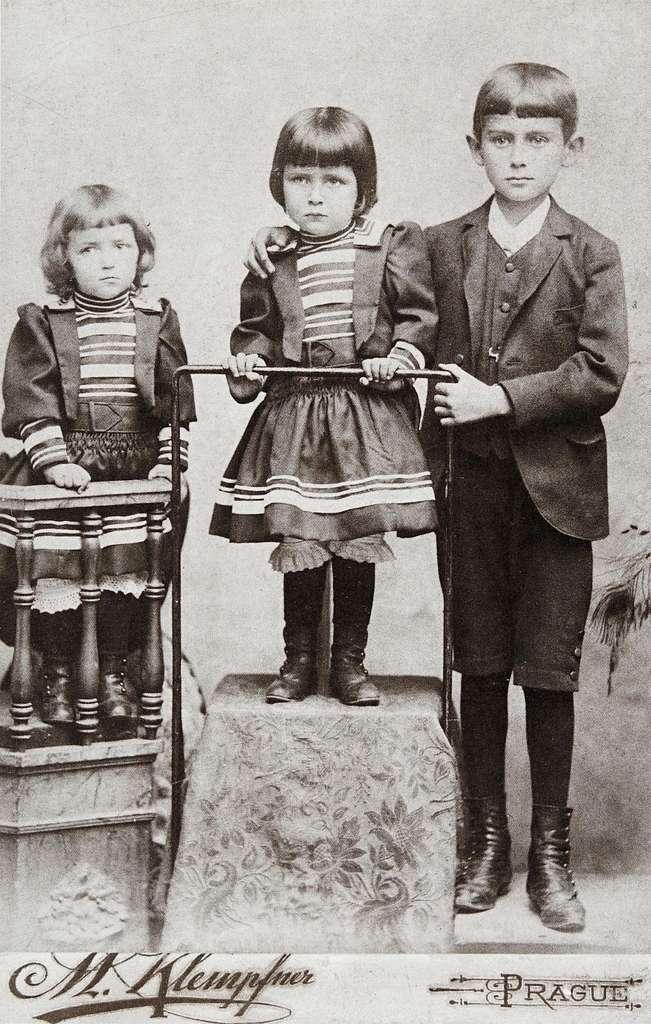
Franz Kafka was born on 3 July 1883 in Prague, then part of the Austro-Hungarian Empire, in an old apartment near the boundary of the Jewish ghetto. His father, Hermann Kafka, rose from a poor Jewish family to become a merchant, while his mother, Julie Kafka, came from a wealthy German-speaking Jewish family. Both parents were engaged in commerce. Of the six children in the family, Kafka was the eldest; two of his brothers, George and Heinrich, died in childhood, and his three sisters, Elli, Vali, and Ottla, perished in Nazi concentration camps during the Holocaust. Kafka’s name, Franz, was chosen before his birth in honor of Emperor Franz Joseph, reflecting his father’s social aspirations. Kafka grew up in a household where only German was spoken and received his entire education in German-language schools.
class=\
He began his education in 1889 at the German Boys’ Elementary School in Prague and completed his secondary studies at the Altstadt German Gymnasium between 1893 and 1901. In 1901, under the influence of his friend Oskar Pollak, he enrolled in the chemistry program at the German University of Prague but switched to the law faculty at his father’s request after only two weeks. This decision shaped his professional life and led him to meet Max Brod, who would become his closest friend for the rest of his life. His friendship with Pollak ended around this time.
Kafka graduated with a doctorate in law and began working in 1907 at the Kingdom of Bohemia Workers’ Accident Insurance Institute, where he held various positions until his early retirement in 1922. He found this bureaucratic career unfulfilling and believed his true existence was realized through writing.
After completing his law doctorate, Kafka undertook a year of internship and in 1907 began working at the Italian insurance company Assicurazioni Generali’s Prague branch. In 1908 he moved to the Kingdom of Bohemia Accident Insurance Company. Although he complained that the bureaucratic structure and pace of work were alien to him, he remained in this position until 1917. These years also marked his entry into Prague’s literary circle. Through his friendship with Max Brod, he became acquainted with figures such as Felix Weltsch, Oskar Baum, Gustav Janouch, and Franz Werfel.
In 1912, while accompanying Max Brod in Berlin, Kafka met the German woman Felice Bauer and became engaged to her twice (in 1914 and 1917). However, his fear that marriage would hinder his writing prevented either engagement from resulting in marriage. This relationship left behind a collection of letters, published after Kafka’s death, titled "Letters to Felice".
In late summer 1917, Kafka suddenly began coughing up blood, marking the onset of tuberculosis, a disease that would haunt him until his death. This illness also ended his relationship with Felice Bauer. Due to his deteriorating health, he was granted leave from his workplace in 1917 and eventually retired early in 1922.
In 1919 he became engaged to Julie Wohryzek, but this relationship ended after he met Milena Jesenská. Milena Jesenská, a married Czech journalist and translator, translated some of Kafka’s works into Czech. Their relationship, sustained through extensive correspondence, was limited to rare meetings due to her residence in Vienna and ended in early 1921.
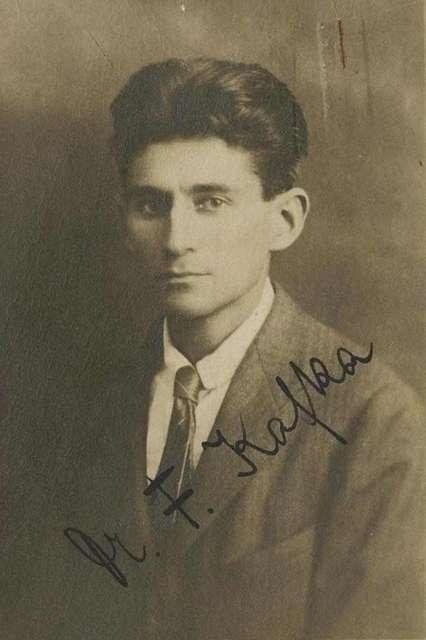
In 1923 Kafka left Prague and moved to Berlin with a young woman named Dora Diamant, spending the final years of his life closely connected to her. During this period he devoted himself entirely to writing. However, enduring the harsh Berlin winter of 1923–1924 further damaged his health.
class=\
Kafka left instructions for all his unpublished manuscripts to be burned after his death, but his close friend Max Brod disregarded this wish and took the lead in publishing Kafka’s works, securing his place in world literature. Although some of Kafka’s writings were published during his lifetime (such as "Observation", "The Judgment", and "The Metamorphosis"), most of his major works were published posthumously by Max Brod:
Kafka’s works revolve around the fundamental anxieties he struggled with throughout his life:
Alienation and Otherness: His characters, such as Josef K. or Gregor Samsa, are typically estranged from society, bureaucracy, and even their own bodies.
Guilt and Worthlessness: Characters are arrested by a mysterious judicial system they cannot comprehend and accused of an unknown crime (as in The Trial).
Entrapment and Helplessness: Protagonists find themselves trapped like in a labyrinth; K.’s futile attempts to reach the castle in The Castle or Gregor Samsa’s confinement to his room after transforming into an insect in The Metamorphosis exemplify this sense of entrapment.
Franz Kafka died on 3 June 1924 at the Kierling Sanatorium near Vienna, at the age of 40, from the tuberculosis he had battled since his youth. He was buried in Prague.
Adıgüzel, Güven. “Kaygılı Bir Ömür: Franz Kafka’nın Hayatı, Eserleri ve Prag’la Hesaplaşması.” GZT SkyRoad. Accessed October 3, 2025.https://www.gzt.com/skyroad/kaygili-bir-omur-franz-kafkanin-hayati-eserleri-ve-pragla-hesaplasmasi-3549375
Getarchive. "Franz Kafka with Sisters JPG." Getarchive. Accessed October 3, 2025.https://itoldya420.getarchive.net/amp/media/kafka-with-sisters-a2ea38
Güner, Meltem. *Franz Kafka’nın Eserlerinde İnsanın Hayata Karşı Tavrının Sonucunda Varoluşunun Şekillenmesi.* Master's thesis, Ankara Hacı Bayram Veli Üniversitesi, n.d. Accessed October 3, 2025.https://tez.yok.gov.tr/UlusalTezMerkezi/TezGoster?key=npGs9H39x7G6401x51yqpN_tfGU2e0QceTTL25x6l48aqHxQ5_IQAGiOmg65NoPY
Picryl. "Photograph of Franz Kafka 2 JPG." Picryl. Accessed October 3, 2025. https://picryl.com/media/photograph-of-franz-kafka-2-a98224?zoom=true
Yapı Kredi Yayınları. "Franz Kafka." Accessed October 3, 2025.https://www.yapikrediyayinlari.com.tr/yazarlar/franz-kafka

Birth | 3 July 1883 | ||||||||
|---|---|---|---|---|---|---|---|---|---|
Death | 3 June 1924 | ||||||||
Place of Birth | Prague, Kingdom of Bohemia, Austro-Hungarian Empire | ||||||||
Place of Death | Kierling Sanatorium, near Vienna, Austria | ||||||||
Occupation | Insurance Officer (Doctor of Law) Writer | ||||||||
Education | 1906 German Male Primary School Altstadt German High School Prague German University (Doctor of Law) | ||||||||
Literary Period | 20th Century Literature | ||||||||
Education
Professional Life and Literary Circle
Literary Legacy and Works
Central Themes and Style
Death