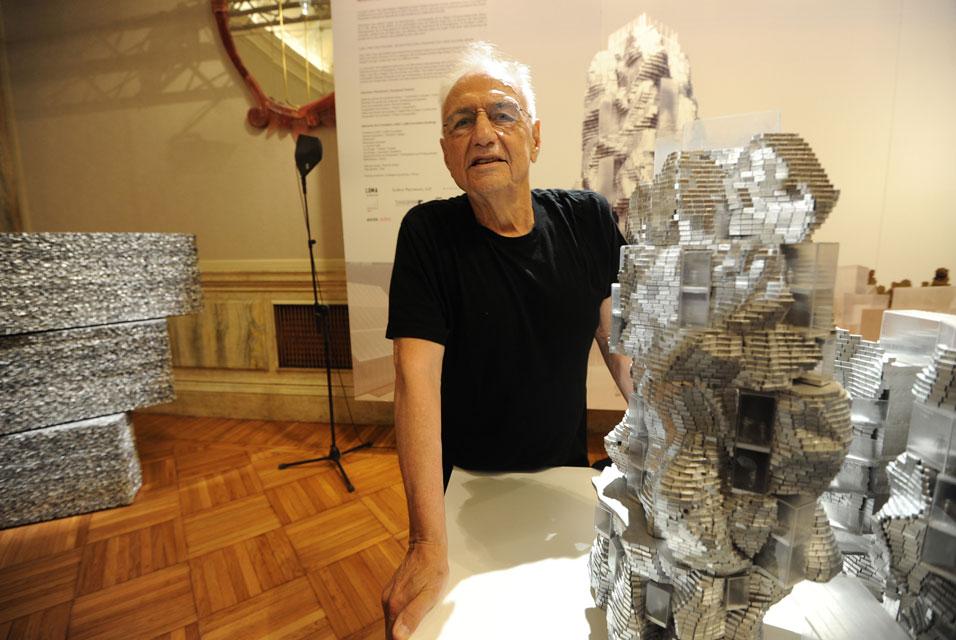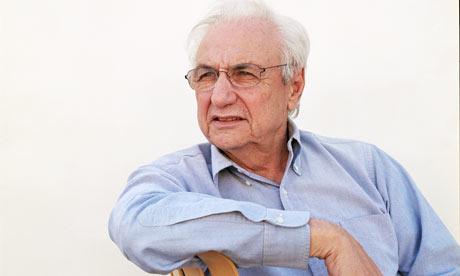

Date of birth | 1929-02-28 | ||||||||
|---|---|---|---|---|---|---|---|---|---|
Date of death | 2025-12-05 | ||||||||
Nationality | Canada United States of America | ||||||||
Occupation | Designer Instructor Architect | ||||||||
Education | Los Angeles City College Harvard University (joined but did not graduate) University of Southern California (B.Arch. 1954) | ||||||||
Office | Gehry Partners - LLP | ||||||||
Notable buildings | Dancing House Marqués de Riscal Hotel EMP Museum / MoPOP Vitra Design Museum Louis Vuitton Foundation Walt Disney Concert Hall Guggenheim Museum Santa Monica House | ||||||||
Notable awards | Presidential Medal of Freedom (2016) Pritzker Architecture Prize (1989) AIA Gold Medal (1999) RIBA Gold Medal (2000) Companion of the Order of Canada (2002) | ||||||||
Frank Owen Gehry (28 February 1929 – 5 December 2025) was a Canadian-born American architect who became one of the most internationally recognized and discussed figures in architecture from the last quarter of the 20th century, known for his original formal language and innovative use of materials.
Through projects realized under his firm Gehry Partners, founded in Los Angeles in 1962, he pushed the technical and aesthetic boundaries of architecture; he gained international fame through structures such as the Guggenheim Museum (Bilbao), the Walt Disney Concert Hall (Los Angeles), and the Louis Vuitton Foundation (Paris). Although often associated with the Deconstructivism movement, Gehry did not consider himself part of it. Embracing an approach that linked architecture with art, Gehry played a pivotal role in the transformation of contemporary architecture by incorporating advanced digital technologies alongside modeling and hand sketches in his design process.
Frank Gehry was born on 28 February 1929 in Toronto, Canada, under the name Ephraim Owen Goldberg. Coming from a Jewish family, Gehry spent much of his childhood with his grandmother Leah. Together, they played games on the kitchen floor, constructing imaginary buildings and cities from wood scraps collected from his grandfather’s hardware store.
In 1947, he moved to the United States. While living in Los Angeles at age 17, Gehry worked various jobs to support his family and continue his education. He held short-term positions as a truck driver, radio announcer, and chemical engineering assistant. His decision to study architecture was largely influenced by his childhood building games.
Frank Gehry began his architectural education in the United States. After attending Los Angeles City College, his interest in architecture deepened. Guidance from his instructors and his meeting with modernist architect Raphael Soriano solidified his commitment to the profession. After completing his studies at Los Angeles City College, he won a scholarship to the University of Southern California, where he earned his Bachelor of Architecture degree in 1954. During his student years, he worked part-time at Victor Gruen Associates; after graduation, he joined the firm full-time.
In the late 1950s, he fulfilled his military service in the U.S. Army for one year, during which he designed furniture for soldiers. After his service, he was admitted to study urban planning at Harvard University and moved with his wife to Cambridge, Massachusetts. He left Harvard before completing his degree to return to Los Angeles and pursue his architectural career.
After a brief period working for Pereira and Luckman, Gehry returned to Victor Gruen Associates. In 1960, he left this position and moved with his family to Paris in 1961. While working in the office of French architect André Remondet, he closely studied the works of Le Corbusier.
In the early years of his career, Gehry produced buildings aligned with the International Style under the influence of Le Corbusier and the Bauhaus school. Over time, however, his architectural perspective began to shift, particularly through his connections with avant-garde art circles along the California coast. His relationships with artists and his interest in experimental production led him beyond conventional architectural forms, guiding him toward the development of his own distinctive style. This period laid the foundation for Gehry’s approach that extended architecture beyond traditional boundaries.
In 1962, he returned to Los Angeles and established his own office, Gehry Associates. In 1969, he gained attention with his Easy Edges furniture series made from cardboard. From this period onward, experimental forms and the use of unconventional materials became central to his architectural production.
The 1978 renovation of his own residence, the Gehry Residence, became a turning point in his career. He reinterpreted a standard suburban house by surrounding it with unusual materials such as chain-link fencing, corrugated metal, and plywood, creating new geometric volumes. This project emerged as a concrete example of Gehry’s original approach to material, form, and structure in architecture.
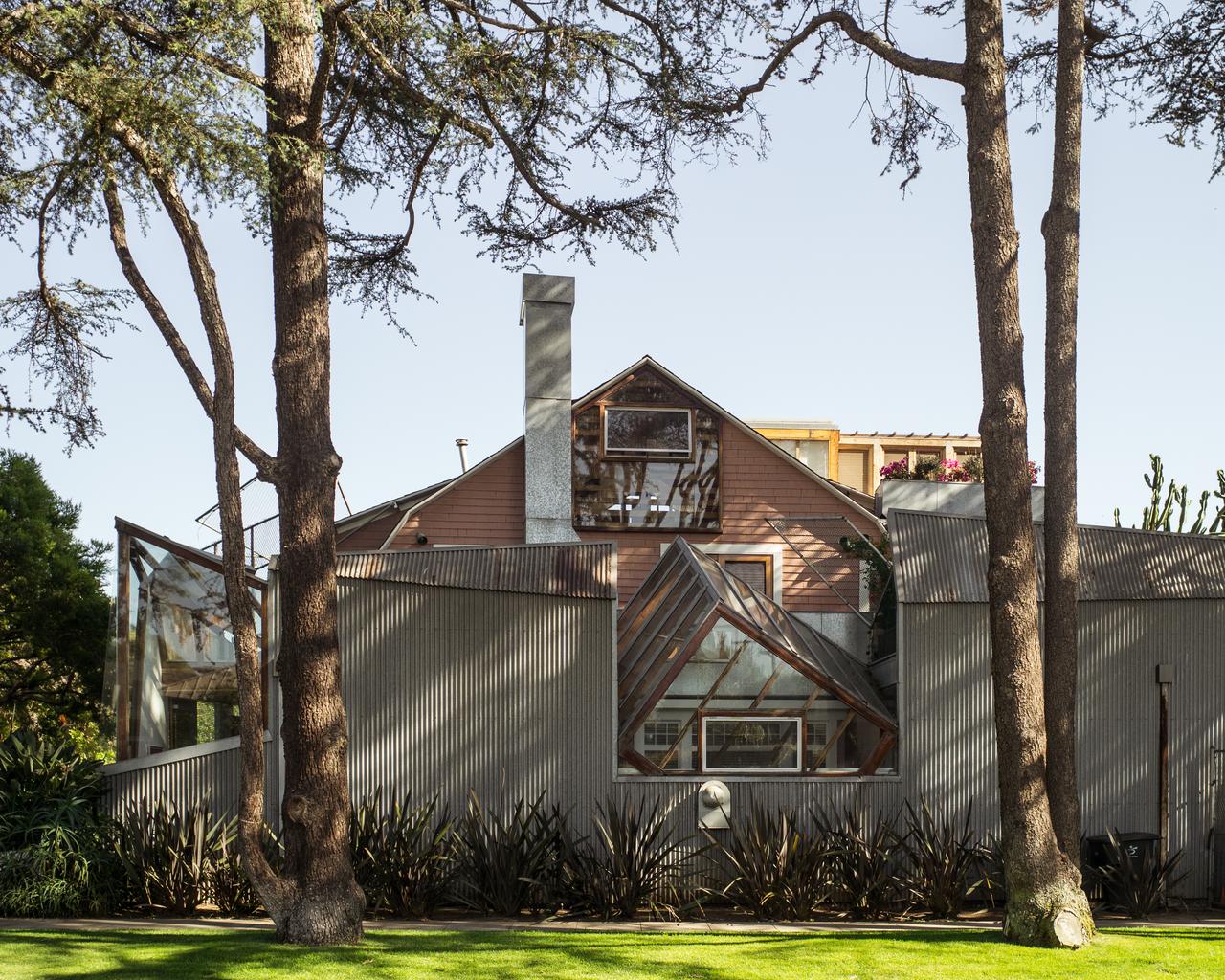
Gehry Residence (flickr)
He achieved his first major international breakthrough with the Vitra Design Museum (1989). His projects in Europe during the 1990s increased his global recognition. The Dancing House (1996) in Prague and the Guggenheim Museum in Bilbao (1997) established his worldwide reputation. The Guggenheim Museum was regarded as a landmark in contemporary architecture due to its formal dynamism and innovative construction techniques.
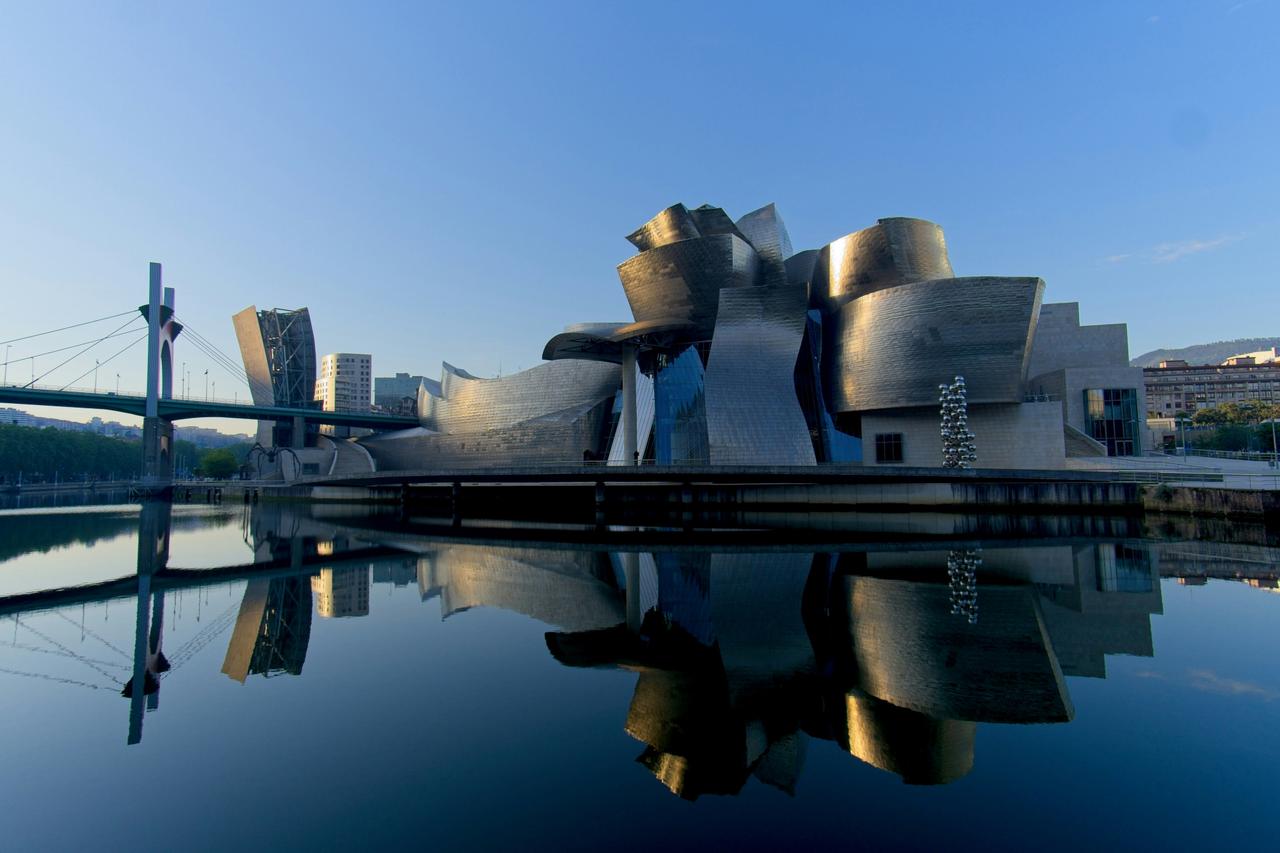
Guggenheim Museum (unsplash)
Following this building, the concept known as the “Bilbao Effect” emerged, defining the role of an iconic architectural structure in urban transformation and serving as a testament to Gehry’s impact on architecture. 【1】 During this period, he completed projects such as the Walt Disney Concert Hall (2003), the Louis Vuitton Foundation (2014), and the Marqués de Riscal Hotel (2006), constructing buildings both in the United States and Europe.
Throughout his career, Frank Gehry produced works across a broad spectrum, from residential projects to museums and from cultural facilities to commercial complexes. By integrating art, technology, and context in his creative processes, he established a significant position in contemporary architecture.
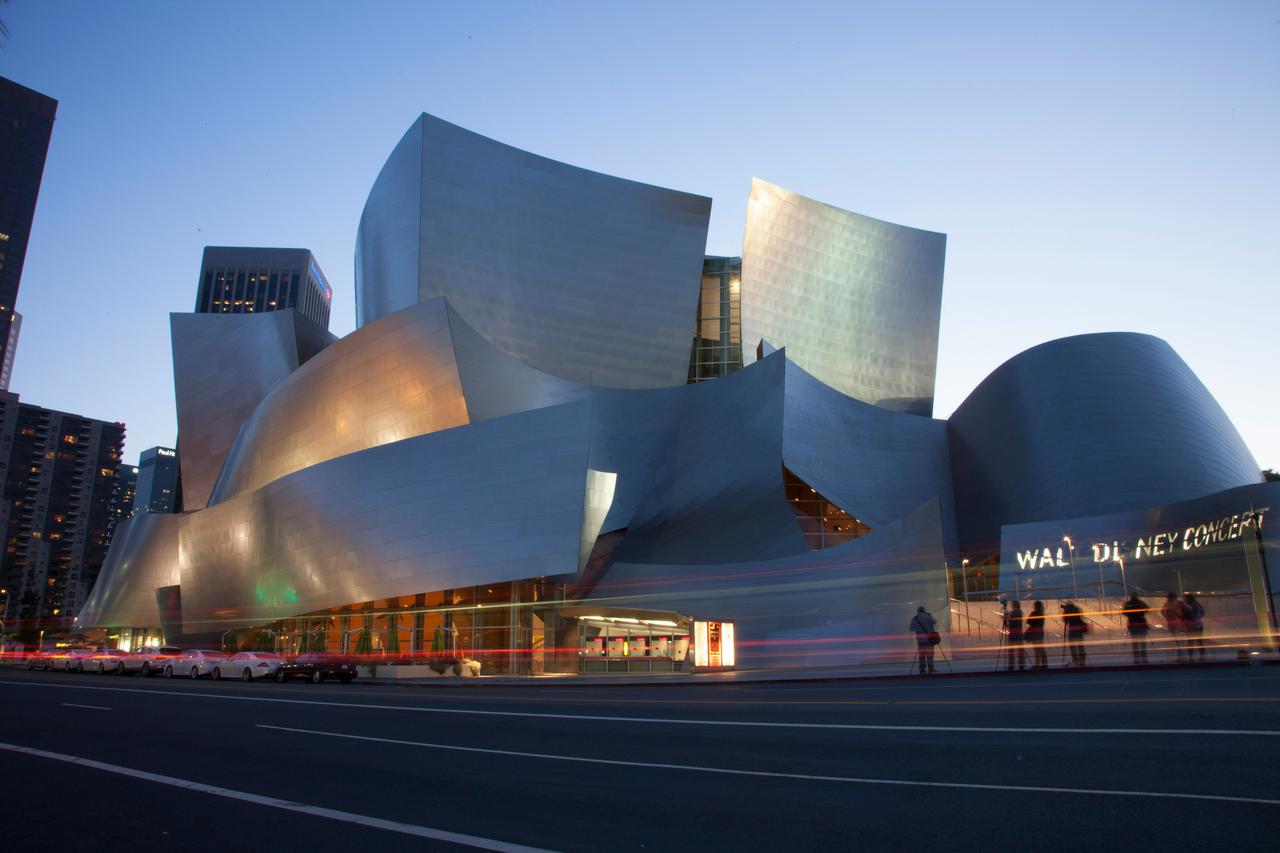
Walt Disney Concert Hall (unsplash)
Frank Gehry views architecture not merely as a process of producing functional structures but as an artistic practice. This perspective is evident in his formal and material choices. He describes his buildings as “sculptural objects” and “spatial containers,” evaluating the design process through the interaction between users and the built environment. 【2】 For Gehry, the success of a building is measured not only by the architect’s vision but also by the connection users form with that vision.
Gehry rejects conventional notions of symmetry in architectural form. His buildings typically feature asymmetry, fragmented geometries, and free-form shapes. Through this preference, he offers an alternative to modernism’s rigid and formulaic aesthetic. Although his formal language is often linked to Deconstructivism, Gehry has consistently rejected identification with this movement.
The foundation of his design process lies in hand drawings and physical models. Through these methods, Gehry explores form in three dimensions, expressing initial ideas through freehand sketches. He then develops physical models based on these sketches. The complex geometries of his buildings are generated by digitizing these models. Gehry was among the first architects to use CATIA software, developed by the French company Dassault, for architectural purposes.
Material use is also distinctive in Gehry’s designs. He incorporates low-cost industrial materials such as chain-link fencing, plywood, corrugated metal, stainless steel, and titanium as integral elements of architectural expression. At the same time, he employs more valuable materials like copper, stone, and lead cladding in different contexts, creating a broad material palette.
The use of natural light is a defining element in the interior spatial composition of his buildings. In spatial organization, volumetric flow and visual interaction take precedence over functional zoning. When relating his buildings to their context, Gehry considers environmental features and user experience. In urban projects, he aims to create a cohesive unity with the surrounding urban fabric.
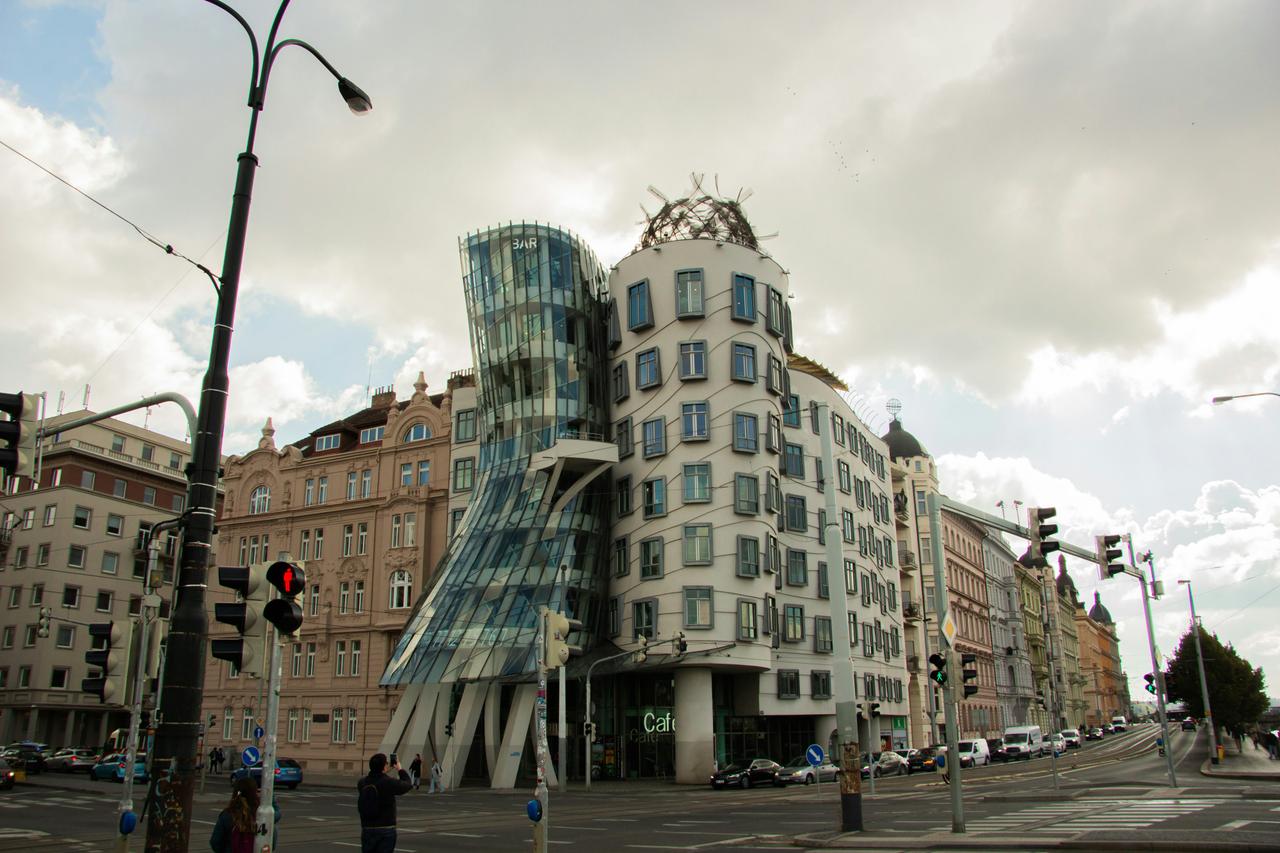
Dancing House Project Designed in Harmony with Urban Fabric (unsplash)
His close relationships with artists directly influence his design philosophy. Interactions with artists such as Constantin Brancusi, Richard Serra, Claes Oldenburg, and Coosje van Bruggen have been decisive in shaping his formal expression and material choices. In line with his belief that “architecture is art,” he often treats architectural projects as independent works of art.
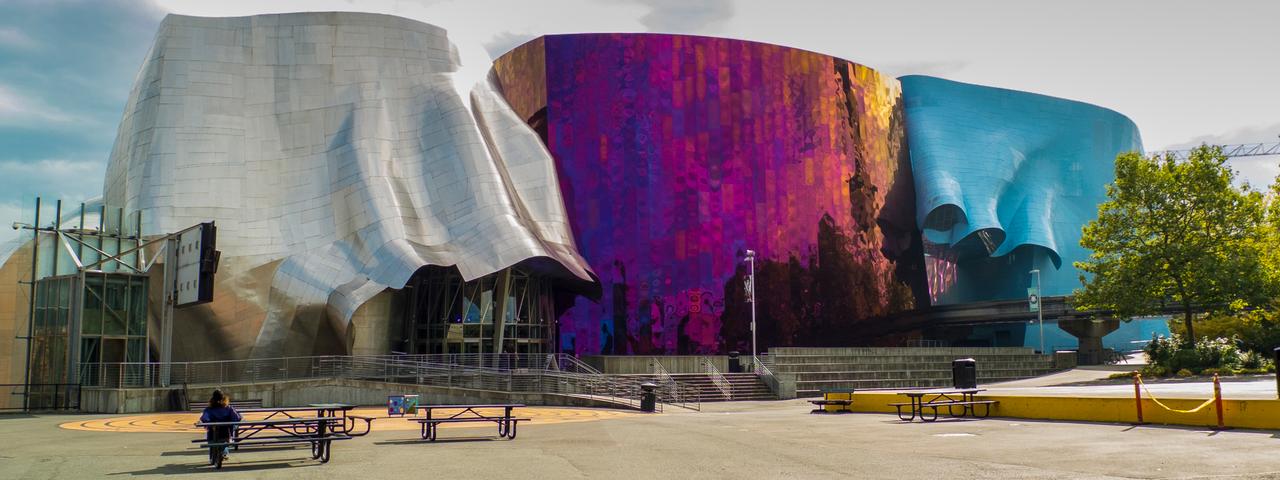
EMP Museum (flickr)
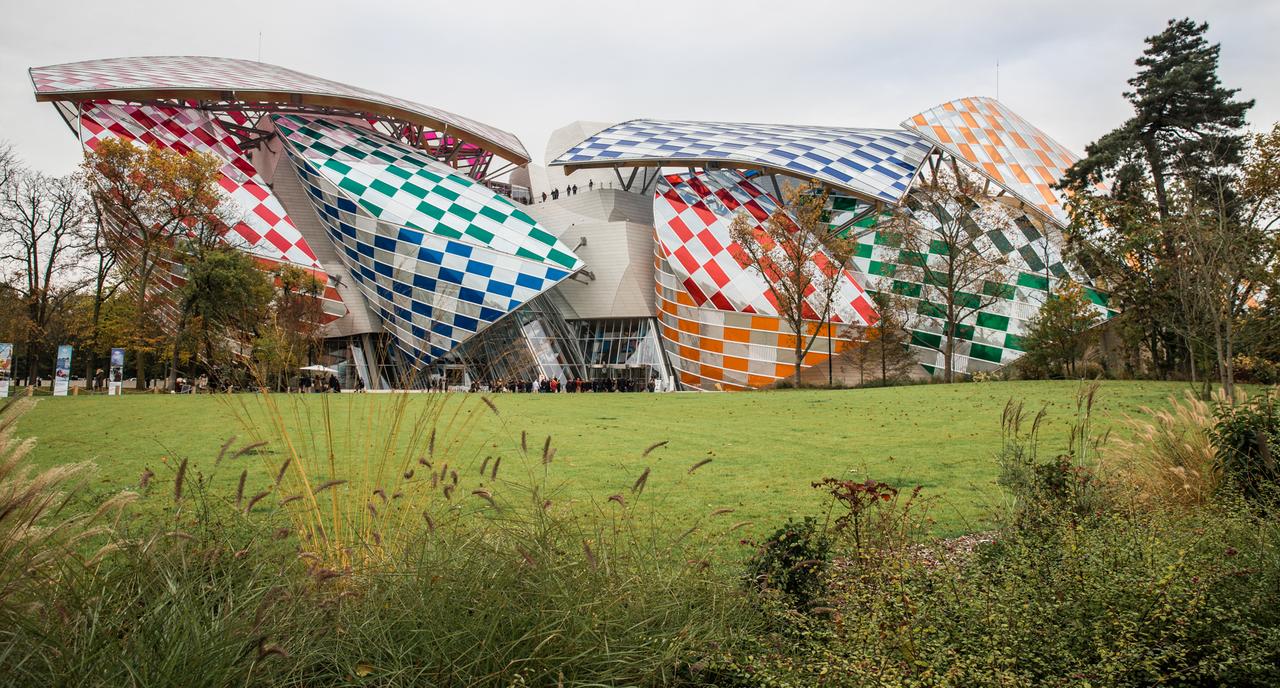
Louis Vuitton Foundation (flickr)
In his later years, Frank Gehry continued practicing architecture. Throughout the 2010s and 2020s, he remained active on large-scale cultural buildings, urban transformation projects, and public space designs.
Despite his advanced age, Gehry remained actively involved in the design process, continuing his habit of working with physical models and combining them with digital technologies to pursue innovative form explorations. He also maintained his academic engagement, serving as a faculty member at Yale University.
Recognized as one of the most influential figures in architecture of the 20th and 21st centuries, Gehry passed away on 5 December 2025 at the age of 96 in his home in Santa Monica, California.
Throughout his career, Frank Gehry received numerous national and international awards and honors in the fields of architecture, art, and design. His awards and titles, listed chronologically and categorically, are as follows:
20th Century ARCHITECTURE. "Frank Owen Gehry." *architectural-history.org.* Accessed December 8, 2025.https://architecture-history.org/architects/architects/GEHRY/biography.html
Academy of Achievement. “Frank O. Gehry.” American Academy of Achievement. Accessed December 8, 2025.https://achievement.org/achiever/frank-gehry/
BBC. "Legendary architect Frank Gehry dies aged 96." Accessed December 8, 2025.https://www.bbc.com/news/articles/c5y2p22z9gno
Forgemind ArchiMedia. "Frank O. Gehry - Parc des Ateliers JPG." Flickr. Accessed December 8, 2025.https://flic.kr/p/8rRhFQ
Fowlow, Loraine. “Frank Gehry.” *The Canadian Encyclopedia.* Accessed December 8, 2025.https://thecanadianencyclopedia.ca/en/article/frank-gehry
Gamba, Paolo. “frank gehry's house in santamonica JPG.” Flickr. Accessed December 8, 2025.https://flic.kr/p/21ycvix
Getty. “10 Frank Gehry Buildings to See in L.A.” Accessed December 8, 2025.https://www.getty.edu/news/10-frank-gehry-buildings-to-see-in-los-angeles/
Kutluay, Emir. “Modern deconstructivist building on a city street JPG.” Unsplash. Accessed December 8, 2025.https://unsplash.com/photos/modern-deconstructivist-building-on-a-city-street-f14tNOoviNo
Manning, Gavin. “Frank-Gehry JPG.” flickr. Accessed December 8, 2025.https://flic.kr/p/e9ARfR
Mehmetoğlu, Fatma. “Mimaride çığır açmış bir deha: Frank Gehry.” *gzt.* Accessed December 8, 2025.https://www.gzt.com/arkitekt/mimaride-cigir-acmis-bir-deha-frank-gehry-3593037
Ninara. “4Y1A1356 Fondation Louis Vuitton, Paris JPG.” flickr. Accessed December 8, 2025.https://flic.kr/p/PtXcy4
Psiuk, Alexander. “a building that is next to a body of water JPG.” Unsplash. Accessed December 8, 2025.https://unsplash.com/photos/a-building-that-is-next-to-a-body-of-water-ueBzLjD5mdE
The Pritzker Architecture Prize. "Frank Gehry." The Hyatt Foundation. Accessed December 8, 2025.https://www.pritzkerprize.com/laureates/1989#laureate-page-122
Zhang, Linda Pomerantz. “gray concrete building during night time JPG.” Unsplash. Accessed December 8, 2025.https://unsplash.com/photos/gray-concrete-building-during-night-time-XOeCBcX42s4
philstyle. “EMP Museum JPG.” Flickr. Accessed December 8, 2025.https://flic.kr/p/pf69MQ
[1]
Loraine Fowlow, “Frank Gehry,” The Canadian Encyclopedia, Son Erişim: 8 Aralık 2025, https://thecanadianencyclopedia.ca/en/article/frank-gehry
[2]
The Pritzker Architecture Prize, “Frank Gehry,” The Hyatt Foundation, Son Erişim: 8 Aralık 2025, https://www.pritzkerprize.com/laureates/1989#laureate-page-122

Date of birth | 1929-02-28 | ||||||||
|---|---|---|---|---|---|---|---|---|---|
Date of death | 2025-12-05 | ||||||||
Nationality | Canada United States of America | ||||||||
Occupation | Designer Instructor Architect | ||||||||
Education | Los Angeles City College Harvard University (joined but did not graduate) University of Southern California (B.Arch. 1954) | ||||||||
Office | Gehry Partners - LLP | ||||||||
Notable buildings | Dancing House Marqués de Riscal Hotel EMP Museum / MoPOP Vitra Design Museum Louis Vuitton Foundation Walt Disney Concert Hall Guggenheim Museum Santa Monica House | ||||||||
Notable awards | Presidential Medal of Freedom (2016) Pritzker Architecture Prize (1989) AIA Gold Medal (1999) RIBA Gold Medal (2000) Companion of the Order of Canada (2002) | ||||||||
Childhood and Youth
Education and Professional Orientation
Architectural Career
Design Philosophy
Notable Projects
Residential Projects
Educational and Cultural Buildings
Museums and Exhibition Spaces
Monumental and International Projects
Public and Commercial Buildings
Later Years and Death
Awards and Honors
Professional and Artistic Awards
Orders, Titles, and Civil Honors
Honorary Academic Degrees