


This article was automatically translated from the original Turkish version.
+2 More
Forgery has been a frequently encountered phenomenon in the Islamic world, both in its early periods and in subsequent centuries. Manuscripts have been subject to forgery in various forms, particularly in the art of calligraphy, book collecting, and religious texts.
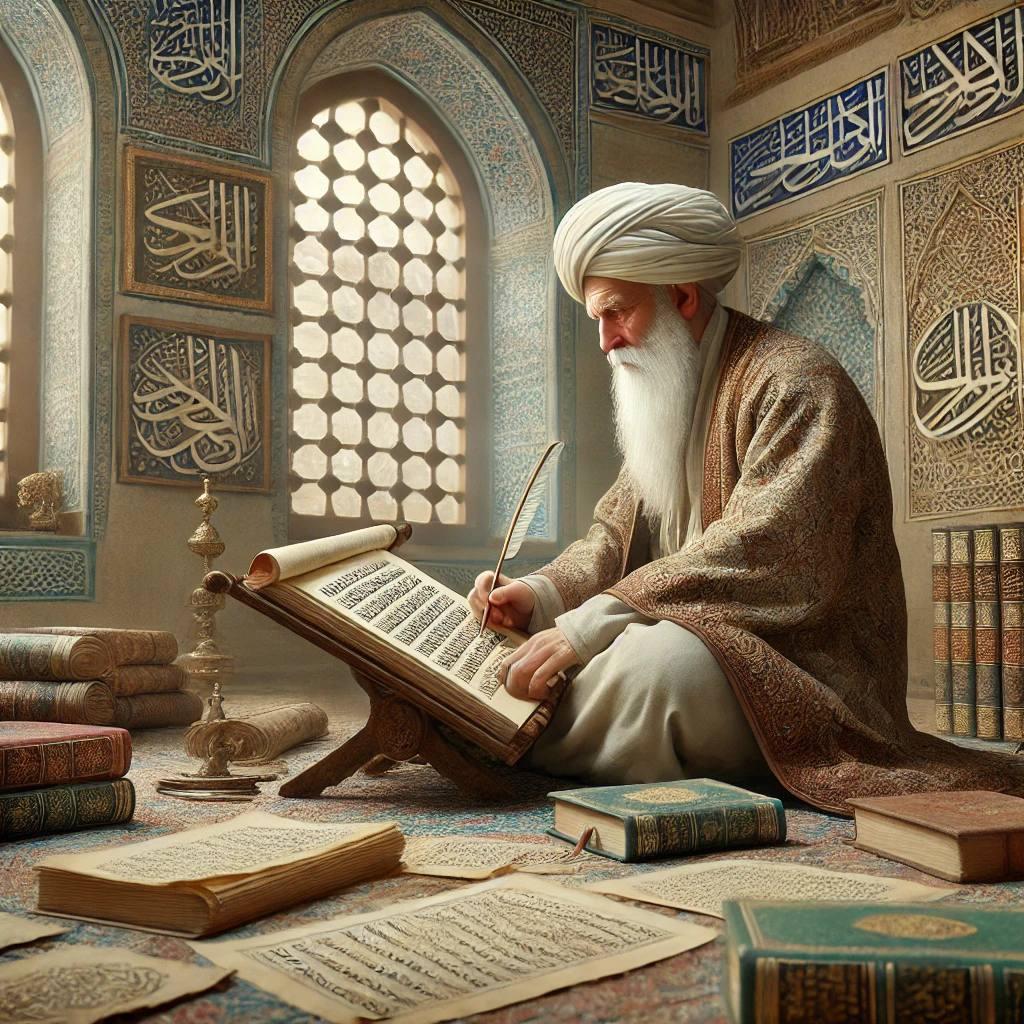
Works copied and transcribed by master calligraphers serve as guides for students.
One indicator that forgery was known from the early days of Islam is that, according to Arabic sources, the Abbasid caliph Harun al-Rashid ordered the use of papyrus rather than parchment for official divan correspondence, because writings on parchment were difficult to erase without leaving traces. Earlier caliphs had preferred papyrus over parchment for their correspondence. These measures demonstrate that forgery was recognized early on and perceived as a threat.
One reason forgery was less common in medieval manuscripts is the widespread use of isnad chains, which provided a cumulative guarantee of a text’s authenticity and served as an important tool for determining the authorship and date of a manuscript. Moreover, many texts were memorized by large audiences, offering a form of social protection against corruption or forgery. Nevertheless, there are documented cases of forged manuscripts produced in early Islamic times for religious or political reasons. According to Salahaddin al-Munajjid, some mushafs attributed to Caliphs Uthman ibn Affan and Ali ibn Abi Talib have been determined to originate from later centuries, not their claimed periods. F. Déroche attributes these misattributions to a mistaken assumption that the script styles appeared older than they actually were.
Forgery in manuscripts has been carried out through numerous methods. The most common include the falsification of dates and isnad records. In manuscripts attributed to renowned calligraphers, methods such as altering isnad chains or signature stamps, or adding false information about the number of folios, were widespread. At times, forgery also involved misattributing texts to incorrect authors. For example, works falsely attributed to Al-Ghazali, Ibn al-Arabi, and al-Suyuti do not belong to them.
Forgery is particularly common in the art of calligraphy. Among manuscripts claimed to be by Ibn al-Bawwab and Ya‘qub al-Musta‘simi, forged faraq notations and reproductions via tracing are among the methods used. Furthermore, admiration for these calligraphers’ works has led to an increase in the number of forgeries. The boundary between imitation and forgery is especially blurred in calligraphy, as imitation is an essential element of training that expresses respect for the master. Modern methods for detecting forgery include watermark analysis, ink examinations, and Carbon-14 dating techniques, all of which play a crucial role in identifying forgery by revealing the temporal characteristics of manuscript materials.
Book collecting has been another factor encouraging forgery. Manuscripts bearing the signatures of renowned calligraphers have attracted great interest among collectors and have generated high profits through counterfeit versions. For instance, Hasan ibn Abdullah al-Sayrafî added forged certification notes to manuscripts to increase their value. Additionally, Ibn Bādīs’s work Umdat al-Kuttab includes sections on how to age paper, demonstrating how technical knowledge was applied in forgery.
Examples of forgery have been identified in libraries and collections around the world. For example, mushafs attributed to Ibn Muqla in the McGill Collection have been shown to rest on unfounded claims. Similarly, some manuscripts in the French National Library have been found to contain forged isnad records and false attributions.
In private collections, commercial profit motives have played a significant role in the emergence of forgeries. For example, damaged sections of a folio were often scraped off and replaced with leaves taken from other manuscripts.
Not only texts but also single-page illustrations and illuminated folios have been subject to forgery. Such works have become prime targets for those motivated by commercial interests. For example, the famous 10th–16th century painting “The Seated Scribe” attributed to Bihzad and drawings by Riza al-Abbasi have frequently been reproduced as forgeries and circulated in the art market. The high value placed on single folios has led to damaged leaves being combined with fragments from other manuscripts or supplemented with forged pages.
In more modern times, as illuminated folios and drawings have gained value, altered works have attracted greater attention. Digital imaging techniques and high-resolution scanning have aided in detecting such forgeries.
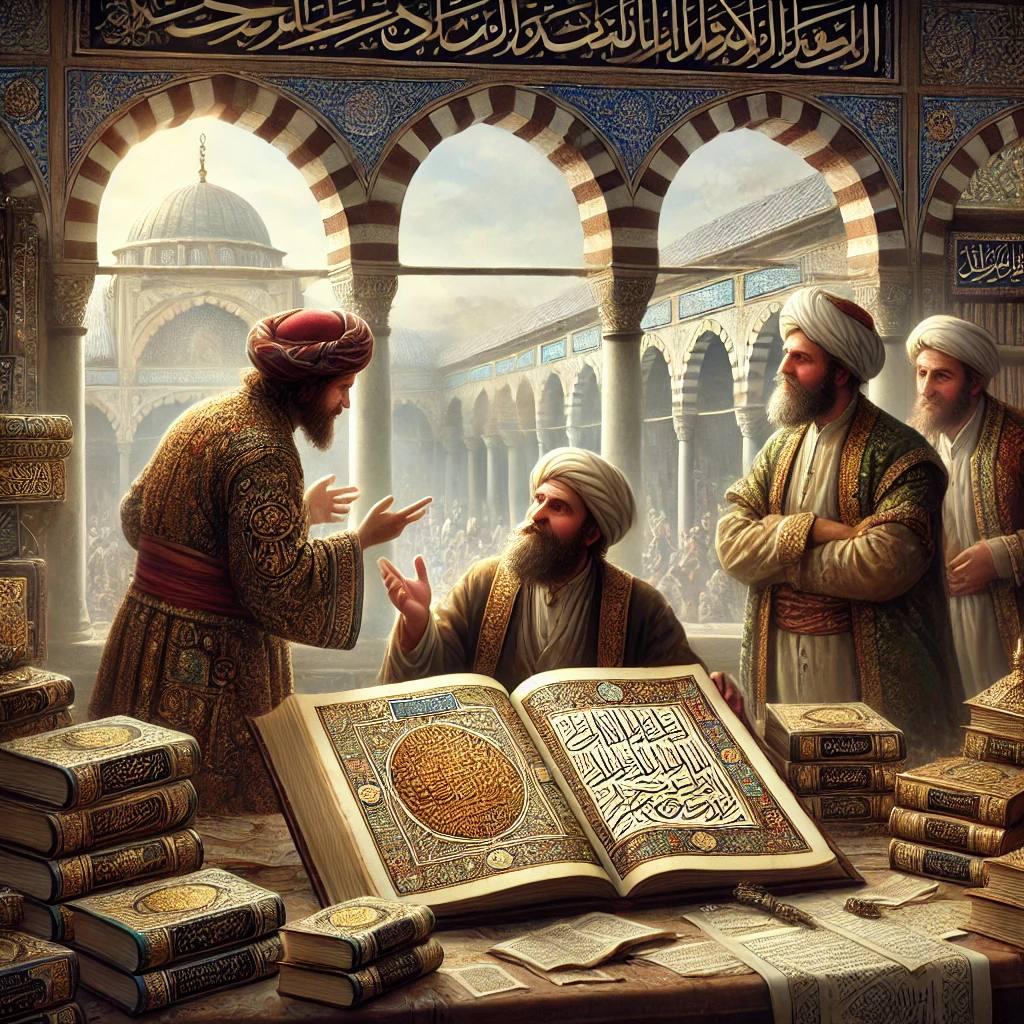
Works described as ‘palace manuscripts’ have attracted attention in every era.
Mushafs attributed to prominent figures such as Caliph Uthman ibn Affan and Ali ibn Abi Talib are in fact not from their era but date to later centuries. According to Salahaddin al-Munajjid, these misattributions stem from religious and political motivations. Additionally, the perception that the scripts used in these mushafs appear older than those of later periods has strengthened claims of forgery. This situation casts doubt on the authenticity of manuscripts claimed to originate from the earliest periods.
Forgery in manuscripts has persisted as a significant issue in Islamic cultural heritage. Methods of forgery applied across diverse fields—dates, calligraphy, collecting, and artistic works—have made it difficult to identify genuine manuscripts. However, research into the causes and methods of forgery holds great importance for the preservation of this heritage.
Boydak, Fatma Şeyma. “Türk İslâm Cilt Sanatında ’Hasbiyallah’ Yazılı Mühürlerden Örnekler”. Diyanet İlmi Dergi 59, no. 4 (December 2023): 1483–1514. https://doi.org/10.61304/did.1360518.
Déroche, François. 2006. Islamic codicology: an introduction to the study of manuscripts in Arabic script. London.
Gacek, Adam. 2001. The Arabic manuscript tradition: a glossary of technical terms and bibliography. Leiden/Chicago.
Gacek, Adam. 2020. Arapça El Yazmaları İçin Rehber. Klasik Yayınları.
James, David. 1992. The master scribes: Qurans of the 11th to 14th centuries. A.D. London/Oxford.
The Encyclopaedia of Islam. 1960-2005. 12c. New ed. Leiden, Brill.
el-Mişvehî, Abid Süleyman. 1994. Enmatu't tevsîk fi'l-mahtuti'l-Arabi fi'l-karni't-tasii'l-hicri. Riyad. Mektebetü'l-Melik Fehd el-Vataniyye

No Discussion Added Yet
Start discussion for "Forgery in Islamic Period Manuscripts" article
Forgery in Early Manuscripts
Methods and Motives of Forgery
Forgery and Collecting
Forgery in Illumination and Painting
Forgery and Misattributions in Mushafs