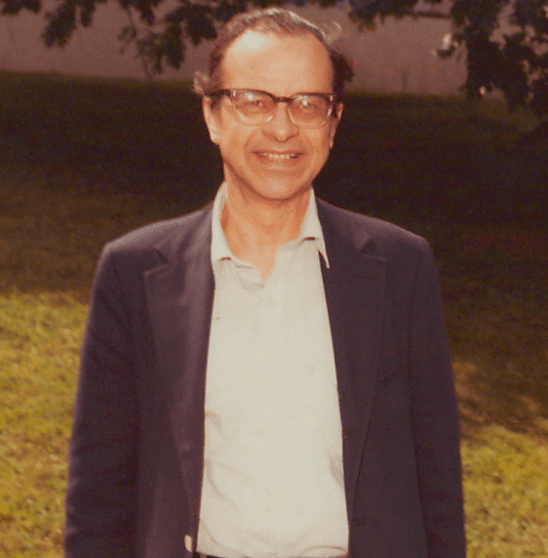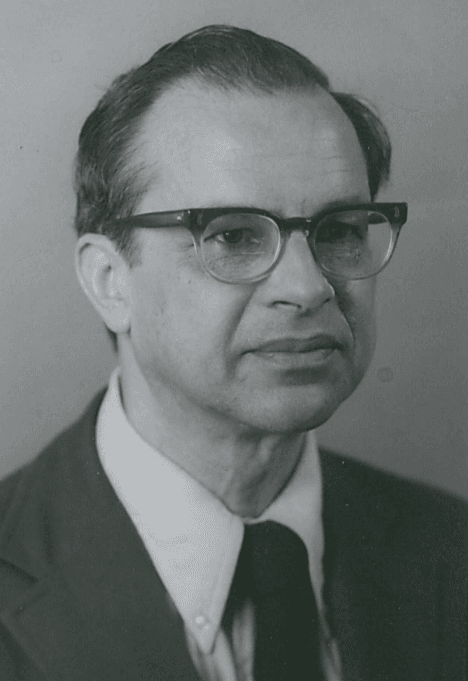
+2 More

Scientific Contributions | SU(6) symmetry model Work on chiral symmetry Contributions to the relationship between mathematics and physics Application of group theory to physics | ||||||||
|---|---|---|---|---|---|---|---|---|---|
Profession | Theoretical physicist | ||||||||
Field | Particle physics High energy physics Mathematical physics | ||||||||
Education | Galatasaray High School Imperial College (PhD) Istanbul University | ||||||||
Award | Einstein Medal (1979) Wigner Medal (1986) Nobel Prize in Physics nominee (1985) TÜBİTAK Science Award (1969) | ||||||||
Birth | April 7, 1921, Istanbul | ||||||||
Death | April 13, 1992, New Haven (USA) | ||||||||
Feza Gürsey (1921–1992) was one of the leading Turkish theoretical physicists of the 20th century. He gained international recognition for his work in particle physics and mathematical physics. His contributions to the application of symmetry concepts and group theory in physics established him as one of the key figures in modern high-energy physics.
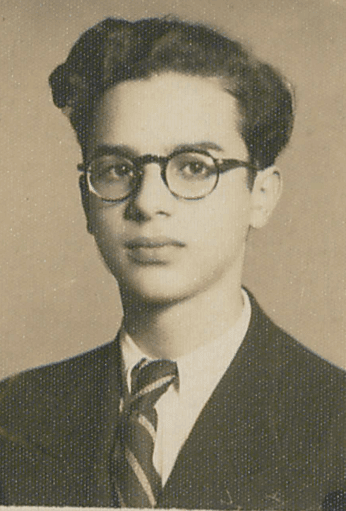
Feza Gürsey Gençliği (Boğaziçi Üniversitesi Arşiv)
Gürsey’s research focused on developing theoretical models to explain the structure and interactions of fundamental particles. His contributions to topics such as SU(6) symmetry, chiral symmetry, and conformal invariance are well documented in the scientific literature.
Gürsey played a significant role in the development of theoretical physics in Türkiye. He led the institutionalization of theoretical physics research at Middle East Technical University and later continued his academic work at Yale University.
Feza Gürsey was born on 7 April 1921 in Istanbul into a family with a strong scientific and intellectual background. His father, Reşit Gürsey, was a military physician, and his mother, Remziye Hisar, earned a doctorate in chemistry from the Sorbonne and is recognized as one of Türkiye’s first female chemists. In this environment, Gürsey grew up immersed in the values of scientific thought and academic discipline from an early age.【1】

Childhood photograph taken with Feza Gürsey's sister and mother (Boğaziçi Üniversitesi Arşivi)
Gürsey’s childhood coincided with Türkiye’s political and social transformation. During the War of Independence, his mother taught in Adana while his father served as a doctor in Ankara, leaving him separated from his family; during this period he was raised by his grandmother and aunt.
After the war, when his family moved to Paris, Gürsey lived there for a time and began his primary education at the Jeanne d’Arc School. His early exposure to diverse cultural environments laid the foundation for his later integration into the international scientific community.
Feza Gürsey’s education was shaped by diverse cultural and academic environments from an early age. He began his primary education in Paris with his family at the Jeanne d’Arc School but continued his studies in Istanbul after his mother returned to Türkiye. His secondary education took place as a boarding student at Galatasaray High School, where the disciplined academic environment strengthened his interest in scientific thinking. Gürsey graduated from Galatasaray High School in 1940.
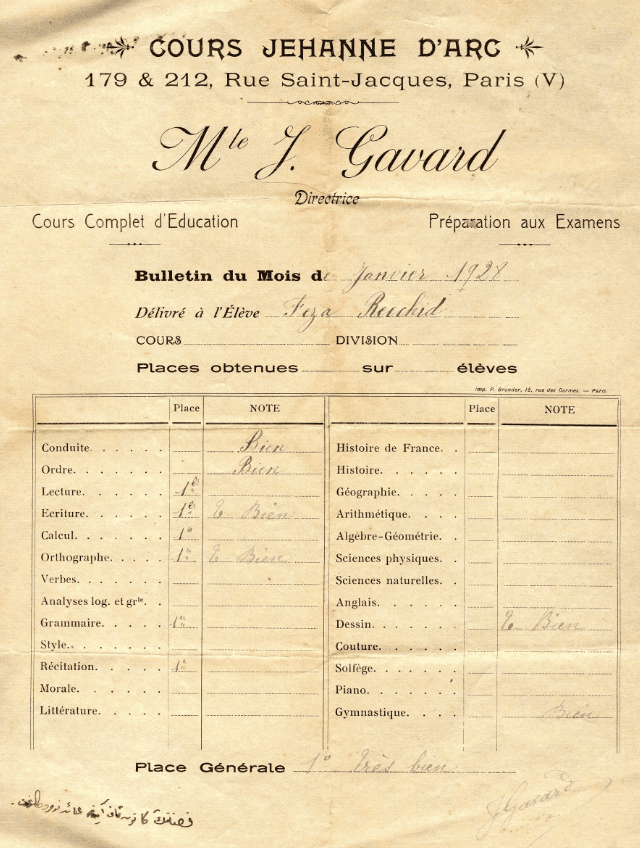
Feza Gürsey’in Jeanne D’Arc Okulundan 1928’de Aldığı Karnesi (Boğaziçi Arşivleri)
In the same year, Gürsey enrolled in the Mathematics-Physics Department of the Faculty of Science at Istanbul University, where he focused particularly on mathematical physics. The education he received during this period went beyond basic physics knowledge; it enabled him to understand the relationship between mathematics and physics, forming the foundation for his later theoretical approaches. Gürsey graduated from university in 1944 and quickly acquired the academic training necessary to pursue further research.
After graduation, Gürsey won a competitive examination organized by the Ministry of National Education, which sent him to England to continue his higher education. He began his doctoral studies at Imperial College, completing his thesis titled “Applications of Quaternions to Field Equations” in 1950. This work revealed his early scientific approach of applying mathematical structures to physical problems.
After earning his doctorate, Gürsey conducted research at the University of Cambridge, where he deepened his knowledge of theoretical physics and established contact with leading scientists of the era. This period was decisive in his entry into the international scientific community and in shaping the intellectual foundation of his future work.
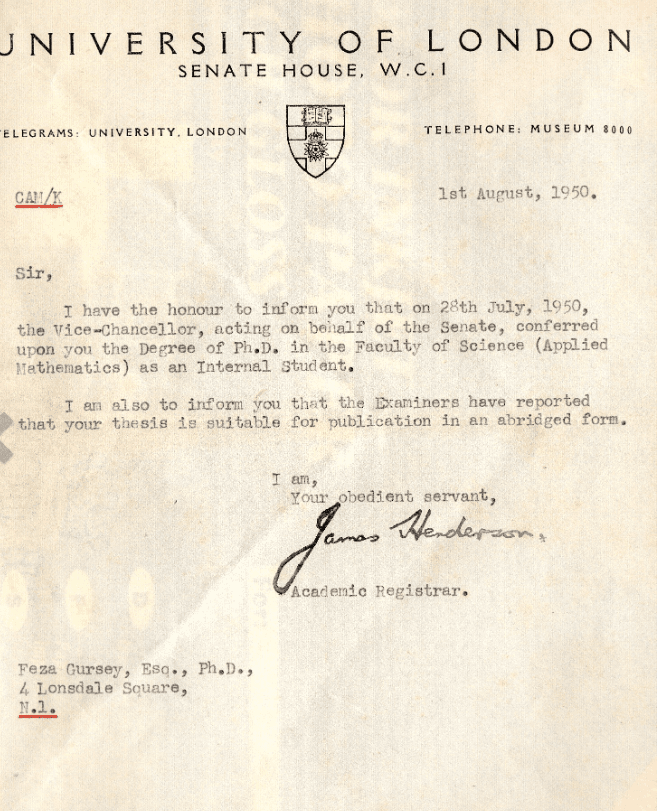
Doktorasını Almaya Hak Kazandığını Bildiren Belge (Boğaziçi arşivleri)
After completing his doctoral work, Feza Gürsey began his academic career in 1951 as a physics assistant at the Faculty of Science of Istanbul University. This period marked the beginning of both his scientific productivity and his efforts to advance theoretical physics in Türkiye.
In 1953, Gürsey was appointed associate professor and made vigorous efforts to establish a strong research environment in theoretical physics at Istanbul University. He did not limit himself to teaching but also contributed to the development of an academic culture that encouraged scientific research.
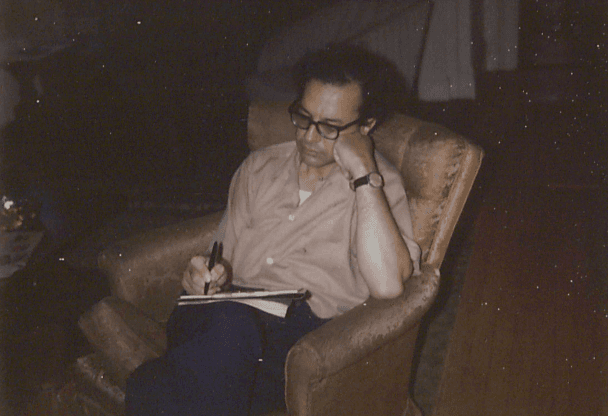
Photograph of Feza Gürsey Taking Notes on a Single Seat (Boğaziçi Üniversitesi Arşivi)
During this early phase of his career, Gürsey took steps to strengthen his connections with international scientific circles. Between 1957 and 1961, he conducted research at Brookhaven National Laboratory as well as at Princeton and Columbia Universities, where he met and collaborated with leading figures in contemporary physics. These experiences provided the groundwork for his scientific work and future research initiatives.
This period is also regarded as the time when Gürsey’s scientific work matured and began to gain international recognition. While maintaining his academic activities in Türkiye, his presence at overseas research centers influenced his scientific output and played a key role in his transition to the next stage of his career.
Feza Gürsey’s academic career acquired an international character from the 1960s onward, during which he established strong ties with the world’s leading research centers. In 1961, he joined Middle East Technical University, where he played a pioneering role in institutionalizing theoretical physics and contributed significantly to the establishment of a robust research culture at the university.
During this time, Gürsey did not confine his work to Türkiye alone. He maintained active engagement with the international scientific community through research visits to Brookhaven National Laboratory, Princeton, and Columbia Universities. His time at these institutions allowed him to focus on the most important problems in contemporary physics and to collaborate with leading scientists in the field.
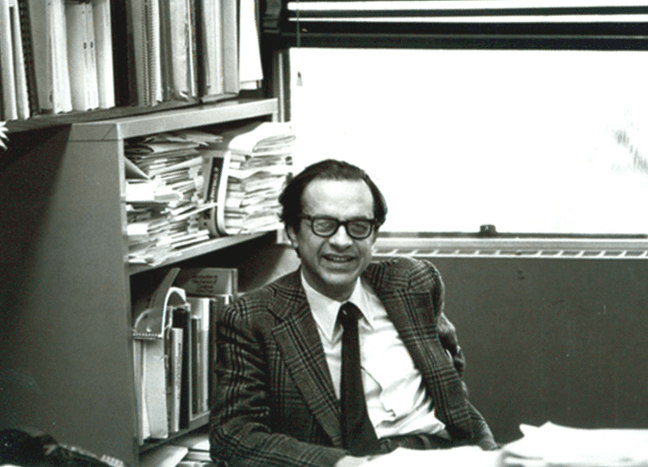
Feza Gürsey Yale Üniversitesi’ndeki Odasında (Boğaziçi Üniversitesi)
From the 1960s onward, Gürsey alternated his appointments between Middle East Technical University and Yale University. This dual academic engagement enabled him to support scientific production in Türkiye while enhancing his international influence. In 1974, he was appointed professor and chair of the physics department at Yale University, where he continued his research.
During his tenure at Yale, Gürsey led the establishment of close collaboration between the physics and mathematics departments, drawing attention through his interdisciplinary approach. He not only made significant scientific contributions but also played an important role in the structural development of academic institutions.
Feza Gürsey’s scientific work was concentrated primarily in theoretical and mathematical physics, offering original contributions to understanding the structure and interactions of fundamental particles. His most distinctive feature was the creative and profound application of mathematical methods, particularly group theory, to solve physical problems. This approach elevated his work to a unique position within modern physics.
Gürsey recognized the importance of symmetry in particle physics at an early stage and conducted pioneering research in this area. His work on the symmetries of strong interactions played a crucial role in introducing the concept of “chiral symmetry” into the physics literature. This symmetry was later developed within the framework of the nonlinear sigma model and became a fundamental approach in particle physics.
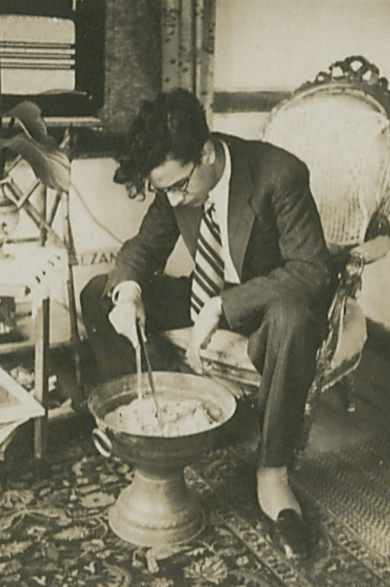
Feza Gürsey's Childhood Photograph Taken at Home (Boğaziçi Üniversitesi Arşivi)
In a 1962 paper co-authored with Luigi Radicati, he demonstrated that fundamental particles could be treated independently of their spin and unitary spin properties, and proposed that the SU(6) symmetry group provided a valid approximate symmetry for quarks at low energies. This proposal became a turning point in particle physics and laid the groundwork for subsequent theoretical developments.【2】
Gürsey’s contributions extended beyond the SU(6) model. His work on symmetries based on exceptional groups such as E(6) and E(7) also advanced theories aimed at unifying fundamental interactions. In this context, the application of Lie groups to physical problems became one of the most striking aspects of his research.
In addition, Gürsey deepened the relationship between mathematics and physics through his studies on quaternionic and octonionic structures. He also conducted research on conformal invariance and Mach’s principle. These efforts demonstrated that his influence extended beyond particle physics to other fields such as general relativity and statistical physics.
Overall, Gürsey’s scientific contributions were centered on the effort to express the symmetries of nature within a mathematical framework. This approach distinguished him as a unique scientist who combined physical intuition with mathematical creativity.
Feza Gürsey is recognized as one of the leading scientists of 20th-century theoretical physics for his original approach to applying mathematical methods to physical problems. His work, grounded in symmetry and group theory, demonstrates that he was not merely a researcher solving specific problems but a theorist who transformed the very way physics is conceptualized.
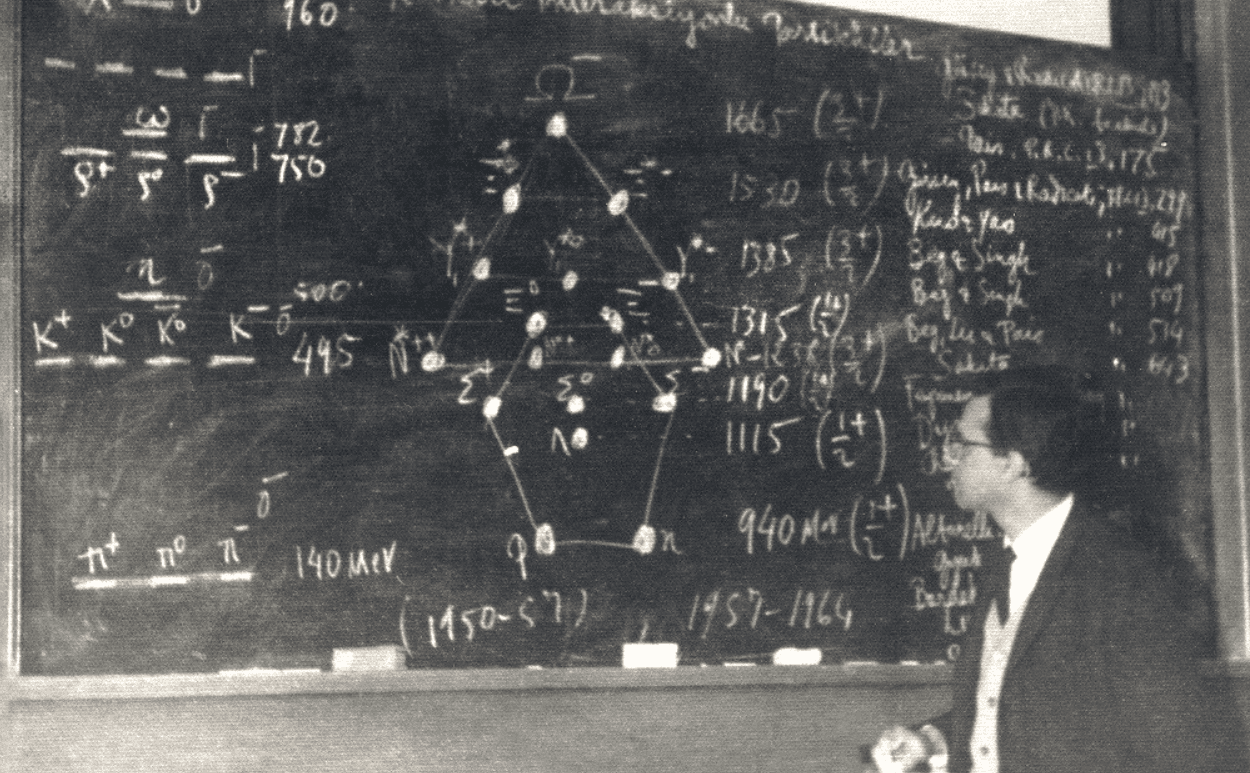
Kara Tahta Önünde Ders Anlatırken Çekilmiş Fotoğrafı (Boğaziçi Arşivleri)
Gürsey’s scientific significance lies in his deepening of the idea that physical structures in nature can be expressed through mathematical formulations. The tradition of understanding nature through the language of mathematics, which developed since the 17th century, gained new dimensions in the 20th century with quantum theory and relativity; Gürsey was among those who advanced this tradition. His work strengthened the interaction between mathematics and physics and contributed to their renewed convergence.
In this context, Gürsey was important not only for his technical contributions but also for the conceptual framework he developed for physical theories. His courage to develop alternative and innovative models, rather than remaining bound to established theories, was a defining feature of his scientific personality. In this sense, he is regarded as a representative of revolutionary transitions in theoretical physics.
Gürsey’s work encompassed diverse fields including high-energy physics, general relativity, and mathematical physics, revealing him as a versatile theoretical physicist. His ability to identify symmetries in nature and express them in mathematical language had a lasting impact on the scientific community.
Feza Gürsey was not only an internationally renowned scientist but also made significant contributions to the development of theoretical physics in Türkiye. Upon joining Middle East Technical University in 1961, he led the institutionalization of theoretical physics and helped establish a strong research tradition at the university.

Photograph of Feza Gürsey Talking on the Telephone (Boğaziçi Üniversitesi Arşivi)
Gürsey’s work at METU was decisive in establishing a modern understanding of physics in Türkiye. He contributed to the emergence of theoretical physics as an independent discipline, supporting this process not only through research but also through education. The students he trained and the academic environment he created played a vital role in ensuring the continuity of scientific production in Türkiye.
In addition, Gürsey actively worked to transfer his international scientific experience back to Türkiye. Through the relationships he built with international research centers, he helped connect Türkiye’s academic circles with global science, serving as a crucial conduit for the circulation of scientific knowledge.
Gürsey’s scientific activities in Türkiye were also significant because they demonstrated that theoretical physics could thrive even under limited resources. His efforts created the foundation for the strengthening of scientific thought in Türkiye and the emergence of new generations of researchers.
Feza Gürsey received numerous national and international awards in recognition of his scientific contributions and was widely respected by the scientific community. His theoretical work, particularly on the symmetries and mathematical structures of fundamental particles, earned him a prestigious position in the world of science.
Gürsey’s scientific achievements were internationally acknowledged by his nomination for the Nobel Prize in Physics. His nomination for the 1985 Nobel Prize in Physics is widely regarded as clear evidence of his influence and the importance of his scientific contributions to theoretical physics.【3】
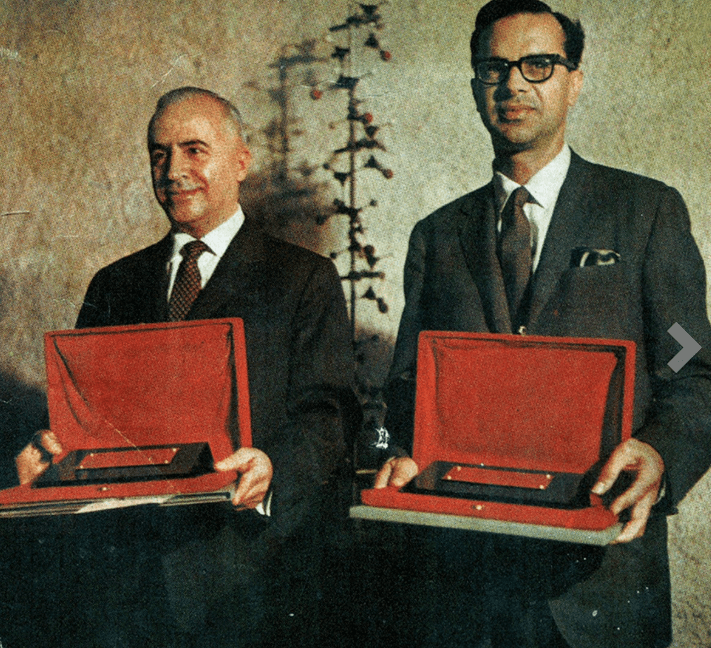
Feza Gürsey, TÜBİTAK Bilim Ödülünü Töreninde Prof. Dr. Bahattin Baysal ile Birlikte, 11 Kasım 1968 (Boğaziçi Arşivleri)
Among the awards he received are the TÜBİTAK Science Award in 1969, the J. R. Oppenheimer Award (shared with Sheldon Glashow) in 1977, the Einstein Medal in 1979, and the Wigner Medal in 1986. Numerous medals and honorary awards from universities and scientific institutions further solidified Gürsey’s scientific reputation.【4】
Feza Gürsey was a scientist whose appeal extended beyond his scientific work to his multifaceted intellectual personality. In addition to his deep knowledge of physics and mathematics, his interest in history, literature, art, and diverse cultures revealed a broad intellectual horizon.
Gürsey’s philosophy of science was grounded in the belief that mathematics is a fundamental tool for understanding nature. In his work, he sought to explain physical reality through mathematical structures, continuing one of the most important traditions in theoretical physics. In this context, he developed a unique method that combined mathematical imagination with physical intuition.
Demonstrating an innovative and courageous attitude in his scientific work, Gürsey aimed to transcend the boundaries of established theories and freely developed alternative models. In this regard, he emerged as a researcher who embraced creative and critical approaches to scientific thought.
In personal terms, Gürsey inspired respect among his peers. He maintained a supportive and collaborative attitude in his relationships with students and colleagues. With his broad knowledge and strong memory, he delivered compelling discussions on scientific and cultural topics, and was regarded not merely as a scientist but as an intellectual and cultural figure.
Feza Gürsey remained an active and productive scientist until the final years of his life, continuing his academic work at Yale University, where he had spent many years. He held his position at Yale from 1974 until 1990, during which he continued his research in theoretical physics and maintained strong ties with the international scientific community.
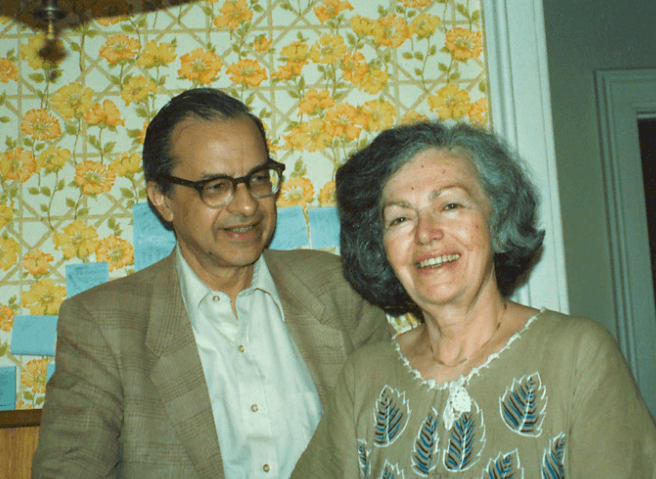
Feza Gürsey eşi Suha Gürsey (Boğaziçi Arşivleri)
In his later years, Gürsey battled a serious illness but continued his scientific work as much as possible. He passed away on 13 April 1992 in New Haven, Connecticut, United States, due to the progression of his illness.
His death was regarded as a major loss not only in Türkiye but also in the international scientific community.
Feza Gürsey left a lasting impact on both Türkiye and the international scientific community through his work in theoretical physics. His application of group theory and symmetry concepts to physical problems played a crucial role in the development of modern high-energy physics and opened new research avenues for subsequent generations of scientists.
Gürsey’s scientific legacy extends beyond the numerous papers he published and the theoretical frameworks he developed. The academic structures he established, the students he trained, and the conceptual approaches he introduced ensured the enduring nature of his influence. His leadership in establishing theoretical physics in Türkiye and creating a lasting tradition in the field is considered one of his most important contributions.
Internationally, Gürsey is recognized for his work strengthening the relationship between mathematics and physics and for making significant contributions to their renewed convergence.
Gürsey’s scientific approach, which seeks to understand natural structures within a mathematical framework, continues to serve as a fundamental reference point in theoretical physics today.
Boğaziçi Üniversitesi Arşivleri. “Bilim Dervişi Feza Gürsey.” bogaziciarsivleri.bogazici.edu.tr. Accessed March 18, 2026.https://bogaziciarsivleri.bogazici.edu.tr/sergi/gursey.php
Boğaziçi Üniversitesi Feza Gürsey Fizik ve Matematik Merkezi. “Feza Gürsey’in Biyografisi.” fezagursey.bogazici.edu.tr. Accessed March 18, 2026.https://fezagursey.bogazici.edu.tr/tr/feza-gurseyin-biyografisi
Boğaziçi Üniversitesi Kütüphanesi Dijital Arşivi. "Feza Gürsey Koleksiyonu." digitalarchive.library.bogazici.edu.tr. Accessed March 18, 2026.
Fizikciler.info. "Prof. Dr. Dr. H. C. Feza Gürsey (1921–1992)." Accessed March 18, 2026.https://www.fizikciler.info/index.php/13-fizikciler/100-prof-dr-dr-h-c-feza-guersey-1921-1992
Topdemir, Hüseyin Gazi. “Kuramsal Fizikte Evrensel Bir Değer: Feza Gürsey.” *Bilim ve Teknik*, (2011): 80-84. Accessed March 18, 2026.https://bilimteknik.tubitak.gov.tr/wp-content/uploads/sites/154/2025/09/4006634e-bfaf-4e7b-89ac-bccce44edb0b-1.pdf
[1]
"Prof. Dr. Dr. h.c. Feza GÜRSEY (1921 – 1992)," Fizik Hocalarımızla Anılar, erişim tarihi: 15 Haziran 2026, https://www.fizikciler.info/index.php/13-fizikciler/100-prof-dr-dr-h-c-feza-guersey-1921-1992
[2]
Hüseyin Gazi Topdemir, "Kuramsal Fizikte Evrensel Bir Değer: Feza Gürsey," Bilim ve Teknik (Şubat 2011): 81. https://bilimteknik.tubitak.gov.tr/wp-content/uploads/sites/154/2025/09/4006634e-bfaf-4e7b-89ac-bccce44edb0b-1.pdf
[3]
Topdemir, "Kuramsal Fizikte Evrensel Bir Değer: Feza Gürsey," 81.
[4]
"Feza Gürsey's Biography," Boğaziçi Üniversitesi Feza Gürsey Fizik ve Matematik Uygulama ve Araştırma Merkezi, Accessed June 15, 2026,https://fezagursey.bogazici.edu.tr/tr/feza-gurseyin-biyografisi

Scientific Contributions | SU(6) symmetry model Work on chiral symmetry Contributions to the relationship between mathematics and physics Application of group theory to physics | ||||||||
|---|---|---|---|---|---|---|---|---|---|
Profession | Theoretical physicist | ||||||||
Field | Particle physics High energy physics Mathematical physics | ||||||||
Education | Galatasaray High School Imperial College (PhD) Istanbul University | ||||||||
Award | Einstein Medal (1979) Wigner Medal (1986) Nobel Prize in Physics nominee (1985) TÜBİTAK Science Award (1969) | ||||||||
Birth | April 7, 1921, Istanbul | ||||||||
Death | April 13, 1992, New Haven (USA) | ||||||||
Early Life and Family
Education
Early Academic Career
International Academic Career
Scientific Work and Theoretical Contributions
His Place and Scientific Significance in Theoretical Physics
Contributions to Science and Institutions in Türkiye
Awards and Scientific Recognition
Personality, Intellectual Outlook, and Philosophy of Science
Final Years and Death
Legacy and Influence