

`aesthetics` Related Article Results
 Ph
PhPhilosophy of Dance
Philosophy of dance is a field that examines fundamental philosophical questions such as the ontology, aesthetics, epistemology, and ethical dimensions of dance. This discipline addresses questions like what dance is, how it can be considered an art form, what meanings it carries, and how it produces knowledge and expression through bodily movement. It also analyzes the relationship between dance and society, culture, identity, and politics from a philosophical perspective. In this way, the phil
EN
Aslı Öncan
PhPhilosophy of Theatre
Philosophy of theatre is a branch of philosophy that produces systematic thought on the nature, purpose, function, and fundamental concepts of theatre. It addresses the basic elements of the art of theatre—such as representation, imitation, reality, fiction, acting, the relationship with the audience, and staging—at a conceptual level. The philosophy of theatre establishes a field of critical thought on theatre by questioning how it differs from other art forms, its social and ethical dimensions
ENAslı Öncan
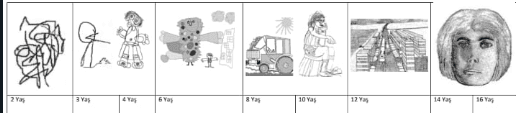
Children's Art
Art has been a powerful vehicle for human self-expression from antiquity to the present. For children, art is not merely an aesthetic activity but one that develops their dream abilities and allows them to express their emotions freely. The importance of Child art is evident in its contribution to their cognitive, emotional and social development as well as in its ability to reveal their creative potential. Children’s Art Children’s art consists of original activities. It is a process through wh
EN
Rumeysa Kalkan

Articles on Art and Literature (Book)
Articles on Art and Literature is a collection of essays and articles by Turkish literary scholar, critic, and writer Prof. Dr. Orhan Okay (1931–2017), published as part of Dergâh Publications’ "Turkish Literature – Studies" series. The book brings together Okay’s writings on art and literature, originally published in various journals between 1969 and 1987. First printed in June 1990, the work comprises 262 pages and has reached its fifth edition as of October 2019. Content and Thematic Structu
EN
Muhammed Samed Acar

Mıstar
A mishtar is a tool consisting of threads stretched at equal intervals on a thin cardboard, placed beneath the paper to be written on, and pressed by hand to produce evenly spaced lines on the paper, ensuring neat handwriting.【1】 The word’s etymology derives from the Arabic roots “satr” or “satar,” meaning “to write” and “line.” In the Ottoman period, the tool was known as “mistar,” while in the Arab world it is called “mistara.” Its Persian equivalent is “hat-keş.” Historical Background The his
EN
Fatma Esmanur Koç
PhPhilosophy of Cinema
Philosophy of cinema is an interdisciplinary field that examines the nature of cinematic art, its modes of expression, ontological structure, and its relationship with the viewer through a philosophical perspective. This field addresses both the philosophical questioning of cinema and the investigation of whether philosophical questions can be expressed through film. Philosophy of cinema is shaped around two primary approaches: philosophy *about* film (philosophy of film) and the evaluation of f
ENAslı Öncan
PhPhilosophy of Humor
Humor, with its multilayered structure operating between individual experience and cultural context, is defined not merely as an amusing element but as a thought-provoking, questioning, and critical mode of expression. Although one of the oldest forms of human narrative, it is regarded as one of the most difficult concepts to define philosophically. Questions about the nature of humor—what is humor, what do we laugh at, why do we laugh—reveal that it is not merely an entertainment device but a c
ENAslı Öncan

Nilgün Marmara in the Backyard of the Earth
Human beings occupy in the universe a space equal to the volume of their own emptiness. But some spirits fill that emptiness with such a sharp, unyielding seepage that even the silence left behind becomes a roaring river. Nilgün Marmara was one of those delicate and unyielding voices who treated this planet as a two-step lodging and watched its backyards early on, choosing departure as an act of will to preserve her own truth. Her poetry is a spiritual journey that wanders at the limits of endur
EN
Nursena Şahin

Modulation in Architecture
Modulation in architecture is the process of creating a building’s overall composition by systematically repeating and organizing a specific unit of measurement, known as a module. The module is commonly applied in structural elements, façade arrangements, and interior spatial organization. This approach is employed not only to achieve aesthetic harmony but also to ensure structural balance and functional integrity. Historical Development Ancient Period and Classical Architecture The origins of
EN
Esra Özkafa
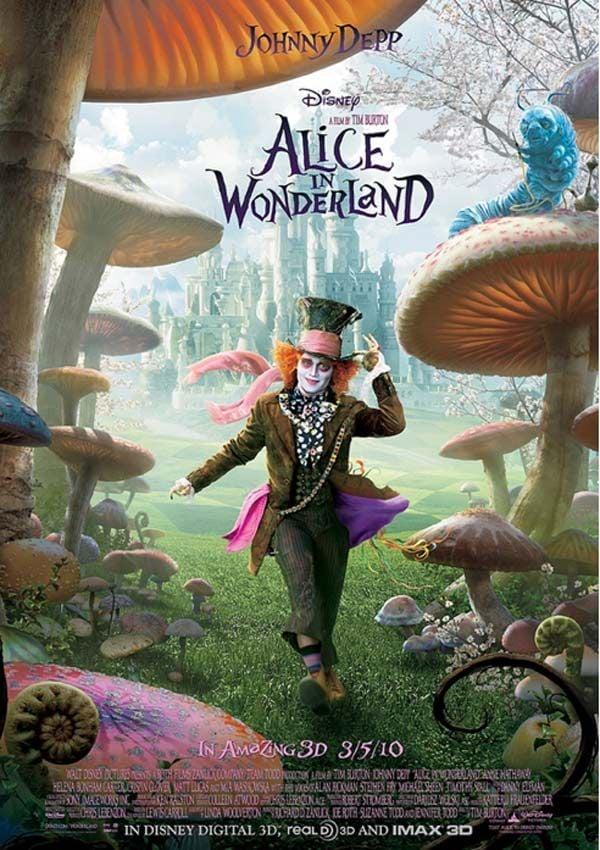
Alice in Wonderland (Film, 2010)
The film Alice in Wonderland (original title: Alice in Wonderland) is a fantasy adaptation of Lewis Carroll’s 19th-century novel of the same name. Directed by Tim Burton and produced by Disney Studios, this 2010 version diverges from previous adaptations by reinterpreting the classic story’s themes and characters through Burton’s distinctive vision. The film begins with Alice returning to the fantastical realm of Wonderland, which she visited as a child but no longer remembers. In the real world
EN
Burcu Sandıkçı