This article was automatically translated from the original Turkish version.
+1 More
Other Name | Hunger Winter (Hongerwinter) | ||||||||
|---|---|---|---|---|---|---|---|---|---|
Date Range | 1944–1945 (Winter – Spring) | ||||||||
Region | Western Netherlands (Area Under German Occupation) | ||||||||
Estimated Number of Deaths | More than 91,000 | ||||||||
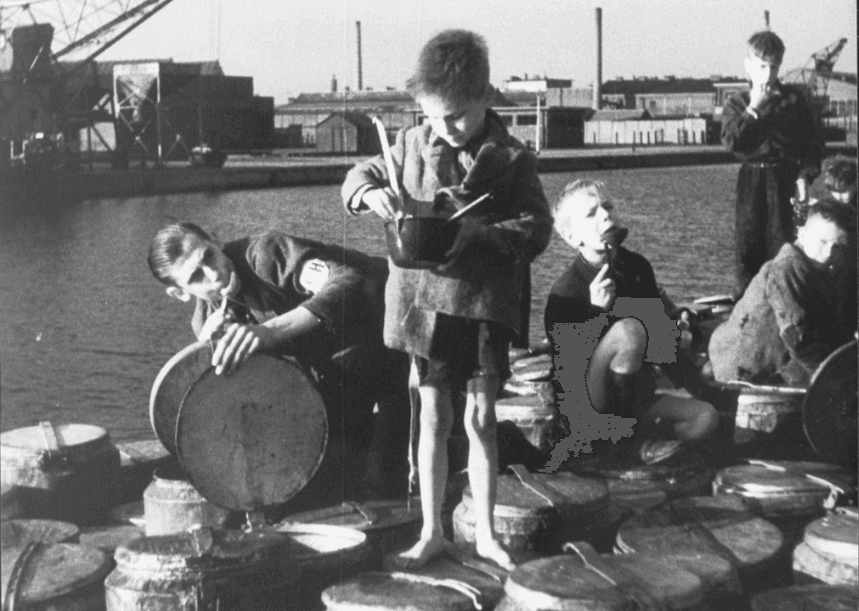
Dutch Famine (Hunger Winter), a severe nutritional crisis that affected the civilian population in western Netherlands from the winter months of 1944 through the spring of 1945 during the final stages of World War II. In this region under German occupation, daily food rations for adults were documented to have dropped to between 400 and 800 calories.【1】 The Dutch Famine is also significant for studies examining the effects of restricted maternal nutrition during different stages of pregnancy.【2】
The famine drastically and abruptly altered the demographic structure of the region. During the famine western Netherlands remained under occupation and approximately 4.3 million people lived in this area. Of this population, a group of 2.3 million particularly those residing in urban areas of the west faced severe famine.【3】
Between January 1944 and July 1945 it is estimated that approximately 91,000 excess deaths (excess mortality) occurred among the civilian population due to war and famine conditions.【4】 Menstrual cycles among women became widely disrupted (amenorrhea) as a result of food shortages and fertility rates declined sharply. Data from the 1944–1945 period show that due to increased mortality the average life expectancy in the Netherlands in 1945 fell to 61.0 years for women and 50.6 years for men.【5】 It has been reported that mothers pregnant during the peak of the famine experienced significant weight loss which affected the birth weights of their infants.
Studies on the “Dutch Famine birth cohort” have revealed that the effects of inadequate nutrition vary depending on the stage of pregnancy during which exposure occurred (early mid or late gestation).
Individuals exposed to famine during early pregnancy have been found to have higher rates of coronary heart disease atherogenic lipid profiles and obesity in adulthood.【6】 This is explained by metabolic adaptations developed by the fetus to cope with a nutrient-poor environment which become disadvantageous in a postnatal environment of abundance. In contrast individuals exposed to famine during the late stages of pregnancy and born with low birth weight have been found to remain leaner throughout life with obesity rates below the population average.
Individuals exposed to famine during early pregnancy exhibited an atherogenic lipid profile characterized by elevated LDL/HDL cholesterol ratios. Additionally these individuals showed higher concentrations of fibrinogen which plays a role in blood clotting but lower concentrations of Factor VII.【7】
Regarding glucose metabolism it has been demonstrated that exposure to famine at any stage of pregnancy (early mid or late) impairs glucose tolerance in later life and increases the risk of Type 2 diabetes.【8】
Exposure to famine during mid-pregnancy has been associated with microalbuminuria a marker of impaired kidney function and obstructive airway diseases in adulthood.【9】 Furthermore individuals exposed during early pregnancy have been observed to exhibit altered physiological responses to stress with higher blood pressure and heart rate reactions during psychological stress tests.
The effects of prenatal undernutrition on the central nervous system produce lasting neurodevelopmental outcomes that vary according to the timing of exposure. Research has shown that individuals exposed to famine during early pregnancy have a significantly increased risk of schizophrenia and schizoid personality disorder while exposure during mid-pregnancy is more strongly associated with mood disorders such as depression.【10】
In addition to psychiatric risks it has been found that early exposure in males is associated with signs of accelerated brain aging and faster cognitive decline in later life. This pattern is attributed to alterations in the fetal programming process involving the hypothalamic-pituitary-adrenal (HPA) axis and permanent disruption of stress response mechanisms.【11】
Long-term studies on the Dutch Famine birth cohort have revealed that prenatal undernutrition has lasting and specific effects on women’s health. In particular women exposed to famine during early pregnancy showed a significantly increased risk of breast cancer while no general increase in other cancer types was observed. These women were also reported to have a higher likelihood of having children more children overall and higher rates of twin births compared to unexposed peers.【12】
One of the key biological mechanisms underlying the long-term effects of the Dutch Famine is believed to be epigenetic changes. Specifically individuals exposed to famine during early pregnancy showed persistent hypomethylation (reduced methylation) of the IGF-2 (Insulin-like Growth Factor 2) gene which regulates growth and metabolism compared to their unexposed siblings. Moreover these effects were not limited to the exposed individuals but were also transmitted to subsequent generations; children of women who experienced famine in utero were found to have higher neonatal adiposity and increased body mass index compared to controls.【13】
De Rooij, Susanne R., Laura S. Bleker, Rebecca C. Painter, Anita C. Ravelli, and Tessa J. Roseboom. “Lessons Learned from 25 Years of Research into Long-Term Consequences of Prenatal Exposure to the Dutch Famine 1944–45: The Dutch Famine Birth Cohort.” *International Journal of Environmental Health Research* 32, no. 7 (2022): 1432–1446. Accessed January 6, 2026.https://doi.org/10.1080/09603123.2021.1888894
Ekamper, Peter, Govert E. Bijwaard, Frans W. A. van Poppel, and L. H. Lumey. “War- and Famine-Related Excess Mortality Among Civilians in the Netherlands, 1944–1945.” *Journal of Maps* 16, no. 1 (2020): 124-131. Accessed January 6, 2026.https://doi.org/10.1080/17445647.2020.1761466
Ekamper, Peter, Govert E. Bijwaard, Frans W. A. van Poppel, and L. H. Lumey. “War-Related Excess Mortality in The Netherlands, 1944–45: New Estimates of Famine- and Non-Famine-Related Deaths from National Death Records.” *Population Studies* 71, no. 1 (2017): 113–128. Accessed January 6, 2026.https://pmc.ncbi.nlm.nih.gov/articles/PMC6226247/
Kelly Short. "War and Hunger / Barefoot in Winter." Flickr. Accessed January 13, 2026.https://www.flickr.com/photos/kellyshort6/29297615285/in/photostream/
Lumey, L. H., and F. W. A. van Poppel. “The Dutch Famine of 1944–45: Mortality and Morbidity in Past and Present Generations.” *Social History of Medicine* 7, no. 2 (August 1994): 229–246. Accessed January 6, 2026.https://doi.org/10.1093/shm/7.2.229
Painter, Rebecca C., Tessa J. Roseboom, and Otto P. Bleker. “Prenatal Exposure to the Dutch Famine and Disease in Later Life: An Overview.” *Reproductive Toxicology* 20, no. 3 (September–October 2005): 345–352. Accessed January 6, 2026.https://doi.org/10.1016/j.reprotox.2005.04.005
Roseboom, Tessa J., Rebecca C. Painter, Annet F.M. van Abeelen, Marjolein V.E. Veenendaal, and Susanne R. de Rooij. “Hungry in the Womb: What Are the Consequences? Lessons from the Dutch Famine.” *Maturitas* 70, no. 2 (October 2011): 141–145. Accessed January 6, 2026.https://doi.org/10.1016/j.maturitas.2011.06.017
Roseboom, Tessa, Susanne de Rooij, and Rebecca Painter. “The Dutch Famine and Its Long-Term Consequences for Adult Health.” *Early Human Development* 82, no. 8 (August 2006): 485–491. Accessed January 6, 2026.https://doi.org/10.1016/j.earlhumdev.2006.07.001
[1]
Tessa Roseboom, Susanne de Rooij ve Rebecca Painter, “The Dutch Famine and Its Long-Term Consequences for Adult Health,” Early Human Development 82, no. 8 (Ağustos 2006): syf: 485, Erişim tarihi: 06 Ocak 2026, https://doi.org/10.1016/j.earlhumdev.2006.07.001; Rebecca C. Painter, Tessa J. Roseboom ve Otto P. Bleker, “Prenatal Exposure to the Dutch Famine and Disease in Later Life: An Overview,” Reproductive Toxicology 20, no. 3 (Eylül–Ekim 2005): syf: 346, Erişim tarihi: 06 Ocak 2026, https://doi.org/10.1016/j.reprotox.2005.04.005.
[2]
Susanne R. De Rooij, Laura S. Bleker, Rebecca C. Painter, Anita C. Ravelli ve Tessa J. Roseboom, “Lessons Learned from 25 Years of Research into Long-Term Consequences of Prenatal Exposure to the Dutch Famine 1944–45: The Dutch Famine Birth Cohort,” International Journal of Environmental Health Research 32, no. 7 (2022): syf: 1433, Erişim tarihi: 06 Ocak 2026, https://doi.org/10.1080/09603123.2021.1888894.
[3]
Peter Ekamper, Govert E. Bijwaard, Frans W. A. van Poppel ve L. H. Lumey, “War- and famine-related excess mortality among civilians in the Netherlands, 1944–1945,” Journal of Maps 16, no. 1 (2020): syf: 126, Erişim tarihi: 06 Ocak 2026, https://doi.org/10.1080/17445647.2020.1761466
[4]
Peter Ekamper, Govert E. Bijwaard, Frans W. A. van Poppel ve L. H. Lumey, “War- and famine-related excess mortality among civilians in the Netherlands, 1944–1945,” Journal of Maps 16, no. 1 (2020): syf: 128, Erişim tarihi: 06 Ocak 2026, https://doi.org/10.1080/17445647.2020.1761466
[5]
Peter Ekamper, Govert E. Bijwaard, Frans W. A. van Poppel ve L. H. Lumey, “War-related excess mortality in The Netherlands, 1944–45: New estimates of famine- and non-famine-related deaths from national death records,” Population Studies 71, no. 1 (2017): syf: 113, Erişim tarihi: 06 Ocak 2026, https://pmc.ncbi.nlm.nih.gov/articles/PMC6226247/
[6]
Tessa Roseboom, Susanne de Rooij ve Rebecca Painter, “The Dutch Famine and Its Long-Term Consequences for Adult Health,” Early Human Development 82, no. 8 (Ağustos 2006): syf: 485 (Abstract), Erişim tarihi: 06 Ocak 2026, https://doi.org/10.1016/j.earlhumdev.2006.07.001
[7]
Rebecca C. Painter, Tessa J. Roseboom ve Otto P. Bleker, “Prenatal Exposure to the Dutch Famine and Disease in Later Life: An Overview,” Reproductive Toxicology 20, no. 3 (Eylül–Ekim 2005): syf: 348 (Tablo 2), Erişim tarihi: 06 Ocak 2026, https://doi.org/10.1016/j.reprotox.2005.04.005.
[8]
Susanne R. De Rooij vd., “Lessons Learned from 25 Years of Research into Long-Term Consequences of Prenatal Exposure to the Dutch Famine 1944–45: The Dutch Famine Birth Cohort,” International Journal of Environmental Health Research 32, no. 7 (2022): syf: 1433, Erişim tarihi: 06 Ocak 2026, https://doi.org/10.1080/09603123.2021.1888894; Painter, Roseboom ve Bleker, “Prenatal Exposure to the Dutch Famine and Disease in Later Life: An Overview,” Reproductive Toxicology 20, no. 3 (Eylül–Ekim 2005): syf: 347, Erişim tarihi: 06 Ocak 2026, https://doi.org/10.1080/09603123.2021.1888894
[9]
Rebecca C. Painter, Tessa J. Roseboom ve Otto P. Bleker, “Prenatal Exposure to the Dutch Famine and Disease in Later Life: An Overview,” Reproductive Toxicology 20, no. 3 (Eylül–Ekim 2005): syf: 348-349, Erişim tarihi: 06 Ocak 2026, https://doi.org/10.1016/j.reprotox.2005.04.005
[10]
Rebecca C. Painter, Tessa J. Roseboom ve Otto P. Bleker, “Prenatal Exposure to the Dutch Famine and Disease in Later Life: An Overview,” Reproductive Toxicology 20, no. 3 (2005): syf: 349, Erişim tarihi: 06 Ocak 2026, https://doi.org/10.1016/j.reprotox.2005.04.005; Susanne R. De Rooij, Laura S. Bleker, Rebecca C. Painter, Anita C. Ravelli ve Tessa J. Roseboom, “Lessons Learned from 25 Years of Research into Long-Term Consequences of Prenatal Exposure to the Dutch Famine 1944–45,” International Journal of Environmental Health Research 32, no. 7 (2022): syf: 1438, Erişim tarihi: 06 Ocak 2026, https://doi.org/10.1080/09603123.2021.1888894
[11]
Susanne R. De Rooij, Laura S. Bleker, Rebecca C. Painter, Anita C. Ravelli ve Tessa J. Roseboom. “Lessons Learned from 25 Years of Research into Long-Term Consequences of Prenatal Exposure to the Dutch Famine 1944–45: The Dutch Famine Birth Cohort.” International Journal of Environmental Health Research 32, no. 7 (2022): syf: 1438, Erişim tarihi: 06 Ocak 2026, https://doi.org/10.1080/09603123.2021.1888894; Tessa Roseboom, Susanne de Rooij ve Rebecca Painter, “The Dutch Famine and Its Long-Term Consequences for Adult Health,” Early Human Development 82, no. 8 (2006): syf: 489, Erişim tarihi: 06 Ocak 2026. https://doi.org/10.1016/j.earlhumdev.2006.07.001
[12]
Susanne R. De Rooij, Laura S. Bleker, Rebecca C. Painter, Anita C. Ravelli ve Tessa J. Roseboom, “Lessons Learned from 25 Years of Research into Long-Term Consequences of Prenatal Exposure to the Dutch Famine 1944–45: The Dutch Famine Birth Cohort,” International Journal of Environmental Health Research 32, no. 7 (2022): 1436-1438, Erişim tarihi: 06 Ocak 2026, https://doi.org/10.1080/09603123.2021.1888894
[13]
Susanne R. De Rooij, Laura S. Bleker, Rebecca C. Painter, Anita C. Ravelli ve Tessa J. Roseboom, "Lessons Learned from 25 Years of Research into Long-Term Consequences of Prenatal Exposure to the Dutch Famine 1944–45: The Dutch Famine Birth Cohort,” International Journal of Environmental Health Research 32, no. 7 (2022): syf: 1434 (Tablo 1), Erişim tarihi: 06 Ocak 2026, https://doi.org/10.1080/09603123.2021.1888894

Other Name | Hunger Winter (Hongerwinter) | ||||||||
|---|---|---|---|---|---|---|---|---|---|
Date Range | 1944–1945 (Winter – Spring) | ||||||||
Region | Western Netherlands (Area Under German Occupation) | ||||||||
Estimated Number of Deaths | More than 91,000 | ||||||||
No Discussion Added Yet
Start discussion for "Dutch Hunger Winter" article
Demographic Effects Fertility and Mortality Rates
Effects of Prenatal Famine Exposure on Adult Health
Metabolic Adaptation and Obesity Risk
Cardiovascular System Lipid Profile and Diabetes
Organ Function and Stress Response
Neurodevelopmental Outcomes (Cognitive and Mental Health)
Women’s Health Reproduction and Cancer Risk
Epigenetic Mechanisms and Intergenerational Transmission