This article was automatically translated from the original Turkish version.
+1 More
Official Name | Bali Baba Camii | ||||||||
|---|---|---|---|---|---|---|---|---|---|
Location | İstanbul, Eyüpsultan, Yusuf Muhlis Paşa Caddesi | ||||||||
Founder | Abdullah Bâli Efendi | ||||||||
Construction Period | Reign of Sultan Murad III | ||||||||
Date of Conversion to Mosque | September 1853 (Dhu al-Hijjah 1269) | ||||||||
Burials | Abdullah Bali Efendi | ||||||||
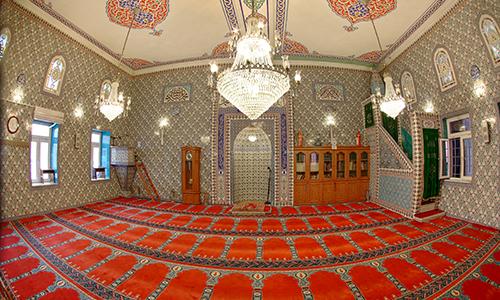
Bali Baba Camii is a place of worship located in the Eyüpsultan district of Istanbul, constructed in the 16th century by Abdullah Bali Efendi and reaching the present day after undergoing various architectural transformations throughout its historical development.【1】
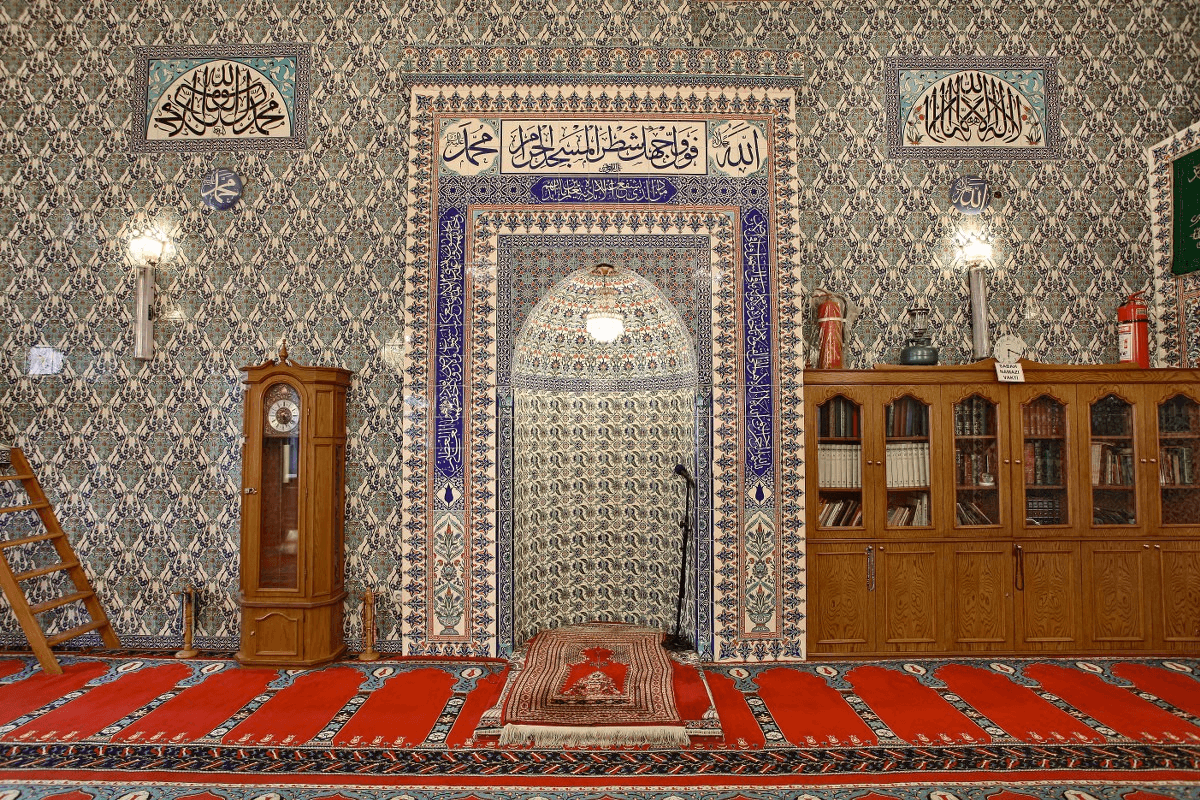
İç Kısım (Eyüpsultan Belediyesi)
The structure is situated at the intersection of Yusuf Muhlis Paşa Street (Eski-yeni Cadde) and Kemikçi Çıkmazı Alley, on the left corner of the alley. Its founder is Abdullah Bali Efendi, who lived during the reign of Sultan III. Murat (H. 982-1003 / M. 1574-1595) and is buried there.【2】
Originally built as a mosque (mescid), the structure was converted into a mosque (cami) in September 1853 (Zilhicce 1269) by Refet Kadın Efendi, the second consort of Sultan III. Selim, who added a pulpit (minber). Refet Kadın Efendi also commissioned the inscription on the structure's façade. During the First World War, the building was used as a warehouse and was evacuated following the 1918 armistice. However, due to severe deterioration during this period, it could not be reopened for worship and remained abandoned for a long time as merely four walls.【3】
The dilapidated structure was completely rebuilt in its current form during renovations carried out around 1960. During this reconstruction, an additional section was added to the building, resulting in the creation of two mihrabs. The mosque’s minber is made of wood. No construction or restoration inscription has been found within the building, and no cemetery has been established within its premises.【4】
The tomb of Abdullah Bali Efendi, the founder of the mosque, is located in the courtyard of the first section of the building. Although iron railings surround the grave, there is no epitaph on the tomb. In a nearby türbe, Sheikh Abdülkadir, who was appointed by the foundation of Sultan I. Ahmed and was the first person to hold the title of Reis'ül-kurra, is buried.【5】
Culture Inventory. "Bali Hoca Camii." Accessed July 12, 2026.https://kulturenvanteri.com/yer/bali-hoca-camii/
Eyüpsultan Belediyesi. "Bali Baba Camii." Accessed July 12, 2026.https://www.eyupsultan.bel.tr/tr/main/pages/bali-baba-camii/939
[1]
Kültür Envanteri. "Bali Hoca Camii." Erişim Tarihi 12 Temmuz 2026. https://kulturenvanteri.com/yer/bali-hoca-camii/
[2]
Eyüpsultan Belediyesi. "Bali Baba Camii." Erişim Tarihi 12 Temmuz 2026. https://www.eyupsultan.bel.tr/tr/main/pages/bali-baba-camii/939
[3]
Eyüpsultan Belediyesi. "Bali Baba Camii."
[4]
Eyüpsultan Belediyesi. "Bali Baba Camii."
[5]
Eyüpsultan Belediyesi. "Bali Baba Camii."

Official Name | Bali Baba Camii | ||||||||
|---|---|---|---|---|---|---|---|---|---|
Location | İstanbul, Eyüpsultan, Yusuf Muhlis Paşa Caddesi | ||||||||
Founder | Abdullah Bâli Efendi | ||||||||
Construction Period | Reign of Sultan Murad III | ||||||||
Date of Conversion to Mosque | September 1853 (Dhu al-Hijjah 1269) | ||||||||
Burials | Abdullah Bali Efendi | ||||||||
Location and Founder
Historical Development and Transformation into a Mosque
1960 Reconstruction and Architectural Changes
Burial Information and Surrounding Structures