
Ayşe Şasa
Birth | 1 February 1941, Istanbul | ||||||||
|---|---|---|---|---|---|---|---|---|---|
Death | 16 June 2014, Istanbul | ||||||||
Place of Burial | Sahrayıcedid Cemetery | ||||||||
Profession | Screenwriter, writer | ||||||||
Education | Arnavutköy American College for Girls; Robert College Department of Administrative Sciences | ||||||||
Related Fields | Yeşilçam, cinema, literature, Sufism | ||||||||
Ayşe Mihriban Şasa (1 February 1941, Istanbul – 16 June 2014, Istanbul) was a Turkish screenwriter and writer. She authored screenplays for numerous films during the Yeşilçam era and played a significant role in Turkish cinema and cultural life through her cinematic writings memoirs interview books and literary works. Her life was shaped around her childhood years education journey transition to cinema period of psychological distress years of seclusion and her relationship with Sufi thought.
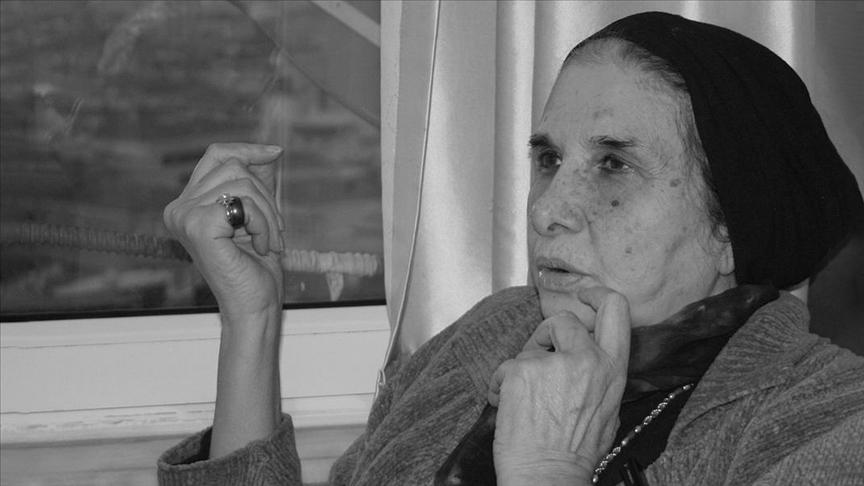
“I am very alone. Please call me if you find this note.” | Ayşe Şasa (TRT2)
Ayşe Mihriban Şasa was born in Istanbul on 1 February 1941. Her mother was Circassian Mihriban Hanım and her father Avni Şasa was of both Circassian and Southeastern Anatolian descent. Şasa spent her childhood years in Istanbul and was raised under the supervision of various governesses until approximately the age of twelve. This period left a lasting imprint on her perception of childhood marked by loneliness fear issues of belonging and a distant relationship with her family environment.
Her grandfather also played a defining role in her childhood. His war stories personality and narrative style left enduring impressions on her mind. She associated her interest in Eastern miniatures with these childhood memories. Due to her family’s inclination toward Westernization she began taking ballet piano and foreign language lessons from an early age. This educational environment laid the foundation for her early engagement with Western culture literature and thought in later years.
Ayşe Şasa started primary school a year early. She received her primary education at Aydın Primary School. These years were difficult for her. Difficulties in adjusting with peers and teachers intensified her sense of loneliness during childhood.
After primary school she entered the Arnavutköy American Girls College as a boarder. She graduated from this school known later as Robert College in 1960. During her college years she developed an interest in literature philosophy and cinema. She read Western literature and existentialist writers such as Virginia Woolf James Joyce Franz Kafka Jean-Paul Sartre Albert Camus Stefan Zweig and Sylvia Plath. This reading environment became one of the main sources of her intellectual exploration during youth.
At the age of twelve or thirteen she published an amateur magazine titled “Çiftehavuzlar Postası.” It featured cartoons cutouts from newspapers drawings commentary on friends and humorous writings. During high school she turned toward theater and cinema and wrote her first play upon graduation.
Ayşe Şasa attended the Department of Administrative Sciences at Robert College from 1963 to 1965. After her first marriage she began studying business at Boğaziçi University but abandoned her studies to pursue a career in cinema.
In the early 1960s she met Kemal Tahir. This encounter became a pivotal point in her intellectual orientation and understanding of writing. Her friendship with Kemal Tahir influenced her way of thinking about Turkey society culture and art. For a period she continued her writing under the influence of his ideas.
During her youth she questioned the social environment she inhabited and the lifestyle represented by her family. Issues such as existence truth society culture and belonging became central to her mental exploration. This quest manifested in various forms in her later writings interviews and cinematic texts.
Ayşe Şasa’s connection with cinema began during her student years. While working as an assistant to director producer and screenwriter Atıf Yılmaz she turned toward screenwriting. She began writing screenplays in 1963. Her decision to enter cinema was influenced by the low status of film within the artistic sphere in Turkey at the time and its perception as a popular narrative form.
Şasa viewed cinema as an art capable of revealing the inner world and unconscious of human beings. In her screenwriting she combined personal experience social observation and cultural questioning. Especially during the 1960s and 1970s she wrote screenplays for numerous films within the Yeşilçam system.
Ayşe Şasa married Atilla Tokatlı in her first marriage. This union was brief. She later married director Atıf Yılmaz. During her marriage to Atıf Yılmaz her ties with the cinema world strengthened and her screenwriting activities intensified. In 1973 following a psychological crisis she separated from Atıf Yılmaz. She later married screenwriter Bülent Oran who was among those who stood by her during her periods of illness and seclusion.
In 1973 Ayşe Şasa experienced a psychological crisis and underwent treatment. She was diagnosed with schizophrenia. After this period she led a long and reclusive life. This phase of psychological distress marked a distinct stage in her literary and intellectual development.
During these years she recorded her experiences in diary form. These writings known as “Schizophrenia Diaries” later became part of the source material for her subsequent writings and books. Her period of illness was not merely a biographical episode but also a time when her search for truth self-questioning and focus on the inner world deeply influenced her texts.
Due to a severe illness in the 1980s she withdrew from the cinema world for approximately ten years. During this time she underwent a new intellectual orientation. In this period of inward withdrawal she engaged in telephone conversations with various individuals forming one of her limited but continuous links to the social world.
One of the turning points in Ayşe Şasa’s life was reading Ibn al-Arabi’s Fusûsu’l-Hikem in 1981. While undergoing psychological treatment in London she came across this work in a book catalog gifted to her by Şerif Mardin and began reading it in English translation. This reading proved decisive in her turn toward Islam and Sufi thought.
After encountering Sufism key concepts such as truth unity wonder heart self soul and gnosis became central to her intellectual world. During this period she met figures such as İsmet Özel Mustafa Kutlu and Mahmut Erol Kılıç. This transformation reshaped her literary sensibility and writing direction.
Şasa framed the transformation she underwent after her psychological crisis around the concepts of self truth and spiritual quest. Sufi thought did not merely represent a religious orientation in her texts but served as a framework for understanding the self overcoming inner conflicts and reestablishing a relationship with existence.
Ayşe Şasa’s literary world developed around her cinematic experience childhood and youth memories psychological distress and her relationship with Sufi thought. In her early phase her reading engagement with Western literature and existentialist writers was prominent. Kafka’s influence is especially evident in her texts with dystopian and allegorical qualities.
Some of her stories essays and memoirs of the Yeşilçam era were published in journals such as Dergâh and Kırklar. These writings were later compiled into books. Her works addressed themes such as cinema the inner world of human beings the search for truth modernization alienation childhood loneliness madness spiritual transformation and Sufism.
The concept of “truth” holds a central position in her literary universe. The traumas she experienced during childhood and youth the difficulties of social adaptation the years of psychological distress and her Sufi quest are the main thematic elements that converge around this concept. Tensions between self society family education culture and belief are explored in her texts alongside a biographical backdrop.
Among Ayşe Şasa’s books are Yeşilçam Günlüğü Delilik Ülkesinden Notlar Şebek Romanı and Bir Ruh Macerası. Yeşilçam Günlüğü consists of essays on cinema and the Yeşilçam environment. Delilik Ülkesinden Notlar contains reflections and inner observations related to her period of psychological distress. Şebek Romanı is regarded as a dystopian work with the qualities of a long story. Bir Ruh Macerası is a book structured as a river conversation and explores different phases of Şasa’s life.
She also co-authored Düş Gerçeklik Sinema with Sadık Yalsızuçanlar and İhsan Kabil and Vakte Karşı Sözler with Ömer Tuğrul İnançer and Berat Demirci. These works focus on themes such as cinema reality dream time Sufism and life experience.
From 1963 onward Ayşe Şasa wrote screenplays for numerous films. Her screenplays span various genres of Yeşilçam cinema including romantic historical social dramatic and adapted films.
Among the films she wrote screenplays for are: Çapkın Kız (1963) Son Kuşlar (1965) Murat’ın Türküsü (1965) Toprağın Kanı (1966) Ah Güzel İstanbul (1966) Harun Reşid’in Gözdesi (1967) Balatlı Arif (1967) Kozanoğlu (1967) İlk ve Son (1968) Köroğlu (1968) Cemile (1968) Battal Gazi Destanı (1971) Unutulan Kadın (1971) Güllü (1971) Yedi Kocalı Hürmüz (1971) Utanç (1972) Cemo (1972) Kambur (1973) Deli Kan (1981) Hacı Arif Bey (1982) Ve Recep ve Zehra ve Ayşe (1983) Ölmez Ağacı (1984) Merdoğlu Ömer Bey (1986) Gramofon Avrat (1987) Arkadaşım Şeytan (1988) Hiçbir Gece (1989) Her Gece Bodrum (1992) Kanayan Yara Bosna (1993) and Dinle Neyden (2008).
Utanç is noted as one of the films in which Şasa’s childhood cultural and psychological influences are reflected in the screenplay. Gramofon Avrat Ah Güzel İstanbul and Son Kuşlar are also among the films associated with her screenwriting. She returned to cinema in 2008 with the film Dinle Neyden.
Ayşe Şasa’s cinematic life was directly linked to Yeşilçam. Her work as an assistant to Atıf Yılmaz was decisive in her entry into screenwriting. During the Yeşilçam era she produced screenplays and wrote extensively on the production conditions public reception narrative forms and cultural position of the cinema of that period.
Şasa did not view cinema merely as a technical production field but as a narrative form connected to the inner world of human beings social life and cultural structure. In her writings on cinema she emphasized the need to approach this art in relation to other spheres of life.
In Ayşe Şasa’s intellectual world childhood experiences criticism of Westernization alienation from modern life loneliness the search for truth and Sufi orientation coexist. Her period of being raised by governesses her distant relationship with her family and her upbringing within Western culture formed the biographical backdrop for her later inquiries.
During her youth she engaged with Western literature and existentialist thought. After meeting Kemal Tahir her questioning of Turkey’s social and cultural structure intensified. After her psychological crisis this questioning evolved primarily around the axes of self truth and spiritual quest.
Her encounter with Sufi thought established a new conceptual framework in her life and writings. The works of Ibn al-Arabi held a unique place in her search for truth. Sufi concepts profoundly influenced her way of understanding the human inner world the self the heart and the relationship with existence.
In the final period of her life Ayşe Şasa continued her activities in writing interviewing and intellectual discourse. It is known that she opened her home to young people engaged in conversations with various individuals and maintained her connections with cultural and artistic circles.
She was treated for a period for pneumonia. She died in Istanbul on 16 June 2014. Her body was buried in Sahrayıcedid Cemetery.
Anadolu Ajansı. “Yaşamı Boyunca Anlam Arayışını Sürdüren Ayşe Şasa Vefatının 9. Yılında Anılıyor.” Accessed June 10, 2026. https://www.aa.com.tr/tr/kultur/yasami-boyunca-anlam-arayisini-surduren-ayse-sasa-vefatinin-9-yilinda-aniliyor/2923171
Anadolu Ajansı. “Yeşilçam Filmlerinin Usta Kalemi Ayşe Şasa.” Anadolu Ajansı. Accessed June 10, 2026. https://www.aa.com.tr/tr/kultur/yesilcam-filmlerinin-usta-kalemi-ayse-sasa-/3599099
Deniz, Tuba. “Türk Sinemasında Bir Düşünür: Ayşe Şasa.” Türkiye Araştırmaları Literatür Dergisi 19, no. 37 (2021): 165–188. Accessed June 10, 2026. https://dergipark.org.tr/en/download/article-file/1746137
Lacivert Dergi. “Çalkantılı Bir Ruh Macerası: Ayşe Şasa.” Röportaj: Yunus Arslan. *Lacivert Dergi*, December 27, 2019. Accessed June 10, 2026. https://www.lacivertdergi.com/soylesi/2019/12/27/calkantili-bir-ruh-macerasi-ayse-sasa
Soysal, Emine Gülsüm. “Benliğin Tasavvuf ile Dönüşümü: Ayşe Şasa.” *Külliye* 2, no. 2 (2021): 114–128. https://doi.org/10.48139/aybukulliye.969221. Accessed June 10, 2026.
TRT 2. “Ben Çok Yalnızım. Bu Notu Bulan Lütfen Beni Arasın. | Ayşe Şasa.” YouTube video. Accessed June 10, 2026. https://www.youtube.com/watch?v=jcnJhOy461M
Turk Edebiyatı İsimler Sözlüğü. "Ayşe Şasa." Accessed June 10, 2026. https://teis.yesevi.edu.tr/madde-detay/ayse-sasa

Ayşe Şasa
Birth | 1 February 1941, Istanbul | ||||||||
|---|---|---|---|---|---|---|---|---|---|
Death | 16 June 2014, Istanbul | ||||||||
Place of Burial | Sahrayıcedid Cemetery | ||||||||
Profession | Screenwriter, writer | ||||||||
Education | Arnavutköy American College for Girls; Robert College Department of Administrative Sciences | ||||||||
Related Fields | Yeşilçam, cinema, literature, Sufism | ||||||||
Life
Childhood and Early Education Years
University Years and Intellectual Exploration
Entry into Cinema
Marriages
Psychological Distress and Seclusion Period
Encounter with Sufi Thought
Literary Identity and Writing World
Books
Screenwriting Works
Relationship with Yeşilçam
Intellectual World
Final Years and Death
Works
Books
Films with Screenplays by Her